🎉 Up to 70% Off Selected ItemsShop Sale

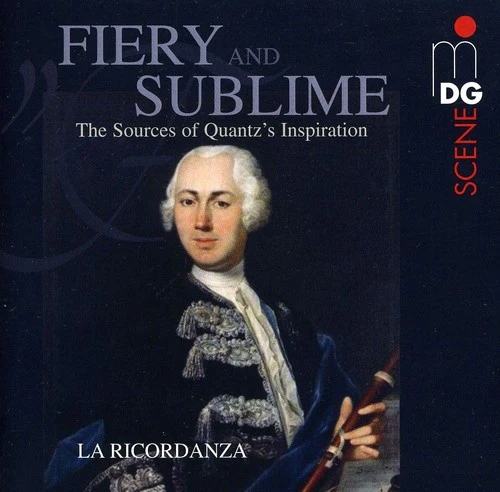
Fiery And Sublime: The Sources Of Quantz's Inspiration
Fine performances, very well recorded – an excellent sampler of music for flute at the time of Quantz.
The booklet note to this CD, by Brian Berryman, leader of La Ricordanza, tells us that one of Quantz’s obituarists (unnamed), described his flute-playing as “learned, fiery and sublime”. When Charles Burney met the elderly Quantz in Berlin, an encounter he reported in The Present State of Music in Germany, the Netherlands, and United Provinces (1773), he liked the man, describing him as “an intelligent man”, who “talks well concerning music”. He added, however, that “talking and composing are different things” and confessed to finding his music “frequently common and insipid”. “Fiery and sublime” or “common and insipid”?
There certainly isn’t anything here that seems worthy of the epithet “sublime”; perhaps the German “erhaben” has other overtones of which I am ignorant? Nor would I want to dismiss any of Quantz’s work on this disc as “common” or “insipid”. “Fiery”, however, wouldn’t be too bad a description of some of the writing - and here, some of the playing - in the fast outer movements of the two pieces by Quantz which are played with great vitality by La Ricordanza. Those two pieces are coupled with one each by four other composers: Leclair, C.P.E. Bach, Johann Gottlieb Graun and Michel Blavet. Samples of their work are here because one of the aims of the disc is to illustrate what its subtitle describes as “the sources of Quantz’s inspiration”.
Quantz was one those composers who achieved something more-or-less individual through synthesis rather than through startling originality. The point is implicit in something else that Burney says about Quantz, in comments based both on his conversations with the composer and on Quantz’s own Memoirs. Burney records how Quantz had benefited from his friendship with Johann Georg Pisendel. “Pisendel”, writes Burney, “had in his youth been taught to sing by the famous Pistocchi [one of the great castrati], and had received instructions on the violin, from Torelli; however, having travelled through France and Italy, where he had acquired the peculiarities in the taste of both countries, he so blended them together as to form a third genus, or mixed style of writing and playing, which was half French and half Italian. Influenced by his example, Quantz declares, that he always preferred the compound style, to the national one, or that of his own country”. Quantz himself made a kind of musical Grand Tour between 1724 and 1727, visiting Italy, France, England and the Netherlands, learning acquisitively along the way – he certainly encountered Blavet in Paris in 1726 and Leclair in Turin in the same year; Graun and C.P.E. Bach he knew, naturally, in Berlin.
The concerto by Quantz which opens the disc - and of which this is the first ever recording - has some fair Italianate fire in its opening allegro di molto and its closing vivace di molto, both movements played with appropriate panache by Brian Berryman, very well supported by the remaining members of La Ricordanza. The intervening movement, marked ‘Grave ma con affetto’ makes one feel sure that Quantz had listened to some of the strikingly expressive music of the younger C.P.E. Bach. Quantz’s Sonata in C major - if it is by Quantz, there being some doubt about the attribution - is unusual in its use of both transverse flute and recorder as solo instruments. It is an attractive and engaging piece, in which the brilliant articulation of the recorder contrasts effectively with the softer, broader tone of the flute. At times it sounds like a version of the frequently claimed antithesis between the vivacity of the Italian manner and the more sentimental idiom of the French!
Graun’s Concerto for recorder is amiable enough without making any very striking or, I suspect, memorable impression on the listener. Burney, evidently in a grumpy mood, dismissed Graun’s compositions as “languid” – and this isn’t, it has to be said, one of the compositions one would call as evidence in rebuttal of the charge. There’s no danger of sublimity here or, indeed, of very much fire. I suspect that Annette Berryman makes about as much as can reasonably be made of the piece. The Sonata by Leclair is altogether more interesting, not least for the beautiful Sarabande which forms its brief third movement and for the inventive allegro assai which follows it. Blavet’s Concerto is an interesting piece, its outer movements thoroughly Italianate and each involving a technically demanding cadenza both of which Brian Berryman negotiates admirably. The central slow movement is made up of two gavottes, in which the musical inflections are just as thoroughly French.
The Trio Sonata by C.P.E. Bach effectively steals the show. Report has it that it was first written when the composer was seventeen, before being revised around 1747 when Bach was in his early thirties, in Berlin alongside Quantz and Graun. The music takes more risks than Quantz or Graun were ever willing to take and, both melodically and harmonically it speaks with a greater individuality than either of the senior Berlin composers could regularly achieve. This isn’t just a matter of Bach being more stylistically advanced - historically speaking - than Quantz and Graun; he is simply possessed of a greater originality of musical mind. Where Quantz was a very effective synthesiser of musical idioms, Bach was something like the creator of a new one.
For anyone interested in the chamber repertoire for flute in the eighteenth century this should be informative and enjoyable listening. Since the playing is exemplary and the recording quality outstanding it can, however, be warmly commended to more than just those with a specialist interest.
-- Glyn Pursglove, MusicWeb International
The booklet note to this CD, by Brian Berryman, leader of La Ricordanza, tells us that one of Quantz’s obituarists (unnamed), described his flute-playing as “learned, fiery and sublime”. When Charles Burney met the elderly Quantz in Berlin, an encounter he reported in The Present State of Music in Germany, the Netherlands, and United Provinces (1773), he liked the man, describing him as “an intelligent man”, who “talks well concerning music”. He added, however, that “talking and composing are different things” and confessed to finding his music “frequently common and insipid”. “Fiery and sublime” or “common and insipid”?
There certainly isn’t anything here that seems worthy of the epithet “sublime”; perhaps the German “erhaben” has other overtones of which I am ignorant? Nor would I want to dismiss any of Quantz’s work on this disc as “common” or “insipid”. “Fiery”, however, wouldn’t be too bad a description of some of the writing - and here, some of the playing - in the fast outer movements of the two pieces by Quantz which are played with great vitality by La Ricordanza. Those two pieces are coupled with one each by four other composers: Leclair, C.P.E. Bach, Johann Gottlieb Graun and Michel Blavet. Samples of their work are here because one of the aims of the disc is to illustrate what its subtitle describes as “the sources of Quantz’s inspiration”.
Quantz was one those composers who achieved something more-or-less individual through synthesis rather than through startling originality. The point is implicit in something else that Burney says about Quantz, in comments based both on his conversations with the composer and on Quantz’s own Memoirs. Burney records how Quantz had benefited from his friendship with Johann Georg Pisendel. “Pisendel”, writes Burney, “had in his youth been taught to sing by the famous Pistocchi [one of the great castrati], and had received instructions on the violin, from Torelli; however, having travelled through France and Italy, where he had acquired the peculiarities in the taste of both countries, he so blended them together as to form a third genus, or mixed style of writing and playing, which was half French and half Italian. Influenced by his example, Quantz declares, that he always preferred the compound style, to the national one, or that of his own country”. Quantz himself made a kind of musical Grand Tour between 1724 and 1727, visiting Italy, France, England and the Netherlands, learning acquisitively along the way – he certainly encountered Blavet in Paris in 1726 and Leclair in Turin in the same year; Graun and C.P.E. Bach he knew, naturally, in Berlin.
The concerto by Quantz which opens the disc - and of which this is the first ever recording - has some fair Italianate fire in its opening allegro di molto and its closing vivace di molto, both movements played with appropriate panache by Brian Berryman, very well supported by the remaining members of La Ricordanza. The intervening movement, marked ‘Grave ma con affetto’ makes one feel sure that Quantz had listened to some of the strikingly expressive music of the younger C.P.E. Bach. Quantz’s Sonata in C major - if it is by Quantz, there being some doubt about the attribution - is unusual in its use of both transverse flute and recorder as solo instruments. It is an attractive and engaging piece, in which the brilliant articulation of the recorder contrasts effectively with the softer, broader tone of the flute. At times it sounds like a version of the frequently claimed antithesis between the vivacity of the Italian manner and the more sentimental idiom of the French!
Graun’s Concerto for recorder is amiable enough without making any very striking or, I suspect, memorable impression on the listener. Burney, evidently in a grumpy mood, dismissed Graun’s compositions as “languid” – and this isn’t, it has to be said, one of the compositions one would call as evidence in rebuttal of the charge. There’s no danger of sublimity here or, indeed, of very much fire. I suspect that Annette Berryman makes about as much as can reasonably be made of the piece. The Sonata by Leclair is altogether more interesting, not least for the beautiful Sarabande which forms its brief third movement and for the inventive allegro assai which follows it. Blavet’s Concerto is an interesting piece, its outer movements thoroughly Italianate and each involving a technically demanding cadenza both of which Brian Berryman negotiates admirably. The central slow movement is made up of two gavottes, in which the musical inflections are just as thoroughly French.
The Trio Sonata by C.P.E. Bach effectively steals the show. Report has it that it was first written when the composer was seventeen, before being revised around 1747 when Bach was in his early thirties, in Berlin alongside Quantz and Graun. The music takes more risks than Quantz or Graun were ever willing to take and, both melodically and harmonically it speaks with a greater individuality than either of the senior Berlin composers could regularly achieve. This isn’t just a matter of Bach being more stylistically advanced - historically speaking - than Quantz and Graun; he is simply possessed of a greater originality of musical mind. Where Quantz was a very effective synthesiser of musical idioms, Bach was something like the creator of a new one.
For anyone interested in the chamber repertoire for flute in the eighteenth century this should be informative and enjoyable listening. Since the playing is exemplary and the recording quality outstanding it can, however, be warmly commended to more than just those with a specialist interest.
-- Glyn Pursglove, MusicWeb International
Fine performances, very well recorded – an excellent sampler of music for flute at the time of Quantz.
The booklet note to this CD, by Brian Berryman, leader of La Ricordanza, tells us that one of Quantz’s obituarists (unnamed), described his flute-playing as “learned, fiery and sublime”. When Charles Burney met the elderly Quantz in Berlin, an encounter he reported in The Present State of Music in Germany, the Netherlands, and United Provinces (1773), he liked the man, describing him as “an intelligent man”, who “talks well concerning music”. He added, however, that “talking and composing are different things” and confessed to finding his music “frequently common and insipid”. “Fiery and sublime” or “common and insipid”?
There certainly isn’t anything here that seems worthy of the epithet “sublime”; perhaps the German “erhaben” has other overtones of which I am ignorant? Nor would I want to dismiss any of Quantz’s work on this disc as “common” or “insipid”. “Fiery”, however, wouldn’t be too bad a description of some of the writing - and here, some of the playing - in the fast outer movements of the two pieces by Quantz which are played with great vitality by La Ricordanza. Those two pieces are coupled with one each by four other composers: Leclair, C.P.E. Bach, Johann Gottlieb Graun and Michel Blavet. Samples of their work are here because one of the aims of the disc is to illustrate what its subtitle describes as “the sources of Quantz’s inspiration”.
Quantz was one those composers who achieved something more-or-less individual through synthesis rather than through startling originality. The point is implicit in something else that Burney says about Quantz, in comments based both on his conversations with the composer and on Quantz’s own Memoirs. Burney records how Quantz had benefited from his friendship with Johann Georg Pisendel. “Pisendel”, writes Burney, “had in his youth been taught to sing by the famous Pistocchi [one of the great castrati], and had received instructions on the violin, from Torelli; however, having travelled through France and Italy, where he had acquired the peculiarities in the taste of both countries, he so blended them together as to form a third genus, or mixed style of writing and playing, which was half French and half Italian. Influenced by his example, Quantz declares, that he always preferred the compound style, to the national one, or that of his own country”. Quantz himself made a kind of musical Grand Tour between 1724 and 1727, visiting Italy, France, England and the Netherlands, learning acquisitively along the way – he certainly encountered Blavet in Paris in 1726 and Leclair in Turin in the same year; Graun and C.P.E. Bach he knew, naturally, in Berlin.
The concerto by Quantz which opens the disc - and of which this is the first ever recording - has some fair Italianate fire in its opening allegro di molto and its closing vivace di molto, both movements played with appropriate panache by Brian Berryman, very well supported by the remaining members of La Ricordanza. The intervening movement, marked ‘Grave ma con affetto’ makes one feel sure that Quantz had listened to some of the strikingly expressive music of the younger C.P.E. Bach. Quantz’s Sonata in C major - if it is by Quantz, there being some doubt about the attribution - is unusual in its use of both transverse flute and recorder as solo instruments. It is an attractive and engaging piece, in which the brilliant articulation of the recorder contrasts effectively with the softer, broader tone of the flute. At times it sounds like a version of the frequently claimed antithesis between the vivacity of the Italian manner and the more sentimental idiom of the French!
Graun’s Concerto for recorder is amiable enough without making any very striking or, I suspect, memorable impression on the listener. Burney, evidently in a grumpy mood, dismissed Graun’s compositions as “languid” – and this isn’t, it has to be said, one of the compositions one would call as evidence in rebuttal of the charge. There’s no danger of sublimity here or, indeed, of very much fire. I suspect that Annette Berryman makes about as much as can reasonably be made of the piece. The Sonata by Leclair is altogether more interesting, not least for the beautiful Sarabande which forms its brief third movement and for the inventive allegro assai which follows it. Blavet’s Concerto is an interesting piece, its outer movements thoroughly Italianate and each involving a technically demanding cadenza both of which Brian Berryman negotiates admirably. The central slow movement is made up of two gavottes, in which the musical inflections are just as thoroughly French.
The Trio Sonata by C.P.E. Bach effectively steals the show. Report has it that it was first written when the composer was seventeen, before being revised around 1747 when Bach was in his early thirties, in Berlin alongside Quantz and Graun. The music takes more risks than Quantz or Graun were ever willing to take and, both melodically and harmonically it speaks with a greater individuality than either of the senior Berlin composers could regularly achieve. This isn’t just a matter of Bach being more stylistically advanced - historically speaking - than Quantz and Graun; he is simply possessed of a greater originality of musical mind. Where Quantz was a very effective synthesiser of musical idioms, Bach was something like the creator of a new one.
For anyone interested in the chamber repertoire for flute in the eighteenth century this should be informative and enjoyable listening. Since the playing is exemplary and the recording quality outstanding it can, however, be warmly commended to more than just those with a specialist interest.
-- Glyn Pursglove, MusicWeb International
The booklet note to this CD, by Brian Berryman, leader of La Ricordanza, tells us that one of Quantz’s obituarists (unnamed), described his flute-playing as “learned, fiery and sublime”. When Charles Burney met the elderly Quantz in Berlin, an encounter he reported in The Present State of Music in Germany, the Netherlands, and United Provinces (1773), he liked the man, describing him as “an intelligent man”, who “talks well concerning music”. He added, however, that “talking and composing are different things” and confessed to finding his music “frequently common and insipid”. “Fiery and sublime” or “common and insipid”?
There certainly isn’t anything here that seems worthy of the epithet “sublime”; perhaps the German “erhaben” has other overtones of which I am ignorant? Nor would I want to dismiss any of Quantz’s work on this disc as “common” or “insipid”. “Fiery”, however, wouldn’t be too bad a description of some of the writing - and here, some of the playing - in the fast outer movements of the two pieces by Quantz which are played with great vitality by La Ricordanza. Those two pieces are coupled with one each by four other composers: Leclair, C.P.E. Bach, Johann Gottlieb Graun and Michel Blavet. Samples of their work are here because one of the aims of the disc is to illustrate what its subtitle describes as “the sources of Quantz’s inspiration”.
Quantz was one those composers who achieved something more-or-less individual through synthesis rather than through startling originality. The point is implicit in something else that Burney says about Quantz, in comments based both on his conversations with the composer and on Quantz’s own Memoirs. Burney records how Quantz had benefited from his friendship with Johann Georg Pisendel. “Pisendel”, writes Burney, “had in his youth been taught to sing by the famous Pistocchi [one of the great castrati], and had received instructions on the violin, from Torelli; however, having travelled through France and Italy, where he had acquired the peculiarities in the taste of both countries, he so blended them together as to form a third genus, or mixed style of writing and playing, which was half French and half Italian. Influenced by his example, Quantz declares, that he always preferred the compound style, to the national one, or that of his own country”. Quantz himself made a kind of musical Grand Tour between 1724 and 1727, visiting Italy, France, England and the Netherlands, learning acquisitively along the way – he certainly encountered Blavet in Paris in 1726 and Leclair in Turin in the same year; Graun and C.P.E. Bach he knew, naturally, in Berlin.
The concerto by Quantz which opens the disc - and of which this is the first ever recording - has some fair Italianate fire in its opening allegro di molto and its closing vivace di molto, both movements played with appropriate panache by Brian Berryman, very well supported by the remaining members of La Ricordanza. The intervening movement, marked ‘Grave ma con affetto’ makes one feel sure that Quantz had listened to some of the strikingly expressive music of the younger C.P.E. Bach. Quantz’s Sonata in C major - if it is by Quantz, there being some doubt about the attribution - is unusual in its use of both transverse flute and recorder as solo instruments. It is an attractive and engaging piece, in which the brilliant articulation of the recorder contrasts effectively with the softer, broader tone of the flute. At times it sounds like a version of the frequently claimed antithesis between the vivacity of the Italian manner and the more sentimental idiom of the French!
Graun’s Concerto for recorder is amiable enough without making any very striking or, I suspect, memorable impression on the listener. Burney, evidently in a grumpy mood, dismissed Graun’s compositions as “languid” – and this isn’t, it has to be said, one of the compositions one would call as evidence in rebuttal of the charge. There’s no danger of sublimity here or, indeed, of very much fire. I suspect that Annette Berryman makes about as much as can reasonably be made of the piece. The Sonata by Leclair is altogether more interesting, not least for the beautiful Sarabande which forms its brief third movement and for the inventive allegro assai which follows it. Blavet’s Concerto is an interesting piece, its outer movements thoroughly Italianate and each involving a technically demanding cadenza both of which Brian Berryman negotiates admirably. The central slow movement is made up of two gavottes, in which the musical inflections are just as thoroughly French.
The Trio Sonata by C.P.E. Bach effectively steals the show. Report has it that it was first written when the composer was seventeen, before being revised around 1747 when Bach was in his early thirties, in Berlin alongside Quantz and Graun. The music takes more risks than Quantz or Graun were ever willing to take and, both melodically and harmonically it speaks with a greater individuality than either of the senior Berlin composers could regularly achieve. This isn’t just a matter of Bach being more stylistically advanced - historically speaking - than Quantz and Graun; he is simply possessed of a greater originality of musical mind. Where Quantz was a very effective synthesiser of musical idioms, Bach was something like the creator of a new one.
For anyone interested in the chamber repertoire for flute in the eighteenth century this should be informative and enjoyable listening. Since the playing is exemplary and the recording quality outstanding it can, however, be warmly commended to more than just those with a specialist interest.
-- Glyn Pursglove, MusicWeb International
$8.40
Original: $23.99
-65%Fiery And Sublime: The Sources Of Quantz's Inspiration—
$23.99
$8.40Description
Fine performances, very well recorded – an excellent sampler of music for flute at the time of Quantz.
The booklet note to this CD, by Brian Berryman, leader of La Ricordanza, tells us that one of Quantz’s obituarists (unnamed), described his flute-playing as “learned, fiery and sublime”. When Charles Burney met the elderly Quantz in Berlin, an encounter he reported in The Present State of Music in Germany, the Netherlands, and United Provinces (1773), he liked the man, describing him as “an intelligent man”, who “talks well concerning music”. He added, however, that “talking and composing are different things” and confessed to finding his music “frequently common and insipid”. “Fiery and sublime” or “common and insipid”?
There certainly isn’t anything here that seems worthy of the epithet “sublime”; perhaps the German “erhaben” has other overtones of which I am ignorant? Nor would I want to dismiss any of Quantz’s work on this disc as “common” or “insipid”. “Fiery”, however, wouldn’t be too bad a description of some of the writing - and here, some of the playing - in the fast outer movements of the two pieces by Quantz which are played with great vitality by La Ricordanza. Those two pieces are coupled with one each by four other composers: Leclair, C.P.E. Bach, Johann Gottlieb Graun and Michel Blavet. Samples of their work are here because one of the aims of the disc is to illustrate what its subtitle describes as “the sources of Quantz’s inspiration”.
Quantz was one those composers who achieved something more-or-less individual through synthesis rather than through startling originality. The point is implicit in something else that Burney says about Quantz, in comments based both on his conversations with the composer and on Quantz’s own Memoirs. Burney records how Quantz had benefited from his friendship with Johann Georg Pisendel. “Pisendel”, writes Burney, “had in his youth been taught to sing by the famous Pistocchi [one of the great castrati], and had received instructions on the violin, from Torelli; however, having travelled through France and Italy, where he had acquired the peculiarities in the taste of both countries, he so blended them together as to form a third genus, or mixed style of writing and playing, which was half French and half Italian. Influenced by his example, Quantz declares, that he always preferred the compound style, to the national one, or that of his own country”. Quantz himself made a kind of musical Grand Tour between 1724 and 1727, visiting Italy, France, England and the Netherlands, learning acquisitively along the way – he certainly encountered Blavet in Paris in 1726 and Leclair in Turin in the same year; Graun and C.P.E. Bach he knew, naturally, in Berlin.
The concerto by Quantz which opens the disc - and of which this is the first ever recording - has some fair Italianate fire in its opening allegro di molto and its closing vivace di molto, both movements played with appropriate panache by Brian Berryman, very well supported by the remaining members of La Ricordanza. The intervening movement, marked ‘Grave ma con affetto’ makes one feel sure that Quantz had listened to some of the strikingly expressive music of the younger C.P.E. Bach. Quantz’s Sonata in C major - if it is by Quantz, there being some doubt about the attribution - is unusual in its use of both transverse flute and recorder as solo instruments. It is an attractive and engaging piece, in which the brilliant articulation of the recorder contrasts effectively with the softer, broader tone of the flute. At times it sounds like a version of the frequently claimed antithesis between the vivacity of the Italian manner and the more sentimental idiom of the French!
Graun’s Concerto for recorder is amiable enough without making any very striking or, I suspect, memorable impression on the listener. Burney, evidently in a grumpy mood, dismissed Graun’s compositions as “languid” – and this isn’t, it has to be said, one of the compositions one would call as evidence in rebuttal of the charge. There’s no danger of sublimity here or, indeed, of very much fire. I suspect that Annette Berryman makes about as much as can reasonably be made of the piece. The Sonata by Leclair is altogether more interesting, not least for the beautiful Sarabande which forms its brief third movement and for the inventive allegro assai which follows it. Blavet’s Concerto is an interesting piece, its outer movements thoroughly Italianate and each involving a technically demanding cadenza both of which Brian Berryman negotiates admirably. The central slow movement is made up of two gavottes, in which the musical inflections are just as thoroughly French.
The Trio Sonata by C.P.E. Bach effectively steals the show. Report has it that it was first written when the composer was seventeen, before being revised around 1747 when Bach was in his early thirties, in Berlin alongside Quantz and Graun. The music takes more risks than Quantz or Graun were ever willing to take and, both melodically and harmonically it speaks with a greater individuality than either of the senior Berlin composers could regularly achieve. This isn’t just a matter of Bach being more stylistically advanced - historically speaking - than Quantz and Graun; he is simply possessed of a greater originality of musical mind. Where Quantz was a very effective synthesiser of musical idioms, Bach was something like the creator of a new one.
For anyone interested in the chamber repertoire for flute in the eighteenth century this should be informative and enjoyable listening. Since the playing is exemplary and the recording quality outstanding it can, however, be warmly commended to more than just those with a specialist interest.
-- Glyn Pursglove, MusicWeb International
The booklet note to this CD, by Brian Berryman, leader of La Ricordanza, tells us that one of Quantz’s obituarists (unnamed), described his flute-playing as “learned, fiery and sublime”. When Charles Burney met the elderly Quantz in Berlin, an encounter he reported in The Present State of Music in Germany, the Netherlands, and United Provinces (1773), he liked the man, describing him as “an intelligent man”, who “talks well concerning music”. He added, however, that “talking and composing are different things” and confessed to finding his music “frequently common and insipid”. “Fiery and sublime” or “common and insipid”?
There certainly isn’t anything here that seems worthy of the epithet “sublime”; perhaps the German “erhaben” has other overtones of which I am ignorant? Nor would I want to dismiss any of Quantz’s work on this disc as “common” or “insipid”. “Fiery”, however, wouldn’t be too bad a description of some of the writing - and here, some of the playing - in the fast outer movements of the two pieces by Quantz which are played with great vitality by La Ricordanza. Those two pieces are coupled with one each by four other composers: Leclair, C.P.E. Bach, Johann Gottlieb Graun and Michel Blavet. Samples of their work are here because one of the aims of the disc is to illustrate what its subtitle describes as “the sources of Quantz’s inspiration”.
Quantz was one those composers who achieved something more-or-less individual through synthesis rather than through startling originality. The point is implicit in something else that Burney says about Quantz, in comments based both on his conversations with the composer and on Quantz’s own Memoirs. Burney records how Quantz had benefited from his friendship with Johann Georg Pisendel. “Pisendel”, writes Burney, “had in his youth been taught to sing by the famous Pistocchi [one of the great castrati], and had received instructions on the violin, from Torelli; however, having travelled through France and Italy, where he had acquired the peculiarities in the taste of both countries, he so blended them together as to form a third genus, or mixed style of writing and playing, which was half French and half Italian. Influenced by his example, Quantz declares, that he always preferred the compound style, to the national one, or that of his own country”. Quantz himself made a kind of musical Grand Tour between 1724 and 1727, visiting Italy, France, England and the Netherlands, learning acquisitively along the way – he certainly encountered Blavet in Paris in 1726 and Leclair in Turin in the same year; Graun and C.P.E. Bach he knew, naturally, in Berlin.
The concerto by Quantz which opens the disc - and of which this is the first ever recording - has some fair Italianate fire in its opening allegro di molto and its closing vivace di molto, both movements played with appropriate panache by Brian Berryman, very well supported by the remaining members of La Ricordanza. The intervening movement, marked ‘Grave ma con affetto’ makes one feel sure that Quantz had listened to some of the strikingly expressive music of the younger C.P.E. Bach. Quantz’s Sonata in C major - if it is by Quantz, there being some doubt about the attribution - is unusual in its use of both transverse flute and recorder as solo instruments. It is an attractive and engaging piece, in which the brilliant articulation of the recorder contrasts effectively with the softer, broader tone of the flute. At times it sounds like a version of the frequently claimed antithesis between the vivacity of the Italian manner and the more sentimental idiom of the French!
Graun’s Concerto for recorder is amiable enough without making any very striking or, I suspect, memorable impression on the listener. Burney, evidently in a grumpy mood, dismissed Graun’s compositions as “languid” – and this isn’t, it has to be said, one of the compositions one would call as evidence in rebuttal of the charge. There’s no danger of sublimity here or, indeed, of very much fire. I suspect that Annette Berryman makes about as much as can reasonably be made of the piece. The Sonata by Leclair is altogether more interesting, not least for the beautiful Sarabande which forms its brief third movement and for the inventive allegro assai which follows it. Blavet’s Concerto is an interesting piece, its outer movements thoroughly Italianate and each involving a technically demanding cadenza both of which Brian Berryman negotiates admirably. The central slow movement is made up of two gavottes, in which the musical inflections are just as thoroughly French.
The Trio Sonata by C.P.E. Bach effectively steals the show. Report has it that it was first written when the composer was seventeen, before being revised around 1747 when Bach was in his early thirties, in Berlin alongside Quantz and Graun. The music takes more risks than Quantz or Graun were ever willing to take and, both melodically and harmonically it speaks with a greater individuality than either of the senior Berlin composers could regularly achieve. This isn’t just a matter of Bach being more stylistically advanced - historically speaking - than Quantz and Graun; he is simply possessed of a greater originality of musical mind. Where Quantz was a very effective synthesiser of musical idioms, Bach was something like the creator of a new one.
For anyone interested in the chamber repertoire for flute in the eighteenth century this should be informative and enjoyable listening. Since the playing is exemplary and the recording quality outstanding it can, however, be warmly commended to more than just those with a specialist interest.
-- Glyn Pursglove, MusicWeb International