Forqueray: Works For Harpsichord / Michael Borgstede
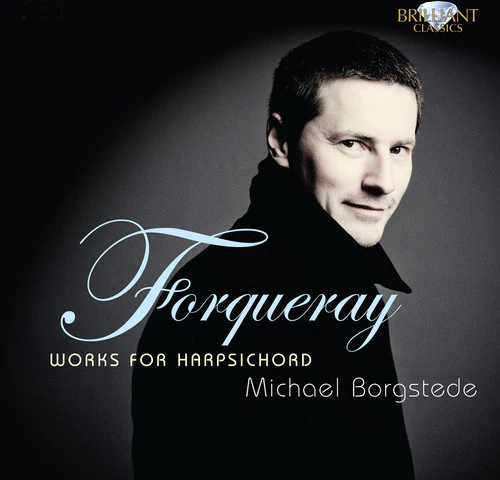
Possibly, like me, the first time you may ever have met the name of Forqueray was when you first discovered the ‘Pièces de Clavecin en concerts’ by Rameau. In those chamber works, enlargements of solo harpsichord pieces, Rameau invariably pays tribute to some of his most interesting contemporaries. Amongst them were names which I thought I would never get to know further including ‘La Marais’ (Marin Marais), ‘La Laborde’ who features in the opening piece of Forqueray’s first Suite and ‘La Forqueray’ found in Rameau’s Fifth Suite, a Fugue in D minor composed apparently on the occasion of the wedding of Jean-Baptiste Forqueray. It’s intriguing that the movement ‘La Forqueray’ in the first suite here is also in D minor. It’s probably a character description of his viol-playing virtuoso father. Little did I know, until this CD emerged, that there were two Forquerays, father and son and both are featured on this disc. This also indicates how Brilliant Classics are imaginatively moving out from standard repertoire and re-issues.
The booklet essay, fascinatingly compiled by Lucy Robinson and entitled ‘A Case of Double Misattribution’ gives us some family background, which is useful and explains the music. It seems that in 1747 Jean-Baptiste had published pieces for viol composed by “M. Forqueray le père’. It seems however that they may not have been by him. The style, which is harmonically adventurous does not quite fit. Scholars now believe these pieces had been “thoroughly reworked” by the son. Jean-Baptiste tells us that he did write the bass line, “adding fingering and adding three pieces of his own”. Also the dedications are to the son’s contemporaries: Rameau, Leclair and one Buisson his brother-in-law and his solicitor Bourron!
In the same year he then brought out his own harpsichord transcriptions of his father’s pieces which made excellent financial sense.
According to the notes Antoine appears to have been a bit of a beast of a father, having his son incarcerated and then exiled for a number of years for some apparently minor thieving activities. It’s rather surprising then that his son took care to prepare the music for ‘clavecin’ so meticulously and brilliantly. He probably realized that many of these pieces are so fecund in imagination, so full of life and so original and sometimes so eccentric that by putting his own mark on them he wasn’t doing himself any harm. Anyway, his father’s fame had been widespread. He had been recognized as one of the greatest virtuosos whose music is even more difficult and extraordinary than that of the great Marais. In truth however Jean-Baptiste made very few alterations to the viol originals and where changes have been made it was not just to simplify or clarify but for purely musical reasons. Three of the pieces are by him, including ‘La Du Vaucel’, a rather pastoral piece to a man described as a “fermier généraux”.
I managed to secure a photocopy of the Fifth Suite in C minor; the same published running order of pieces is retained in both versions. I assume this is so in all the suites. Several things immediately struck me. First, the clear fingerings and the figured bass as mentioned. Then the fact that the viol music is written on two staves: a bass and a C clef. Often the two move suddenly to bass clefs obviously giving a low tessitura mirrored by Jean-Baptiste. The suite begins with a serious homage to Rameau, returning the compliment, possibly. The most curious movement is the one reproduced in the booklet, ‘Le Leon’, which is notated in white notes because of its 3/2 time signature or as it is in the original 2/3. There are also instructions, which I’m not sure Michael Borgstede completely adheres to. They translate “In order to play this piece in the way I intended it, one must observe the placing of the notes; the upper part hardly ever coincides with the bass.”
A standard form regularly found here and popular with French composers of this period is the Rondo. This is fine where the opening ‘A’ is arresting, as in ‘La Montiginio’ in Suite Five but on occasions as in ‘La Sainscy’ in the first suite, it can be a little irritating and tedious.
Michael Borgstede’s playing is technically superb and he is a fine and experienced performer both as a soloist and as a member of the ensemble ‘Musica ad Rhenum’, a prolific recording group founded twenty years ago. Even so, I am not sure that he quite captures the composer’s intention. In the first suite for example does he really play La Clement ‘Noble et détaché’ or Le Carillon de Passy ‘Légérement sans vitesse’ as marked by the composers?
In all there are thirty-two pieces and the quality is not always consistent. Most are intriguing and often incredibly exciting. Three which stand out for me are, for sheer joy of living, ‘La Eynaud’ in the third suite and in the fifth ‘La Sylva’ which is melancholy and solemn in an alla breve time signature sensitively handled by Borgstede. The last piece of all, another Rondo ‘Jupiter’ is pure harpsichord music, using the full range of the instrument in a dramatic and spectacular way.
I’m not mad keen on the recording … or is it possibly the instrument. It is a copy of a double manual French harpsichord after Pascal Taskin (1723-1793). In so many pieces, which are pitched constantly in the lower section of the instrument even with octaves in the left hand, there is sometimes a lack of sharpness, which obscures the harmony. I have heard the tracks not only on my own stereo, but also in the car and on a friend’s fine equipment. I retain the same view although the bass does need to be turned down more than usual.
Even so this is a fine set. The famous names of harpsichord composers have some competition here. These are pieces to which I will certainly return.
-- Gary Higginson, MusicWeb International
Possibly, like me, the first time you may ever have met the name of Forqueray was when you first discovered the ‘Pièces de Clavecin en concerts’ by Rameau. In those chamber works, enlargements of solo harpsichord pieces, Rameau invariably pays tribute to some of his most interesting contemporaries. Amongst them were names which I thought I would never get to know further including ‘La Marais’ (Marin Marais), ‘La Laborde’ who features in the opening piece of Forqueray’s first Suite and ‘La Forqueray’ found in Rameau’s Fifth Suite, a Fugue in D minor composed apparently on the occasion of the wedding of Jean-Baptiste Forqueray. It’s intriguing that the movement ‘La Forqueray’ in the first suite here is also in D minor. It’s probably a character description of his viol-playing virtuoso father. Little did I know, until this CD emerged, that there were two Forquerays, father and son and both are featured on this disc. This also indicates how Brilliant Classics are imaginatively moving out from standard repertoire and re-issues.
The booklet essay, fascinatingly compiled by Lucy Robinson and entitled ‘A Case of Double Misattribution’ gives us some family background, which is useful and explains the music. It seems that in 1747 Jean-Baptiste had published pieces for viol composed by “M. Forqueray le père’. It seems however that they may not have been by him. The style, which is harmonically adventurous does not quite fit. Scholars now believe these pieces had been “thoroughly reworked” by the son. Jean-Baptiste tells us that he did write the bass line, “adding fingering and adding three pieces of his own”. Also the dedications are to the son’s contemporaries: Rameau, Leclair and one Buisson his brother-in-law and his solicitor Bourron!
In the same year he then brought out his own harpsichord transcriptions of his father’s pieces which made excellent financial sense.
According to the notes Antoine appears to have been a bit of a beast of a father, having his son incarcerated and then exiled for a number of years for some apparently minor thieving activities. It’s rather surprising then that his son took care to prepare the music for ‘clavecin’ so meticulously and brilliantly. He probably realized that many of these pieces are so fecund in imagination, so full of life and so original and sometimes so eccentric that by putting his own mark on them he wasn’t doing himself any harm. Anyway, his father’s fame had been widespread. He had been recognized as one of the greatest virtuosos whose music is even more difficult and extraordinary than that of the great Marais. In truth however Jean-Baptiste made very few alterations to the viol originals and where changes have been made it was not just to simplify or clarify but for purely musical reasons. Three of the pieces are by him, including ‘La Du Vaucel’, a rather pastoral piece to a man described as a “fermier généraux”.
I managed to secure a photocopy of the Fifth Suite in C minor; the same published running order of pieces is retained in both versions. I assume this is so in all the suites. Several things immediately struck me. First, the clear fingerings and the figured bass as mentioned. Then the fact that the viol music is written on two staves: a bass and a C clef. Often the two move suddenly to bass clefs obviously giving a low tessitura mirrored by Jean-Baptiste. The suite begins with a serious homage to Rameau, returning the compliment, possibly. The most curious movement is the one reproduced in the booklet, ‘Le Leon’, which is notated in white notes because of its 3/2 time signature or as it is in the original 2/3. There are also instructions, which I’m not sure Michael Borgstede completely adheres to. They translate “In order to play this piece in the way I intended it, one must observe the placing of the notes; the upper part hardly ever coincides with the bass.”
A standard form regularly found here and popular with French composers of this period is the Rondo. This is fine where the opening ‘A’ is arresting, as in ‘La Montiginio’ in Suite Five but on occasions as in ‘La Sainscy’ in the first suite, it can be a little irritating and tedious.
Michael Borgstede’s playing is technically superb and he is a fine and experienced performer both as a soloist and as a member of the ensemble ‘Musica ad Rhenum’, a prolific recording group founded twenty years ago. Even so, I am not sure that he quite captures the composer’s intention. In the first suite for example does he really play La Clement ‘Noble et détaché’ or Le Carillon de Passy ‘Légérement sans vitesse’ as marked by the composers?
In all there are thirty-two pieces and the quality is not always consistent. Most are intriguing and often incredibly exciting. Three which stand out for me are, for sheer joy of living, ‘La Eynaud’ in the third suite and in the fifth ‘La Sylva’ which is melancholy and solemn in an alla breve time signature sensitively handled by Borgstede. The last piece of all, another Rondo ‘Jupiter’ is pure harpsichord music, using the full range of the instrument in a dramatic and spectacular way.
I’m not mad keen on the recording … or is it possibly the instrument. It is a copy of a double manual French harpsichord after Pascal Taskin (1723-1793). In so many pieces, which are pitched constantly in the lower section of the instrument even with octaves in the left hand, there is sometimes a lack of sharpness, which obscures the harmony. I have heard the tracks not only on my own stereo, but also in the car and on a friend’s fine equipment. I retain the same view although the bass does need to be turned down more than usual.
Even so this is a fine set. The famous names of harpsichord composers have some competition here. These are pieces to which I will certainly return.
-- Gary Higginson, MusicWeb International
Description
Possibly, like me, the first time you may ever have met the name of Forqueray was when you first discovered the ‘Pièces de Clavecin en concerts’ by Rameau. In those chamber works, enlargements of solo harpsichord pieces, Rameau invariably pays tribute to some of his most interesting contemporaries. Amongst them were names which I thought I would never get to know further including ‘La Marais’ (Marin Marais), ‘La Laborde’ who features in the opening piece of Forqueray’s first Suite and ‘La Forqueray’ found in Rameau’s Fifth Suite, a Fugue in D minor composed apparently on the occasion of the wedding of Jean-Baptiste Forqueray. It’s intriguing that the movement ‘La Forqueray’ in the first suite here is also in D minor. It’s probably a character description of his viol-playing virtuoso father. Little did I know, until this CD emerged, that there were two Forquerays, father and son and both are featured on this disc. This also indicates how Brilliant Classics are imaginatively moving out from standard repertoire and re-issues.
The booklet essay, fascinatingly compiled by Lucy Robinson and entitled ‘A Case of Double Misattribution’ gives us some family background, which is useful and explains the music. It seems that in 1747 Jean-Baptiste had published pieces for viol composed by “M. Forqueray le père’. It seems however that they may not have been by him. The style, which is harmonically adventurous does not quite fit. Scholars now believe these pieces had been “thoroughly reworked” by the son. Jean-Baptiste tells us that he did write the bass line, “adding fingering and adding three pieces of his own”. Also the dedications are to the son’s contemporaries: Rameau, Leclair and one Buisson his brother-in-law and his solicitor Bourron!
In the same year he then brought out his own harpsichord transcriptions of his father’s pieces which made excellent financial sense.
According to the notes Antoine appears to have been a bit of a beast of a father, having his son incarcerated and then exiled for a number of years for some apparently minor thieving activities. It’s rather surprising then that his son took care to prepare the music for ‘clavecin’ so meticulously and brilliantly. He probably realized that many of these pieces are so fecund in imagination, so full of life and so original and sometimes so eccentric that by putting his own mark on them he wasn’t doing himself any harm. Anyway, his father’s fame had been widespread. He had been recognized as one of the greatest virtuosos whose music is even more difficult and extraordinary than that of the great Marais. In truth however Jean-Baptiste made very few alterations to the viol originals and where changes have been made it was not just to simplify or clarify but for purely musical reasons. Three of the pieces are by him, including ‘La Du Vaucel’, a rather pastoral piece to a man described as a “fermier généraux”.
I managed to secure a photocopy of the Fifth Suite in C minor; the same published running order of pieces is retained in both versions. I assume this is so in all the suites. Several things immediately struck me. First, the clear fingerings and the figured bass as mentioned. Then the fact that the viol music is written on two staves: a bass and a C clef. Often the two move suddenly to bass clefs obviously giving a low tessitura mirrored by Jean-Baptiste. The suite begins with a serious homage to Rameau, returning the compliment, possibly. The most curious movement is the one reproduced in the booklet, ‘Le Leon’, which is notated in white notes because of its 3/2 time signature or as it is in the original 2/3. There are also instructions, which I’m not sure Michael Borgstede completely adheres to. They translate “In order to play this piece in the way I intended it, one must observe the placing of the notes; the upper part hardly ever coincides with the bass.”
A standard form regularly found here and popular with French composers of this period is the Rondo. This is fine where the opening ‘A’ is arresting, as in ‘La Montiginio’ in Suite Five but on occasions as in ‘La Sainscy’ in the first suite, it can be a little irritating and tedious.
Michael Borgstede’s playing is technically superb and he is a fine and experienced performer both as a soloist and as a member of the ensemble ‘Musica ad Rhenum’, a prolific recording group founded twenty years ago. Even so, I am not sure that he quite captures the composer’s intention. In the first suite for example does he really play La Clement ‘Noble et détaché’ or Le Carillon de Passy ‘Légérement sans vitesse’ as marked by the composers?
In all there are thirty-two pieces and the quality is not always consistent. Most are intriguing and often incredibly exciting. Three which stand out for me are, for sheer joy of living, ‘La Eynaud’ in the third suite and in the fifth ‘La Sylva’ which is melancholy and solemn in an alla breve time signature sensitively handled by Borgstede. The last piece of all, another Rondo ‘Jupiter’ is pure harpsichord music, using the full range of the instrument in a dramatic and spectacular way.
I’m not mad keen on the recording … or is it possibly the instrument. It is a copy of a double manual French harpsichord after Pascal Taskin (1723-1793). In so many pieces, which are pitched constantly in the lower section of the instrument even with octaves in the left hand, there is sometimes a lack of sharpness, which obscures the harmony. I have heard the tracks not only on my own stereo, but also in the car and on a friend’s fine equipment. I retain the same view although the bass does need to be turned down more than usual.
Even so this is a fine set. The famous names of harpsichord composers have some competition here. These are pieces to which I will certainly return.
-- Gary Higginson, MusicWeb International