🎉 Up to 70% Off Selected ItemsShop Sale

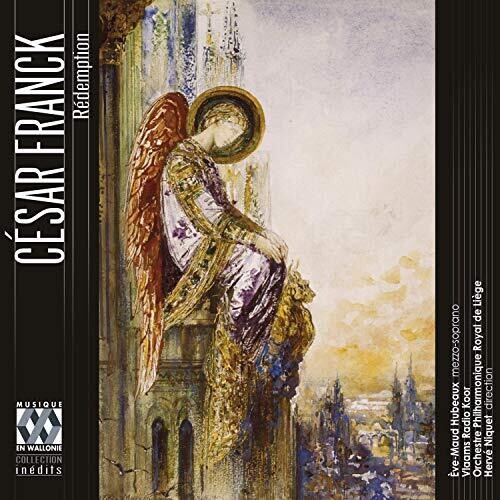
Franck: Rédemption
C�sar Franck's R�demption (1873) is a pivotal work. It is an "ode-symphony," coming at the crossover point between oratorio, opera and symphonic poem - a vein brilliantly exploited by Franck in Psych� (1888) and Les B�atitudes (1891). R�demption also marks a further progression: with this vast fresco C�sar Franck became "le p�re Franck", leading father figure in the new French compositional school, the composer of maturity, creator of Le Chasseur maudit (1883), the Variations symphoniques (1885) and Les �olides (1885). Here we see the organist becoming a virtuoso in handling grand orchestral or vocal forces and taking his place amongst the major composers of the Symbolist period.
C�sar Franck's R�demption (1873) is a pivotal work. It is an "ode-symphony," coming at the crossover point between oratorio, opera and symphonic poem - a vein brilliantly exploited by Franck in Psych� (1888) and Les B�atitudes (1891). R�demption also marks a further progression: with this vast fresco C�sar Franck became "le p�re Franck", leading father figure in the new French compositional school, the composer of maturity, creator of Le Chasseur maudit (1883), the Variations symphoniques (1885) and Les �olides (1885). Here we see the organist becoming a virtuoso in handling grand orchestral or vocal forces and taking his place amongst the major composers of the Symbolist period.
$7.35
Original: $20.99
-65%Franck: Rédemption—
$20.99
$7.35Description
C�sar Franck's R�demption (1873) is a pivotal work. It is an "ode-symphony," coming at the crossover point between oratorio, opera and symphonic poem - a vein brilliantly exploited by Franck in Psych� (1888) and Les B�atitudes (1891). R�demption also marks a further progression: with this vast fresco C�sar Franck became "le p�re Franck", leading father figure in the new French compositional school, the composer of maturity, creator of Le Chasseur maudit (1883), the Variations symphoniques (1885) and Les �olides (1885). Here we see the organist becoming a virtuoso in handling grand orchestral or vocal forces and taking his place amongst the major composers of the Symbolist period.






















