🎉 Up to 70% Off Selected ItemsShop Sale

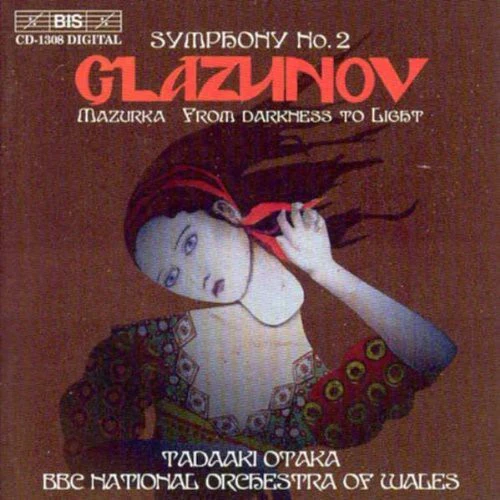
Glazunov: Complete Symphonies Vol 1 / Otaka, Bbc Wales Nso
Alexander Glazunov's Symphony No. 2 (completed in 1886, when the composer was 21) is distinguished by its quintessentially Russian thematic style, which like Borodin's juxtaposes "oriental" and "occidental" melodies. The Symphony's main theme, announced in a commanding unison statement at the first movement's opening, appears in all four movements in various guises, establishing the work's cyclic unity. Glazunov's motivic development technique stems directly from contemporary Russian practice (already he displays the mastery of orchestration and large forms that would characterize his later work), so any fan of 19th century Russian symphonic music will find much that is comfortably familiar here. However, even non-Russophiles will derive enjoyment from Glazunov's always ear-catching tunes, colorful orchestration, and dramatic sensibility (particularly in the outer movements). Tadaaki Otaka shows himself to be finely attuned to Glazunov's special sound-world and lavishes much care and affection on this music, leading the BBC Wales Orchestra in an enthusiastic and highly polished performance.
Glazunov's Mazurka in G major (1888) actually is a self-contained suite of dances (the dance suite was a popular form of the Russian National school) and points the way toward the imaginative and vibrant style of his later ballet scores. The orchestral fantasy From Darkness to Light was dedicated to Busoni, and it displays (in the darkness section) some surprisingly advanced harmonic devices (Glazunov reportedly had no sympathy for any modernist tendencies, at least later in his career). Out of this pushed-to-the-edge chromaticism emerge the pure tonal harmonies of light, as the work follows a rather obvious path of "transfiguration". Otaka and his forces are just as convincing in these two filler works, making the whole program quite enjoyable. BIS' vivid recording presents a naturally balanced sound picture with a wide dynamic range.
--Victor Carr Jr, ClassicsToday.com
Glazunov's Mazurka in G major (1888) actually is a self-contained suite of dances (the dance suite was a popular form of the Russian National school) and points the way toward the imaginative and vibrant style of his later ballet scores. The orchestral fantasy From Darkness to Light was dedicated to Busoni, and it displays (in the darkness section) some surprisingly advanced harmonic devices (Glazunov reportedly had no sympathy for any modernist tendencies, at least later in his career). Out of this pushed-to-the-edge chromaticism emerge the pure tonal harmonies of light, as the work follows a rather obvious path of "transfiguration". Otaka and his forces are just as convincing in these two filler works, making the whole program quite enjoyable. BIS' vivid recording presents a naturally balanced sound picture with a wide dynamic range.
--Victor Carr Jr, ClassicsToday.com
Alexander Glazunov's Symphony No. 2 (completed in 1886, when the composer was 21) is distinguished by its quintessentially Russian thematic style, which like Borodin's juxtaposes "oriental" and "occidental" melodies. The Symphony's main theme, announced in a commanding unison statement at the first movement's opening, appears in all four movements in various guises, establishing the work's cyclic unity. Glazunov's motivic development technique stems directly from contemporary Russian practice (already he displays the mastery of orchestration and large forms that would characterize his later work), so any fan of 19th century Russian symphonic music will find much that is comfortably familiar here. However, even non-Russophiles will derive enjoyment from Glazunov's always ear-catching tunes, colorful orchestration, and dramatic sensibility (particularly in the outer movements). Tadaaki Otaka shows himself to be finely attuned to Glazunov's special sound-world and lavishes much care and affection on this music, leading the BBC Wales Orchestra in an enthusiastic and highly polished performance.
Glazunov's Mazurka in G major (1888) actually is a self-contained suite of dances (the dance suite was a popular form of the Russian National school) and points the way toward the imaginative and vibrant style of his later ballet scores. The orchestral fantasy From Darkness to Light was dedicated to Busoni, and it displays (in the darkness section) some surprisingly advanced harmonic devices (Glazunov reportedly had no sympathy for any modernist tendencies, at least later in his career). Out of this pushed-to-the-edge chromaticism emerge the pure tonal harmonies of light, as the work follows a rather obvious path of "transfiguration". Otaka and his forces are just as convincing in these two filler works, making the whole program quite enjoyable. BIS' vivid recording presents a naturally balanced sound picture with a wide dynamic range.
--Victor Carr Jr, ClassicsToday.com
Glazunov's Mazurka in G major (1888) actually is a self-contained suite of dances (the dance suite was a popular form of the Russian National school) and points the way toward the imaginative and vibrant style of his later ballet scores. The orchestral fantasy From Darkness to Light was dedicated to Busoni, and it displays (in the darkness section) some surprisingly advanced harmonic devices (Glazunov reportedly had no sympathy for any modernist tendencies, at least later in his career). Out of this pushed-to-the-edge chromaticism emerge the pure tonal harmonies of light, as the work follows a rather obvious path of "transfiguration". Otaka and his forces are just as convincing in these two filler works, making the whole program quite enjoyable. BIS' vivid recording presents a naturally balanced sound picture with a wide dynamic range.
--Victor Carr Jr, ClassicsToday.com
$7.70
Original: $21.99
-65%Glazunov: Complete Symphonies Vol 1 / Otaka, Bbc Wales Nso—
$21.99
$7.70Description
Alexander Glazunov's Symphony No. 2 (completed in 1886, when the composer was 21) is distinguished by its quintessentially Russian thematic style, which like Borodin's juxtaposes "oriental" and "occidental" melodies. The Symphony's main theme, announced in a commanding unison statement at the first movement's opening, appears in all four movements in various guises, establishing the work's cyclic unity. Glazunov's motivic development technique stems directly from contemporary Russian practice (already he displays the mastery of orchestration and large forms that would characterize his later work), so any fan of 19th century Russian symphonic music will find much that is comfortably familiar here. However, even non-Russophiles will derive enjoyment from Glazunov's always ear-catching tunes, colorful orchestration, and dramatic sensibility (particularly in the outer movements). Tadaaki Otaka shows himself to be finely attuned to Glazunov's special sound-world and lavishes much care and affection on this music, leading the BBC Wales Orchestra in an enthusiastic and highly polished performance.
Glazunov's Mazurka in G major (1888) actually is a self-contained suite of dances (the dance suite was a popular form of the Russian National school) and points the way toward the imaginative and vibrant style of his later ballet scores. The orchestral fantasy From Darkness to Light was dedicated to Busoni, and it displays (in the darkness section) some surprisingly advanced harmonic devices (Glazunov reportedly had no sympathy for any modernist tendencies, at least later in his career). Out of this pushed-to-the-edge chromaticism emerge the pure tonal harmonies of light, as the work follows a rather obvious path of "transfiguration". Otaka and his forces are just as convincing in these two filler works, making the whole program quite enjoyable. BIS' vivid recording presents a naturally balanced sound picture with a wide dynamic range.
--Victor Carr Jr, ClassicsToday.com
Glazunov's Mazurka in G major (1888) actually is a self-contained suite of dances (the dance suite was a popular form of the Russian National school) and points the way toward the imaginative and vibrant style of his later ballet scores. The orchestral fantasy From Darkness to Light was dedicated to Busoni, and it displays (in the darkness section) some surprisingly advanced harmonic devices (Glazunov reportedly had no sympathy for any modernist tendencies, at least later in his career). Out of this pushed-to-the-edge chromaticism emerge the pure tonal harmonies of light, as the work follows a rather obvious path of "transfiguration". Otaka and his forces are just as convincing in these two filler works, making the whole program quite enjoyable. BIS' vivid recording presents a naturally balanced sound picture with a wide dynamic range.
--Victor Carr Jr, ClassicsToday.com