🎉 Up to 70% Off Selected ItemsShop Sale

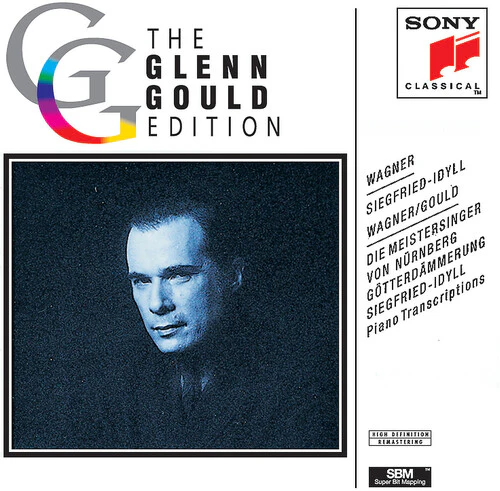
Glenn Gould Edition - Wagner: Siegfried Idyll, Etc
WAGNER (trans. Gould) Siegfried Idyll, (orig.) 1 Siegfried Idyll, (trans.) Die Meistersinger: Act I Prelude. Götterdämmerung: Dawn and Siegfried’s Rhine Journey • Glenn Gould (pn, cond); Toronto SO members 1 • SONY 52650 (70:59)
I can think of no worthier nomination to Fanfare’s Classical Hall of Fame than this conductorial debut of the late, exceedingly great Glenn Gould, and also his very last recording. Gould, of course, admitted in the late 1960s to being a closet Wagnerite who often “worshipped at the shrine,” and in 1973 he set down piano transcriptions of three favorite pieces. Meistersinger was a stunner the first time I heard it, and coming off a concert with Jorge Bolet playing the Liszt transcription of Tannhäuser —and he really pounded the thing out—I was left in shocked, disappointed silence after hearing Gould’s shimmering, nuanced, hyper-contrapuntal version of Wagner’s most Baroque work. Since then I have come to admire it to no end, a brilliant conception that brings out things you will not hear in any other recording, orchestral or not. Wagner’s orchestration actually gets in the way of everything there, and Gould admitted that when he prepared to play it, it was a question of “what do I leave out this time,” as there were not enough hands, even his own long fingers, to cover all the parts. “Dawn” is just as persuasive if not as extroverted in its intricacy, and the piano sounds just wonderful.
Siegfried is matched in its slow tempo only by Gould’s orchestra reading. Here he turns this transcription into a marvelous tone poem, drawing each and every strand of meaning out of every bar, always cognizant of the overarching structure and subtle phrasing, both Gould trademarks. You can almost come to accept this piece as meant for the piano, so convincing is his reading. Siegfried for chamber orchestra, in its original guise, is given to us in one of the slowest readings on record (Gould liked to temper the tempo in many works), and one can hear the Toronto players straining to bring every ounce of intensity to Gould’s concentrated leadership. Somehow he makes it work, and as a testimony to his extraordinary talent and career, this beautifully conceived album is mandatory in any collection worthy of the name.
FANFARE: Steven E. Ritter
WAGNER (trans. Gould) Siegfried Idyll, (orig.) 1 Siegfried Idyll, (trans.) Die Meistersinger: Act I Prelude. Götterdämmerung: Dawn and Siegfried’s Rhine Journey • Glenn Gould (pn, cond); Toronto SO members 1 • SONY 52650 (70:59)
I can think of no worthier nomination to Fanfare’s Classical Hall of Fame than this conductorial debut of the late, exceedingly great Glenn Gould, and also his very last recording. Gould, of course, admitted in the late 1960s to being a closet Wagnerite who often “worshipped at the shrine,” and in 1973 he set down piano transcriptions of three favorite pieces. Meistersinger was a stunner the first time I heard it, and coming off a concert with Jorge Bolet playing the Liszt transcription of Tannhäuser —and he really pounded the thing out—I was left in shocked, disappointed silence after hearing Gould’s shimmering, nuanced, hyper-contrapuntal version of Wagner’s most Baroque work. Since then I have come to admire it to no end, a brilliant conception that brings out things you will not hear in any other recording, orchestral or not. Wagner’s orchestration actually gets in the way of everything there, and Gould admitted that when he prepared to play it, it was a question of “what do I leave out this time,” as there were not enough hands, even his own long fingers, to cover all the parts. “Dawn” is just as persuasive if not as extroverted in its intricacy, and the piano sounds just wonderful.
Siegfried is matched in its slow tempo only by Gould’s orchestra reading. Here he turns this transcription into a marvelous tone poem, drawing each and every strand of meaning out of every bar, always cognizant of the overarching structure and subtle phrasing, both Gould trademarks. You can almost come to accept this piece as meant for the piano, so convincing is his reading. Siegfried for chamber orchestra, in its original guise, is given to us in one of the slowest readings on record (Gould liked to temper the tempo in many works), and one can hear the Toronto players straining to bring every ounce of intensity to Gould’s concentrated leadership. Somehow he makes it work, and as a testimony to his extraordinary talent and career, this beautifully conceived album is mandatory in any collection worthy of the name.
FANFARE: Steven E. Ritter
$11.99
Glenn Gould Edition - Wagner: Siegfried Idyll, Etc—
$11.99
Description
WAGNER (trans. Gould) Siegfried Idyll, (orig.) 1 Siegfried Idyll, (trans.) Die Meistersinger: Act I Prelude. Götterdämmerung: Dawn and Siegfried’s Rhine Journey • Glenn Gould (pn, cond); Toronto SO members 1 • SONY 52650 (70:59)
I can think of no worthier nomination to Fanfare’s Classical Hall of Fame than this conductorial debut of the late, exceedingly great Glenn Gould, and also his very last recording. Gould, of course, admitted in the late 1960s to being a closet Wagnerite who often “worshipped at the shrine,” and in 1973 he set down piano transcriptions of three favorite pieces. Meistersinger was a stunner the first time I heard it, and coming off a concert with Jorge Bolet playing the Liszt transcription of Tannhäuser —and he really pounded the thing out—I was left in shocked, disappointed silence after hearing Gould’s shimmering, nuanced, hyper-contrapuntal version of Wagner’s most Baroque work. Since then I have come to admire it to no end, a brilliant conception that brings out things you will not hear in any other recording, orchestral or not. Wagner’s orchestration actually gets in the way of everything there, and Gould admitted that when he prepared to play it, it was a question of “what do I leave out this time,” as there were not enough hands, even his own long fingers, to cover all the parts. “Dawn” is just as persuasive if not as extroverted in its intricacy, and the piano sounds just wonderful.
Siegfried is matched in its slow tempo only by Gould’s orchestra reading. Here he turns this transcription into a marvelous tone poem, drawing each and every strand of meaning out of every bar, always cognizant of the overarching structure and subtle phrasing, both Gould trademarks. You can almost come to accept this piece as meant for the piano, so convincing is his reading. Siegfried for chamber orchestra, in its original guise, is given to us in one of the slowest readings on record (Gould liked to temper the tempo in many works), and one can hear the Toronto players straining to bring every ounce of intensity to Gould’s concentrated leadership. Somehow he makes it work, and as a testimony to his extraordinary talent and career, this beautifully conceived album is mandatory in any collection worthy of the name.
FANFARE: Steven E. Ritter