🎉 Up to 70% Off Selected ItemsShop Sale

1 / 2
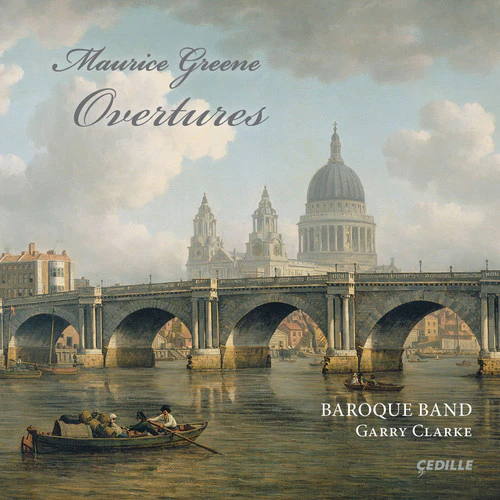
Greene: Overtures / Clarke, Baroque Band
Maurice Greene (1696-1755), organist of St. Paul’s Cathedral, London; Composer and Organist to the Chapel Royal; Master of the King’s Musick. Maurice Greene, described contemporarily (and he was a near-exact contemporary of Handel) as the leading English-born musician of his generation. And yet, today’s audiences have little experience listening to his music, especially his instrumental works. The truth is, his music is not better than Handel, it’s not as good as Handel, but it sounds like Handel at his most ingratiatingly English. If it’s not as melodically entrancing, it definitely captures the appeal of bright “happy” harmony and ear-catching melody, along with the character of both the gentle, verdant countryside and the stately court ceremony. In short, if you like the orchestral Handel, or the concerto grosso Handel, you’ll definitely enjoy the overtures presented here, in vibrant, clearly detailed sound, stylishly performed by Garry Clarke’s Chicago-based period-instrument ensemble Baroque Band.
This group can play notes with the best baroque bands, but throughout the six Overtures in Seven Parts (strings, plus harpsichord, flute, and oboe) and the two additional overtures (from the opera Phoebe and from Greene’s Ode to St. Cecilia’s Day) these musicians and their director show particular and welcome concern for expressive nuance and articulation that gives the performances a dynamic presence that’s far more satisfying to listeners than renditions that may be “proper” but fall far short of demanding a repeat.
The program’s producers opted to supplement/complement the recital with three selections from Greene’s Lessons for the Harpsichord, performed with his usual panache and absolute stylistic authority by David Schrader. My only suggestion would have been to intersperse the solo harpsichord works among the overtures rather than group them in one block–but having these pieces on the same disc as the orchestral works makes for nice variety as well as giving listeners exposure to another area of Greene’s rarely-heard music. I looked everywhere for information about Schrader’s harpsichord–an instrument whose disposition makes an impressive sound, but also has a certain character that organists and early-music keyboardists know can add a dimension to the music and the performance that goes beyond the mere designation “harpsichord” or “organ”. Whatever its provenance, Schrader’s instrument has a very pleasing, intimate quality, timbrally on the bright side and evenly voiced across registers.
And whatever may have prompted the producers and players on this recording to make a program of Maurice Greene’s instrumental music–the vast majority of the existing CD catalog contains choral works–we baroque music lovers can do no less than celebrate and enjoy the chance to hear–and hear again–these undeservedly obscure solo and orchestral pieces, most of them entirely new to the catalog. Strongly recommended.
– David Vernier, ClassicsToday.com
This group can play notes with the best baroque bands, but throughout the six Overtures in Seven Parts (strings, plus harpsichord, flute, and oboe) and the two additional overtures (from the opera Phoebe and from Greene’s Ode to St. Cecilia’s Day) these musicians and their director show particular and welcome concern for expressive nuance and articulation that gives the performances a dynamic presence that’s far more satisfying to listeners than renditions that may be “proper” but fall far short of demanding a repeat.
The program’s producers opted to supplement/complement the recital with three selections from Greene’s Lessons for the Harpsichord, performed with his usual panache and absolute stylistic authority by David Schrader. My only suggestion would have been to intersperse the solo harpsichord works among the overtures rather than group them in one block–but having these pieces on the same disc as the orchestral works makes for nice variety as well as giving listeners exposure to another area of Greene’s rarely-heard music. I looked everywhere for information about Schrader’s harpsichord–an instrument whose disposition makes an impressive sound, but also has a certain character that organists and early-music keyboardists know can add a dimension to the music and the performance that goes beyond the mere designation “harpsichord” or “organ”. Whatever its provenance, Schrader’s instrument has a very pleasing, intimate quality, timbrally on the bright side and evenly voiced across registers.
And whatever may have prompted the producers and players on this recording to make a program of Maurice Greene’s instrumental music–the vast majority of the existing CD catalog contains choral works–we baroque music lovers can do no less than celebrate and enjoy the chance to hear–and hear again–these undeservedly obscure solo and orchestral pieces, most of them entirely new to the catalog. Strongly recommended.
– David Vernier, ClassicsToday.com
Maurice Greene (1696-1755), organist of St. Paul’s Cathedral, London; Composer and Organist to the Chapel Royal; Master of the King’s Musick. Maurice Greene, described contemporarily (and he was a near-exact contemporary of Handel) as the leading English-born musician of his generation. And yet, today’s audiences have little experience listening to his music, especially his instrumental works. The truth is, his music is not better than Handel, it’s not as good as Handel, but it sounds like Handel at his most ingratiatingly English. If it’s not as melodically entrancing, it definitely captures the appeal of bright “happy” harmony and ear-catching melody, along with the character of both the gentle, verdant countryside and the stately court ceremony. In short, if you like the orchestral Handel, or the concerto grosso Handel, you’ll definitely enjoy the overtures presented here, in vibrant, clearly detailed sound, stylishly performed by Garry Clarke’s Chicago-based period-instrument ensemble Baroque Band.
This group can play notes with the best baroque bands, but throughout the six Overtures in Seven Parts (strings, plus harpsichord, flute, and oboe) and the two additional overtures (from the opera Phoebe and from Greene’s Ode to St. Cecilia’s Day) these musicians and their director show particular and welcome concern for expressive nuance and articulation that gives the performances a dynamic presence that’s far more satisfying to listeners than renditions that may be “proper” but fall far short of demanding a repeat.
The program’s producers opted to supplement/complement the recital with three selections from Greene’s Lessons for the Harpsichord, performed with his usual panache and absolute stylistic authority by David Schrader. My only suggestion would have been to intersperse the solo harpsichord works among the overtures rather than group them in one block–but having these pieces on the same disc as the orchestral works makes for nice variety as well as giving listeners exposure to another area of Greene’s rarely-heard music. I looked everywhere for information about Schrader’s harpsichord–an instrument whose disposition makes an impressive sound, but also has a certain character that organists and early-music keyboardists know can add a dimension to the music and the performance that goes beyond the mere designation “harpsichord” or “organ”. Whatever its provenance, Schrader’s instrument has a very pleasing, intimate quality, timbrally on the bright side and evenly voiced across registers.
And whatever may have prompted the producers and players on this recording to make a program of Maurice Greene’s instrumental music–the vast majority of the existing CD catalog contains choral works–we baroque music lovers can do no less than celebrate and enjoy the chance to hear–and hear again–these undeservedly obscure solo and orchestral pieces, most of them entirely new to the catalog. Strongly recommended.
– David Vernier, ClassicsToday.com
This group can play notes with the best baroque bands, but throughout the six Overtures in Seven Parts (strings, plus harpsichord, flute, and oboe) and the two additional overtures (from the opera Phoebe and from Greene’s Ode to St. Cecilia’s Day) these musicians and their director show particular and welcome concern for expressive nuance and articulation that gives the performances a dynamic presence that’s far more satisfying to listeners than renditions that may be “proper” but fall far short of demanding a repeat.
The program’s producers opted to supplement/complement the recital with three selections from Greene’s Lessons for the Harpsichord, performed with his usual panache and absolute stylistic authority by David Schrader. My only suggestion would have been to intersperse the solo harpsichord works among the overtures rather than group them in one block–but having these pieces on the same disc as the orchestral works makes for nice variety as well as giving listeners exposure to another area of Greene’s rarely-heard music. I looked everywhere for information about Schrader’s harpsichord–an instrument whose disposition makes an impressive sound, but also has a certain character that organists and early-music keyboardists know can add a dimension to the music and the performance that goes beyond the mere designation “harpsichord” or “organ”. Whatever its provenance, Schrader’s instrument has a very pleasing, intimate quality, timbrally on the bright side and evenly voiced across registers.
And whatever may have prompted the producers and players on this recording to make a program of Maurice Greene’s instrumental music–the vast majority of the existing CD catalog contains choral works–we baroque music lovers can do no less than celebrate and enjoy the chance to hear–and hear again–these undeservedly obscure solo and orchestral pieces, most of them entirely new to the catalog. Strongly recommended.
– David Vernier, ClassicsToday.com
$19.99
Greene: Overtures / Clarke, Baroque Band—
$19.99
Description
Maurice Greene (1696-1755), organist of St. Paul’s Cathedral, London; Composer and Organist to the Chapel Royal; Master of the King’s Musick. Maurice Greene, described contemporarily (and he was a near-exact contemporary of Handel) as the leading English-born musician of his generation. And yet, today’s audiences have little experience listening to his music, especially his instrumental works. The truth is, his music is not better than Handel, it’s not as good as Handel, but it sounds like Handel at his most ingratiatingly English. If it’s not as melodically entrancing, it definitely captures the appeal of bright “happy” harmony and ear-catching melody, along with the character of both the gentle, verdant countryside and the stately court ceremony. In short, if you like the orchestral Handel, or the concerto grosso Handel, you’ll definitely enjoy the overtures presented here, in vibrant, clearly detailed sound, stylishly performed by Garry Clarke’s Chicago-based period-instrument ensemble Baroque Band.
This group can play notes with the best baroque bands, but throughout the six Overtures in Seven Parts (strings, plus harpsichord, flute, and oboe) and the two additional overtures (from the opera Phoebe and from Greene’s Ode to St. Cecilia’s Day) these musicians and their director show particular and welcome concern for expressive nuance and articulation that gives the performances a dynamic presence that’s far more satisfying to listeners than renditions that may be “proper” but fall far short of demanding a repeat.
The program’s producers opted to supplement/complement the recital with three selections from Greene’s Lessons for the Harpsichord, performed with his usual panache and absolute stylistic authority by David Schrader. My only suggestion would have been to intersperse the solo harpsichord works among the overtures rather than group them in one block–but having these pieces on the same disc as the orchestral works makes for nice variety as well as giving listeners exposure to another area of Greene’s rarely-heard music. I looked everywhere for information about Schrader’s harpsichord–an instrument whose disposition makes an impressive sound, but also has a certain character that organists and early-music keyboardists know can add a dimension to the music and the performance that goes beyond the mere designation “harpsichord” or “organ”. Whatever its provenance, Schrader’s instrument has a very pleasing, intimate quality, timbrally on the bright side and evenly voiced across registers.
And whatever may have prompted the producers and players on this recording to make a program of Maurice Greene’s instrumental music–the vast majority of the existing CD catalog contains choral works–we baroque music lovers can do no less than celebrate and enjoy the chance to hear–and hear again–these undeservedly obscure solo and orchestral pieces, most of them entirely new to the catalog. Strongly recommended.
– David Vernier, ClassicsToday.com
This group can play notes with the best baroque bands, but throughout the six Overtures in Seven Parts (strings, plus harpsichord, flute, and oboe) and the two additional overtures (from the opera Phoebe and from Greene’s Ode to St. Cecilia’s Day) these musicians and their director show particular and welcome concern for expressive nuance and articulation that gives the performances a dynamic presence that’s far more satisfying to listeners than renditions that may be “proper” but fall far short of demanding a repeat.
The program’s producers opted to supplement/complement the recital with three selections from Greene’s Lessons for the Harpsichord, performed with his usual panache and absolute stylistic authority by David Schrader. My only suggestion would have been to intersperse the solo harpsichord works among the overtures rather than group them in one block–but having these pieces on the same disc as the orchestral works makes for nice variety as well as giving listeners exposure to another area of Greene’s rarely-heard music. I looked everywhere for information about Schrader’s harpsichord–an instrument whose disposition makes an impressive sound, but also has a certain character that organists and early-music keyboardists know can add a dimension to the music and the performance that goes beyond the mere designation “harpsichord” or “organ”. Whatever its provenance, Schrader’s instrument has a very pleasing, intimate quality, timbrally on the bright side and evenly voiced across registers.
And whatever may have prompted the producers and players on this recording to make a program of Maurice Greene’s instrumental music–the vast majority of the existing CD catalog contains choral works–we baroque music lovers can do no less than celebrate and enjoy the chance to hear–and hear again–these undeservedly obscure solo and orchestral pieces, most of them entirely new to the catalog. Strongly recommended.
– David Vernier, ClassicsToday.com






















