🎉 Up to 70% Off Selected ItemsShop Sale

1 / 2
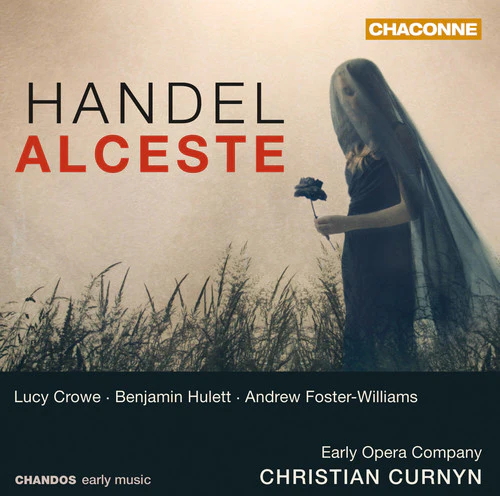
Handel: Alceste / Curnyn, Crowe, Hulett, Foster-Williams, Early Opera Company
The work was never performed; its main characters have no singing parts; the music written for the original project was later reworked and reused in several other stage productions. So what exactly is the attraction of Handel’s incidental music for Alceste, a play by Tobias Smollett based on the tragedy by Euripides? First, we should know that the original production—what would have been an elaborate and costly affair, involving a host of performers, supported by a large orchestra and showy scenery—was abruptly cancelled before the opening. Various theories exist as to the reason, but suffice it to say, after the event Handel happily carved up his score to satisfy the needs of other productions, and Smollett’s play ultimately was lost. Which brings us back to the question: What’s the attraction here, with this reassembled program of (much of) Handel’s music for Alceste? For me, the answer is, the two gorgeous soprano arias sung by the Muse Calliope, “Gentle Morpheus, son of night; That when bright Aurora’s beams” and “Come, Fancy, empress of the brain”. But I have to add that although Handel graced these arias with some of his loveliest tunes, they are made extraordinary here by the singing of Lucy Crowe. And this is the true attraction of this program and this disc, which is not to discount the fine contributions of the rest of the cast and players.
It’s just that Crowe so completely embraces, embodies, and possesses her music, her voice so captivating, every phrase delivered with the natural, unmannered purity that comes with consummate technique and comprehensive textual understanding. For her, a climactic high note (as at the close of “Come fancy empress…”) is not an objective but a thing to savor in the context of the whole line, indeed of the whole song; and the reams of twirling runs are a means, albeit a free-spirited and fancy means, through the vibrant, verdant harmonic texture. Ah, but that high note—and also those many earlier passages of leaping intervals—are so perfectly sung, all the more affecting because they are so fleeting, uncatchable, and as a consequence, inevitably repeatable. And those signature Handelian runs—no one sings these with such ease, unencumbered as a bird in flight.
To be sure, there’s lots more to savor on this disc, including Christian Curnyn’s absolutely spot-on direction, keeping things moving with his superb orchestra at a theatrically cheerable pace, even without the actual “theatrical” bits of the original play to define the action (whatever it was). Who cares, when the music is this typically, engagingly Handelian? My only reservations are the usual ones in Handel’s vocal music: the tenor and bass, who both have very fine voices and an excellent sense of style, manage their melismatic passages via the “ha-ha-ha” school of vocalism—which is not only distracting (I would even say irritating), but technically faulty and musically unjustifiable. They are by no means serious offenders—but the mannerism is noticeable; however, for the pure pleasure of Crowe’s singing, these are distractions that you can easily overlook, or skip over. This is one not to miss.
-- David Vernier, ClassicsToday.com
Alceste was planned as a lavish collaboration between the impresario John Rich, the celebrated set-designer Servandoni and the rambunctious author of Roderick Random, Tobias Smollett, but it never made it to the stage. Notes by the librettist Thomas Morell hint that the play may have been cancelled owing to Handel’s incidental music being too difficult for the cast. However, it seems that Rich may simply have decided that an adaptation of a drama by Euripides was too risky a venture. This was, after all, a period in which the tastes of the London audience were as volatile as the explosives that had destroyed Servandoni’s Temple of Peace during the Green Park performance of Handel’s Music for the Royal Fireworks.
Christian Curnyn’s delicious recording of the surviving score is amplified with a sinfonia from Admeto and a passacaglia from Radamisto. These fizzy, sexily swung orchestral additions emphasise the parallels between Handel’s incidental music and Purcell’s music for King Arthur, The Fairy Queen and The Tempest.
Though Alceste was written in 1749-50 and features one aria that could only date from that time (the exquisite lullaby ‘Gentle Morpheus, son of night’), it observes the contours of a Restoration masque. Alcestis’s journey to the Underworld is enchanting, with Curnyn’s fleet strings, intimately proportioned chorus, and polished soloists, soprano Lucy Crowe, tenor Benjamin Hulett and bass-baritone Andrew Foster-Williams. The choral writing marries the pastoral delicacy of Handel’s Acis and Galatea with stylings from Purcell’s Odes to St Cecilia, showing Handel’s feel for local tastes, and Curnyn’s perceptive approach to Handel.
Performance: 5 (out of 5); Sound: 5 (out of 5)
-- Anna Picard, BBC Music Magazine
It’s just that Crowe so completely embraces, embodies, and possesses her music, her voice so captivating, every phrase delivered with the natural, unmannered purity that comes with consummate technique and comprehensive textual understanding. For her, a climactic high note (as at the close of “Come fancy empress…”) is not an objective but a thing to savor in the context of the whole line, indeed of the whole song; and the reams of twirling runs are a means, albeit a free-spirited and fancy means, through the vibrant, verdant harmonic texture. Ah, but that high note—and also those many earlier passages of leaping intervals—are so perfectly sung, all the more affecting because they are so fleeting, uncatchable, and as a consequence, inevitably repeatable. And those signature Handelian runs—no one sings these with such ease, unencumbered as a bird in flight.
To be sure, there’s lots more to savor on this disc, including Christian Curnyn’s absolutely spot-on direction, keeping things moving with his superb orchestra at a theatrically cheerable pace, even without the actual “theatrical” bits of the original play to define the action (whatever it was). Who cares, when the music is this typically, engagingly Handelian? My only reservations are the usual ones in Handel’s vocal music: the tenor and bass, who both have very fine voices and an excellent sense of style, manage their melismatic passages via the “ha-ha-ha” school of vocalism—which is not only distracting (I would even say irritating), but technically faulty and musically unjustifiable. They are by no means serious offenders—but the mannerism is noticeable; however, for the pure pleasure of Crowe’s singing, these are distractions that you can easily overlook, or skip over. This is one not to miss.
-- David Vernier, ClassicsToday.com
Alceste was planned as a lavish collaboration between the impresario John Rich, the celebrated set-designer Servandoni and the rambunctious author of Roderick Random, Tobias Smollett, but it never made it to the stage. Notes by the librettist Thomas Morell hint that the play may have been cancelled owing to Handel’s incidental music being too difficult for the cast. However, it seems that Rich may simply have decided that an adaptation of a drama by Euripides was too risky a venture. This was, after all, a period in which the tastes of the London audience were as volatile as the explosives that had destroyed Servandoni’s Temple of Peace during the Green Park performance of Handel’s Music for the Royal Fireworks.
Christian Curnyn’s delicious recording of the surviving score is amplified with a sinfonia from Admeto and a passacaglia from Radamisto. These fizzy, sexily swung orchestral additions emphasise the parallels between Handel’s incidental music and Purcell’s music for King Arthur, The Fairy Queen and The Tempest.
Though Alceste was written in 1749-50 and features one aria that could only date from that time (the exquisite lullaby ‘Gentle Morpheus, son of night’), it observes the contours of a Restoration masque. Alcestis’s journey to the Underworld is enchanting, with Curnyn’s fleet strings, intimately proportioned chorus, and polished soloists, soprano Lucy Crowe, tenor Benjamin Hulett and bass-baritone Andrew Foster-Williams. The choral writing marries the pastoral delicacy of Handel’s Acis and Galatea with stylings from Purcell’s Odes to St Cecilia, showing Handel’s feel for local tastes, and Curnyn’s perceptive approach to Handel.
Performance: 5 (out of 5); Sound: 5 (out of 5)
-- Anna Picard, BBC Music Magazine
The work was never performed; its main characters have no singing parts; the music written for the original project was later reworked and reused in several other stage productions. So what exactly is the attraction of Handel’s incidental music for Alceste, a play by Tobias Smollett based on the tragedy by Euripides? First, we should know that the original production—what would have been an elaborate and costly affair, involving a host of performers, supported by a large orchestra and showy scenery—was abruptly cancelled before the opening. Various theories exist as to the reason, but suffice it to say, after the event Handel happily carved up his score to satisfy the needs of other productions, and Smollett’s play ultimately was lost. Which brings us back to the question: What’s the attraction here, with this reassembled program of (much of) Handel’s music for Alceste? For me, the answer is, the two gorgeous soprano arias sung by the Muse Calliope, “Gentle Morpheus, son of night; That when bright Aurora’s beams” and “Come, Fancy, empress of the brain”. But I have to add that although Handel graced these arias with some of his loveliest tunes, they are made extraordinary here by the singing of Lucy Crowe. And this is the true attraction of this program and this disc, which is not to discount the fine contributions of the rest of the cast and players.
It’s just that Crowe so completely embraces, embodies, and possesses her music, her voice so captivating, every phrase delivered with the natural, unmannered purity that comes with consummate technique and comprehensive textual understanding. For her, a climactic high note (as at the close of “Come fancy empress…”) is not an objective but a thing to savor in the context of the whole line, indeed of the whole song; and the reams of twirling runs are a means, albeit a free-spirited and fancy means, through the vibrant, verdant harmonic texture. Ah, but that high note—and also those many earlier passages of leaping intervals—are so perfectly sung, all the more affecting because they are so fleeting, uncatchable, and as a consequence, inevitably repeatable. And those signature Handelian runs—no one sings these with such ease, unencumbered as a bird in flight.
To be sure, there’s lots more to savor on this disc, including Christian Curnyn’s absolutely spot-on direction, keeping things moving with his superb orchestra at a theatrically cheerable pace, even without the actual “theatrical” bits of the original play to define the action (whatever it was). Who cares, when the music is this typically, engagingly Handelian? My only reservations are the usual ones in Handel’s vocal music: the tenor and bass, who both have very fine voices and an excellent sense of style, manage their melismatic passages via the “ha-ha-ha” school of vocalism—which is not only distracting (I would even say irritating), but technically faulty and musically unjustifiable. They are by no means serious offenders—but the mannerism is noticeable; however, for the pure pleasure of Crowe’s singing, these are distractions that you can easily overlook, or skip over. This is one not to miss.
-- David Vernier, ClassicsToday.com
Alceste was planned as a lavish collaboration between the impresario John Rich, the celebrated set-designer Servandoni and the rambunctious author of Roderick Random, Tobias Smollett, but it never made it to the stage. Notes by the librettist Thomas Morell hint that the play may have been cancelled owing to Handel’s incidental music being too difficult for the cast. However, it seems that Rich may simply have decided that an adaptation of a drama by Euripides was too risky a venture. This was, after all, a period in which the tastes of the London audience were as volatile as the explosives that had destroyed Servandoni’s Temple of Peace during the Green Park performance of Handel’s Music for the Royal Fireworks.
Christian Curnyn’s delicious recording of the surviving score is amplified with a sinfonia from Admeto and a passacaglia from Radamisto. These fizzy, sexily swung orchestral additions emphasise the parallels between Handel’s incidental music and Purcell’s music for King Arthur, The Fairy Queen and The Tempest.
Though Alceste was written in 1749-50 and features one aria that could only date from that time (the exquisite lullaby ‘Gentle Morpheus, son of night’), it observes the contours of a Restoration masque. Alcestis’s journey to the Underworld is enchanting, with Curnyn’s fleet strings, intimately proportioned chorus, and polished soloists, soprano Lucy Crowe, tenor Benjamin Hulett and bass-baritone Andrew Foster-Williams. The choral writing marries the pastoral delicacy of Handel’s Acis and Galatea with stylings from Purcell’s Odes to St Cecilia, showing Handel’s feel for local tastes, and Curnyn’s perceptive approach to Handel.
Performance: 5 (out of 5); Sound: 5 (out of 5)
-- Anna Picard, BBC Music Magazine
It’s just that Crowe so completely embraces, embodies, and possesses her music, her voice so captivating, every phrase delivered with the natural, unmannered purity that comes with consummate technique and comprehensive textual understanding. For her, a climactic high note (as at the close of “Come fancy empress…”) is not an objective but a thing to savor in the context of the whole line, indeed of the whole song; and the reams of twirling runs are a means, albeit a free-spirited and fancy means, through the vibrant, verdant harmonic texture. Ah, but that high note—and also those many earlier passages of leaping intervals—are so perfectly sung, all the more affecting because they are so fleeting, uncatchable, and as a consequence, inevitably repeatable. And those signature Handelian runs—no one sings these with such ease, unencumbered as a bird in flight.
To be sure, there’s lots more to savor on this disc, including Christian Curnyn’s absolutely spot-on direction, keeping things moving with his superb orchestra at a theatrically cheerable pace, even without the actual “theatrical” bits of the original play to define the action (whatever it was). Who cares, when the music is this typically, engagingly Handelian? My only reservations are the usual ones in Handel’s vocal music: the tenor and bass, who both have very fine voices and an excellent sense of style, manage their melismatic passages via the “ha-ha-ha” school of vocalism—which is not only distracting (I would even say irritating), but technically faulty and musically unjustifiable. They are by no means serious offenders—but the mannerism is noticeable; however, for the pure pleasure of Crowe’s singing, these are distractions that you can easily overlook, or skip over. This is one not to miss.
-- David Vernier, ClassicsToday.com
Alceste was planned as a lavish collaboration between the impresario John Rich, the celebrated set-designer Servandoni and the rambunctious author of Roderick Random, Tobias Smollett, but it never made it to the stage. Notes by the librettist Thomas Morell hint that the play may have been cancelled owing to Handel’s incidental music being too difficult for the cast. However, it seems that Rich may simply have decided that an adaptation of a drama by Euripides was too risky a venture. This was, after all, a period in which the tastes of the London audience were as volatile as the explosives that had destroyed Servandoni’s Temple of Peace during the Green Park performance of Handel’s Music for the Royal Fireworks.
Christian Curnyn’s delicious recording of the surviving score is amplified with a sinfonia from Admeto and a passacaglia from Radamisto. These fizzy, sexily swung orchestral additions emphasise the parallels between Handel’s incidental music and Purcell’s music for King Arthur, The Fairy Queen and The Tempest.
Though Alceste was written in 1749-50 and features one aria that could only date from that time (the exquisite lullaby ‘Gentle Morpheus, son of night’), it observes the contours of a Restoration masque. Alcestis’s journey to the Underworld is enchanting, with Curnyn’s fleet strings, intimately proportioned chorus, and polished soloists, soprano Lucy Crowe, tenor Benjamin Hulett and bass-baritone Andrew Foster-Williams. The choral writing marries the pastoral delicacy of Handel’s Acis and Galatea with stylings from Purcell’s Odes to St Cecilia, showing Handel’s feel for local tastes, and Curnyn’s perceptive approach to Handel.
Performance: 5 (out of 5); Sound: 5 (out of 5)
-- Anna Picard, BBC Music Magazine
$7.70
Original: $21.99
-65%Handel: Alceste / Curnyn, Crowe, Hulett, Foster-Williams, Early Opera Company—
$21.99
$7.70Description
The work was never performed; its main characters have no singing parts; the music written for the original project was later reworked and reused in several other stage productions. So what exactly is the attraction of Handel’s incidental music for Alceste, a play by Tobias Smollett based on the tragedy by Euripides? First, we should know that the original production—what would have been an elaborate and costly affair, involving a host of performers, supported by a large orchestra and showy scenery—was abruptly cancelled before the opening. Various theories exist as to the reason, but suffice it to say, after the event Handel happily carved up his score to satisfy the needs of other productions, and Smollett’s play ultimately was lost. Which brings us back to the question: What’s the attraction here, with this reassembled program of (much of) Handel’s music for Alceste? For me, the answer is, the two gorgeous soprano arias sung by the Muse Calliope, “Gentle Morpheus, son of night; That when bright Aurora’s beams” and “Come, Fancy, empress of the brain”. But I have to add that although Handel graced these arias with some of his loveliest tunes, they are made extraordinary here by the singing of Lucy Crowe. And this is the true attraction of this program and this disc, which is not to discount the fine contributions of the rest of the cast and players.
It’s just that Crowe so completely embraces, embodies, and possesses her music, her voice so captivating, every phrase delivered with the natural, unmannered purity that comes with consummate technique and comprehensive textual understanding. For her, a climactic high note (as at the close of “Come fancy empress…”) is not an objective but a thing to savor in the context of the whole line, indeed of the whole song; and the reams of twirling runs are a means, albeit a free-spirited and fancy means, through the vibrant, verdant harmonic texture. Ah, but that high note—and also those many earlier passages of leaping intervals—are so perfectly sung, all the more affecting because they are so fleeting, uncatchable, and as a consequence, inevitably repeatable. And those signature Handelian runs—no one sings these with such ease, unencumbered as a bird in flight.
To be sure, there’s lots more to savor on this disc, including Christian Curnyn’s absolutely spot-on direction, keeping things moving with his superb orchestra at a theatrically cheerable pace, even without the actual “theatrical” bits of the original play to define the action (whatever it was). Who cares, when the music is this typically, engagingly Handelian? My only reservations are the usual ones in Handel’s vocal music: the tenor and bass, who both have very fine voices and an excellent sense of style, manage their melismatic passages via the “ha-ha-ha” school of vocalism—which is not only distracting (I would even say irritating), but technically faulty and musically unjustifiable. They are by no means serious offenders—but the mannerism is noticeable; however, for the pure pleasure of Crowe’s singing, these are distractions that you can easily overlook, or skip over. This is one not to miss.
-- David Vernier, ClassicsToday.com
Alceste was planned as a lavish collaboration between the impresario John Rich, the celebrated set-designer Servandoni and the rambunctious author of Roderick Random, Tobias Smollett, but it never made it to the stage. Notes by the librettist Thomas Morell hint that the play may have been cancelled owing to Handel’s incidental music being too difficult for the cast. However, it seems that Rich may simply have decided that an adaptation of a drama by Euripides was too risky a venture. This was, after all, a period in which the tastes of the London audience were as volatile as the explosives that had destroyed Servandoni’s Temple of Peace during the Green Park performance of Handel’s Music for the Royal Fireworks.
Christian Curnyn’s delicious recording of the surviving score is amplified with a sinfonia from Admeto and a passacaglia from Radamisto. These fizzy, sexily swung orchestral additions emphasise the parallels between Handel’s incidental music and Purcell’s music for King Arthur, The Fairy Queen and The Tempest.
Though Alceste was written in 1749-50 and features one aria that could only date from that time (the exquisite lullaby ‘Gentle Morpheus, son of night’), it observes the contours of a Restoration masque. Alcestis’s journey to the Underworld is enchanting, with Curnyn’s fleet strings, intimately proportioned chorus, and polished soloists, soprano Lucy Crowe, tenor Benjamin Hulett and bass-baritone Andrew Foster-Williams. The choral writing marries the pastoral delicacy of Handel’s Acis and Galatea with stylings from Purcell’s Odes to St Cecilia, showing Handel’s feel for local tastes, and Curnyn’s perceptive approach to Handel.
Performance: 5 (out of 5); Sound: 5 (out of 5)
-- Anna Picard, BBC Music Magazine
It’s just that Crowe so completely embraces, embodies, and possesses her music, her voice so captivating, every phrase delivered with the natural, unmannered purity that comes with consummate technique and comprehensive textual understanding. For her, a climactic high note (as at the close of “Come fancy empress…”) is not an objective but a thing to savor in the context of the whole line, indeed of the whole song; and the reams of twirling runs are a means, albeit a free-spirited and fancy means, through the vibrant, verdant harmonic texture. Ah, but that high note—and also those many earlier passages of leaping intervals—are so perfectly sung, all the more affecting because they are so fleeting, uncatchable, and as a consequence, inevitably repeatable. And those signature Handelian runs—no one sings these with such ease, unencumbered as a bird in flight.
To be sure, there’s lots more to savor on this disc, including Christian Curnyn’s absolutely spot-on direction, keeping things moving with his superb orchestra at a theatrically cheerable pace, even without the actual “theatrical” bits of the original play to define the action (whatever it was). Who cares, when the music is this typically, engagingly Handelian? My only reservations are the usual ones in Handel’s vocal music: the tenor and bass, who both have very fine voices and an excellent sense of style, manage their melismatic passages via the “ha-ha-ha” school of vocalism—which is not only distracting (I would even say irritating), but technically faulty and musically unjustifiable. They are by no means serious offenders—but the mannerism is noticeable; however, for the pure pleasure of Crowe’s singing, these are distractions that you can easily overlook, or skip over. This is one not to miss.
-- David Vernier, ClassicsToday.com
Alceste was planned as a lavish collaboration between the impresario John Rich, the celebrated set-designer Servandoni and the rambunctious author of Roderick Random, Tobias Smollett, but it never made it to the stage. Notes by the librettist Thomas Morell hint that the play may have been cancelled owing to Handel’s incidental music being too difficult for the cast. However, it seems that Rich may simply have decided that an adaptation of a drama by Euripides was too risky a venture. This was, after all, a period in which the tastes of the London audience were as volatile as the explosives that had destroyed Servandoni’s Temple of Peace during the Green Park performance of Handel’s Music for the Royal Fireworks.
Christian Curnyn’s delicious recording of the surviving score is amplified with a sinfonia from Admeto and a passacaglia from Radamisto. These fizzy, sexily swung orchestral additions emphasise the parallels between Handel’s incidental music and Purcell’s music for King Arthur, The Fairy Queen and The Tempest.
Though Alceste was written in 1749-50 and features one aria that could only date from that time (the exquisite lullaby ‘Gentle Morpheus, son of night’), it observes the contours of a Restoration masque. Alcestis’s journey to the Underworld is enchanting, with Curnyn’s fleet strings, intimately proportioned chorus, and polished soloists, soprano Lucy Crowe, tenor Benjamin Hulett and bass-baritone Andrew Foster-Williams. The choral writing marries the pastoral delicacy of Handel’s Acis and Galatea with stylings from Purcell’s Odes to St Cecilia, showing Handel’s feel for local tastes, and Curnyn’s perceptive approach to Handel.
Performance: 5 (out of 5); Sound: 5 (out of 5)
-- Anna Picard, BBC Music Magazine