🎉 Up to 70% Off Selected ItemsShop Sale

1 / 2
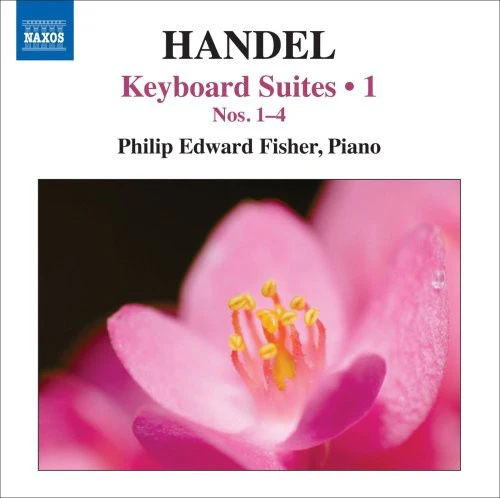
Handel: Keyboard Suites, Vol 1 / Philip Edward Fisher
HANDEL Suites, HWV 426–429 • Philip Edward Fisher (pn) • NAXOS 8.572197 (61:55 )
Handel’s keyboard suites—though still not as established in the repertoire of the average pianist as Bach’s are—are steadily gaining popularity with many performers. Just last issue (in Fanfare 33:6), I had the pleasure of reviewing two new recordings of some of this repertoire. Here, we have Volume 1 of what looks like a complete recording of the so-called “Eight Great Suites.”
Philip Edward Fisher certainly has the mechanical capabilities to play this music in a convincing manner, as the virtuosic opening preludes to both the first and third suites, in A Major and D Minor, respectively, can attest. His free way with them pays dividends, as it feeds off the very nature of their origins—improvisation. Fisher does have one eccentricity to his playing in terms of this freedom, though, one that if he did not overuse might be more convincing. He enjoys starting many movements slowly, then accelerating into the full tempo in the second measure of the movement. This most notably occurs, to my ears, in the Gigue to the A-Major Suite, not only the first time, at the onset of the piece, but all four times, as he plays every single repeat of this movement! How this is supposed to be dance-like, I’m not sure. Fisher’s tone, in addition, tends to have a bit more weight than does Gould’s or Perahia’s. He has a keen sense of voicing and tonal shading, as well as tempi which tend to be moderate, except occasionally. The Air to the D-Minor Suite, which he, along with many others, plays just too slowly for me, is an example. For a better overall approach, I prefer Perahia, who is able to lend unity to this movement through the slow accelerando from the onset of the piece—one that continues through all of the variations, bringing a beautiful sense of momentum. Fisher’s E-Minor Suite comes off the best, as he plays it in the most unaffected way: a light and bouncy, virtuosic fugal Prélude, followed by a soft and flowing Allemande, an aggressive and assured Courante, a pensive Sarabande with little ornamentation and played at a gently lilting tempo, and a lively, quirky, and lightly ornamented Gigue. Fisher seems to let the music speak for itself here—something that many performers can do a little more of from time to time.
All in all, this is a very fine disc, to be warmly recommended, not only for its low price, but also for its often assured and inspired playing. In addition to this disc, I would highly recommend those performances by Murray Perahia (Sony 62785), Evgeny Koroliov (seemingly only available for download on Amazon and iTunes, or check out amazon.de for the actual disc), and Racha Arodaky (AIR 001-2009). Here’s hoping that Fisher will grace us not only with the complete “Eight Great Suites” of 1720 in the following volume(s), but all 16.
FANFARE: Scott Noriega
------------------------------------------------------------------------------------------------
The modern concert grand lends itself well to the idiomatic flair and delightful variety characterizing Handel's keyboard suites, yet surprisingly few pianists champion them on disc. Philip Edward Fisher is an exception, and his first volume in what promises to be a complete cycle adds up to an absorbing listen.
Naxos' close, dry pickup imparts an analytic, Glenn Gould-like clarity to Fisher's touch, although there's plenty of nuance and tonal shading. You hear this right away in the First suite's Prelude, and also in the Gigue, where Fisher states the main theme's first four repeated notes before accelerating into a faster basic tempo--an oddly convincing gesture.
In contrast to Sviatoslav Richter's straightforwardly plain dispatch of the Second suite's Fugue and Presto movements, Fisher generates more textural variety by elongating accented notes and pressing slightly ahead in sequential passagework. And listeners familiar with the E minor suite's Courante as a courtly allegretto by way of Keith Jarrett or Ragna Schirmer will be surprised by Fisher's relatively subjective deliberation. How the remainder of this cycle will fare next to Schirmer's more warmly engineered traversal of all 16 suites remains to be seen, but so far Fisher and Handel appear to be a provocative and often inspired match.
--Jed Distler, ClassicsToday.com
HANDEL Suites, HWV 426–429 • Philip Edward Fisher (pn) • NAXOS 8.572197 (61:55 )
Handel’s keyboard suites—though still not as established in the repertoire of the average pianist as Bach’s are—are steadily gaining popularity with many performers. Just last issue (in Fanfare 33:6), I had the pleasure of reviewing two new recordings of some of this repertoire. Here, we have Volume 1 of what looks like a complete recording of the so-called “Eight Great Suites.”
Philip Edward Fisher certainly has the mechanical capabilities to play this music in a convincing manner, as the virtuosic opening preludes to both the first and third suites, in A Major and D Minor, respectively, can attest. His free way with them pays dividends, as it feeds off the very nature of their origins—improvisation. Fisher does have one eccentricity to his playing in terms of this freedom, though, one that if he did not overuse might be more convincing. He enjoys starting many movements slowly, then accelerating into the full tempo in the second measure of the movement. This most notably occurs, to my ears, in the Gigue to the A-Major Suite, not only the first time, at the onset of the piece, but all four times, as he plays every single repeat of this movement! How this is supposed to be dance-like, I’m not sure. Fisher’s tone, in addition, tends to have a bit more weight than does Gould’s or Perahia’s. He has a keen sense of voicing and tonal shading, as well as tempi which tend to be moderate, except occasionally. The Air to the D-Minor Suite, which he, along with many others, plays just too slowly for me, is an example. For a better overall approach, I prefer Perahia, who is able to lend unity to this movement through the slow accelerando from the onset of the piece—one that continues through all of the variations, bringing a beautiful sense of momentum. Fisher’s E-Minor Suite comes off the best, as he plays it in the most unaffected way: a light and bouncy, virtuosic fugal Prélude, followed by a soft and flowing Allemande, an aggressive and assured Courante, a pensive Sarabande with little ornamentation and played at a gently lilting tempo, and a lively, quirky, and lightly ornamented Gigue. Fisher seems to let the music speak for itself here—something that many performers can do a little more of from time to time.
All in all, this is a very fine disc, to be warmly recommended, not only for its low price, but also for its often assured and inspired playing. In addition to this disc, I would highly recommend those performances by Murray Perahia (Sony 62785), Evgeny Koroliov (seemingly only available for download on Amazon and iTunes, or check out amazon.de for the actual disc), and Racha Arodaky (AIR 001-2009). Here’s hoping that Fisher will grace us not only with the complete “Eight Great Suites” of 1720 in the following volume(s), but all 16.
FANFARE: Scott Noriega
------------------------------------------------------------------------------------------------
The modern concert grand lends itself well to the idiomatic flair and delightful variety characterizing Handel's keyboard suites, yet surprisingly few pianists champion them on disc. Philip Edward Fisher is an exception, and his first volume in what promises to be a complete cycle adds up to an absorbing listen.
Naxos' close, dry pickup imparts an analytic, Glenn Gould-like clarity to Fisher's touch, although there's plenty of nuance and tonal shading. You hear this right away in the First suite's Prelude, and also in the Gigue, where Fisher states the main theme's first four repeated notes before accelerating into a faster basic tempo--an oddly convincing gesture.
In contrast to Sviatoslav Richter's straightforwardly plain dispatch of the Second suite's Fugue and Presto movements, Fisher generates more textural variety by elongating accented notes and pressing slightly ahead in sequential passagework. And listeners familiar with the E minor suite's Courante as a courtly allegretto by way of Keith Jarrett or Ragna Schirmer will be surprised by Fisher's relatively subjective deliberation. How the remainder of this cycle will fare next to Schirmer's more warmly engineered traversal of all 16 suites remains to be seen, but so far Fisher and Handel appear to be a provocative and often inspired match.
--Jed Distler, ClassicsToday.com
$3.50
Original: $9.99
-65%Handel: Keyboard Suites, Vol 1 / Philip Edward Fisher—
$9.99
$3.50Description
HANDEL Suites, HWV 426–429 • Philip Edward Fisher (pn) • NAXOS 8.572197 (61:55 )
Handel’s keyboard suites—though still not as established in the repertoire of the average pianist as Bach’s are—are steadily gaining popularity with many performers. Just last issue (in Fanfare 33:6), I had the pleasure of reviewing two new recordings of some of this repertoire. Here, we have Volume 1 of what looks like a complete recording of the so-called “Eight Great Suites.”
Philip Edward Fisher certainly has the mechanical capabilities to play this music in a convincing manner, as the virtuosic opening preludes to both the first and third suites, in A Major and D Minor, respectively, can attest. His free way with them pays dividends, as it feeds off the very nature of their origins—improvisation. Fisher does have one eccentricity to his playing in terms of this freedom, though, one that if he did not overuse might be more convincing. He enjoys starting many movements slowly, then accelerating into the full tempo in the second measure of the movement. This most notably occurs, to my ears, in the Gigue to the A-Major Suite, not only the first time, at the onset of the piece, but all four times, as he plays every single repeat of this movement! How this is supposed to be dance-like, I’m not sure. Fisher’s tone, in addition, tends to have a bit more weight than does Gould’s or Perahia’s. He has a keen sense of voicing and tonal shading, as well as tempi which tend to be moderate, except occasionally. The Air to the D-Minor Suite, which he, along with many others, plays just too slowly for me, is an example. For a better overall approach, I prefer Perahia, who is able to lend unity to this movement through the slow accelerando from the onset of the piece—one that continues through all of the variations, bringing a beautiful sense of momentum. Fisher’s E-Minor Suite comes off the best, as he plays it in the most unaffected way: a light and bouncy, virtuosic fugal Prélude, followed by a soft and flowing Allemande, an aggressive and assured Courante, a pensive Sarabande with little ornamentation and played at a gently lilting tempo, and a lively, quirky, and lightly ornamented Gigue. Fisher seems to let the music speak for itself here—something that many performers can do a little more of from time to time.
All in all, this is a very fine disc, to be warmly recommended, not only for its low price, but also for its often assured and inspired playing. In addition to this disc, I would highly recommend those performances by Murray Perahia (Sony 62785), Evgeny Koroliov (seemingly only available for download on Amazon and iTunes, or check out amazon.de for the actual disc), and Racha Arodaky (AIR 001-2009). Here’s hoping that Fisher will grace us not only with the complete “Eight Great Suites” of 1720 in the following volume(s), but all 16.
FANFARE: Scott Noriega
------------------------------------------------------------------------------------------------
The modern concert grand lends itself well to the idiomatic flair and delightful variety characterizing Handel's keyboard suites, yet surprisingly few pianists champion them on disc. Philip Edward Fisher is an exception, and his first volume in what promises to be a complete cycle adds up to an absorbing listen.
Naxos' close, dry pickup imparts an analytic, Glenn Gould-like clarity to Fisher's touch, although there's plenty of nuance and tonal shading. You hear this right away in the First suite's Prelude, and also in the Gigue, where Fisher states the main theme's first four repeated notes before accelerating into a faster basic tempo--an oddly convincing gesture.
In contrast to Sviatoslav Richter's straightforwardly plain dispatch of the Second suite's Fugue and Presto movements, Fisher generates more textural variety by elongating accented notes and pressing slightly ahead in sequential passagework. And listeners familiar with the E minor suite's Courante as a courtly allegretto by way of Keith Jarrett or Ragna Schirmer will be surprised by Fisher's relatively subjective deliberation. How the remainder of this cycle will fare next to Schirmer's more warmly engineered traversal of all 16 suites remains to be seen, but so far Fisher and Handel appear to be a provocative and often inspired match.
--Jed Distler, ClassicsToday.com