🎉 Up to 70% Off Selected ItemsShop Sale

1 / 2
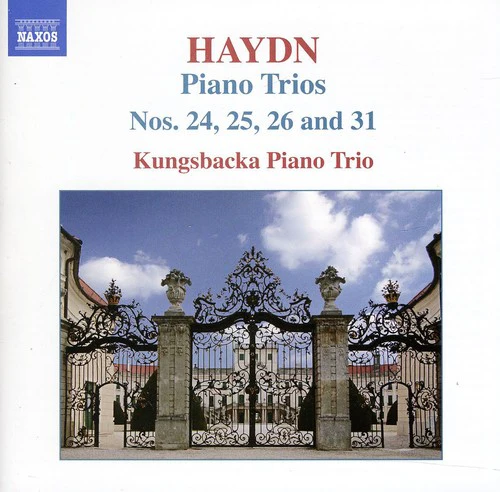
Haydn: Piano Trios, Vol. 1 / Kungsbacka Trio
HAYDN Piano Trios: No. 24 in D; No. 25 in G; No. 26 in f?; No. 31 in e? • Kungsbacka Pn Trio • NAXOS 8.572040 (52: 35)
This disc offers an intriguing set of paradoxes. But let’s first state that it is quite wonderful. The Adagio cantabile of Trio No. 26 is that of the Adagio of Haydn’s Symphony No. 102—and yet it is not. The notes are very much the same; one easily follows the symphony’s score during the trio, translating the first violin part to the piano and the winds to the violin. But the movement now makes a totally different impression, sweet and calm instead of solid and intense. This is not just the performance, and the Kungsbacka demonstrates elsewhere that it can be appropriately intense. In its complete set, Haydn Trio Eisenstadt (which I admire greatly) hews close to the symphony’s Adagio, and it just doesn’t work.
As I seem to repeat in every issue, there is no single right way to play Haydn, assuming competence and taste. This ensemble produces the impression of period practice, and yet Simon Crawford Phillips’s piano is clearly a modern grand. He achieves delicate, pearl-like tones in Haydn’s rising and falling phrases, but he sometimes pounds cadences in codas. These performances are thoughtful and relaxed (the andantes are especially lovely), with little of the sparkle of the Beaux Arts Trio’s recordings—which are in turn seldom contemplative and can wear one down with their consistent flash. Each complements the other, and many recordings lie in between; yet the Kungsbacka races through the presto “Hungarian Rondo” of No. 25 as fast as any group. If you prefer one complete set, I recommend Haydn Trio Eisenstadt on Phoenix Edition ( Fanfare 32:5). I prefer the variety of multiple ensembles, and these four trios mesh neatly with a disc of Nos. 21–23 by Trio 1790 on cpo (Complete Piano Trios Vol. 4) and Nos. 27–30 by Robert Levin, Vera Beths, and Anner Byslma on Sony. Add to these PentaTone’s two-SACD set of nine early trios by the Beaux Arts: no duplications, and you get both modern and period instruments.
FANFARE: James H. North
HAYDN Piano Trios: No. 24 in D; No. 25 in G; No. 26 in f?; No. 31 in e? • Kungsbacka Pn Trio • NAXOS 8.572040 (52: 35)
This disc offers an intriguing set of paradoxes. But let’s first state that it is quite wonderful. The Adagio cantabile of Trio No. 26 is that of the Adagio of Haydn’s Symphony No. 102—and yet it is not. The notes are very much the same; one easily follows the symphony’s score during the trio, translating the first violin part to the piano and the winds to the violin. But the movement now makes a totally different impression, sweet and calm instead of solid and intense. This is not just the performance, and the Kungsbacka demonstrates elsewhere that it can be appropriately intense. In its complete set, Haydn Trio Eisenstadt (which I admire greatly) hews close to the symphony’s Adagio, and it just doesn’t work.
As I seem to repeat in every issue, there is no single right way to play Haydn, assuming competence and taste. This ensemble produces the impression of period practice, and yet Simon Crawford Phillips’s piano is clearly a modern grand. He achieves delicate, pearl-like tones in Haydn’s rising and falling phrases, but he sometimes pounds cadences in codas. These performances are thoughtful and relaxed (the andantes are especially lovely), with little of the sparkle of the Beaux Arts Trio’s recordings—which are in turn seldom contemplative and can wear one down with their consistent flash. Each complements the other, and many recordings lie in between; yet the Kungsbacka races through the presto “Hungarian Rondo” of No. 25 as fast as any group. If you prefer one complete set, I recommend Haydn Trio Eisenstadt on Phoenix Edition ( Fanfare 32:5). I prefer the variety of multiple ensembles, and these four trios mesh neatly with a disc of Nos. 21–23 by Trio 1790 on cpo (Complete Piano Trios Vol. 4) and Nos. 27–30 by Robert Levin, Vera Beths, and Anner Byslma on Sony. Add to these PentaTone’s two-SACD set of nine early trios by the Beaux Arts: no duplications, and you get both modern and period instruments.
FANFARE: James H. North
$13.99
Haydn: Piano Trios, Vol. 1 / Kungsbacka Trio—
$13.99
Description
HAYDN Piano Trios: No. 24 in D; No. 25 in G; No. 26 in f?; No. 31 in e? • Kungsbacka Pn Trio • NAXOS 8.572040 (52: 35)
This disc offers an intriguing set of paradoxes. But let’s first state that it is quite wonderful. The Adagio cantabile of Trio No. 26 is that of the Adagio of Haydn’s Symphony No. 102—and yet it is not. The notes are very much the same; one easily follows the symphony’s score during the trio, translating the first violin part to the piano and the winds to the violin. But the movement now makes a totally different impression, sweet and calm instead of solid and intense. This is not just the performance, and the Kungsbacka demonstrates elsewhere that it can be appropriately intense. In its complete set, Haydn Trio Eisenstadt (which I admire greatly) hews close to the symphony’s Adagio, and it just doesn’t work.
As I seem to repeat in every issue, there is no single right way to play Haydn, assuming competence and taste. This ensemble produces the impression of period practice, and yet Simon Crawford Phillips’s piano is clearly a modern grand. He achieves delicate, pearl-like tones in Haydn’s rising and falling phrases, but he sometimes pounds cadences in codas. These performances are thoughtful and relaxed (the andantes are especially lovely), with little of the sparkle of the Beaux Arts Trio’s recordings—which are in turn seldom contemplative and can wear one down with their consistent flash. Each complements the other, and many recordings lie in between; yet the Kungsbacka races through the presto “Hungarian Rondo” of No. 25 as fast as any group. If you prefer one complete set, I recommend Haydn Trio Eisenstadt on Phoenix Edition ( Fanfare 32:5). I prefer the variety of multiple ensembles, and these four trios mesh neatly with a disc of Nos. 21–23 by Trio 1790 on cpo (Complete Piano Trios Vol. 4) and Nos. 27–30 by Robert Levin, Vera Beths, and Anner Byslma on Sony. Add to these PentaTone’s two-SACD set of nine early trios by the Beaux Arts: no duplications, and you get both modern and period instruments.
FANFARE: James H. North