🎉 Up to 70% Off Selected ItemsShop Sale

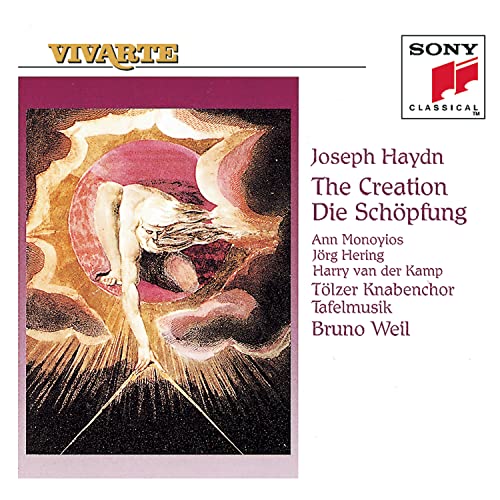
Haydn: The Creation / Bruno Weil, Tafelmusik
The Creation is potentially the most life-enhancing work in the choral repertoire but it hasn’t been particularly well served on record, partly because it is difficult to sustain the necessary fervour in studio conditions. Sony has found performers who are both able and willing: Tafelmusik’s playing is predictably immaculate, and the Tölz Boys Choir (with fresh-voiced tenors and basses) is radically more accomplished than many all-male groups.
The big, set-piece choruses are very exciting, though some may find Weil’s speeds shockingly fast, and the impact would have been greater had the balance favoured the choir just a touch more. He is not afraid of greater expression in slower numbers (such as the introduction to Part 3), though on occasion the result is, I fear, too pretty for its own good.
All three soloists have something to offer: Ann Monoyios boasts a light, clear soprano ideally suited to her decorative arias in Parts 1 and 2; Jörg Hering’s warm tenor brings fluent musicality throughout; and Harry van der Kamp’s distinctive low-vibrato bass is deployed with great intelligence.
The overall style of performance is relatively intimate, so it’s a shame that the engineers give us quite so much resonant church acoustic; but the well-articulated German text is never under threat. Anyone not allergic to period-instrument Haydn will find much to enjoy here.
-- Stephen Maddock, BBC Music Magazine
The big, set-piece choruses are very exciting, though some may find Weil’s speeds shockingly fast, and the impact would have been greater had the balance favoured the choir just a touch more. He is not afraid of greater expression in slower numbers (such as the introduction to Part 3), though on occasion the result is, I fear, too pretty for its own good.
All three soloists have something to offer: Ann Monoyios boasts a light, clear soprano ideally suited to her decorative arias in Parts 1 and 2; Jörg Hering’s warm tenor brings fluent musicality throughout; and Harry van der Kamp’s distinctive low-vibrato bass is deployed with great intelligence.
The overall style of performance is relatively intimate, so it’s a shame that the engineers give us quite so much resonant church acoustic; but the well-articulated German text is never under threat. Anyone not allergic to period-instrument Haydn will find much to enjoy here.
-- Stephen Maddock, BBC Music Magazine
The Creation is potentially the most life-enhancing work in the choral repertoire but it hasn’t been particularly well served on record, partly because it is difficult to sustain the necessary fervour in studio conditions. Sony has found performers who are both able and willing: Tafelmusik’s playing is predictably immaculate, and the Tölz Boys Choir (with fresh-voiced tenors and basses) is radically more accomplished than many all-male groups.
The big, set-piece choruses are very exciting, though some may find Weil’s speeds shockingly fast, and the impact would have been greater had the balance favoured the choir just a touch more. He is not afraid of greater expression in slower numbers (such as the introduction to Part 3), though on occasion the result is, I fear, too pretty for its own good.
All three soloists have something to offer: Ann Monoyios boasts a light, clear soprano ideally suited to her decorative arias in Parts 1 and 2; Jörg Hering’s warm tenor brings fluent musicality throughout; and Harry van der Kamp’s distinctive low-vibrato bass is deployed with great intelligence.
The overall style of performance is relatively intimate, so it’s a shame that the engineers give us quite so much resonant church acoustic; but the well-articulated German text is never under threat. Anyone not allergic to period-instrument Haydn will find much to enjoy here.
-- Stephen Maddock, BBC Music Magazine
The big, set-piece choruses are very exciting, though some may find Weil’s speeds shockingly fast, and the impact would have been greater had the balance favoured the choir just a touch more. He is not afraid of greater expression in slower numbers (such as the introduction to Part 3), though on occasion the result is, I fear, too pretty for its own good.
All three soloists have something to offer: Ann Monoyios boasts a light, clear soprano ideally suited to her decorative arias in Parts 1 and 2; Jörg Hering’s warm tenor brings fluent musicality throughout; and Harry van der Kamp’s distinctive low-vibrato bass is deployed with great intelligence.
The overall style of performance is relatively intimate, so it’s a shame that the engineers give us quite so much resonant church acoustic; but the well-articulated German text is never under threat. Anyone not allergic to period-instrument Haydn will find much to enjoy here.
-- Stephen Maddock, BBC Music Magazine
$29.99
Haydn: The Creation / Bruno Weil, Tafelmusik—
$29.99
Description
The Creation is potentially the most life-enhancing work in the choral repertoire but it hasn’t been particularly well served on record, partly because it is difficult to sustain the necessary fervour in studio conditions. Sony has found performers who are both able and willing: Tafelmusik’s playing is predictably immaculate, and the Tölz Boys Choir (with fresh-voiced tenors and basses) is radically more accomplished than many all-male groups.
The big, set-piece choruses are very exciting, though some may find Weil’s speeds shockingly fast, and the impact would have been greater had the balance favoured the choir just a touch more. He is not afraid of greater expression in slower numbers (such as the introduction to Part 3), though on occasion the result is, I fear, too pretty for its own good.
All three soloists have something to offer: Ann Monoyios boasts a light, clear soprano ideally suited to her decorative arias in Parts 1 and 2; Jörg Hering’s warm tenor brings fluent musicality throughout; and Harry van der Kamp’s distinctive low-vibrato bass is deployed with great intelligence.
The overall style of performance is relatively intimate, so it’s a shame that the engineers give us quite so much resonant church acoustic; but the well-articulated German text is never under threat. Anyone not allergic to period-instrument Haydn will find much to enjoy here.
-- Stephen Maddock, BBC Music Magazine
The big, set-piece choruses are very exciting, though some may find Weil’s speeds shockingly fast, and the impact would have been greater had the balance favoured the choir just a touch more. He is not afraid of greater expression in slower numbers (such as the introduction to Part 3), though on occasion the result is, I fear, too pretty for its own good.
All three soloists have something to offer: Ann Monoyios boasts a light, clear soprano ideally suited to her decorative arias in Parts 1 and 2; Jörg Hering’s warm tenor brings fluent musicality throughout; and Harry van der Kamp’s distinctive low-vibrato bass is deployed with great intelligence.
The overall style of performance is relatively intimate, so it’s a shame that the engineers give us quite so much resonant church acoustic; but the well-articulated German text is never under threat. Anyone not allergic to period-instrument Haydn will find much to enjoy here.
-- Stephen Maddock, BBC Music Magazine