🎉 Up to 70% Off Selected ItemsShop Sale

1 / 2
Haydn: The Creation / Pearlman, Boston Baroque
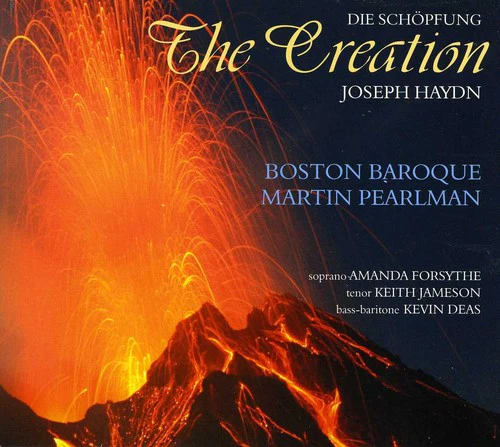
HAYDN The Creation • Martin Pearlman, cond; Amanda Forsythe (sop); Keith Jameson (ten); Kevin Deas (bs-bar); Boston Baroque • LINN CKD 401 (2 SACDs: 96:09 Text and Translation)
I was disappointed in Boston Baroque’s recording of Cherubini’s C-Minor Requiem (Fanfare 30:5), but this Creation has, from its orchestral introduction, an essential rightness—of mood, sonority, drama, and tempo. As with Dinu Lipatti’s Schumann Concerto (the first time I experienced such a feeling), this is the way it should go. Martin Pearlman realizes the work’s character of being very serious yet radiantly joyful. His period orchestra (strings 6/5/4/4/2) has a full measure of both power and tenderness, without having to strain for either. The chorus (7/6/6/6) is magnificent; the opening of “Stimmt an die Saiten” (disc 1, track 11) is so electric that one wants to stand up and cheer. Pearlman’s vocal soloists are each superb, in voice and in delivery; their clean, never ostentatious ornamentations fit this particular work (the florid style of René Jacobs’s soloists is better suited to the more Baroque The Seasons), and they match beautifully in ensemble. The fortepiano continuo is always just right. Above all, the lofty spirit of the whole is thrilling.
The icing on the cake is Linn’s recorded sound, from Mechanics Hall in Worcester, Massachusetts, during October 2011. It is so realistic, so natural, that one might be sitting beside Beethoven at the premiere. Balances are ideal; the chorus is clearly spread from sopranos on the left to basses on the right, and every contrapuntal line comes through. This is Boston Baroque’s first recording for Linn, and it helps explain the vast improvement over its Cherubini. No doubt it is aided by listening on a system of all-Linn electronics (with KEF 104/2 speakers and/or Sennheiser HD 600 head phones). I blamed the Worcester Hall’s acoustics for the Cherubini’s problematic sound; either I was mistaken or Linn’s team, led by Thomas C. Moore of Five/Four Productions, Ltd., has worked miracles. SACD smoothes the sound, lessening the orchestra’s impact, but clarifies the choral lines even more; one has the sensation of almost hearing each individual voice, which is just as it should be. Surround sound restores any lost impact and throws the listener into the performance, a wondrous if slightly unreal effect.
Must there be something wrong? Okay, the side-by-side German/English libretto is in small white print on black pages, making one squint.
I haven’t been counting, but I’ll bet there have been 100 recordings of The Creation. This one stands comfortably at the pinnacle; among its close competitors, Thomas Hengelbrock on Deutsche Harmonia Mundi is sweeter but less dramatic, Neville Marriner’s incomparable EMI soloists steal the show in a modern-instrument performance. In more than six decades of listening, I have found that almost every new recording of any masterpiece brings more doubts, because every performance has characteristics that others lack. About once a decade have I found the recording, one that has everything: Willem Mengelberg’s (Telefunken) Franck D Minor, Otto Klemperer’s 1954 mono “Eroica,” David Willcocks’s “Lord Nelson” Mass, Klaus Tennstedt’s (pirate) live BSO Schubert Ninth, George Szell’s Schumann Second, Riccardo Chailly’s Gurrelieder, James Levine’s Prokofiev Fifth. Martin Pearlman’s Creation joins that list.
FANFARE: James H. North
HAYDN The Creation • Martin Pearlman, cond; Amanda Forsythe (sop); Keith Jameson (ten); Kevin Deas (bs-bar); Boston Baroque • LINN CKD 401 (2 SACDs: 96:09 Text and Translation)
I was disappointed in Boston Baroque’s recording of Cherubini’s C-Minor Requiem (Fanfare 30:5), but this Creation has, from its orchestral introduction, an essential rightness—of mood, sonority, drama, and tempo. As with Dinu Lipatti’s Schumann Concerto (the first time I experienced such a feeling), this is the way it should go. Martin Pearlman realizes the work’s character of being very serious yet radiantly joyful. His period orchestra (strings 6/5/4/4/2) has a full measure of both power and tenderness, without having to strain for either. The chorus (7/6/6/6) is magnificent; the opening of “Stimmt an die Saiten” (disc 1, track 11) is so electric that one wants to stand up and cheer. Pearlman’s vocal soloists are each superb, in voice and in delivery; their clean, never ostentatious ornamentations fit this particular work (the florid style of René Jacobs’s soloists is better suited to the more Baroque The Seasons), and they match beautifully in ensemble. The fortepiano continuo is always just right. Above all, the lofty spirit of the whole is thrilling.
The icing on the cake is Linn’s recorded sound, from Mechanics Hall in Worcester, Massachusetts, during October 2011. It is so realistic, so natural, that one might be sitting beside Beethoven at the premiere. Balances are ideal; the chorus is clearly spread from sopranos on the left to basses on the right, and every contrapuntal line comes through. This is Boston Baroque’s first recording for Linn, and it helps explain the vast improvement over its Cherubini. No doubt it is aided by listening on a system of all-Linn electronics (with KEF 104/2 speakers and/or Sennheiser HD 600 head phones). I blamed the Worcester Hall’s acoustics for the Cherubini’s problematic sound; either I was mistaken or Linn’s team, led by Thomas C. Moore of Five/Four Productions, Ltd., has worked miracles. SACD smoothes the sound, lessening the orchestra’s impact, but clarifies the choral lines even more; one has the sensation of almost hearing each individual voice, which is just as it should be. Surround sound restores any lost impact and throws the listener into the performance, a wondrous if slightly unreal effect.
Must there be something wrong? Okay, the side-by-side German/English libretto is in small white print on black pages, making one squint.
I haven’t been counting, but I’ll bet there have been 100 recordings of The Creation. This one stands comfortably at the pinnacle; among its close competitors, Thomas Hengelbrock on Deutsche Harmonia Mundi is sweeter but less dramatic, Neville Marriner’s incomparable EMI soloists steal the show in a modern-instrument performance. In more than six decades of listening, I have found that almost every new recording of any masterpiece brings more doubts, because every performance has characteristics that others lack. About once a decade have I found the recording, one that has everything: Willem Mengelberg’s (Telefunken) Franck D Minor, Otto Klemperer’s 1954 mono “Eroica,” David Willcocks’s “Lord Nelson” Mass, Klaus Tennstedt’s (pirate) live BSO Schubert Ninth, George Szell’s Schumann Second, Riccardo Chailly’s Gurrelieder, James Levine’s Prokofiev Fifth. Martin Pearlman’s Creation joins that list.
FANFARE: James H. North
$21.99
Haydn: The Creation / Pearlman, Boston Baroque—
$21.99
Description
HAYDN The Creation • Martin Pearlman, cond; Amanda Forsythe (sop); Keith Jameson (ten); Kevin Deas (bs-bar); Boston Baroque • LINN CKD 401 (2 SACDs: 96:09 Text and Translation)
I was disappointed in Boston Baroque’s recording of Cherubini’s C-Minor Requiem (Fanfare 30:5), but this Creation has, from its orchestral introduction, an essential rightness—of mood, sonority, drama, and tempo. As with Dinu Lipatti’s Schumann Concerto (the first time I experienced such a feeling), this is the way it should go. Martin Pearlman realizes the work’s character of being very serious yet radiantly joyful. His period orchestra (strings 6/5/4/4/2) has a full measure of both power and tenderness, without having to strain for either. The chorus (7/6/6/6) is magnificent; the opening of “Stimmt an die Saiten” (disc 1, track 11) is so electric that one wants to stand up and cheer. Pearlman’s vocal soloists are each superb, in voice and in delivery; their clean, never ostentatious ornamentations fit this particular work (the florid style of René Jacobs’s soloists is better suited to the more Baroque The Seasons), and they match beautifully in ensemble. The fortepiano continuo is always just right. Above all, the lofty spirit of the whole is thrilling.
The icing on the cake is Linn’s recorded sound, from Mechanics Hall in Worcester, Massachusetts, during October 2011. It is so realistic, so natural, that one might be sitting beside Beethoven at the premiere. Balances are ideal; the chorus is clearly spread from sopranos on the left to basses on the right, and every contrapuntal line comes through. This is Boston Baroque’s first recording for Linn, and it helps explain the vast improvement over its Cherubini. No doubt it is aided by listening on a system of all-Linn electronics (with KEF 104/2 speakers and/or Sennheiser HD 600 head phones). I blamed the Worcester Hall’s acoustics for the Cherubini’s problematic sound; either I was mistaken or Linn’s team, led by Thomas C. Moore of Five/Four Productions, Ltd., has worked miracles. SACD smoothes the sound, lessening the orchestra’s impact, but clarifies the choral lines even more; one has the sensation of almost hearing each individual voice, which is just as it should be. Surround sound restores any lost impact and throws the listener into the performance, a wondrous if slightly unreal effect.
Must there be something wrong? Okay, the side-by-side German/English libretto is in small white print on black pages, making one squint.
I haven’t been counting, but I’ll bet there have been 100 recordings of The Creation. This one stands comfortably at the pinnacle; among its close competitors, Thomas Hengelbrock on Deutsche Harmonia Mundi is sweeter but less dramatic, Neville Marriner’s incomparable EMI soloists steal the show in a modern-instrument performance. In more than six decades of listening, I have found that almost every new recording of any masterpiece brings more doubts, because every performance has characteristics that others lack. About once a decade have I found the recording, one that has everything: Willem Mengelberg’s (Telefunken) Franck D Minor, Otto Klemperer’s 1954 mono “Eroica,” David Willcocks’s “Lord Nelson” Mass, Klaus Tennstedt’s (pirate) live BSO Schubert Ninth, George Szell’s Schumann Second, Riccardo Chailly’s Gurrelieder, James Levine’s Prokofiev Fifth. Martin Pearlman’s Creation joins that list.
FANFARE: James H. North