🎉 Up to 70% Off Selected ItemsShop Sale

1 / 2
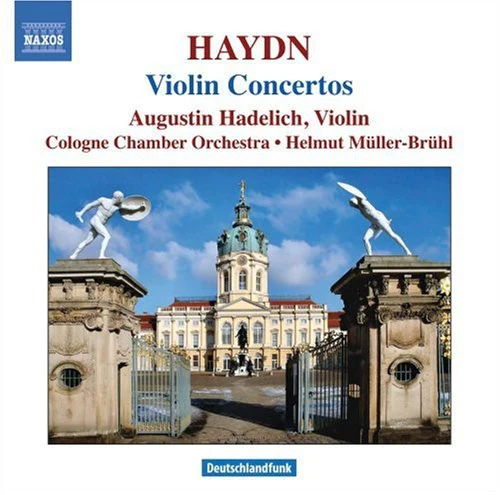
Haydn: Violin Concertos No 1, 3 & 4 / Hadelich, Müller-Brühl, Cologne CO
There are fine recordings of Haydn's Violin Concertos by the likes of Arthur Grumiaux and Christian Tetzlaff, among others. Here's another that belongs in their company, and at budget price, too. Augustin Hadelich is a Juilliard prize-winner who brings youthful élan to the three authenticated Haydn violin concertos, adding his own apt cadenzas to them as well. They're early works, dating from the 1760s during Haydn's service for the Esterházy court. Likely written for performance by the noted virtuoso Luigi Tomasini, they're lovely pieces with ample showiness in double-stopping episodes and spirited passagework.
The C major concerto is especially notable for its sprightly outer movements flanking an exquisite Adagio, sweetly sung by Hadelich, who plays it with an affecting inwardness and intensity of feeling. He's also well up to the brilliance of the A major concerto's solo part and the virtuoso touches that characterize the G major trio, with its use of dotted notes, double-stopping, and ornamentation. Here, as elsewhere in the program, Hadelich demonstrates a tonal sweetness in the high register that is instantly appealing. The only possible aspect of his performances that could engender dissent is the occasional use of a slow vibrato that put me in mind of a wobbly soprano.
Helmut Müller-Brühl and his modern-instrument Cologne Chamber Orchestra record frequently for Naxos, and this is one of their best Haydn outings, supporting the soloist with energy and style. The engineering also is well up to snuff, with admirable transparency in such episodes as the opening of the C major's Adagio movement, where the solo violin sings the melody over the strings' pizzicato accompaniment.
--Dan Davis, ClassicsToday.com
The C major concerto is especially notable for its sprightly outer movements flanking an exquisite Adagio, sweetly sung by Hadelich, who plays it with an affecting inwardness and intensity of feeling. He's also well up to the brilliance of the A major concerto's solo part and the virtuoso touches that characterize the G major trio, with its use of dotted notes, double-stopping, and ornamentation. Here, as elsewhere in the program, Hadelich demonstrates a tonal sweetness in the high register that is instantly appealing. The only possible aspect of his performances that could engender dissent is the occasional use of a slow vibrato that put me in mind of a wobbly soprano.
Helmut Müller-Brühl and his modern-instrument Cologne Chamber Orchestra record frequently for Naxos, and this is one of their best Haydn outings, supporting the soloist with energy and style. The engineering also is well up to snuff, with admirable transparency in such episodes as the opening of the C major's Adagio movement, where the solo violin sings the melody over the strings' pizzicato accompaniment.
--Dan Davis, ClassicsToday.com
There are fine recordings of Haydn's Violin Concertos by the likes of Arthur Grumiaux and Christian Tetzlaff, among others. Here's another that belongs in their company, and at budget price, too. Augustin Hadelich is a Juilliard prize-winner who brings youthful élan to the three authenticated Haydn violin concertos, adding his own apt cadenzas to them as well. They're early works, dating from the 1760s during Haydn's service for the Esterházy court. Likely written for performance by the noted virtuoso Luigi Tomasini, they're lovely pieces with ample showiness in double-stopping episodes and spirited passagework.
The C major concerto is especially notable for its sprightly outer movements flanking an exquisite Adagio, sweetly sung by Hadelich, who plays it with an affecting inwardness and intensity of feeling. He's also well up to the brilliance of the A major concerto's solo part and the virtuoso touches that characterize the G major trio, with its use of dotted notes, double-stopping, and ornamentation. Here, as elsewhere in the program, Hadelich demonstrates a tonal sweetness in the high register that is instantly appealing. The only possible aspect of his performances that could engender dissent is the occasional use of a slow vibrato that put me in mind of a wobbly soprano.
Helmut Müller-Brühl and his modern-instrument Cologne Chamber Orchestra record frequently for Naxos, and this is one of their best Haydn outings, supporting the soloist with energy and style. The engineering also is well up to snuff, with admirable transparency in such episodes as the opening of the C major's Adagio movement, where the solo violin sings the melody over the strings' pizzicato accompaniment.
--Dan Davis, ClassicsToday.com
The C major concerto is especially notable for its sprightly outer movements flanking an exquisite Adagio, sweetly sung by Hadelich, who plays it with an affecting inwardness and intensity of feeling. He's also well up to the brilliance of the A major concerto's solo part and the virtuoso touches that characterize the G major trio, with its use of dotted notes, double-stopping, and ornamentation. Here, as elsewhere in the program, Hadelich demonstrates a tonal sweetness in the high register that is instantly appealing. The only possible aspect of his performances that could engender dissent is the occasional use of a slow vibrato that put me in mind of a wobbly soprano.
Helmut Müller-Brühl and his modern-instrument Cologne Chamber Orchestra record frequently for Naxos, and this is one of their best Haydn outings, supporting the soloist with energy and style. The engineering also is well up to snuff, with admirable transparency in such episodes as the opening of the C major's Adagio movement, where the solo violin sings the melody over the strings' pizzicato accompaniment.
--Dan Davis, ClassicsToday.com
$19.99
Haydn: Violin Concertos No 1, 3 & 4 / Hadelich, Müller-Brühl, Cologne CO—
$19.99
Description
There are fine recordings of Haydn's Violin Concertos by the likes of Arthur Grumiaux and Christian Tetzlaff, among others. Here's another that belongs in their company, and at budget price, too. Augustin Hadelich is a Juilliard prize-winner who brings youthful élan to the three authenticated Haydn violin concertos, adding his own apt cadenzas to them as well. They're early works, dating from the 1760s during Haydn's service for the Esterházy court. Likely written for performance by the noted virtuoso Luigi Tomasini, they're lovely pieces with ample showiness in double-stopping episodes and spirited passagework.
The C major concerto is especially notable for its sprightly outer movements flanking an exquisite Adagio, sweetly sung by Hadelich, who plays it with an affecting inwardness and intensity of feeling. He's also well up to the brilliance of the A major concerto's solo part and the virtuoso touches that characterize the G major trio, with its use of dotted notes, double-stopping, and ornamentation. Here, as elsewhere in the program, Hadelich demonstrates a tonal sweetness in the high register that is instantly appealing. The only possible aspect of his performances that could engender dissent is the occasional use of a slow vibrato that put me in mind of a wobbly soprano.
Helmut Müller-Brühl and his modern-instrument Cologne Chamber Orchestra record frequently for Naxos, and this is one of their best Haydn outings, supporting the soloist with energy and style. The engineering also is well up to snuff, with admirable transparency in such episodes as the opening of the C major's Adagio movement, where the solo violin sings the melody over the strings' pizzicato accompaniment.
--Dan Davis, ClassicsToday.com
The C major concerto is especially notable for its sprightly outer movements flanking an exquisite Adagio, sweetly sung by Hadelich, who plays it with an affecting inwardness and intensity of feeling. He's also well up to the brilliance of the A major concerto's solo part and the virtuoso touches that characterize the G major trio, with its use of dotted notes, double-stopping, and ornamentation. Here, as elsewhere in the program, Hadelich demonstrates a tonal sweetness in the high register that is instantly appealing. The only possible aspect of his performances that could engender dissent is the occasional use of a slow vibrato that put me in mind of a wobbly soprano.
Helmut Müller-Brühl and his modern-instrument Cologne Chamber Orchestra record frequently for Naxos, and this is one of their best Haydn outings, supporting the soloist with energy and style. The engineering also is well up to snuff, with admirable transparency in such episodes as the opening of the C major's Adagio movement, where the solo violin sings the melody over the strings' pizzicato accompaniment.
--Dan Davis, ClassicsToday.com