🎉 Up to 70% Off Selected ItemsShop Sale

1 / 2
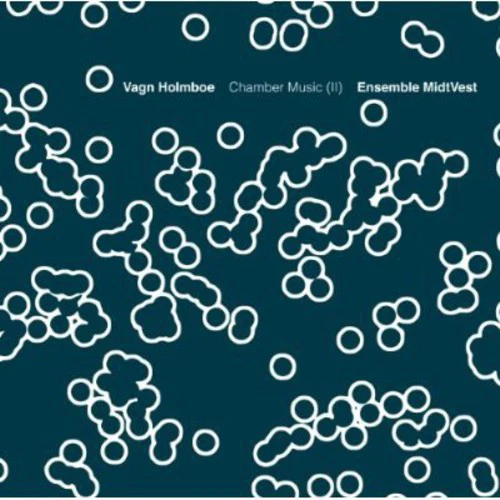
Holmboe: Chamber Music (II) / Ensemble MidtVest
HOLMBOE Eco. Aspects. Sonata for Cello Solo. Quartetto Medico. Sextet • Ens MidtVest • DACAPO 8.226074 (70:28)
The music of Vagn Holmboe (1909-1996), in addition to these chamber works (of which this is Vol. 2), extends to more than 370 pieces including 13 symphonies. His music is generally described as neoclassical but operating within the parameters of an organic form of development. Holmboe described this as a process of gradual but evident change in the music “interrelated with many things that slowly seep in through a life lived with nature.” Thus his music tends to be quite serious, despite occasional moments of jocularity, but never off-putting. His earlier style was based on the music of his mentor, Carl Nielsen, then developed through years spent in the Balkans studying the folk music there.
These five works come from the latter stages of his career, the earliest of them being the Quartetto Medico of 1956. This piece was written for friends of his who were amateur musicians and professional doctors, which explains its lack of difficulty as well as the humorous titles of the movements (such as Andante medicamento, Allegro quasi febrile and the two “Intermedicos”). The wind quintet Aspects dates from 1957, but the other works are all later: the Solo Cello Sonata from 1968-69, the Sextet from 1973, and Eco from 1991.
The liner notes claim that there is a “Zen-like balance between intellect and nature” in his music, and I would concur. Oddly enough, however, I found that his slow movements were much more emotionally affecting to me than his fast ones. Either the Ensemble MidtVest doesn’t play these with enough good-humored brio, or it just isn’t in there to be brought out, but in either case I find his Allegro s to be peppy but lacking the boisterous good humor of Nielsen’s.
Of course, in the case of the solo cello sonata—played with tremendous feeling and elegance by Jonathan Slaatto—this is serious music indeed, thus the fast passages in the first movement are more in the nature of exposition and spinning out of the theme rather than an attempt at humor. Indeed, I found this to be the most interesting, and certainly the deepest, work on this disc, alternating its moods quickly but always logically. The primary key of the sonata is G Minor, but true to his proclivity for using Balkan folk music, Holmboe works primarily in modes and not in Western keys. Either Slaatto has a somewhat light and airy tone or the microphone placement makes it sound thus, but in either case I felt that the overly reverberant soundspace did not flatter the instrument in this work. That being said, there is little or nothing one can quibble of in either the work’s construction (I wonder if Holmboe was ever more mercurial in his change of moods than he is here) or its emotional impact.
Despite the overall lightness of tone (and texture) in the Quartetto Medico, this music is not really very jocular either. Rather, it floats like a cloud within the universe of Holmboe’s mind, to some extent like Debussy’s early chamber music. This is particularly true of the second “Intermedico,” marked Poco largamente , which is played by the solo pianist in a dreamy style and manner, while the finale ( Allegro con frangula ) starts with piano but is soon joined by the winds. The tempo is more of an Allegretto , not terribly fast, though the music soon doubles in speed as it swirls to a conclusion.
Holmboe’s Sextet begins with the solo cello, which is a bit deceiving, as well as in a slowish tempo that soon picks up. Again, the music is slightly jocular but not really humorous, yet as in the case of all his music it makes a good impression. The Andante cantabile second movement seems to suspend time and place as the music simply hangs above one’s ears while listening, while the final Allegro molto coalesces musical moods into a typically quirky finale.
If this disc is your introduction to Holmboe’s musical world, as it was for me, I think you’ll be intrigued and charmed by it. If you haven’t gotten around to Holmboe’s chamber works but like his other music, this one is a must.
FANFARE: Lynn René Bayley
HOLMBOE Eco. Aspects. Sonata for Cello Solo. Quartetto Medico. Sextet • Ens MidtVest • DACAPO 8.226074 (70:28)
The music of Vagn Holmboe (1909-1996), in addition to these chamber works (of which this is Vol. 2), extends to more than 370 pieces including 13 symphonies. His music is generally described as neoclassical but operating within the parameters of an organic form of development. Holmboe described this as a process of gradual but evident change in the music “interrelated with many things that slowly seep in through a life lived with nature.” Thus his music tends to be quite serious, despite occasional moments of jocularity, but never off-putting. His earlier style was based on the music of his mentor, Carl Nielsen, then developed through years spent in the Balkans studying the folk music there.
These five works come from the latter stages of his career, the earliest of them being the Quartetto Medico of 1956. This piece was written for friends of his who were amateur musicians and professional doctors, which explains its lack of difficulty as well as the humorous titles of the movements (such as Andante medicamento, Allegro quasi febrile and the two “Intermedicos”). The wind quintet Aspects dates from 1957, but the other works are all later: the Solo Cello Sonata from 1968-69, the Sextet from 1973, and Eco from 1991.
The liner notes claim that there is a “Zen-like balance between intellect and nature” in his music, and I would concur. Oddly enough, however, I found that his slow movements were much more emotionally affecting to me than his fast ones. Either the Ensemble MidtVest doesn’t play these with enough good-humored brio, or it just isn’t in there to be brought out, but in either case I find his Allegro s to be peppy but lacking the boisterous good humor of Nielsen’s.
Of course, in the case of the solo cello sonata—played with tremendous feeling and elegance by Jonathan Slaatto—this is serious music indeed, thus the fast passages in the first movement are more in the nature of exposition and spinning out of the theme rather than an attempt at humor. Indeed, I found this to be the most interesting, and certainly the deepest, work on this disc, alternating its moods quickly but always logically. The primary key of the sonata is G Minor, but true to his proclivity for using Balkan folk music, Holmboe works primarily in modes and not in Western keys. Either Slaatto has a somewhat light and airy tone or the microphone placement makes it sound thus, but in either case I felt that the overly reverberant soundspace did not flatter the instrument in this work. That being said, there is little or nothing one can quibble of in either the work’s construction (I wonder if Holmboe was ever more mercurial in his change of moods than he is here) or its emotional impact.
Despite the overall lightness of tone (and texture) in the Quartetto Medico, this music is not really very jocular either. Rather, it floats like a cloud within the universe of Holmboe’s mind, to some extent like Debussy’s early chamber music. This is particularly true of the second “Intermedico,” marked Poco largamente , which is played by the solo pianist in a dreamy style and manner, while the finale ( Allegro con frangula ) starts with piano but is soon joined by the winds. The tempo is more of an Allegretto , not terribly fast, though the music soon doubles in speed as it swirls to a conclusion.
Holmboe’s Sextet begins with the solo cello, which is a bit deceiving, as well as in a slowish tempo that soon picks up. Again, the music is slightly jocular but not really humorous, yet as in the case of all his music it makes a good impression. The Andante cantabile second movement seems to suspend time and place as the music simply hangs above one’s ears while listening, while the final Allegro molto coalesces musical moods into a typically quirky finale.
If this disc is your introduction to Holmboe’s musical world, as it was for me, I think you’ll be intrigued and charmed by it. If you haven’t gotten around to Holmboe’s chamber works but like his other music, this one is a must.
FANFARE: Lynn René Bayley
$13.99
Holmboe: Chamber Music (II) / Ensemble MidtVest—
$13.99
Description
HOLMBOE Eco. Aspects. Sonata for Cello Solo. Quartetto Medico. Sextet • Ens MidtVest • DACAPO 8.226074 (70:28)
The music of Vagn Holmboe (1909-1996), in addition to these chamber works (of which this is Vol. 2), extends to more than 370 pieces including 13 symphonies. His music is generally described as neoclassical but operating within the parameters of an organic form of development. Holmboe described this as a process of gradual but evident change in the music “interrelated with many things that slowly seep in through a life lived with nature.” Thus his music tends to be quite serious, despite occasional moments of jocularity, but never off-putting. His earlier style was based on the music of his mentor, Carl Nielsen, then developed through years spent in the Balkans studying the folk music there.
These five works come from the latter stages of his career, the earliest of them being the Quartetto Medico of 1956. This piece was written for friends of his who were amateur musicians and professional doctors, which explains its lack of difficulty as well as the humorous titles of the movements (such as Andante medicamento, Allegro quasi febrile and the two “Intermedicos”). The wind quintet Aspects dates from 1957, but the other works are all later: the Solo Cello Sonata from 1968-69, the Sextet from 1973, and Eco from 1991.
The liner notes claim that there is a “Zen-like balance between intellect and nature” in his music, and I would concur. Oddly enough, however, I found that his slow movements were much more emotionally affecting to me than his fast ones. Either the Ensemble MidtVest doesn’t play these with enough good-humored brio, or it just isn’t in there to be brought out, but in either case I find his Allegro s to be peppy but lacking the boisterous good humor of Nielsen’s.
Of course, in the case of the solo cello sonata—played with tremendous feeling and elegance by Jonathan Slaatto—this is serious music indeed, thus the fast passages in the first movement are more in the nature of exposition and spinning out of the theme rather than an attempt at humor. Indeed, I found this to be the most interesting, and certainly the deepest, work on this disc, alternating its moods quickly but always logically. The primary key of the sonata is G Minor, but true to his proclivity for using Balkan folk music, Holmboe works primarily in modes and not in Western keys. Either Slaatto has a somewhat light and airy tone or the microphone placement makes it sound thus, but in either case I felt that the overly reverberant soundspace did not flatter the instrument in this work. That being said, there is little or nothing one can quibble of in either the work’s construction (I wonder if Holmboe was ever more mercurial in his change of moods than he is here) or its emotional impact.
Despite the overall lightness of tone (and texture) in the Quartetto Medico, this music is not really very jocular either. Rather, it floats like a cloud within the universe of Holmboe’s mind, to some extent like Debussy’s early chamber music. This is particularly true of the second “Intermedico,” marked Poco largamente , which is played by the solo pianist in a dreamy style and manner, while the finale ( Allegro con frangula ) starts with piano but is soon joined by the winds. The tempo is more of an Allegretto , not terribly fast, though the music soon doubles in speed as it swirls to a conclusion.
Holmboe’s Sextet begins with the solo cello, which is a bit deceiving, as well as in a slowish tempo that soon picks up. Again, the music is slightly jocular but not really humorous, yet as in the case of all his music it makes a good impression. The Andante cantabile second movement seems to suspend time and place as the music simply hangs above one’s ears while listening, while the final Allegro molto coalesces musical moods into a typically quirky finale.
If this disc is your introduction to Holmboe’s musical world, as it was for me, I think you’ll be intrigued and charmed by it. If you haven’t gotten around to Holmboe’s chamber works but like his other music, this one is a must.
FANFARE: Lynn René Bayley