🎉 Up to 70% Off Selected ItemsShop Sale

1 / 2
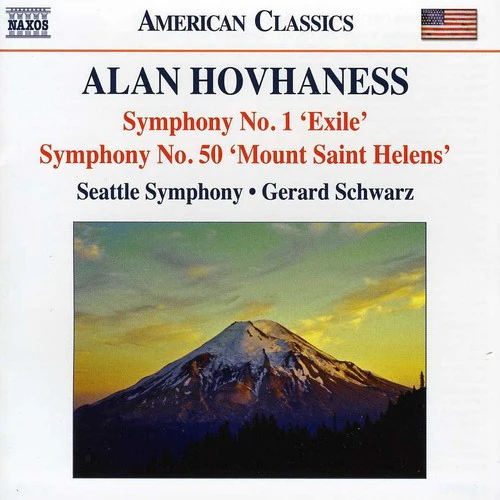
Hovhaness: Symphonies No 1 & 50 / Schwarz, Seattle
A wonderful introduction to this amazing composer’s music.
With over 500 works to his name Alan Hovhaness may well be the most prolific American composer as well as one of the most fascinating. His music cannot be pigeonholed since he drew influences from so many varied sources. That said, above all, he insisted on melody, having roundly rejected the path of ‘modernism’ that many others followed in the 20 th century. Among those influences was his Armenian heritage inherited through his father. These are very much to the fore in his First Symphony subtitled Exile which references the plight of Armenians who were forced to flee in their millions in the face of an onslaught by Ottoman Turks during the First World War. Lovers of big tunes will revel in the lush sonorities on display. They’re in evidence right from the first notes. These are given to the clarinet which introduces a plaintive tune taken up by other woodwind with the orchestra continuing the Middle Eastern-sounding scales and the music becoming disturbed and agitated. The second, short movement marked Grazioso is further demonstration of the melodies for which Hovhaness is rightly renowned. Woodwind sings out against a background of pizzicato from strings and harp. This allows for an interlude of calm before the third and final movement brings us back to agitation. Driving strings and winds recall the opening theme in chorale form which then becomes the main focus of the orchestra. The powerfully expressed message is that a whole people cannot be suppressed. Its spirit will reassert itself and prevail against all the odds.
One of the other influences Hovhaness exploits is his love and reverence of the music of the Far East, particularly Japan and Korea, having studied both. The second work, Fantasy on Japanese Woodprints, has a title that allows him to explore his own impressions of the music from this part of the world. It involves extremely creative ways of approximating the sounds of Japan through clever and inventive use of the instruments of a Western orchestra. The marimba is the instrument of choice to carry the main theme against a background of orchestral experimentation creating a convincing and effective ‘Japanese’ sound for Western ears.
Yet another influence which has shown itself in many of Hovhaness’s compositions are mountains. He once wrote “Mountains are symbols, like pyramids, of man’s attempt to know God. Mountains are symbolic meeting places between the mundane and spiritual worlds”. It was a natural thing therefore to have been moved to write a symphony that expresses those ideas following the huge explosion of Mount Saint Helens in Washington State in 1980. The first movement sets the scene and pays reverence to the majesty and mystery of the mountain through use of gorgeous harmonically and melodically rich tunes. These emphasise the mountain’s imperious eminence over its surroundings and its naturally serene nature prior to its being geographically changed by the explosion. The second movement is also calm since it describes the fabulous Spirit Lake in whose waters the mountain was often magically mirrored. Once again Hovhaness uses Japanese-sounding melodies to create the air of mystery and natural beauty of a place which was obliterated by the explosion. The finale opens with an almost hymn-like theme from the strings with tubular bells in the background. A sole flute precedes a representation of the cataclysmic events that rent the mountain asunder, and which continues for much of the movement’s 14 minutes. This musical depiction of the destructive power of nature is extremely potent with plenty of work for bass drums and gong as wave after wave of explosions tear the very fabric of the ground on which the mountain stood. Finally the opening hymn returns to re-establish a measure of calm. Hovhaness doesn’t end the symphony there. Instead he creates a coda to signify the “youthful power and grandeur of the Cascades Mountains” that, as he said, renews the vitality of “our peaceful planet, the living earth, the life-giving force building the majestic Cascades Mountains (,) rising, piercing the clouds of heaven”. This symphony represents an extremely satisfying journey that shows the composer’s unique view of how to use music to describe nature in all its creative as well as destructive power. The disc as a whole is a wonderful introduction to this amazing composer’s music that I for one am only beginning to discover. More of Hovhaness’s works are being recorded all the time. With 67 symphonies alone there’s plenty left to record and to discover and that’s an exciting prospect. Gerard Schwarz is a great advocate of American music and he and his orchestra help do the kind of justice Hovhaness deserves. Ron Johnson does a sterling job on the marimba in the disc’s second work. These recordings were originally made by Delos and they offer an extremely rewarding experience for a whole new audience to discover and revel in.
-- Steve Arloff , MusicWeb International
With over 500 works to his name Alan Hovhaness may well be the most prolific American composer as well as one of the most fascinating. His music cannot be pigeonholed since he drew influences from so many varied sources. That said, above all, he insisted on melody, having roundly rejected the path of ‘modernism’ that many others followed in the 20 th century. Among those influences was his Armenian heritage inherited through his father. These are very much to the fore in his First Symphony subtitled Exile which references the plight of Armenians who were forced to flee in their millions in the face of an onslaught by Ottoman Turks during the First World War. Lovers of big tunes will revel in the lush sonorities on display. They’re in evidence right from the first notes. These are given to the clarinet which introduces a plaintive tune taken up by other woodwind with the orchestra continuing the Middle Eastern-sounding scales and the music becoming disturbed and agitated. The second, short movement marked Grazioso is further demonstration of the melodies for which Hovhaness is rightly renowned. Woodwind sings out against a background of pizzicato from strings and harp. This allows for an interlude of calm before the third and final movement brings us back to agitation. Driving strings and winds recall the opening theme in chorale form which then becomes the main focus of the orchestra. The powerfully expressed message is that a whole people cannot be suppressed. Its spirit will reassert itself and prevail against all the odds.
One of the other influences Hovhaness exploits is his love and reverence of the music of the Far East, particularly Japan and Korea, having studied both. The second work, Fantasy on Japanese Woodprints, has a title that allows him to explore his own impressions of the music from this part of the world. It involves extremely creative ways of approximating the sounds of Japan through clever and inventive use of the instruments of a Western orchestra. The marimba is the instrument of choice to carry the main theme against a background of orchestral experimentation creating a convincing and effective ‘Japanese’ sound for Western ears.
Yet another influence which has shown itself in many of Hovhaness’s compositions are mountains. He once wrote “Mountains are symbols, like pyramids, of man’s attempt to know God. Mountains are symbolic meeting places between the mundane and spiritual worlds”. It was a natural thing therefore to have been moved to write a symphony that expresses those ideas following the huge explosion of Mount Saint Helens in Washington State in 1980. The first movement sets the scene and pays reverence to the majesty and mystery of the mountain through use of gorgeous harmonically and melodically rich tunes. These emphasise the mountain’s imperious eminence over its surroundings and its naturally serene nature prior to its being geographically changed by the explosion. The second movement is also calm since it describes the fabulous Spirit Lake in whose waters the mountain was often magically mirrored. Once again Hovhaness uses Japanese-sounding melodies to create the air of mystery and natural beauty of a place which was obliterated by the explosion. The finale opens with an almost hymn-like theme from the strings with tubular bells in the background. A sole flute precedes a representation of the cataclysmic events that rent the mountain asunder, and which continues for much of the movement’s 14 minutes. This musical depiction of the destructive power of nature is extremely potent with plenty of work for bass drums and gong as wave after wave of explosions tear the very fabric of the ground on which the mountain stood. Finally the opening hymn returns to re-establish a measure of calm. Hovhaness doesn’t end the symphony there. Instead he creates a coda to signify the “youthful power and grandeur of the Cascades Mountains” that, as he said, renews the vitality of “our peaceful planet, the living earth, the life-giving force building the majestic Cascades Mountains (,) rising, piercing the clouds of heaven”. This symphony represents an extremely satisfying journey that shows the composer’s unique view of how to use music to describe nature in all its creative as well as destructive power. The disc as a whole is a wonderful introduction to this amazing composer’s music that I for one am only beginning to discover. More of Hovhaness’s works are being recorded all the time. With 67 symphonies alone there’s plenty left to record and to discover and that’s an exciting prospect. Gerard Schwarz is a great advocate of American music and he and his orchestra help do the kind of justice Hovhaness deserves. Ron Johnson does a sterling job on the marimba in the disc’s second work. These recordings were originally made by Delos and they offer an extremely rewarding experience for a whole new audience to discover and revel in.
-- Steve Arloff , MusicWeb International
A wonderful introduction to this amazing composer’s music.
With over 500 works to his name Alan Hovhaness may well be the most prolific American composer as well as one of the most fascinating. His music cannot be pigeonholed since he drew influences from so many varied sources. That said, above all, he insisted on melody, having roundly rejected the path of ‘modernism’ that many others followed in the 20 th century. Among those influences was his Armenian heritage inherited through his father. These are very much to the fore in his First Symphony subtitled Exile which references the plight of Armenians who were forced to flee in their millions in the face of an onslaught by Ottoman Turks during the First World War. Lovers of big tunes will revel in the lush sonorities on display. They’re in evidence right from the first notes. These are given to the clarinet which introduces a plaintive tune taken up by other woodwind with the orchestra continuing the Middle Eastern-sounding scales and the music becoming disturbed and agitated. The second, short movement marked Grazioso is further demonstration of the melodies for which Hovhaness is rightly renowned. Woodwind sings out against a background of pizzicato from strings and harp. This allows for an interlude of calm before the third and final movement brings us back to agitation. Driving strings and winds recall the opening theme in chorale form which then becomes the main focus of the orchestra. The powerfully expressed message is that a whole people cannot be suppressed. Its spirit will reassert itself and prevail against all the odds.
One of the other influences Hovhaness exploits is his love and reverence of the music of the Far East, particularly Japan and Korea, having studied both. The second work, Fantasy on Japanese Woodprints, has a title that allows him to explore his own impressions of the music from this part of the world. It involves extremely creative ways of approximating the sounds of Japan through clever and inventive use of the instruments of a Western orchestra. The marimba is the instrument of choice to carry the main theme against a background of orchestral experimentation creating a convincing and effective ‘Japanese’ sound for Western ears.
Yet another influence which has shown itself in many of Hovhaness’s compositions are mountains. He once wrote “Mountains are symbols, like pyramids, of man’s attempt to know God. Mountains are symbolic meeting places between the mundane and spiritual worlds”. It was a natural thing therefore to have been moved to write a symphony that expresses those ideas following the huge explosion of Mount Saint Helens in Washington State in 1980. The first movement sets the scene and pays reverence to the majesty and mystery of the mountain through use of gorgeous harmonically and melodically rich tunes. These emphasise the mountain’s imperious eminence over its surroundings and its naturally serene nature prior to its being geographically changed by the explosion. The second movement is also calm since it describes the fabulous Spirit Lake in whose waters the mountain was often magically mirrored. Once again Hovhaness uses Japanese-sounding melodies to create the air of mystery and natural beauty of a place which was obliterated by the explosion. The finale opens with an almost hymn-like theme from the strings with tubular bells in the background. A sole flute precedes a representation of the cataclysmic events that rent the mountain asunder, and which continues for much of the movement’s 14 minutes. This musical depiction of the destructive power of nature is extremely potent with plenty of work for bass drums and gong as wave after wave of explosions tear the very fabric of the ground on which the mountain stood. Finally the opening hymn returns to re-establish a measure of calm. Hovhaness doesn’t end the symphony there. Instead he creates a coda to signify the “youthful power and grandeur of the Cascades Mountains” that, as he said, renews the vitality of “our peaceful planet, the living earth, the life-giving force building the majestic Cascades Mountains (,) rising, piercing the clouds of heaven”. This symphony represents an extremely satisfying journey that shows the composer’s unique view of how to use music to describe nature in all its creative as well as destructive power. The disc as a whole is a wonderful introduction to this amazing composer’s music that I for one am only beginning to discover. More of Hovhaness’s works are being recorded all the time. With 67 symphonies alone there’s plenty left to record and to discover and that’s an exciting prospect. Gerard Schwarz is a great advocate of American music and he and his orchestra help do the kind of justice Hovhaness deserves. Ron Johnson does a sterling job on the marimba in the disc’s second work. These recordings were originally made by Delos and they offer an extremely rewarding experience for a whole new audience to discover and revel in.
-- Steve Arloff , MusicWeb International
With over 500 works to his name Alan Hovhaness may well be the most prolific American composer as well as one of the most fascinating. His music cannot be pigeonholed since he drew influences from so many varied sources. That said, above all, he insisted on melody, having roundly rejected the path of ‘modernism’ that many others followed in the 20 th century. Among those influences was his Armenian heritage inherited through his father. These are very much to the fore in his First Symphony subtitled Exile which references the plight of Armenians who were forced to flee in their millions in the face of an onslaught by Ottoman Turks during the First World War. Lovers of big tunes will revel in the lush sonorities on display. They’re in evidence right from the first notes. These are given to the clarinet which introduces a plaintive tune taken up by other woodwind with the orchestra continuing the Middle Eastern-sounding scales and the music becoming disturbed and agitated. The second, short movement marked Grazioso is further demonstration of the melodies for which Hovhaness is rightly renowned. Woodwind sings out against a background of pizzicato from strings and harp. This allows for an interlude of calm before the third and final movement brings us back to agitation. Driving strings and winds recall the opening theme in chorale form which then becomes the main focus of the orchestra. The powerfully expressed message is that a whole people cannot be suppressed. Its spirit will reassert itself and prevail against all the odds.
One of the other influences Hovhaness exploits is his love and reverence of the music of the Far East, particularly Japan and Korea, having studied both. The second work, Fantasy on Japanese Woodprints, has a title that allows him to explore his own impressions of the music from this part of the world. It involves extremely creative ways of approximating the sounds of Japan through clever and inventive use of the instruments of a Western orchestra. The marimba is the instrument of choice to carry the main theme against a background of orchestral experimentation creating a convincing and effective ‘Japanese’ sound for Western ears.
Yet another influence which has shown itself in many of Hovhaness’s compositions are mountains. He once wrote “Mountains are symbols, like pyramids, of man’s attempt to know God. Mountains are symbolic meeting places between the mundane and spiritual worlds”. It was a natural thing therefore to have been moved to write a symphony that expresses those ideas following the huge explosion of Mount Saint Helens in Washington State in 1980. The first movement sets the scene and pays reverence to the majesty and mystery of the mountain through use of gorgeous harmonically and melodically rich tunes. These emphasise the mountain’s imperious eminence over its surroundings and its naturally serene nature prior to its being geographically changed by the explosion. The second movement is also calm since it describes the fabulous Spirit Lake in whose waters the mountain was often magically mirrored. Once again Hovhaness uses Japanese-sounding melodies to create the air of mystery and natural beauty of a place which was obliterated by the explosion. The finale opens with an almost hymn-like theme from the strings with tubular bells in the background. A sole flute precedes a representation of the cataclysmic events that rent the mountain asunder, and which continues for much of the movement’s 14 minutes. This musical depiction of the destructive power of nature is extremely potent with plenty of work for bass drums and gong as wave after wave of explosions tear the very fabric of the ground on which the mountain stood. Finally the opening hymn returns to re-establish a measure of calm. Hovhaness doesn’t end the symphony there. Instead he creates a coda to signify the “youthful power and grandeur of the Cascades Mountains” that, as he said, renews the vitality of “our peaceful planet, the living earth, the life-giving force building the majestic Cascades Mountains (,) rising, piercing the clouds of heaven”. This symphony represents an extremely satisfying journey that shows the composer’s unique view of how to use music to describe nature in all its creative as well as destructive power. The disc as a whole is a wonderful introduction to this amazing composer’s music that I for one am only beginning to discover. More of Hovhaness’s works are being recorded all the time. With 67 symphonies alone there’s plenty left to record and to discover and that’s an exciting prospect. Gerard Schwarz is a great advocate of American music and he and his orchestra help do the kind of justice Hovhaness deserves. Ron Johnson does a sterling job on the marimba in the disc’s second work. These recordings were originally made by Delos and they offer an extremely rewarding experience for a whole new audience to discover and revel in.
-- Steve Arloff , MusicWeb International
$7.00
Original: $19.99
-65%Hovhaness: Symphonies No 1 & 50 / Schwarz, Seattle—
$19.99
$7.00Description
A wonderful introduction to this amazing composer’s music.
With over 500 works to his name Alan Hovhaness may well be the most prolific American composer as well as one of the most fascinating. His music cannot be pigeonholed since he drew influences from so many varied sources. That said, above all, he insisted on melody, having roundly rejected the path of ‘modernism’ that many others followed in the 20 th century. Among those influences was his Armenian heritage inherited through his father. These are very much to the fore in his First Symphony subtitled Exile which references the plight of Armenians who were forced to flee in their millions in the face of an onslaught by Ottoman Turks during the First World War. Lovers of big tunes will revel in the lush sonorities on display. They’re in evidence right from the first notes. These are given to the clarinet which introduces a plaintive tune taken up by other woodwind with the orchestra continuing the Middle Eastern-sounding scales and the music becoming disturbed and agitated. The second, short movement marked Grazioso is further demonstration of the melodies for which Hovhaness is rightly renowned. Woodwind sings out against a background of pizzicato from strings and harp. This allows for an interlude of calm before the third and final movement brings us back to agitation. Driving strings and winds recall the opening theme in chorale form which then becomes the main focus of the orchestra. The powerfully expressed message is that a whole people cannot be suppressed. Its spirit will reassert itself and prevail against all the odds.
One of the other influences Hovhaness exploits is his love and reverence of the music of the Far East, particularly Japan and Korea, having studied both. The second work, Fantasy on Japanese Woodprints, has a title that allows him to explore his own impressions of the music from this part of the world. It involves extremely creative ways of approximating the sounds of Japan through clever and inventive use of the instruments of a Western orchestra. The marimba is the instrument of choice to carry the main theme against a background of orchestral experimentation creating a convincing and effective ‘Japanese’ sound for Western ears.
Yet another influence which has shown itself in many of Hovhaness’s compositions are mountains. He once wrote “Mountains are symbols, like pyramids, of man’s attempt to know God. Mountains are symbolic meeting places between the mundane and spiritual worlds”. It was a natural thing therefore to have been moved to write a symphony that expresses those ideas following the huge explosion of Mount Saint Helens in Washington State in 1980. The first movement sets the scene and pays reverence to the majesty and mystery of the mountain through use of gorgeous harmonically and melodically rich tunes. These emphasise the mountain’s imperious eminence over its surroundings and its naturally serene nature prior to its being geographically changed by the explosion. The second movement is also calm since it describes the fabulous Spirit Lake in whose waters the mountain was often magically mirrored. Once again Hovhaness uses Japanese-sounding melodies to create the air of mystery and natural beauty of a place which was obliterated by the explosion. The finale opens with an almost hymn-like theme from the strings with tubular bells in the background. A sole flute precedes a representation of the cataclysmic events that rent the mountain asunder, and which continues for much of the movement’s 14 minutes. This musical depiction of the destructive power of nature is extremely potent with plenty of work for bass drums and gong as wave after wave of explosions tear the very fabric of the ground on which the mountain stood. Finally the opening hymn returns to re-establish a measure of calm. Hovhaness doesn’t end the symphony there. Instead he creates a coda to signify the “youthful power and grandeur of the Cascades Mountains” that, as he said, renews the vitality of “our peaceful planet, the living earth, the life-giving force building the majestic Cascades Mountains (,) rising, piercing the clouds of heaven”. This symphony represents an extremely satisfying journey that shows the composer’s unique view of how to use music to describe nature in all its creative as well as destructive power. The disc as a whole is a wonderful introduction to this amazing composer’s music that I for one am only beginning to discover. More of Hovhaness’s works are being recorded all the time. With 67 symphonies alone there’s plenty left to record and to discover and that’s an exciting prospect. Gerard Schwarz is a great advocate of American music and he and his orchestra help do the kind of justice Hovhaness deserves. Ron Johnson does a sterling job on the marimba in the disc’s second work. These recordings were originally made by Delos and they offer an extremely rewarding experience for a whole new audience to discover and revel in.
-- Steve Arloff , MusicWeb International
With over 500 works to his name Alan Hovhaness may well be the most prolific American composer as well as one of the most fascinating. His music cannot be pigeonholed since he drew influences from so many varied sources. That said, above all, he insisted on melody, having roundly rejected the path of ‘modernism’ that many others followed in the 20 th century. Among those influences was his Armenian heritage inherited through his father. These are very much to the fore in his First Symphony subtitled Exile which references the plight of Armenians who were forced to flee in their millions in the face of an onslaught by Ottoman Turks during the First World War. Lovers of big tunes will revel in the lush sonorities on display. They’re in evidence right from the first notes. These are given to the clarinet which introduces a plaintive tune taken up by other woodwind with the orchestra continuing the Middle Eastern-sounding scales and the music becoming disturbed and agitated. The second, short movement marked Grazioso is further demonstration of the melodies for which Hovhaness is rightly renowned. Woodwind sings out against a background of pizzicato from strings and harp. This allows for an interlude of calm before the third and final movement brings us back to agitation. Driving strings and winds recall the opening theme in chorale form which then becomes the main focus of the orchestra. The powerfully expressed message is that a whole people cannot be suppressed. Its spirit will reassert itself and prevail against all the odds.
One of the other influences Hovhaness exploits is his love and reverence of the music of the Far East, particularly Japan and Korea, having studied both. The second work, Fantasy on Japanese Woodprints, has a title that allows him to explore his own impressions of the music from this part of the world. It involves extremely creative ways of approximating the sounds of Japan through clever and inventive use of the instruments of a Western orchestra. The marimba is the instrument of choice to carry the main theme against a background of orchestral experimentation creating a convincing and effective ‘Japanese’ sound for Western ears.
Yet another influence which has shown itself in many of Hovhaness’s compositions are mountains. He once wrote “Mountains are symbols, like pyramids, of man’s attempt to know God. Mountains are symbolic meeting places between the mundane and spiritual worlds”. It was a natural thing therefore to have been moved to write a symphony that expresses those ideas following the huge explosion of Mount Saint Helens in Washington State in 1980. The first movement sets the scene and pays reverence to the majesty and mystery of the mountain through use of gorgeous harmonically and melodically rich tunes. These emphasise the mountain’s imperious eminence over its surroundings and its naturally serene nature prior to its being geographically changed by the explosion. The second movement is also calm since it describes the fabulous Spirit Lake in whose waters the mountain was often magically mirrored. Once again Hovhaness uses Japanese-sounding melodies to create the air of mystery and natural beauty of a place which was obliterated by the explosion. The finale opens with an almost hymn-like theme from the strings with tubular bells in the background. A sole flute precedes a representation of the cataclysmic events that rent the mountain asunder, and which continues for much of the movement’s 14 minutes. This musical depiction of the destructive power of nature is extremely potent with plenty of work for bass drums and gong as wave after wave of explosions tear the very fabric of the ground on which the mountain stood. Finally the opening hymn returns to re-establish a measure of calm. Hovhaness doesn’t end the symphony there. Instead he creates a coda to signify the “youthful power and grandeur of the Cascades Mountains” that, as he said, renews the vitality of “our peaceful planet, the living earth, the life-giving force building the majestic Cascades Mountains (,) rising, piercing the clouds of heaven”. This symphony represents an extremely satisfying journey that shows the composer’s unique view of how to use music to describe nature in all its creative as well as destructive power. The disc as a whole is a wonderful introduction to this amazing composer’s music that I for one am only beginning to discover. More of Hovhaness’s works are being recorded all the time. With 67 symphonies alone there’s plenty left to record and to discover and that’s an exciting prospect. Gerard Schwarz is a great advocate of American music and he and his orchestra help do the kind of justice Hovhaness deserves. Ron Johnson does a sterling job on the marimba in the disc’s second work. These recordings were originally made by Delos and they offer an extremely rewarding experience for a whole new audience to discover and revel in.
-- Steve Arloff , MusicWeb International