Baitz: Into Light / Various
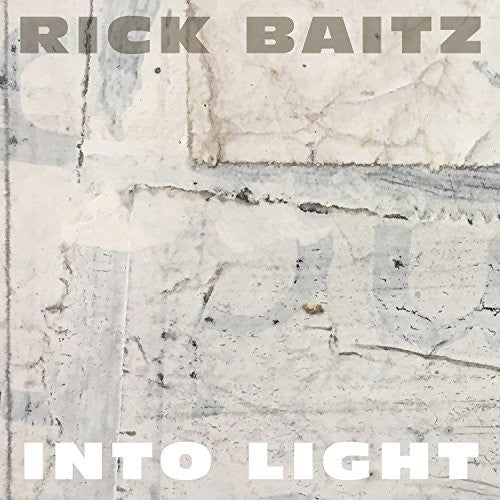
When violinist Mary Rowell asked Rick Baitz to write a piece for her quartet, what emerged was Chthonic Dances, a mashup of rhythms, patterns and harmonies gleaned from his early years living in Brazil and South Africa. Rick says: “The healing energy of dance is a constant wherever I’ve lived. From South African township music to Brazilian samba, the juxtaposition of dance and story-telling creates catharsis- and if you’re down, the act of dancing your pain is a force in transcending it. So the dance of chthonic spirits brings out their complement, the spirits of light.” The New York Times described it as “a bright-hued, vigorously melodic score,” and it opens his new innova album, Into Light. ‘Hall of Mirrors’ is also permeated with the spirits of light and groove, merging the tribal with the computerized, employing mbiras, windwands, table, and electronics, which refract the instruments into processed and transformed versions of themselves. Kind of like when you go into a funhouse and see a bizarro reflection of yourself. Commissioned by the Juilliard School, ‘Hall of Mirrors’ is both earthbound and celestial, dance-like and trance-like, with an underlying sense of rhythmic slight-of-hand and a prevalent- but at times ambiguous- drone. The final piece on the album, ‘Into Light,’ dates back to 1984, but philosophically it’s in the same ballpark as the others. Rick thinks of it as both a dance and a meditation; a voyage through light and darkness with a lot of harmonic and rhythmic trickery along the way.
When violinist Mary Rowell asked Rick Baitz to write a piece for her quartet, what emerged was Chthonic Dances, a mashup of rhythms, patterns and harmonies gleaned from his early years living in Brazil and South Africa. Rick says: “The healing energy of dance is a constant wherever I’ve lived. From South African township music to Brazilian samba, the juxtaposition of dance and story-telling creates catharsis- and if you’re down, the act of dancing your pain is a force in transcending it. So the dance of chthonic spirits brings out their complement, the spirits of light.” The New York Times described it as “a bright-hued, vigorously melodic score,” and it opens his new innova album, Into Light. ‘Hall of Mirrors’ is also permeated with the spirits of light and groove, merging the tribal with the computerized, employing mbiras, windwands, table, and electronics, which refract the instruments into processed and transformed versions of themselves. Kind of like when you go into a funhouse and see a bizarro reflection of yourself. Commissioned by the Juilliard School, ‘Hall of Mirrors’ is both earthbound and celestial, dance-like and trance-like, with an underlying sense of rhythmic slight-of-hand and a prevalent- but at times ambiguous- drone. The final piece on the album, ‘Into Light,’ dates back to 1984, but philosophically it’s in the same ballpark as the others. Rick thinks of it as both a dance and a meditation; a voyage through light and darkness with a lot of harmonic and rhythmic trickery along the way.
Original: $16.99
-65%$16.99
$5.95Description
When violinist Mary Rowell asked Rick Baitz to write a piece for her quartet, what emerged was Chthonic Dances, a mashup of rhythms, patterns and harmonies gleaned from his early years living in Brazil and South Africa. Rick says: “The healing energy of dance is a constant wherever I’ve lived. From South African township music to Brazilian samba, the juxtaposition of dance and story-telling creates catharsis- and if you’re down, the act of dancing your pain is a force in transcending it. So the dance of chthonic spirits brings out their complement, the spirits of light.” The New York Times described it as “a bright-hued, vigorously melodic score,” and it opens his new innova album, Into Light. ‘Hall of Mirrors’ is also permeated with the spirits of light and groove, merging the tribal with the computerized, employing mbiras, windwands, table, and electronics, which refract the instruments into processed and transformed versions of themselves. Kind of like when you go into a funhouse and see a bizarro reflection of yourself. Commissioned by the Juilliard School, ‘Hall of Mirrors’ is both earthbound and celestial, dance-like and trance-like, with an underlying sense of rhythmic slight-of-hand and a prevalent- but at times ambiguous- drone. The final piece on the album, ‘Into Light,’ dates back to 1984, but philosophically it’s in the same ballpark as the others. Rick thinks of it as both a dance and a meditation; a voyage through light and darkness with a lot of harmonic and rhythmic trickery along the way.