🎉 Up to 70% Off Selected ItemsShop Sale

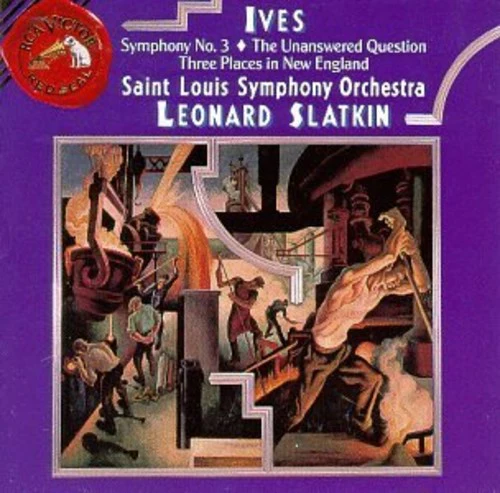
Ives: Symphony No 3, Etc / Slatkin, St Louis So
This is a splendid set of Ives classics with two novelties. It says something forhis stature these days that this is the fifth recording of Three Places in New England in the current British catalogue. The opening march is slightly disappointing in Slatkin's over measured treatment, but there are plenty of fireworks (literally, since it depicts a Fourth of July outing) in ''Putnam's Camp'' and real intensity in the sound of hymn-singing across the river which is built into ''The Housatonic at Stockbridge''.
It is good to have The Unanswered Question and Central Park in the Dark where they belong—together. The separate layers of activity in both pieces, with the strings static and the other instrumental textures dynamically changing, create the quintessential Ives experience in the simplest form. The spacing is carefully engineered in this recording and the detail at all levels is clear.
I have compared the Tilson Thomas recording of the Third Symphony unfavourably with that by Sir Neville Marriner. Slatkin, in this third recording in the British catalogue, now has the edge on both of them, with an affectionate treatment of this hymn-saturated score. Tilson Thomas used a new edition. I think Slatkin does too, and there are extras in the strings at the end of the second movement which I have never heard before.
The two novelties are both early, from the 1890s. The March is all infectious razzle-dazzle and the Fugue in four keys is experimental for its period but smoothly contrived and haunting in its ending. They complete a well planned and competitive Ives release.
-- Peter Dickinson, Gramophone [4/1993]
It is good to have The Unanswered Question and Central Park in the Dark where they belong—together. The separate layers of activity in both pieces, with the strings static and the other instrumental textures dynamically changing, create the quintessential Ives experience in the simplest form. The spacing is carefully engineered in this recording and the detail at all levels is clear.
I have compared the Tilson Thomas recording of the Third Symphony unfavourably with that by Sir Neville Marriner. Slatkin, in this third recording in the British catalogue, now has the edge on both of them, with an affectionate treatment of this hymn-saturated score. Tilson Thomas used a new edition. I think Slatkin does too, and there are extras in the strings at the end of the second movement which I have never heard before.
The two novelties are both early, from the 1890s. The March is all infectious razzle-dazzle and the Fugue in four keys is experimental for its period but smoothly contrived and haunting in its ending. They complete a well planned and competitive Ives release.
-- Peter Dickinson, Gramophone [4/1993]
This is a splendid set of Ives classics with two novelties. It says something forhis stature these days that this is the fifth recording of Three Places in New England in the current British catalogue. The opening march is slightly disappointing in Slatkin's over measured treatment, but there are plenty of fireworks (literally, since it depicts a Fourth of July outing) in ''Putnam's Camp'' and real intensity in the sound of hymn-singing across the river which is built into ''The Housatonic at Stockbridge''.
It is good to have The Unanswered Question and Central Park in the Dark where they belong—together. The separate layers of activity in both pieces, with the strings static and the other instrumental textures dynamically changing, create the quintessential Ives experience in the simplest form. The spacing is carefully engineered in this recording and the detail at all levels is clear.
I have compared the Tilson Thomas recording of the Third Symphony unfavourably with that by Sir Neville Marriner. Slatkin, in this third recording in the British catalogue, now has the edge on both of them, with an affectionate treatment of this hymn-saturated score. Tilson Thomas used a new edition. I think Slatkin does too, and there are extras in the strings at the end of the second movement which I have never heard before.
The two novelties are both early, from the 1890s. The March is all infectious razzle-dazzle and the Fugue in four keys is experimental for its period but smoothly contrived and haunting in its ending. They complete a well planned and competitive Ives release.
-- Peter Dickinson, Gramophone [4/1993]
It is good to have The Unanswered Question and Central Park in the Dark where they belong—together. The separate layers of activity in both pieces, with the strings static and the other instrumental textures dynamically changing, create the quintessential Ives experience in the simplest form. The spacing is carefully engineered in this recording and the detail at all levels is clear.
I have compared the Tilson Thomas recording of the Third Symphony unfavourably with that by Sir Neville Marriner. Slatkin, in this third recording in the British catalogue, now has the edge on both of them, with an affectionate treatment of this hymn-saturated score. Tilson Thomas used a new edition. I think Slatkin does too, and there are extras in the strings at the end of the second movement which I have never heard before.
The two novelties are both early, from the 1890s. The March is all infectious razzle-dazzle and the Fugue in four keys is experimental for its period but smoothly contrived and haunting in its ending. They complete a well planned and competitive Ives release.
-- Peter Dickinson, Gramophone [4/1993]
$6.30
Original: $17.99
-65%Ives: Symphony No 3, Etc / Slatkin, St Louis So—
$17.99
$6.30Description
This is a splendid set of Ives classics with two novelties. It says something forhis stature these days that this is the fifth recording of Three Places in New England in the current British catalogue. The opening march is slightly disappointing in Slatkin's over measured treatment, but there are plenty of fireworks (literally, since it depicts a Fourth of July outing) in ''Putnam's Camp'' and real intensity in the sound of hymn-singing across the river which is built into ''The Housatonic at Stockbridge''.
It is good to have The Unanswered Question and Central Park in the Dark where they belong—together. The separate layers of activity in both pieces, with the strings static and the other instrumental textures dynamically changing, create the quintessential Ives experience in the simplest form. The spacing is carefully engineered in this recording and the detail at all levels is clear.
I have compared the Tilson Thomas recording of the Third Symphony unfavourably with that by Sir Neville Marriner. Slatkin, in this third recording in the British catalogue, now has the edge on both of them, with an affectionate treatment of this hymn-saturated score. Tilson Thomas used a new edition. I think Slatkin does too, and there are extras in the strings at the end of the second movement which I have never heard before.
The two novelties are both early, from the 1890s. The March is all infectious razzle-dazzle and the Fugue in four keys is experimental for its period but smoothly contrived and haunting in its ending. They complete a well planned and competitive Ives release.
-- Peter Dickinson, Gramophone [4/1993]
It is good to have The Unanswered Question and Central Park in the Dark where they belong—together. The separate layers of activity in both pieces, with the strings static and the other instrumental textures dynamically changing, create the quintessential Ives experience in the simplest form. The spacing is carefully engineered in this recording and the detail at all levels is clear.
I have compared the Tilson Thomas recording of the Third Symphony unfavourably with that by Sir Neville Marriner. Slatkin, in this third recording in the British catalogue, now has the edge on both of them, with an affectionate treatment of this hymn-saturated score. Tilson Thomas used a new edition. I think Slatkin does too, and there are extras in the strings at the end of the second movement which I have never heard before.
The two novelties are both early, from the 1890s. The March is all infectious razzle-dazzle and the Fugue in four keys is experimental for its period but smoothly contrived and haunting in its ending. They complete a well planned and competitive Ives release.
-- Peter Dickinson, Gramophone [4/1993]