🎉 Up to 70% Off Selected ItemsShop Sale

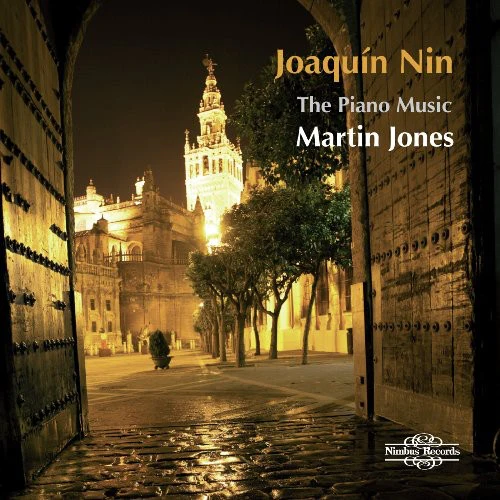
Joaquin Nin: Piano Music / Martin Jones
NIN Danza Ibérica. Mensaje a Claudio Debussy. Cadena de valses. Canto de cuña para los huérfanos de España. “1830” Variations sobre un tema frivolo. 3 Danzas espa?olas • Martin Jones (pn) • NIMBUS 5851 (67:15)
Good to see a whole disc of the piano music of Joaquín Nin (1879–1949), issued as part of the Nimbus 5000 series. The pianist Martin Jones is well known as an intensely musical player, and so it is here. His articulation throughout is a model of clarity, his pedal work the result of much thought. This is immediately evident from the first piece here, Danza Ibérica (subtitled “In Seville on a May Night”), a bright, busy work that ends in decidedly exuberant fashion. The sultry central section is beautifully realized by Jones; elsewhere, active rhythms dance infectiously.
The Mensaje a Claudio Debussy (Message to Claude Debussy) of 1929 is a hugely successful tribute (Nin describes it as a boceto sinfónico , a symphonic sketch). Of course, Debussy was fascinated by Spanish music so the homage is remarkably apt. Jones is magnificent, as much in the cloudy, Impressionist mists as in the remarkable cadenza that the piece contains. Thematically, allusion is all. No direct quotes, but many shapes that point to familiar gestures from Debussy’s scores.
The Cadena de Valses (Chain of Waltzes) is subtitled “Evocación romántica.” Schubert lurks in the background (Schubert’s centenary was just around the corner at the date of composition, 1927). This, surely, is a masterpiece. There is a plethora of references, from Soler and Weber through Schubert and Granados. But it appears as all of a magnificently effective piece. Jones seems to have an authentic Spanish swing at his disposal as well as an ability to project large-scale form.
Moving forward a decade, the Canto de cuña para los huérfanos de España (Lullaby for the Orphans of Spain) of 1938 is a lament for children orphaned because of the civil war. This is a magnificently touching elegy, dark and harmonically complex. Jones ensures the end is almost unbearably touching. Perhaps the disc should have ended with this piece, as no matter how long the gap between pieces, it is too short.
Luckily, the variations that follow begin innocently and don’t make for too much of a shock. Dating from 1934, and from Paris, it is a superbly constructed piece that deserves more outings on the concert platform. Jones rises to the challenges perfectly (listen to the octaves of the first variation, or the deep flowing lyricism of the Schumannesque second). Jones also plays with a beautifully wistful touch when required.
Three dances composed in September and October 1938 complete the disc. The first is another “Danza Ibérica,” somewhat more stripped down than the example that opened the recital. It is followed by a “Danza Andaluza” (Nín claimed it to be based on an Andalusian song), on paper a study in repeated notes but in reality a tender statement of the utmost beauty. Finally, a “Danza Murciana,” alternating 6/8 and 3/4 meters (as well as major and minor modes).
Calum MacDonald’s booklet notes are exemplary. Competition is high in this music: Thomas Tirino on Koch was welcomed by Peter Rabinowitz in Fanfare 25:3; Nicholas Unwin on Centaur was no less enthusiastically rated by Lawrence Johnson in Fanfare 22:1. Yet Jones makes such a strong case, and is so well recorded with just the right amount of presence (at Wyastone, Monmouth, in 2007) that, while listening, it is difficult to imagine alternatives. And there can be no higher praise than that.
FANFARE: Colin Clarke
-------------------------------------------------------------------------------------------------------
Joaquín Nin is, perhaps, best rememberd as the father of composer Joaquin Nin–Culmell (Culmell was his mother’s maiden name) and writer Anaïs Nin, for his music, in Britain at least, is seldom, if ever, performed and he is but a name, if that, to music-lovers. It’s hard to see why he is so neglected for these works are highly colourful and full of pleasing, and entertaining, things. Like the music of Astor Piazzolla these pieces speak the musical language of the composer’s homeland, in this case Cuba, dominated by things Spanish, and, although slight, are well worth investigating.
After a rather breathless start, the first piece is a kind of more modern (harmonically and rhythmically) version of a piece from Albeniz’s Ibéria, Mensaje a Claudio Debussy. It comes as welcome relief. In general, it’s a slow, quiet, dance - at times it sounds like Constant Lambert - and it builds to an impressive climax but falls away again towards the end. This is a fine piece.
Cadena de valses is a set of waltzes, in the manner of Ravel’s Valses nobles et valses sentimentales, but without the variety of that masterwork. Nin’s work is pleasing but one would have welcomed some rest from time to time; it’s all a bit tiring. The gentle restraint of Canto de cuna para los huerfanos de España (Lullaby for the Orphans of Spain), a requiem for the children who had been left without parents after the Spanish Civil War, is a touching memorial which says more, in its simple way, than many a bigger and bolder work.
1830: variaciones sobre un tema frivolo, whilst firmly keeping one eye on the past, isn’t ignorant of the future, but as the frivolous theme is developed we hear many different voices including one which is terribly reminiscent of Michael Carr’s title music for television’s The Edgar Wallace Mystery Theatre! The similarity is so clear that one wonders if Carr knew the Nin work, for there’s no reason that he shouldn’t. The piece alternates virtuoso movements with slower, more relaxed ones. There’s a real virtuoso rush at the end which is quite delightful.
The final three pieces are dances of one kind or another. This is a very pleasant collection of, basically, light piano pieces, but there is a problem; the range of the music is very limited and as Jones plays them in the same way – what else can he do? – a sense of boredom sets in. The best thing to do is sample a couple of tracks at a time, for listening to the whole CD in one sitting will give you an unfavourable impression of the music, as it did me. Whilst Nin, on the strength of this music, is no lost master it’s very enjoyable stuff, and an interesting insight into what happened in Spanish piano music after Albeniz and Falla. The recording and notes are excellent.
-- Bob Briggs, MusicWeb International
NIN Danza Ibérica. Mensaje a Claudio Debussy. Cadena de valses. Canto de cuña para los huérfanos de España. “1830” Variations sobre un tema frivolo. 3 Danzas espa?olas • Martin Jones (pn) • NIMBUS 5851 (67:15)
Good to see a whole disc of the piano music of Joaquín Nin (1879–1949), issued as part of the Nimbus 5000 series. The pianist Martin Jones is well known as an intensely musical player, and so it is here. His articulation throughout is a model of clarity, his pedal work the result of much thought. This is immediately evident from the first piece here, Danza Ibérica (subtitled “In Seville on a May Night”), a bright, busy work that ends in decidedly exuberant fashion. The sultry central section is beautifully realized by Jones; elsewhere, active rhythms dance infectiously.
The Mensaje a Claudio Debussy (Message to Claude Debussy) of 1929 is a hugely successful tribute (Nin describes it as a boceto sinfónico , a symphonic sketch). Of course, Debussy was fascinated by Spanish music so the homage is remarkably apt. Jones is magnificent, as much in the cloudy, Impressionist mists as in the remarkable cadenza that the piece contains. Thematically, allusion is all. No direct quotes, but many shapes that point to familiar gestures from Debussy’s scores.
The Cadena de Valses (Chain of Waltzes) is subtitled “Evocación romántica.” Schubert lurks in the background (Schubert’s centenary was just around the corner at the date of composition, 1927). This, surely, is a masterpiece. There is a plethora of references, from Soler and Weber through Schubert and Granados. But it appears as all of a magnificently effective piece. Jones seems to have an authentic Spanish swing at his disposal as well as an ability to project large-scale form.
Moving forward a decade, the Canto de cuña para los huérfanos de España (Lullaby for the Orphans of Spain) of 1938 is a lament for children orphaned because of the civil war. This is a magnificently touching elegy, dark and harmonically complex. Jones ensures the end is almost unbearably touching. Perhaps the disc should have ended with this piece, as no matter how long the gap between pieces, it is too short.
Luckily, the variations that follow begin innocently and don’t make for too much of a shock. Dating from 1934, and from Paris, it is a superbly constructed piece that deserves more outings on the concert platform. Jones rises to the challenges perfectly (listen to the octaves of the first variation, or the deep flowing lyricism of the Schumannesque second). Jones also plays with a beautifully wistful touch when required.
Three dances composed in September and October 1938 complete the disc. The first is another “Danza Ibérica,” somewhat more stripped down than the example that opened the recital. It is followed by a “Danza Andaluza” (Nín claimed it to be based on an Andalusian song), on paper a study in repeated notes but in reality a tender statement of the utmost beauty. Finally, a “Danza Murciana,” alternating 6/8 and 3/4 meters (as well as major and minor modes).
Calum MacDonald’s booklet notes are exemplary. Competition is high in this music: Thomas Tirino on Koch was welcomed by Peter Rabinowitz in Fanfare 25:3; Nicholas Unwin on Centaur was no less enthusiastically rated by Lawrence Johnson in Fanfare 22:1. Yet Jones makes such a strong case, and is so well recorded with just the right amount of presence (at Wyastone, Monmouth, in 2007) that, while listening, it is difficult to imagine alternatives. And there can be no higher praise than that.
FANFARE: Colin Clarke
-------------------------------------------------------------------------------------------------------
Joaquín Nin is, perhaps, best rememberd as the father of composer Joaquin Nin–Culmell (Culmell was his mother’s maiden name) and writer Anaïs Nin, for his music, in Britain at least, is seldom, if ever, performed and he is but a name, if that, to music-lovers. It’s hard to see why he is so neglected for these works are highly colourful and full of pleasing, and entertaining, things. Like the music of Astor Piazzolla these pieces speak the musical language of the composer’s homeland, in this case Cuba, dominated by things Spanish, and, although slight, are well worth investigating.
After a rather breathless start, the first piece is a kind of more modern (harmonically and rhythmically) version of a piece from Albeniz’s Ibéria, Mensaje a Claudio Debussy. It comes as welcome relief. In general, it’s a slow, quiet, dance - at times it sounds like Constant Lambert - and it builds to an impressive climax but falls away again towards the end. This is a fine piece.
Cadena de valses is a set of waltzes, in the manner of Ravel’s Valses nobles et valses sentimentales, but without the variety of that masterwork. Nin’s work is pleasing but one would have welcomed some rest from time to time; it’s all a bit tiring. The gentle restraint of Canto de cuna para los huerfanos de España (Lullaby for the Orphans of Spain), a requiem for the children who had been left without parents after the Spanish Civil War, is a touching memorial which says more, in its simple way, than many a bigger and bolder work.
1830: variaciones sobre un tema frivolo, whilst firmly keeping one eye on the past, isn’t ignorant of the future, but as the frivolous theme is developed we hear many different voices including one which is terribly reminiscent of Michael Carr’s title music for television’s The Edgar Wallace Mystery Theatre! The similarity is so clear that one wonders if Carr knew the Nin work, for there’s no reason that he shouldn’t. The piece alternates virtuoso movements with slower, more relaxed ones. There’s a real virtuoso rush at the end which is quite delightful.
The final three pieces are dances of one kind or another. This is a very pleasant collection of, basically, light piano pieces, but there is a problem; the range of the music is very limited and as Jones plays them in the same way – what else can he do? – a sense of boredom sets in. The best thing to do is sample a couple of tracks at a time, for listening to the whole CD in one sitting will give you an unfavourable impression of the music, as it did me. Whilst Nin, on the strength of this music, is no lost master it’s very enjoyable stuff, and an interesting insight into what happened in Spanish piano music after Albeniz and Falla. The recording and notes are excellent.
-- Bob Briggs, MusicWeb International
$20.99
Joaquin Nin: Piano Music / Martin Jones—
$20.99
Description
NIN Danza Ibérica. Mensaje a Claudio Debussy. Cadena de valses. Canto de cuña para los huérfanos de España. “1830” Variations sobre un tema frivolo. 3 Danzas espa?olas • Martin Jones (pn) • NIMBUS 5851 (67:15)
Good to see a whole disc of the piano music of Joaquín Nin (1879–1949), issued as part of the Nimbus 5000 series. The pianist Martin Jones is well known as an intensely musical player, and so it is here. His articulation throughout is a model of clarity, his pedal work the result of much thought. This is immediately evident from the first piece here, Danza Ibérica (subtitled “In Seville on a May Night”), a bright, busy work that ends in decidedly exuberant fashion. The sultry central section is beautifully realized by Jones; elsewhere, active rhythms dance infectiously.
The Mensaje a Claudio Debussy (Message to Claude Debussy) of 1929 is a hugely successful tribute (Nin describes it as a boceto sinfónico , a symphonic sketch). Of course, Debussy was fascinated by Spanish music so the homage is remarkably apt. Jones is magnificent, as much in the cloudy, Impressionist mists as in the remarkable cadenza that the piece contains. Thematically, allusion is all. No direct quotes, but many shapes that point to familiar gestures from Debussy’s scores.
The Cadena de Valses (Chain of Waltzes) is subtitled “Evocación romántica.” Schubert lurks in the background (Schubert’s centenary was just around the corner at the date of composition, 1927). This, surely, is a masterpiece. There is a plethora of references, from Soler and Weber through Schubert and Granados. But it appears as all of a magnificently effective piece. Jones seems to have an authentic Spanish swing at his disposal as well as an ability to project large-scale form.
Moving forward a decade, the Canto de cuña para los huérfanos de España (Lullaby for the Orphans of Spain) of 1938 is a lament for children orphaned because of the civil war. This is a magnificently touching elegy, dark and harmonically complex. Jones ensures the end is almost unbearably touching. Perhaps the disc should have ended with this piece, as no matter how long the gap between pieces, it is too short.
Luckily, the variations that follow begin innocently and don’t make for too much of a shock. Dating from 1934, and from Paris, it is a superbly constructed piece that deserves more outings on the concert platform. Jones rises to the challenges perfectly (listen to the octaves of the first variation, or the deep flowing lyricism of the Schumannesque second). Jones also plays with a beautifully wistful touch when required.
Three dances composed in September and October 1938 complete the disc. The first is another “Danza Ibérica,” somewhat more stripped down than the example that opened the recital. It is followed by a “Danza Andaluza” (Nín claimed it to be based on an Andalusian song), on paper a study in repeated notes but in reality a tender statement of the utmost beauty. Finally, a “Danza Murciana,” alternating 6/8 and 3/4 meters (as well as major and minor modes).
Calum MacDonald’s booklet notes are exemplary. Competition is high in this music: Thomas Tirino on Koch was welcomed by Peter Rabinowitz in Fanfare 25:3; Nicholas Unwin on Centaur was no less enthusiastically rated by Lawrence Johnson in Fanfare 22:1. Yet Jones makes such a strong case, and is so well recorded with just the right amount of presence (at Wyastone, Monmouth, in 2007) that, while listening, it is difficult to imagine alternatives. And there can be no higher praise than that.
FANFARE: Colin Clarke
-------------------------------------------------------------------------------------------------------
Joaquín Nin is, perhaps, best rememberd as the father of composer Joaquin Nin–Culmell (Culmell was his mother’s maiden name) and writer Anaïs Nin, for his music, in Britain at least, is seldom, if ever, performed and he is but a name, if that, to music-lovers. It’s hard to see why he is so neglected for these works are highly colourful and full of pleasing, and entertaining, things. Like the music of Astor Piazzolla these pieces speak the musical language of the composer’s homeland, in this case Cuba, dominated by things Spanish, and, although slight, are well worth investigating.
After a rather breathless start, the first piece is a kind of more modern (harmonically and rhythmically) version of a piece from Albeniz’s Ibéria, Mensaje a Claudio Debussy. It comes as welcome relief. In general, it’s a slow, quiet, dance - at times it sounds like Constant Lambert - and it builds to an impressive climax but falls away again towards the end. This is a fine piece.
Cadena de valses is a set of waltzes, in the manner of Ravel’s Valses nobles et valses sentimentales, but without the variety of that masterwork. Nin’s work is pleasing but one would have welcomed some rest from time to time; it’s all a bit tiring. The gentle restraint of Canto de cuna para los huerfanos de España (Lullaby for the Orphans of Spain), a requiem for the children who had been left without parents after the Spanish Civil War, is a touching memorial which says more, in its simple way, than many a bigger and bolder work.
1830: variaciones sobre un tema frivolo, whilst firmly keeping one eye on the past, isn’t ignorant of the future, but as the frivolous theme is developed we hear many different voices including one which is terribly reminiscent of Michael Carr’s title music for television’s The Edgar Wallace Mystery Theatre! The similarity is so clear that one wonders if Carr knew the Nin work, for there’s no reason that he shouldn’t. The piece alternates virtuoso movements with slower, more relaxed ones. There’s a real virtuoso rush at the end which is quite delightful.
The final three pieces are dances of one kind or another. This is a very pleasant collection of, basically, light piano pieces, but there is a problem; the range of the music is very limited and as Jones plays them in the same way – what else can he do? – a sense of boredom sets in. The best thing to do is sample a couple of tracks at a time, for listening to the whole CD in one sitting will give you an unfavourable impression of the music, as it did me. Whilst Nin, on the strength of this music, is no lost master it’s very enjoyable stuff, and an interesting insight into what happened in Spanish piano music after Albeniz and Falla. The recording and notes are excellent.
-- Bob Briggs, MusicWeb International