🎉 Up to 70% Off Selected ItemsShop Sale

1 / 2
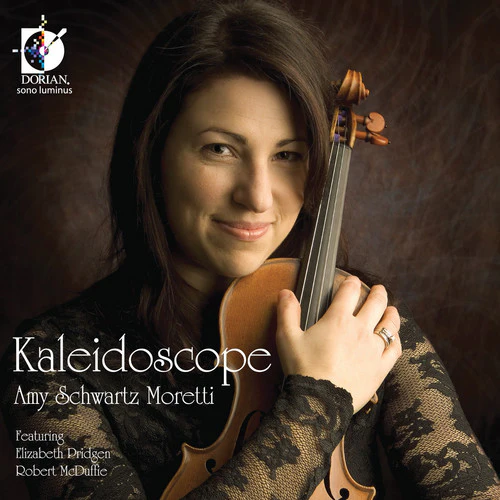
Kaleidoscope / Amy Schwartz Moretti
KALEIDOSCOPE • Amy Schwartz Moretti (vn); Robert McDuffie (vn); Elizabeth Pridgen (pn) • DORIAN 92126 (63:36)
GERSHWIN 3 Preludes. TCHAIKOVSKY Mélodie. Valse Scherzo. NOVÁ?EK Perpetuum mobile. MARTINON Solo Violin Sonatine, op. 31/1. KREISLER Caprice viennois. Praeludium and Allegro. MASSENET Thaïs: Meditation. MOSZKOWSKI Suite for 2 Violins and Piano
According to the blurb, Amy Schwartz Moretti chose the pieces for her first solo CD because they represent a kaleidoscope of works she’s known through her years of violin playing. The recital begins with Jascha Heifetz’s arrangement of George Gershwin’s Three Preludes, pieces in which Heifetz could wow an audience with stylish verve. Moretti is not so straightforwardly energetic as Heifetz, and she doesn’t wind up the first with a knockout punch. She’s slinkier, however (in a way similar to that of Maria Bachmann), especially in the second prelude. The engineers have swaddled her sound (on an 1874 Vuillaume that seems especially rich in the lowest registers) in a decent amount of reverberation, but at times she seems more recessive than does the pianist, her colleague Elizabeth Pridgen from Mercer University, although she brings the third prelude to a satisfying conclusion.
Two contrasting pieces by Piotr Illyitch Tchaikovsky follow: the Melodie, op. 42/3, which she plays with great warmth if not Nathan Milstein’s élan, and the Valse Scherzo, op. 34. At least one virtuoso I knew well ran afoul of this brilliant showpiece (both technically and stylistically), but Moretti doesn’t, and even if her portamentos don’t always seem finely judged in the waltz-like sections, she hits the double-stops squarely, plays the staccatos lightly and gracefully, and swirls the arpeggios with the silvery elegance of a baton twirler. Ottokar Nová?ek’s popular Perpetuum mobile may not be so difficult as it sounds, but Nathan Milstein could make a very dashing impression in it. Moretti takes it a bit more slowly, but perhaps makes a bit more musical sense out of it. For that reason, his 2:35 sounds somewhat longer than her 3:10.
Jean Martinon’s Sonatine No. 5, coming near the recital’s center, provides a slice of spiced meat among the sweets. She plays with prepossessing bravado at the opening of the second movement, but spikes the whole with energy. Fritz Kreisler didn’t slink and slide in his Caprice viennois the way Moretti does (compare, however, his two recordings from May 11 and 18, 1910—which themselves differ surprisingly—to his last, much more mannered one, from January 15, 1942), but her way in it makes a sense of its own kind. Its middle section is bright enough, but the outer section is softer-grained than, say, Zino Francescatti’s. Her even quarters in the first section of Kreisler’s Praeludium and Allegro remind me of the similar opening of David Nadien’s recording. Kreisler himself didn’t record the piece, which has been acclaimed by critics as the best of his lot, so we’ll never know what he would have done (Moretti does play the return of the quarter notes more subtly than their initial statement), although Carl Flesch relates that the composer didn’t take the Allegro too rapidly. Neither does Moretti, though it’s fast enough to throw off highlights (she approaches the cadenza slowly, but then mixes a real cocktail of sounds at the end). Jules Massenet’s popular Meditation may be the single most frequently requested violin piece in my experience, and Moretti plays it with such beauty of tone and glowing ardor that it’s easy to see why.
The program concludes with Moritz Moszkowski’s ingratiating Suite in G Minor for Two Violins and Piano, in which Robert McDuffie joins Moretti and Pridgen. McDuffie and Moretti seem well matched tonally (though he’s playing the 1735 Ladenburg Guarneri del Gésu) and stylistically through this work’s four movements. Together, Moretti and McDuffie produce an almost orchestral sonority, a tribute perhaps to Moszkowski’s skill in writing for the instruments, but also to the two violinists channeling his spirit. If it’s lightweight fare, listeners should note that the ability to make such pieces sound worthy of a hearing used to be more highly prized in earlier eras, and Moretti and the ensemble possess this ability in abundance. Although the recital will appeal most strongly to Moretti’s followers, all the well-played numbers suggest a broader recommendation to a wider audience—especially on account of Moszkowski’s suite.
FANFARE: Robert Maxham
KALEIDOSCOPE • Amy Schwartz Moretti (vn); Robert McDuffie (vn); Elizabeth Pridgen (pn) • DORIAN 92126 (63:36)
GERSHWIN 3 Preludes. TCHAIKOVSKY Mélodie. Valse Scherzo. NOVÁ?EK Perpetuum mobile. MARTINON Solo Violin Sonatine, op. 31/1. KREISLER Caprice viennois. Praeludium and Allegro. MASSENET Thaïs: Meditation. MOSZKOWSKI Suite for 2 Violins and Piano
According to the blurb, Amy Schwartz Moretti chose the pieces for her first solo CD because they represent a kaleidoscope of works she’s known through her years of violin playing. The recital begins with Jascha Heifetz’s arrangement of George Gershwin’s Three Preludes, pieces in which Heifetz could wow an audience with stylish verve. Moretti is not so straightforwardly energetic as Heifetz, and she doesn’t wind up the first with a knockout punch. She’s slinkier, however (in a way similar to that of Maria Bachmann), especially in the second prelude. The engineers have swaddled her sound (on an 1874 Vuillaume that seems especially rich in the lowest registers) in a decent amount of reverberation, but at times she seems more recessive than does the pianist, her colleague Elizabeth Pridgen from Mercer University, although she brings the third prelude to a satisfying conclusion.
Two contrasting pieces by Piotr Illyitch Tchaikovsky follow: the Melodie, op. 42/3, which she plays with great warmth if not Nathan Milstein’s élan, and the Valse Scherzo, op. 34. At least one virtuoso I knew well ran afoul of this brilliant showpiece (both technically and stylistically), but Moretti doesn’t, and even if her portamentos don’t always seem finely judged in the waltz-like sections, she hits the double-stops squarely, plays the staccatos lightly and gracefully, and swirls the arpeggios with the silvery elegance of a baton twirler. Ottokar Nová?ek’s popular Perpetuum mobile may not be so difficult as it sounds, but Nathan Milstein could make a very dashing impression in it. Moretti takes it a bit more slowly, but perhaps makes a bit more musical sense out of it. For that reason, his 2:35 sounds somewhat longer than her 3:10.
Jean Martinon’s Sonatine No. 5, coming near the recital’s center, provides a slice of spiced meat among the sweets. She plays with prepossessing bravado at the opening of the second movement, but spikes the whole with energy. Fritz Kreisler didn’t slink and slide in his Caprice viennois the way Moretti does (compare, however, his two recordings from May 11 and 18, 1910—which themselves differ surprisingly—to his last, much more mannered one, from January 15, 1942), but her way in it makes a sense of its own kind. Its middle section is bright enough, but the outer section is softer-grained than, say, Zino Francescatti’s. Her even quarters in the first section of Kreisler’s Praeludium and Allegro remind me of the similar opening of David Nadien’s recording. Kreisler himself didn’t record the piece, which has been acclaimed by critics as the best of his lot, so we’ll never know what he would have done (Moretti does play the return of the quarter notes more subtly than their initial statement), although Carl Flesch relates that the composer didn’t take the Allegro too rapidly. Neither does Moretti, though it’s fast enough to throw off highlights (she approaches the cadenza slowly, but then mixes a real cocktail of sounds at the end). Jules Massenet’s popular Meditation may be the single most frequently requested violin piece in my experience, and Moretti plays it with such beauty of tone and glowing ardor that it’s easy to see why.
The program concludes with Moritz Moszkowski’s ingratiating Suite in G Minor for Two Violins and Piano, in which Robert McDuffie joins Moretti and Pridgen. McDuffie and Moretti seem well matched tonally (though he’s playing the 1735 Ladenburg Guarneri del Gésu) and stylistically through this work’s four movements. Together, Moretti and McDuffie produce an almost orchestral sonority, a tribute perhaps to Moszkowski’s skill in writing for the instruments, but also to the two violinists channeling his spirit. If it’s lightweight fare, listeners should note that the ability to make such pieces sound worthy of a hearing used to be more highly prized in earlier eras, and Moretti and the ensemble possess this ability in abundance. Although the recital will appeal most strongly to Moretti’s followers, all the well-played numbers suggest a broader recommendation to a wider audience—especially on account of Moszkowski’s suite.
FANFARE: Robert Maxham
$6.65
Original: $18.99
-65%Kaleidoscope / Amy Schwartz Moretti—
$18.99
$6.65Description
KALEIDOSCOPE • Amy Schwartz Moretti (vn); Robert McDuffie (vn); Elizabeth Pridgen (pn) • DORIAN 92126 (63:36)
GERSHWIN 3 Preludes. TCHAIKOVSKY Mélodie. Valse Scherzo. NOVÁ?EK Perpetuum mobile. MARTINON Solo Violin Sonatine, op. 31/1. KREISLER Caprice viennois. Praeludium and Allegro. MASSENET Thaïs: Meditation. MOSZKOWSKI Suite for 2 Violins and Piano
According to the blurb, Amy Schwartz Moretti chose the pieces for her first solo CD because they represent a kaleidoscope of works she’s known through her years of violin playing. The recital begins with Jascha Heifetz’s arrangement of George Gershwin’s Three Preludes, pieces in which Heifetz could wow an audience with stylish verve. Moretti is not so straightforwardly energetic as Heifetz, and she doesn’t wind up the first with a knockout punch. She’s slinkier, however (in a way similar to that of Maria Bachmann), especially in the second prelude. The engineers have swaddled her sound (on an 1874 Vuillaume that seems especially rich in the lowest registers) in a decent amount of reverberation, but at times she seems more recessive than does the pianist, her colleague Elizabeth Pridgen from Mercer University, although she brings the third prelude to a satisfying conclusion.
Two contrasting pieces by Piotr Illyitch Tchaikovsky follow: the Melodie, op. 42/3, which she plays with great warmth if not Nathan Milstein’s élan, and the Valse Scherzo, op. 34. At least one virtuoso I knew well ran afoul of this brilliant showpiece (both technically and stylistically), but Moretti doesn’t, and even if her portamentos don’t always seem finely judged in the waltz-like sections, she hits the double-stops squarely, plays the staccatos lightly and gracefully, and swirls the arpeggios with the silvery elegance of a baton twirler. Ottokar Nová?ek’s popular Perpetuum mobile may not be so difficult as it sounds, but Nathan Milstein could make a very dashing impression in it. Moretti takes it a bit more slowly, but perhaps makes a bit more musical sense out of it. For that reason, his 2:35 sounds somewhat longer than her 3:10.
Jean Martinon’s Sonatine No. 5, coming near the recital’s center, provides a slice of spiced meat among the sweets. She plays with prepossessing bravado at the opening of the second movement, but spikes the whole with energy. Fritz Kreisler didn’t slink and slide in his Caprice viennois the way Moretti does (compare, however, his two recordings from May 11 and 18, 1910—which themselves differ surprisingly—to his last, much more mannered one, from January 15, 1942), but her way in it makes a sense of its own kind. Its middle section is bright enough, but the outer section is softer-grained than, say, Zino Francescatti’s. Her even quarters in the first section of Kreisler’s Praeludium and Allegro remind me of the similar opening of David Nadien’s recording. Kreisler himself didn’t record the piece, which has been acclaimed by critics as the best of his lot, so we’ll never know what he would have done (Moretti does play the return of the quarter notes more subtly than their initial statement), although Carl Flesch relates that the composer didn’t take the Allegro too rapidly. Neither does Moretti, though it’s fast enough to throw off highlights (she approaches the cadenza slowly, but then mixes a real cocktail of sounds at the end). Jules Massenet’s popular Meditation may be the single most frequently requested violin piece in my experience, and Moretti plays it with such beauty of tone and glowing ardor that it’s easy to see why.
The program concludes with Moritz Moszkowski’s ingratiating Suite in G Minor for Two Violins and Piano, in which Robert McDuffie joins Moretti and Pridgen. McDuffie and Moretti seem well matched tonally (though he’s playing the 1735 Ladenburg Guarneri del Gésu) and stylistically through this work’s four movements. Together, Moretti and McDuffie produce an almost orchestral sonority, a tribute perhaps to Moszkowski’s skill in writing for the instruments, but also to the two violinists channeling his spirit. If it’s lightweight fare, listeners should note that the ability to make such pieces sound worthy of a hearing used to be more highly prized in earlier eras, and Moretti and the ensemble possess this ability in abundance. Although the recital will appeal most strongly to Moretti’s followers, all the well-played numbers suggest a broader recommendation to a wider audience—especially on account of Moszkowski’s suite.
FANFARE: Robert Maxham






















