🎉 Up to 70% Off Selected ItemsShop Sale

1 / 2
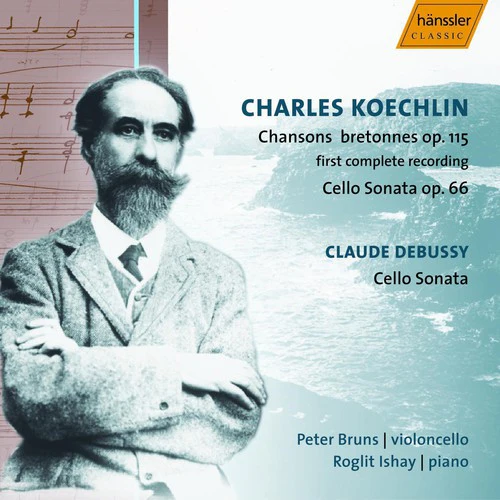
Koechlin: Chansons Bretonnes, Cello Sonata; Debussy / Bruns
KOECHLIN Chansons bretonnes, op. 115. Cello Sonata, op. 66. DEBUSSY Cello Sonata • Peter Bruns (vc); Roglit Ishay (pn) • HÄNSSLER CD 98.258 (53:11)
The tentative thumbs-up given to the Lidstrom/Forsberg tilt at Koechlin— Chansonnes Bretonnes , Books I and II, and the Cello Sonata (Hyperion 66979, Fanfare 22:1); Book III (Hyperion 67244, Fanfare 27: 2)—is a thumbs-down after hearing this new Bruns/Ishay release. With no comparisons, Lidstrom’s dragging pace and overload of clinging sensitivity presented Koechlin’s art as recondite, arcane, fragile, spaced-out, while Bruns and Ishay’s brisker pace—often by several minutes in many of these brief pieces—animates the Breton folk-song arrangements with lift, lilt, and charm. Likewise, the novel melodic/harmonic geste of the Cello Sonata leaps from the limbo of the “interesting” chez Lidstrom/Forsberg (the consolation prize one awards music of unfathomable complexity one intends never to hear again) to the desmesne of the piquantly novel, teasing us to return. Nor are Bruns and Ishay hustling the music for an easy score, but following directions—the Andante quasi Adagio of the Sonata’s middle movement, for instance, need not be a molasses-treading dirge, as it is with Lidstrom and Forsberg. The contrast puts one in mind of Schoenberg’s quip, “My music isn’t ‘Modern,’ just poorly performed.”
While Koechlin titled the folk-song collection Vingt Chansons bretonnes , Lidstrom and Forsberg have included a Marche d’Arthur which the composer omitted “due to its brevity (five bars),” Koechlin scholar Robert Orledge notes, though the performers distend this to 28 seconds. Bruns and Ishay eschew it but give us the set of 20 pieces, as Koechlin prepared it, complete on a single disc. Their Debussy Cello Sonata seems to search for a bit more than there is to find, heard after, say, Gary Hoffmann’s breezier go at it with David Golub (Delos 3167), though their performance still gives pleasure, supplying a substantial bonus. Sound is upfront and balanced, capturing every nuance with vibrant gutsiness. Orledge’s informed liner notes confect a final elegance. The performances of choice, enthusiastically recommended.
FANFARE: Adrian Corleonis
KOECHLIN Chansons bretonnes, op. 115. Cello Sonata, op. 66. DEBUSSY Cello Sonata • Peter Bruns (vc); Roglit Ishay (pn) • HÄNSSLER CD 98.258 (53:11)
The tentative thumbs-up given to the Lidstrom/Forsberg tilt at Koechlin— Chansonnes Bretonnes , Books I and II, and the Cello Sonata (Hyperion 66979, Fanfare 22:1); Book III (Hyperion 67244, Fanfare 27: 2)—is a thumbs-down after hearing this new Bruns/Ishay release. With no comparisons, Lidstrom’s dragging pace and overload of clinging sensitivity presented Koechlin’s art as recondite, arcane, fragile, spaced-out, while Bruns and Ishay’s brisker pace—often by several minutes in many of these brief pieces—animates the Breton folk-song arrangements with lift, lilt, and charm. Likewise, the novel melodic/harmonic geste of the Cello Sonata leaps from the limbo of the “interesting” chez Lidstrom/Forsberg (the consolation prize one awards music of unfathomable complexity one intends never to hear again) to the desmesne of the piquantly novel, teasing us to return. Nor are Bruns and Ishay hustling the music for an easy score, but following directions—the Andante quasi Adagio of the Sonata’s middle movement, for instance, need not be a molasses-treading dirge, as it is with Lidstrom and Forsberg. The contrast puts one in mind of Schoenberg’s quip, “My music isn’t ‘Modern,’ just poorly performed.”
While Koechlin titled the folk-song collection Vingt Chansons bretonnes , Lidstrom and Forsberg have included a Marche d’Arthur which the composer omitted “due to its brevity (five bars),” Koechlin scholar Robert Orledge notes, though the performers distend this to 28 seconds. Bruns and Ishay eschew it but give us the set of 20 pieces, as Koechlin prepared it, complete on a single disc. Their Debussy Cello Sonata seems to search for a bit more than there is to find, heard after, say, Gary Hoffmann’s breezier go at it with David Golub (Delos 3167), though their performance still gives pleasure, supplying a substantial bonus. Sound is upfront and balanced, capturing every nuance with vibrant gutsiness. Orledge’s informed liner notes confect a final elegance. The performances of choice, enthusiastically recommended.
FANFARE: Adrian Corleonis
$7.35
Original: $20.99
-65%Koechlin: Chansons Bretonnes, Cello Sonata; Debussy / Bruns—
$20.99
$7.35Description
KOECHLIN Chansons bretonnes, op. 115. Cello Sonata, op. 66. DEBUSSY Cello Sonata • Peter Bruns (vc); Roglit Ishay (pn) • HÄNSSLER CD 98.258 (53:11)
The tentative thumbs-up given to the Lidstrom/Forsberg tilt at Koechlin— Chansonnes Bretonnes , Books I and II, and the Cello Sonata (Hyperion 66979, Fanfare 22:1); Book III (Hyperion 67244, Fanfare 27: 2)—is a thumbs-down after hearing this new Bruns/Ishay release. With no comparisons, Lidstrom’s dragging pace and overload of clinging sensitivity presented Koechlin’s art as recondite, arcane, fragile, spaced-out, while Bruns and Ishay’s brisker pace—often by several minutes in many of these brief pieces—animates the Breton folk-song arrangements with lift, lilt, and charm. Likewise, the novel melodic/harmonic geste of the Cello Sonata leaps from the limbo of the “interesting” chez Lidstrom/Forsberg (the consolation prize one awards music of unfathomable complexity one intends never to hear again) to the desmesne of the piquantly novel, teasing us to return. Nor are Bruns and Ishay hustling the music for an easy score, but following directions—the Andante quasi Adagio of the Sonata’s middle movement, for instance, need not be a molasses-treading dirge, as it is with Lidstrom and Forsberg. The contrast puts one in mind of Schoenberg’s quip, “My music isn’t ‘Modern,’ just poorly performed.”
While Koechlin titled the folk-song collection Vingt Chansons bretonnes , Lidstrom and Forsberg have included a Marche d’Arthur which the composer omitted “due to its brevity (five bars),” Koechlin scholar Robert Orledge notes, though the performers distend this to 28 seconds. Bruns and Ishay eschew it but give us the set of 20 pieces, as Koechlin prepared it, complete on a single disc. Their Debussy Cello Sonata seems to search for a bit more than there is to find, heard after, say, Gary Hoffmann’s breezier go at it with David Golub (Delos 3167), though their performance still gives pleasure, supplying a substantial bonus. Sound is upfront and balanced, capturing every nuance with vibrant gutsiness. Orledge’s informed liner notes confect a final elegance. The performances of choice, enthusiastically recommended.
FANFARE: Adrian Corleonis