🎉 Up to 70% Off Selected ItemsShop Sale

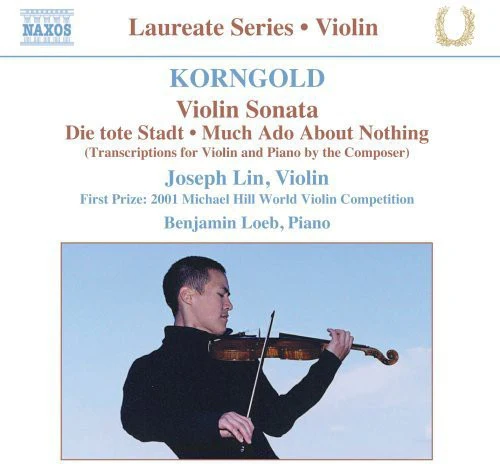
Laureate Series - Violin - Korngold / Lin, Loeb
"Joseph Lin’s recording of Korngold’s Violin Sonata appears in a collection of arrangements. Gil Shaham recorded the Suite, along with his reading of the Concerto—and Barber’s—and included the Caprice fantastique on “Devil’s Dance” (Deutsche Grammophon 463 483, 24:3), that appeared around Halloween time in 2000. The Suite consists of four movements, “Maiden in the Bridal Chamber,” “Dogberry and Verges,” “Gartenscene,” (a short number played as an encore by Heifetz), and “Masquerade.” These pieces, in a more popular vein than the more ambitious Violin Sonata, showcase Korngold’s rich melodic gift and harmonic imagination, and “Dogberry and Verges” give evidence of a mild sense of humor that the Sonata seems to lack. Lin and Loeb sharply characterize each of these movements, with Lin producing an especially glowing tone in the “Garden Scene” and displaying musical and technical authority in the “Masquerade.” Shaham plays with a more sumptuous tone and soaring portamentos that bring the period and the music vividly to life and he moves forward more coherently—and cogently—in the march, “Dogberry and Verges,” which Lin plays with a drier sensibility approaching that in Prokofiev’s March from The Love for Three Oranges. But Shaham brings a cheekier strut to the final movement, “Masquerade.”
Compared to Kiss, Lin sounds relatively sweet-toned, and the timings of his movements fall between those of Kiss and Waltman. But while those two-odd minutes may seem insignificant in a four-movement work, they also can represent a sort of general relaxation that makes the work sound more discursive, though Lin and Loeb play with plenty of energy and attack the more aggressive passages in the first movement, for example, with plenty of gusto and plenty of sharp-edged panache at the movement’s climax. The duo also takes command in the large-scale Scherzo (at 10:37 in this recording, that movement occupies almost a third of the Sonata’s duration), and though there may be a degree of roughness in Lin’s attack, he brings a sense of excitement to the movement. Lin’s purity of tone on the E string generates thrilling intensity in the slow movement, powering its leaps into the stratosphere. If the Sonata’s dedicatees inspired its seriousness, Korngold certainly rose to the occasion, and so do Lin and Loeb.
The shorter pieces begin with the Serenade from Der Schneemann, a rapt miniature that shows off Lin’s tonal command but also his wide and rather slow vibrato, which, for some listeners, may even threaten to grow annoying. From Korngold’s opera, Die tote Stadt, come the two short pieces, “Tanzlied” and “Marietta’s Lied,” the first a delicately wistful song that’s immediately ingratiating, and the second, an affecting lyrical outpouring that could vie successfully with the most popular works in the genre. The Caprice, subtitled “Wichtelmännchen,” or “Goblins” could similarly almost take the place of several similar pieces, like Bazzini’s Dance of the Goblins or Paganini’s “Witches’ Dance” on recital programs, though it’s more atmospheric than brilliant. Lin sounds a bit more polite in this miniature—and occasionally more ardent, by turns—than does Shaham, who plays it with more suggestive macabre energy.
Naxos’s issue offers yet another chance to ponder the question posed above: did Korngold’s work in Hollywood debase his musical coin or polish it? Lin and Loeb make a great deal of this repertoire, and their readings deserve a recommendation to anyone interested in it, in young violinists (the release appears as part of Naxos’s “Laureate” series), or in Korngold—or even to more general listeners. Recommended."
FANFARE: Robert Maxham
Compared to Kiss, Lin sounds relatively sweet-toned, and the timings of his movements fall between those of Kiss and Waltman. But while those two-odd minutes may seem insignificant in a four-movement work, they also can represent a sort of general relaxation that makes the work sound more discursive, though Lin and Loeb play with plenty of energy and attack the more aggressive passages in the first movement, for example, with plenty of gusto and plenty of sharp-edged panache at the movement’s climax. The duo also takes command in the large-scale Scherzo (at 10:37 in this recording, that movement occupies almost a third of the Sonata’s duration), and though there may be a degree of roughness in Lin’s attack, he brings a sense of excitement to the movement. Lin’s purity of tone on the E string generates thrilling intensity in the slow movement, powering its leaps into the stratosphere. If the Sonata’s dedicatees inspired its seriousness, Korngold certainly rose to the occasion, and so do Lin and Loeb.
The shorter pieces begin with the Serenade from Der Schneemann, a rapt miniature that shows off Lin’s tonal command but also his wide and rather slow vibrato, which, for some listeners, may even threaten to grow annoying. From Korngold’s opera, Die tote Stadt, come the two short pieces, “Tanzlied” and “Marietta’s Lied,” the first a delicately wistful song that’s immediately ingratiating, and the second, an affecting lyrical outpouring that could vie successfully with the most popular works in the genre. The Caprice, subtitled “Wichtelmännchen,” or “Goblins” could similarly almost take the place of several similar pieces, like Bazzini’s Dance of the Goblins or Paganini’s “Witches’ Dance” on recital programs, though it’s more atmospheric than brilliant. Lin sounds a bit more polite in this miniature—and occasionally more ardent, by turns—than does Shaham, who plays it with more suggestive macabre energy.
Naxos’s issue offers yet another chance to ponder the question posed above: did Korngold’s work in Hollywood debase his musical coin or polish it? Lin and Loeb make a great deal of this repertoire, and their readings deserve a recommendation to anyone interested in it, in young violinists (the release appears as part of Naxos’s “Laureate” series), or in Korngold—or even to more general listeners. Recommended."
FANFARE: Robert Maxham
"Joseph Lin’s recording of Korngold’s Violin Sonata appears in a collection of arrangements. Gil Shaham recorded the Suite, along with his reading of the Concerto—and Barber’s—and included the Caprice fantastique on “Devil’s Dance” (Deutsche Grammophon 463 483, 24:3), that appeared around Halloween time in 2000. The Suite consists of four movements, “Maiden in the Bridal Chamber,” “Dogberry and Verges,” “Gartenscene,” (a short number played as an encore by Heifetz), and “Masquerade.” These pieces, in a more popular vein than the more ambitious Violin Sonata, showcase Korngold’s rich melodic gift and harmonic imagination, and “Dogberry and Verges” give evidence of a mild sense of humor that the Sonata seems to lack. Lin and Loeb sharply characterize each of these movements, with Lin producing an especially glowing tone in the “Garden Scene” and displaying musical and technical authority in the “Masquerade.” Shaham plays with a more sumptuous tone and soaring portamentos that bring the period and the music vividly to life and he moves forward more coherently—and cogently—in the march, “Dogberry and Verges,” which Lin plays with a drier sensibility approaching that in Prokofiev’s March from The Love for Three Oranges. But Shaham brings a cheekier strut to the final movement, “Masquerade.”
Compared to Kiss, Lin sounds relatively sweet-toned, and the timings of his movements fall between those of Kiss and Waltman. But while those two-odd minutes may seem insignificant in a four-movement work, they also can represent a sort of general relaxation that makes the work sound more discursive, though Lin and Loeb play with plenty of energy and attack the more aggressive passages in the first movement, for example, with plenty of gusto and plenty of sharp-edged panache at the movement’s climax. The duo also takes command in the large-scale Scherzo (at 10:37 in this recording, that movement occupies almost a third of the Sonata’s duration), and though there may be a degree of roughness in Lin’s attack, he brings a sense of excitement to the movement. Lin’s purity of tone on the E string generates thrilling intensity in the slow movement, powering its leaps into the stratosphere. If the Sonata’s dedicatees inspired its seriousness, Korngold certainly rose to the occasion, and so do Lin and Loeb.
The shorter pieces begin with the Serenade from Der Schneemann, a rapt miniature that shows off Lin’s tonal command but also his wide and rather slow vibrato, which, for some listeners, may even threaten to grow annoying. From Korngold’s opera, Die tote Stadt, come the two short pieces, “Tanzlied” and “Marietta’s Lied,” the first a delicately wistful song that’s immediately ingratiating, and the second, an affecting lyrical outpouring that could vie successfully with the most popular works in the genre. The Caprice, subtitled “Wichtelmännchen,” or “Goblins” could similarly almost take the place of several similar pieces, like Bazzini’s Dance of the Goblins or Paganini’s “Witches’ Dance” on recital programs, though it’s more atmospheric than brilliant. Lin sounds a bit more polite in this miniature—and occasionally more ardent, by turns—than does Shaham, who plays it with more suggestive macabre energy.
Naxos’s issue offers yet another chance to ponder the question posed above: did Korngold’s work in Hollywood debase his musical coin or polish it? Lin and Loeb make a great deal of this repertoire, and their readings deserve a recommendation to anyone interested in it, in young violinists (the release appears as part of Naxos’s “Laureate” series), or in Korngold—or even to more general listeners. Recommended."
FANFARE: Robert Maxham
Compared to Kiss, Lin sounds relatively sweet-toned, and the timings of his movements fall between those of Kiss and Waltman. But while those two-odd minutes may seem insignificant in a four-movement work, they also can represent a sort of general relaxation that makes the work sound more discursive, though Lin and Loeb play with plenty of energy and attack the more aggressive passages in the first movement, for example, with plenty of gusto and plenty of sharp-edged panache at the movement’s climax. The duo also takes command in the large-scale Scherzo (at 10:37 in this recording, that movement occupies almost a third of the Sonata’s duration), and though there may be a degree of roughness in Lin’s attack, he brings a sense of excitement to the movement. Lin’s purity of tone on the E string generates thrilling intensity in the slow movement, powering its leaps into the stratosphere. If the Sonata’s dedicatees inspired its seriousness, Korngold certainly rose to the occasion, and so do Lin and Loeb.
The shorter pieces begin with the Serenade from Der Schneemann, a rapt miniature that shows off Lin’s tonal command but also his wide and rather slow vibrato, which, for some listeners, may even threaten to grow annoying. From Korngold’s opera, Die tote Stadt, come the two short pieces, “Tanzlied” and “Marietta’s Lied,” the first a delicately wistful song that’s immediately ingratiating, and the second, an affecting lyrical outpouring that could vie successfully with the most popular works in the genre. The Caprice, subtitled “Wichtelmännchen,” or “Goblins” could similarly almost take the place of several similar pieces, like Bazzini’s Dance of the Goblins or Paganini’s “Witches’ Dance” on recital programs, though it’s more atmospheric than brilliant. Lin sounds a bit more polite in this miniature—and occasionally more ardent, by turns—than does Shaham, who plays it with more suggestive macabre energy.
Naxos’s issue offers yet another chance to ponder the question posed above: did Korngold’s work in Hollywood debase his musical coin or polish it? Lin and Loeb make a great deal of this repertoire, and their readings deserve a recommendation to anyone interested in it, in young violinists (the release appears as part of Naxos’s “Laureate” series), or in Korngold—or even to more general listeners. Recommended."
FANFARE: Robert Maxham
$4.90
Original: $13.99
-65%Laureate Series - Violin - Korngold / Lin, Loeb—
$13.99
$4.90Description
"Joseph Lin’s recording of Korngold’s Violin Sonata appears in a collection of arrangements. Gil Shaham recorded the Suite, along with his reading of the Concerto—and Barber’s—and included the Caprice fantastique on “Devil’s Dance” (Deutsche Grammophon 463 483, 24:3), that appeared around Halloween time in 2000. The Suite consists of four movements, “Maiden in the Bridal Chamber,” “Dogberry and Verges,” “Gartenscene,” (a short number played as an encore by Heifetz), and “Masquerade.” These pieces, in a more popular vein than the more ambitious Violin Sonata, showcase Korngold’s rich melodic gift and harmonic imagination, and “Dogberry and Verges” give evidence of a mild sense of humor that the Sonata seems to lack. Lin and Loeb sharply characterize each of these movements, with Lin producing an especially glowing tone in the “Garden Scene” and displaying musical and technical authority in the “Masquerade.” Shaham plays with a more sumptuous tone and soaring portamentos that bring the period and the music vividly to life and he moves forward more coherently—and cogently—in the march, “Dogberry and Verges,” which Lin plays with a drier sensibility approaching that in Prokofiev’s March from The Love for Three Oranges. But Shaham brings a cheekier strut to the final movement, “Masquerade.”
Compared to Kiss, Lin sounds relatively sweet-toned, and the timings of his movements fall between those of Kiss and Waltman. But while those two-odd minutes may seem insignificant in a four-movement work, they also can represent a sort of general relaxation that makes the work sound more discursive, though Lin and Loeb play with plenty of energy and attack the more aggressive passages in the first movement, for example, with plenty of gusto and plenty of sharp-edged panache at the movement’s climax. The duo also takes command in the large-scale Scherzo (at 10:37 in this recording, that movement occupies almost a third of the Sonata’s duration), and though there may be a degree of roughness in Lin’s attack, he brings a sense of excitement to the movement. Lin’s purity of tone on the E string generates thrilling intensity in the slow movement, powering its leaps into the stratosphere. If the Sonata’s dedicatees inspired its seriousness, Korngold certainly rose to the occasion, and so do Lin and Loeb.
The shorter pieces begin with the Serenade from Der Schneemann, a rapt miniature that shows off Lin’s tonal command but also his wide and rather slow vibrato, which, for some listeners, may even threaten to grow annoying. From Korngold’s opera, Die tote Stadt, come the two short pieces, “Tanzlied” and “Marietta’s Lied,” the first a delicately wistful song that’s immediately ingratiating, and the second, an affecting lyrical outpouring that could vie successfully with the most popular works in the genre. The Caprice, subtitled “Wichtelmännchen,” or “Goblins” could similarly almost take the place of several similar pieces, like Bazzini’s Dance of the Goblins or Paganini’s “Witches’ Dance” on recital programs, though it’s more atmospheric than brilliant. Lin sounds a bit more polite in this miniature—and occasionally more ardent, by turns—than does Shaham, who plays it with more suggestive macabre energy.
Naxos’s issue offers yet another chance to ponder the question posed above: did Korngold’s work in Hollywood debase his musical coin or polish it? Lin and Loeb make a great deal of this repertoire, and their readings deserve a recommendation to anyone interested in it, in young violinists (the release appears as part of Naxos’s “Laureate” series), or in Korngold—or even to more general listeners. Recommended."
FANFARE: Robert Maxham
Compared to Kiss, Lin sounds relatively sweet-toned, and the timings of his movements fall between those of Kiss and Waltman. But while those two-odd minutes may seem insignificant in a four-movement work, they also can represent a sort of general relaxation that makes the work sound more discursive, though Lin and Loeb play with plenty of energy and attack the more aggressive passages in the first movement, for example, with plenty of gusto and plenty of sharp-edged panache at the movement’s climax. The duo also takes command in the large-scale Scherzo (at 10:37 in this recording, that movement occupies almost a third of the Sonata’s duration), and though there may be a degree of roughness in Lin’s attack, he brings a sense of excitement to the movement. Lin’s purity of tone on the E string generates thrilling intensity in the slow movement, powering its leaps into the stratosphere. If the Sonata’s dedicatees inspired its seriousness, Korngold certainly rose to the occasion, and so do Lin and Loeb.
The shorter pieces begin with the Serenade from Der Schneemann, a rapt miniature that shows off Lin’s tonal command but also his wide and rather slow vibrato, which, for some listeners, may even threaten to grow annoying. From Korngold’s opera, Die tote Stadt, come the two short pieces, “Tanzlied” and “Marietta’s Lied,” the first a delicately wistful song that’s immediately ingratiating, and the second, an affecting lyrical outpouring that could vie successfully with the most popular works in the genre. The Caprice, subtitled “Wichtelmännchen,” or “Goblins” could similarly almost take the place of several similar pieces, like Bazzini’s Dance of the Goblins or Paganini’s “Witches’ Dance” on recital programs, though it’s more atmospheric than brilliant. Lin sounds a bit more polite in this miniature—and occasionally more ardent, by turns—than does Shaham, who plays it with more suggestive macabre energy.
Naxos’s issue offers yet another chance to ponder the question posed above: did Korngold’s work in Hollywood debase his musical coin or polish it? Lin and Loeb make a great deal of this repertoire, and their readings deserve a recommendation to anyone interested in it, in young violinists (the release appears as part of Naxos’s “Laureate” series), or in Korngold—or even to more general listeners. Recommended."
FANFARE: Robert Maxham