🎉 Up to 70% Off Selected ItemsShop Sale

1 / 2
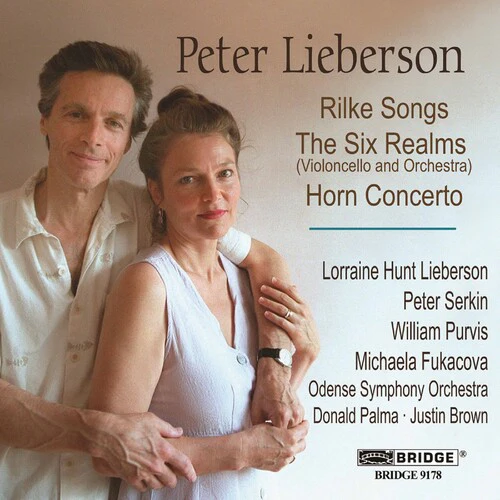
Lieberson: Rilke Songs, Six Realms, Etc / Serkin, Et Al
When brand new, this CD’s reputation preceded it: winner of many rave reviews, it has already received the initial WQXR Gramophone American Award. It is dedicated to the memory of the composer’s mother, Birgitta Lieberson-Wolfe (1917–2003), who was known professionally as Vera Zorina, but the disc is being viewed widely as a memorial to mezzo-soprano Lorraine Hunt Lieberson, who passed away in July 2006, at the height—or could it have been only the beginning?—of a great career. No singer since Callas has been so idolized, but her life and her achievements remind me more of Kathleen Ferrier’s. In a moving encomium in The New Yorker (September 25, 2006), Alex Ross makes the cogent point that conventional adjectives simply do not apply to Hunt Lieberson, but that we must fall back on them because there are no words in the language which can do her justice. I, too, fell under her spell on several occasions. She was radiant as Didon in Les Troyens, and then bitterly hurt and angry at being abandoned by Enée, feelings projected throughout the giant Metropolitan Opera House. In Fitzgerald’s novel The Great Gatsby and Harbison’s opera thereof, Myrtle Wilson is hardly more than a convenient plot device, yet Hunt Lieberson brought her to life; such a change could upset the balance of a work but in this case added nuance and depth to a work that needed both. Her singing of Britten’s Phaedra with the New York Philharmonic was so devastating that I had to reconsider everything I thought I knew about the work. The final time I heard her was in her husband’s lyrical, loving Neruda Songs, with Levine and the Boston Symphony; she was beauty itself. These occasions could have been four different singers, if such singers existed.
Peter Lieberson, the son of a composer, has been at least three composers in one: he writes works related to his “long-standing practice of Tibetan Buddhism;” he has written exciting, complex music that mirrors such earlier teachers as Babbitt and Wuorinen; and—under his wife’s influence—has recently written lyrical, expressive vocal music. It is the complex music (call it difficult, if you must) that appeals most strongly to me—viz., a thrilling recent DG disc, 457 606, titled Raising the Gaze. I am too ignorant of Buddhist beliefs and ceremonies to appreciate that side of the composer; although some of his most heart-felt music falls into that category, I have seldom been able to understand its statements or follow its procedures. These categories begin to overlap in the instrumental works on this disc. The Six Realms (1999–2000) mixes complexity with Buddhism. Written for Yo-Yo Ma’s Silk Road Project, its movements reflect “the six realms described in Buddhism . . . a highly detailed portrait of our human consciousness” (the quotations are taken from the composer’s program notes). Yet he also refers to the piece as “my concerto.” Written for solo cello and a large orchestra often sparingly used, its 27 minutes cover a wide range of emotional (presumably religious) and musical expression. After a bumpy start (mine), The Six Realms is now beginning to reveal its depth and power.
The Horn Concerto (1998–1999) is more conventional, as much so as anything I have heard from Lieberson. Lyricism meets complexity, each making room for the other. It consists of two roughly nine-minute movements, the first of which recalls concertos of Schoeck and Hindemith, the second Stravinsky, especially his Symphony in Three Movements. Fine models all, but surprising for Lieberson (who knew Stravinsky as a child). As the piece progresses, the writing for horn becomes more vibrant, more exciting, and no doubt very difficult to play. William Purvis rides it like a champion.
But the pieces de resistance here are the five Rilke Songs (1997–2001), taken from The Sonnets to Orpheus. Lieberson’s straightforward music seems to equate simplicity with truth. Music and performance transport us into Rilke’s world and involve us in his musings; that the vocal line is lyrical and the voice beautiful is almost incidental. While the performances of the two instrumental works are excellent, that of the songs is so ideal as to disappear. Pianist Serkin and the composer have been friends from birth and collaborators for decades; the singer was wife, inspiration, and artistic advisor; the three are one artistic whole. It comes as a shock to hear an eruption of applause; the audience at the Ravinia Festival must have been holding its collective breath for these 18 minutes. So was I.
Every one of Lorraine Hunt Lieberson’s recordings is a treasure. Every Peter Lieberson disc ought to be treasured; Oliver Knussen called his music “the real thing.”
FANFARE: James H. North
Peter Lieberson, the son of a composer, has been at least three composers in one: he writes works related to his “long-standing practice of Tibetan Buddhism;” he has written exciting, complex music that mirrors such earlier teachers as Babbitt and Wuorinen; and—under his wife’s influence—has recently written lyrical, expressive vocal music. It is the complex music (call it difficult, if you must) that appeals most strongly to me—viz., a thrilling recent DG disc, 457 606, titled Raising the Gaze. I am too ignorant of Buddhist beliefs and ceremonies to appreciate that side of the composer; although some of his most heart-felt music falls into that category, I have seldom been able to understand its statements or follow its procedures. These categories begin to overlap in the instrumental works on this disc. The Six Realms (1999–2000) mixes complexity with Buddhism. Written for Yo-Yo Ma’s Silk Road Project, its movements reflect “the six realms described in Buddhism . . . a highly detailed portrait of our human consciousness” (the quotations are taken from the composer’s program notes). Yet he also refers to the piece as “my concerto.” Written for solo cello and a large orchestra often sparingly used, its 27 minutes cover a wide range of emotional (presumably religious) and musical expression. After a bumpy start (mine), The Six Realms is now beginning to reveal its depth and power.
The Horn Concerto (1998–1999) is more conventional, as much so as anything I have heard from Lieberson. Lyricism meets complexity, each making room for the other. It consists of two roughly nine-minute movements, the first of which recalls concertos of Schoeck and Hindemith, the second Stravinsky, especially his Symphony in Three Movements. Fine models all, but surprising for Lieberson (who knew Stravinsky as a child). As the piece progresses, the writing for horn becomes more vibrant, more exciting, and no doubt very difficult to play. William Purvis rides it like a champion.
But the pieces de resistance here are the five Rilke Songs (1997–2001), taken from The Sonnets to Orpheus. Lieberson’s straightforward music seems to equate simplicity with truth. Music and performance transport us into Rilke’s world and involve us in his musings; that the vocal line is lyrical and the voice beautiful is almost incidental. While the performances of the two instrumental works are excellent, that of the songs is so ideal as to disappear. Pianist Serkin and the composer have been friends from birth and collaborators for decades; the singer was wife, inspiration, and artistic advisor; the three are one artistic whole. It comes as a shock to hear an eruption of applause; the audience at the Ravinia Festival must have been holding its collective breath for these 18 minutes. So was I.
Every one of Lorraine Hunt Lieberson’s recordings is a treasure. Every Peter Lieberson disc ought to be treasured; Oliver Knussen called his music “the real thing.”
FANFARE: James H. North
When brand new, this CD’s reputation preceded it: winner of many rave reviews, it has already received the initial WQXR Gramophone American Award. It is dedicated to the memory of the composer’s mother, Birgitta Lieberson-Wolfe (1917–2003), who was known professionally as Vera Zorina, but the disc is being viewed widely as a memorial to mezzo-soprano Lorraine Hunt Lieberson, who passed away in July 2006, at the height—or could it have been only the beginning?—of a great career. No singer since Callas has been so idolized, but her life and her achievements remind me more of Kathleen Ferrier’s. In a moving encomium in The New Yorker (September 25, 2006), Alex Ross makes the cogent point that conventional adjectives simply do not apply to Hunt Lieberson, but that we must fall back on them because there are no words in the language which can do her justice. I, too, fell under her spell on several occasions. She was radiant as Didon in Les Troyens, and then bitterly hurt and angry at being abandoned by Enée, feelings projected throughout the giant Metropolitan Opera House. In Fitzgerald’s novel The Great Gatsby and Harbison’s opera thereof, Myrtle Wilson is hardly more than a convenient plot device, yet Hunt Lieberson brought her to life; such a change could upset the balance of a work but in this case added nuance and depth to a work that needed both. Her singing of Britten’s Phaedra with the New York Philharmonic was so devastating that I had to reconsider everything I thought I knew about the work. The final time I heard her was in her husband’s lyrical, loving Neruda Songs, with Levine and the Boston Symphony; she was beauty itself. These occasions could have been four different singers, if such singers existed.
Peter Lieberson, the son of a composer, has been at least three composers in one: he writes works related to his “long-standing practice of Tibetan Buddhism;” he has written exciting, complex music that mirrors such earlier teachers as Babbitt and Wuorinen; and—under his wife’s influence—has recently written lyrical, expressive vocal music. It is the complex music (call it difficult, if you must) that appeals most strongly to me—viz., a thrilling recent DG disc, 457 606, titled Raising the Gaze. I am too ignorant of Buddhist beliefs and ceremonies to appreciate that side of the composer; although some of his most heart-felt music falls into that category, I have seldom been able to understand its statements or follow its procedures. These categories begin to overlap in the instrumental works on this disc. The Six Realms (1999–2000) mixes complexity with Buddhism. Written for Yo-Yo Ma’s Silk Road Project, its movements reflect “the six realms described in Buddhism . . . a highly detailed portrait of our human consciousness” (the quotations are taken from the composer’s program notes). Yet he also refers to the piece as “my concerto.” Written for solo cello and a large orchestra often sparingly used, its 27 minutes cover a wide range of emotional (presumably religious) and musical expression. After a bumpy start (mine), The Six Realms is now beginning to reveal its depth and power.
The Horn Concerto (1998–1999) is more conventional, as much so as anything I have heard from Lieberson. Lyricism meets complexity, each making room for the other. It consists of two roughly nine-minute movements, the first of which recalls concertos of Schoeck and Hindemith, the second Stravinsky, especially his Symphony in Three Movements. Fine models all, but surprising for Lieberson (who knew Stravinsky as a child). As the piece progresses, the writing for horn becomes more vibrant, more exciting, and no doubt very difficult to play. William Purvis rides it like a champion.
But the pieces de resistance here are the five Rilke Songs (1997–2001), taken from The Sonnets to Orpheus. Lieberson’s straightforward music seems to equate simplicity with truth. Music and performance transport us into Rilke’s world and involve us in his musings; that the vocal line is lyrical and the voice beautiful is almost incidental. While the performances of the two instrumental works are excellent, that of the songs is so ideal as to disappear. Pianist Serkin and the composer have been friends from birth and collaborators for decades; the singer was wife, inspiration, and artistic advisor; the three are one artistic whole. It comes as a shock to hear an eruption of applause; the audience at the Ravinia Festival must have been holding its collective breath for these 18 minutes. So was I.
Every one of Lorraine Hunt Lieberson’s recordings is a treasure. Every Peter Lieberson disc ought to be treasured; Oliver Knussen called his music “the real thing.”
FANFARE: James H. North
Peter Lieberson, the son of a composer, has been at least three composers in one: he writes works related to his “long-standing practice of Tibetan Buddhism;” he has written exciting, complex music that mirrors such earlier teachers as Babbitt and Wuorinen; and—under his wife’s influence—has recently written lyrical, expressive vocal music. It is the complex music (call it difficult, if you must) that appeals most strongly to me—viz., a thrilling recent DG disc, 457 606, titled Raising the Gaze. I am too ignorant of Buddhist beliefs and ceremonies to appreciate that side of the composer; although some of his most heart-felt music falls into that category, I have seldom been able to understand its statements or follow its procedures. These categories begin to overlap in the instrumental works on this disc. The Six Realms (1999–2000) mixes complexity with Buddhism. Written for Yo-Yo Ma’s Silk Road Project, its movements reflect “the six realms described in Buddhism . . . a highly detailed portrait of our human consciousness” (the quotations are taken from the composer’s program notes). Yet he also refers to the piece as “my concerto.” Written for solo cello and a large orchestra often sparingly used, its 27 minutes cover a wide range of emotional (presumably religious) and musical expression. After a bumpy start (mine), The Six Realms is now beginning to reveal its depth and power.
The Horn Concerto (1998–1999) is more conventional, as much so as anything I have heard from Lieberson. Lyricism meets complexity, each making room for the other. It consists of two roughly nine-minute movements, the first of which recalls concertos of Schoeck and Hindemith, the second Stravinsky, especially his Symphony in Three Movements. Fine models all, but surprising for Lieberson (who knew Stravinsky as a child). As the piece progresses, the writing for horn becomes more vibrant, more exciting, and no doubt very difficult to play. William Purvis rides it like a champion.
But the pieces de resistance here are the five Rilke Songs (1997–2001), taken from The Sonnets to Orpheus. Lieberson’s straightforward music seems to equate simplicity with truth. Music and performance transport us into Rilke’s world and involve us in his musings; that the vocal line is lyrical and the voice beautiful is almost incidental. While the performances of the two instrumental works are excellent, that of the songs is so ideal as to disappear. Pianist Serkin and the composer have been friends from birth and collaborators for decades; the singer was wife, inspiration, and artistic advisor; the three are one artistic whole. It comes as a shock to hear an eruption of applause; the audience at the Ravinia Festival must have been holding its collective breath for these 18 minutes. So was I.
Every one of Lorraine Hunt Lieberson’s recordings is a treasure. Every Peter Lieberson disc ought to be treasured; Oliver Knussen called his music “the real thing.”
FANFARE: James H. North
$14.99
Lieberson: Rilke Songs, Six Realms, Etc / Serkin, Et Al—
$14.99
Description
When brand new, this CD’s reputation preceded it: winner of many rave reviews, it has already received the initial WQXR Gramophone American Award. It is dedicated to the memory of the composer’s mother, Birgitta Lieberson-Wolfe (1917–2003), who was known professionally as Vera Zorina, but the disc is being viewed widely as a memorial to mezzo-soprano Lorraine Hunt Lieberson, who passed away in July 2006, at the height—or could it have been only the beginning?—of a great career. No singer since Callas has been so idolized, but her life and her achievements remind me more of Kathleen Ferrier’s. In a moving encomium in The New Yorker (September 25, 2006), Alex Ross makes the cogent point that conventional adjectives simply do not apply to Hunt Lieberson, but that we must fall back on them because there are no words in the language which can do her justice. I, too, fell under her spell on several occasions. She was radiant as Didon in Les Troyens, and then bitterly hurt and angry at being abandoned by Enée, feelings projected throughout the giant Metropolitan Opera House. In Fitzgerald’s novel The Great Gatsby and Harbison’s opera thereof, Myrtle Wilson is hardly more than a convenient plot device, yet Hunt Lieberson brought her to life; such a change could upset the balance of a work but in this case added nuance and depth to a work that needed both. Her singing of Britten’s Phaedra with the New York Philharmonic was so devastating that I had to reconsider everything I thought I knew about the work. The final time I heard her was in her husband’s lyrical, loving Neruda Songs, with Levine and the Boston Symphony; she was beauty itself. These occasions could have been four different singers, if such singers existed.
Peter Lieberson, the son of a composer, has been at least three composers in one: he writes works related to his “long-standing practice of Tibetan Buddhism;” he has written exciting, complex music that mirrors such earlier teachers as Babbitt and Wuorinen; and—under his wife’s influence—has recently written lyrical, expressive vocal music. It is the complex music (call it difficult, if you must) that appeals most strongly to me—viz., a thrilling recent DG disc, 457 606, titled Raising the Gaze. I am too ignorant of Buddhist beliefs and ceremonies to appreciate that side of the composer; although some of his most heart-felt music falls into that category, I have seldom been able to understand its statements or follow its procedures. These categories begin to overlap in the instrumental works on this disc. The Six Realms (1999–2000) mixes complexity with Buddhism. Written for Yo-Yo Ma’s Silk Road Project, its movements reflect “the six realms described in Buddhism . . . a highly detailed portrait of our human consciousness” (the quotations are taken from the composer’s program notes). Yet he also refers to the piece as “my concerto.” Written for solo cello and a large orchestra often sparingly used, its 27 minutes cover a wide range of emotional (presumably religious) and musical expression. After a bumpy start (mine), The Six Realms is now beginning to reveal its depth and power.
The Horn Concerto (1998–1999) is more conventional, as much so as anything I have heard from Lieberson. Lyricism meets complexity, each making room for the other. It consists of two roughly nine-minute movements, the first of which recalls concertos of Schoeck and Hindemith, the second Stravinsky, especially his Symphony in Three Movements. Fine models all, but surprising for Lieberson (who knew Stravinsky as a child). As the piece progresses, the writing for horn becomes more vibrant, more exciting, and no doubt very difficult to play. William Purvis rides it like a champion.
But the pieces de resistance here are the five Rilke Songs (1997–2001), taken from The Sonnets to Orpheus. Lieberson’s straightforward music seems to equate simplicity with truth. Music and performance transport us into Rilke’s world and involve us in his musings; that the vocal line is lyrical and the voice beautiful is almost incidental. While the performances of the two instrumental works are excellent, that of the songs is so ideal as to disappear. Pianist Serkin and the composer have been friends from birth and collaborators for decades; the singer was wife, inspiration, and artistic advisor; the three are one artistic whole. It comes as a shock to hear an eruption of applause; the audience at the Ravinia Festival must have been holding its collective breath for these 18 minutes. So was I.
Every one of Lorraine Hunt Lieberson’s recordings is a treasure. Every Peter Lieberson disc ought to be treasured; Oliver Knussen called his music “the real thing.”
FANFARE: James H. North
Peter Lieberson, the son of a composer, has been at least three composers in one: he writes works related to his “long-standing practice of Tibetan Buddhism;” he has written exciting, complex music that mirrors such earlier teachers as Babbitt and Wuorinen; and—under his wife’s influence—has recently written lyrical, expressive vocal music. It is the complex music (call it difficult, if you must) that appeals most strongly to me—viz., a thrilling recent DG disc, 457 606, titled Raising the Gaze. I am too ignorant of Buddhist beliefs and ceremonies to appreciate that side of the composer; although some of his most heart-felt music falls into that category, I have seldom been able to understand its statements or follow its procedures. These categories begin to overlap in the instrumental works on this disc. The Six Realms (1999–2000) mixes complexity with Buddhism. Written for Yo-Yo Ma’s Silk Road Project, its movements reflect “the six realms described in Buddhism . . . a highly detailed portrait of our human consciousness” (the quotations are taken from the composer’s program notes). Yet he also refers to the piece as “my concerto.” Written for solo cello and a large orchestra often sparingly used, its 27 minutes cover a wide range of emotional (presumably religious) and musical expression. After a bumpy start (mine), The Six Realms is now beginning to reveal its depth and power.
The Horn Concerto (1998–1999) is more conventional, as much so as anything I have heard from Lieberson. Lyricism meets complexity, each making room for the other. It consists of two roughly nine-minute movements, the first of which recalls concertos of Schoeck and Hindemith, the second Stravinsky, especially his Symphony in Three Movements. Fine models all, but surprising for Lieberson (who knew Stravinsky as a child). As the piece progresses, the writing for horn becomes more vibrant, more exciting, and no doubt very difficult to play. William Purvis rides it like a champion.
But the pieces de resistance here are the five Rilke Songs (1997–2001), taken from The Sonnets to Orpheus. Lieberson’s straightforward music seems to equate simplicity with truth. Music and performance transport us into Rilke’s world and involve us in his musings; that the vocal line is lyrical and the voice beautiful is almost incidental. While the performances of the two instrumental works are excellent, that of the songs is so ideal as to disappear. Pianist Serkin and the composer have been friends from birth and collaborators for decades; the singer was wife, inspiration, and artistic advisor; the three are one artistic whole. It comes as a shock to hear an eruption of applause; the audience at the Ravinia Festival must have been holding its collective breath for these 18 minutes. So was I.
Every one of Lorraine Hunt Lieberson’s recordings is a treasure. Every Peter Lieberson disc ought to be treasured; Oliver Knussen called his music “the real thing.”
FANFARE: James H. North