🎉 Up to 70% Off Selected ItemsShop Sale

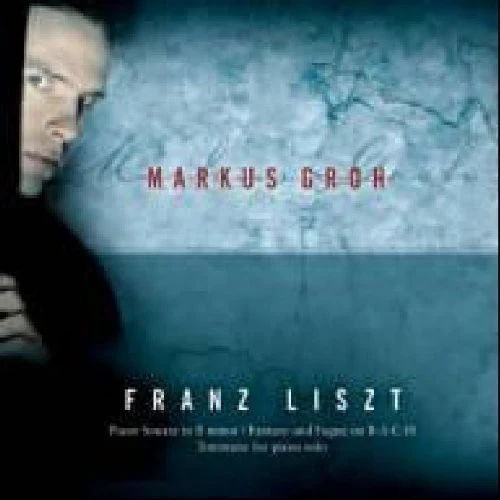
Liszt: B-a-c-h Variations, Piano Sonata / Markus Groh
This is a hybrid Super Audio CD playable on both regular and Super Audio CD players.
R E V I E W S
No easy listening here. Groh offers a monumental reading of the Sonata hewn from stone, with dark colors, generally measured tempos, and a crushing weight. In his curious program note (it’s framed as a letter to Liszt, but it tells the composer mostly things he already knows), Groh not only points to the Faust legend, but also suggests that the sonata has “parallels with the story of the Creation in the Bible.” His lengthy analysis, though, pretty much drops the analogy once it’s gotten past the opening measures—and rightly so. For the progress of the Liszt Sonata has nothing in common with Genesis; and what little light and Edenic joy the music might contain is blocked out by the almost unrelievedly grim intensity of the interpretation. Not even the fugue (played with exceptional clarity) has much spark or impetuosity.
In the end, then, Groh’s reading brings the music closer in spirit to Byron’s Manfred (with its self-lacerating guilt) than to either Faust or the Bible—but the music certainly supports that interpretation, and Groh the performer (as opposed to Groh the writer) makes a persuasive advocate. The careful shading of the opening measures holds out the promise of a performance of great expressive depth, taking nothing for granted—a promise that’s fulfilled in the artful shaping of the recitatives, the inevitable growth of the crescendos, the assurance of the phrasing, and the staggering conviction of the climaxes. I’m not quite ready to admit this CD to the inner circle with Argerich, Horowitz (the early recording), Ernst Levy, Hough, Pollini, Richter, and a handful of others; but it’s certainly close, and readers with several recordings on their shelves already should find this a gripping alternative view.
The Fantasy and Fugue responds well to the same epic approach—but I’m marginally less convinced by Totentanz. No complaints about his technique: in that regard, this is as stunning a performance as its companions. But Groh gives us a remarkably unironic reading of a piece that’s fueled by sardonic wit—and for all the detail, for all the striking contrasts, it seems to be a bit too monolithic. Still and all, this is a significant contribution to the Liszt catalog—and I’m eager to hear more from this remarkably talented musician.
FANFARE: Peter J. Rabinowitz
R E V I E W S
No easy listening here. Groh offers a monumental reading of the Sonata hewn from stone, with dark colors, generally measured tempos, and a crushing weight. In his curious program note (it’s framed as a letter to Liszt, but it tells the composer mostly things he already knows), Groh not only points to the Faust legend, but also suggests that the sonata has “parallels with the story of the Creation in the Bible.” His lengthy analysis, though, pretty much drops the analogy once it’s gotten past the opening measures—and rightly so. For the progress of the Liszt Sonata has nothing in common with Genesis; and what little light and Edenic joy the music might contain is blocked out by the almost unrelievedly grim intensity of the interpretation. Not even the fugue (played with exceptional clarity) has much spark or impetuosity.
In the end, then, Groh’s reading brings the music closer in spirit to Byron’s Manfred (with its self-lacerating guilt) than to either Faust or the Bible—but the music certainly supports that interpretation, and Groh the performer (as opposed to Groh the writer) makes a persuasive advocate. The careful shading of the opening measures holds out the promise of a performance of great expressive depth, taking nothing for granted—a promise that’s fulfilled in the artful shaping of the recitatives, the inevitable growth of the crescendos, the assurance of the phrasing, and the staggering conviction of the climaxes. I’m not quite ready to admit this CD to the inner circle with Argerich, Horowitz (the early recording), Ernst Levy, Hough, Pollini, Richter, and a handful of others; but it’s certainly close, and readers with several recordings on their shelves already should find this a gripping alternative view.
The Fantasy and Fugue responds well to the same epic approach—but I’m marginally less convinced by Totentanz. No complaints about his technique: in that regard, this is as stunning a performance as its companions. But Groh gives us a remarkably unironic reading of a piece that’s fueled by sardonic wit—and for all the detail, for all the striking contrasts, it seems to be a bit too monolithic. Still and all, this is a significant contribution to the Liszt catalog—and I’m eager to hear more from this remarkably talented musician.
FANFARE: Peter J. Rabinowitz
This is a hybrid Super Audio CD playable on both regular and Super Audio CD players.
R E V I E W S
No easy listening here. Groh offers a monumental reading of the Sonata hewn from stone, with dark colors, generally measured tempos, and a crushing weight. In his curious program note (it’s framed as a letter to Liszt, but it tells the composer mostly things he already knows), Groh not only points to the Faust legend, but also suggests that the sonata has “parallels with the story of the Creation in the Bible.” His lengthy analysis, though, pretty much drops the analogy once it’s gotten past the opening measures—and rightly so. For the progress of the Liszt Sonata has nothing in common with Genesis; and what little light and Edenic joy the music might contain is blocked out by the almost unrelievedly grim intensity of the interpretation. Not even the fugue (played with exceptional clarity) has much spark or impetuosity.
In the end, then, Groh’s reading brings the music closer in spirit to Byron’s Manfred (with its self-lacerating guilt) than to either Faust or the Bible—but the music certainly supports that interpretation, and Groh the performer (as opposed to Groh the writer) makes a persuasive advocate. The careful shading of the opening measures holds out the promise of a performance of great expressive depth, taking nothing for granted—a promise that’s fulfilled in the artful shaping of the recitatives, the inevitable growth of the crescendos, the assurance of the phrasing, and the staggering conviction of the climaxes. I’m not quite ready to admit this CD to the inner circle with Argerich, Horowitz (the early recording), Ernst Levy, Hough, Pollini, Richter, and a handful of others; but it’s certainly close, and readers with several recordings on their shelves already should find this a gripping alternative view.
The Fantasy and Fugue responds well to the same epic approach—but I’m marginally less convinced by Totentanz. No complaints about his technique: in that regard, this is as stunning a performance as its companions. But Groh gives us a remarkably unironic reading of a piece that’s fueled by sardonic wit—and for all the detail, for all the striking contrasts, it seems to be a bit too monolithic. Still and all, this is a significant contribution to the Liszt catalog—and I’m eager to hear more from this remarkably talented musician.
FANFARE: Peter J. Rabinowitz
R E V I E W S
No easy listening here. Groh offers a monumental reading of the Sonata hewn from stone, with dark colors, generally measured tempos, and a crushing weight. In his curious program note (it’s framed as a letter to Liszt, but it tells the composer mostly things he already knows), Groh not only points to the Faust legend, but also suggests that the sonata has “parallels with the story of the Creation in the Bible.” His lengthy analysis, though, pretty much drops the analogy once it’s gotten past the opening measures—and rightly so. For the progress of the Liszt Sonata has nothing in common with Genesis; and what little light and Edenic joy the music might contain is blocked out by the almost unrelievedly grim intensity of the interpretation. Not even the fugue (played with exceptional clarity) has much spark or impetuosity.
In the end, then, Groh’s reading brings the music closer in spirit to Byron’s Manfred (with its self-lacerating guilt) than to either Faust or the Bible—but the music certainly supports that interpretation, and Groh the performer (as opposed to Groh the writer) makes a persuasive advocate. The careful shading of the opening measures holds out the promise of a performance of great expressive depth, taking nothing for granted—a promise that’s fulfilled in the artful shaping of the recitatives, the inevitable growth of the crescendos, the assurance of the phrasing, and the staggering conviction of the climaxes. I’m not quite ready to admit this CD to the inner circle with Argerich, Horowitz (the early recording), Ernst Levy, Hough, Pollini, Richter, and a handful of others; but it’s certainly close, and readers with several recordings on their shelves already should find this a gripping alternative view.
The Fantasy and Fugue responds well to the same epic approach—but I’m marginally less convinced by Totentanz. No complaints about his technique: in that regard, this is as stunning a performance as its companions. But Groh gives us a remarkably unironic reading of a piece that’s fueled by sardonic wit—and for all the detail, for all the striking contrasts, it seems to be a bit too monolithic. Still and all, this is a significant contribution to the Liszt catalog—and I’m eager to hear more from this remarkably talented musician.
FANFARE: Peter J. Rabinowitz
$5.60
Original: $15.99
-65%Liszt: B-a-c-h Variations, Piano Sonata / Markus Groh—
$15.99
$5.60Description
This is a hybrid Super Audio CD playable on both regular and Super Audio CD players.
R E V I E W S
No easy listening here. Groh offers a monumental reading of the Sonata hewn from stone, with dark colors, generally measured tempos, and a crushing weight. In his curious program note (it’s framed as a letter to Liszt, but it tells the composer mostly things he already knows), Groh not only points to the Faust legend, but also suggests that the sonata has “parallels with the story of the Creation in the Bible.” His lengthy analysis, though, pretty much drops the analogy once it’s gotten past the opening measures—and rightly so. For the progress of the Liszt Sonata has nothing in common with Genesis; and what little light and Edenic joy the music might contain is blocked out by the almost unrelievedly grim intensity of the interpretation. Not even the fugue (played with exceptional clarity) has much spark or impetuosity.
In the end, then, Groh’s reading brings the music closer in spirit to Byron’s Manfred (with its self-lacerating guilt) than to either Faust or the Bible—but the music certainly supports that interpretation, and Groh the performer (as opposed to Groh the writer) makes a persuasive advocate. The careful shading of the opening measures holds out the promise of a performance of great expressive depth, taking nothing for granted—a promise that’s fulfilled in the artful shaping of the recitatives, the inevitable growth of the crescendos, the assurance of the phrasing, and the staggering conviction of the climaxes. I’m not quite ready to admit this CD to the inner circle with Argerich, Horowitz (the early recording), Ernst Levy, Hough, Pollini, Richter, and a handful of others; but it’s certainly close, and readers with several recordings on their shelves already should find this a gripping alternative view.
The Fantasy and Fugue responds well to the same epic approach—but I’m marginally less convinced by Totentanz. No complaints about his technique: in that regard, this is as stunning a performance as its companions. But Groh gives us a remarkably unironic reading of a piece that’s fueled by sardonic wit—and for all the detail, for all the striking contrasts, it seems to be a bit too monolithic. Still and all, this is a significant contribution to the Liszt catalog—and I’m eager to hear more from this remarkably talented musician.
FANFARE: Peter J. Rabinowitz
R E V I E W S
No easy listening here. Groh offers a monumental reading of the Sonata hewn from stone, with dark colors, generally measured tempos, and a crushing weight. In his curious program note (it’s framed as a letter to Liszt, but it tells the composer mostly things he already knows), Groh not only points to the Faust legend, but also suggests that the sonata has “parallels with the story of the Creation in the Bible.” His lengthy analysis, though, pretty much drops the analogy once it’s gotten past the opening measures—and rightly so. For the progress of the Liszt Sonata has nothing in common with Genesis; and what little light and Edenic joy the music might contain is blocked out by the almost unrelievedly grim intensity of the interpretation. Not even the fugue (played with exceptional clarity) has much spark or impetuosity.
In the end, then, Groh’s reading brings the music closer in spirit to Byron’s Manfred (with its self-lacerating guilt) than to either Faust or the Bible—but the music certainly supports that interpretation, and Groh the performer (as opposed to Groh the writer) makes a persuasive advocate. The careful shading of the opening measures holds out the promise of a performance of great expressive depth, taking nothing for granted—a promise that’s fulfilled in the artful shaping of the recitatives, the inevitable growth of the crescendos, the assurance of the phrasing, and the staggering conviction of the climaxes. I’m not quite ready to admit this CD to the inner circle with Argerich, Horowitz (the early recording), Ernst Levy, Hough, Pollini, Richter, and a handful of others; but it’s certainly close, and readers with several recordings on their shelves already should find this a gripping alternative view.
The Fantasy and Fugue responds well to the same epic approach—but I’m marginally less convinced by Totentanz. No complaints about his technique: in that regard, this is as stunning a performance as its companions. But Groh gives us a remarkably unironic reading of a piece that’s fueled by sardonic wit—and for all the detail, for all the striking contrasts, it seems to be a bit too monolithic. Still and all, this is a significant contribution to the Liszt catalog—and I’m eager to hear more from this remarkably talented musician.
FANFARE: Peter J. Rabinowitz