🎉 Up to 70% Off Selected ItemsShop Sale

1 / 2
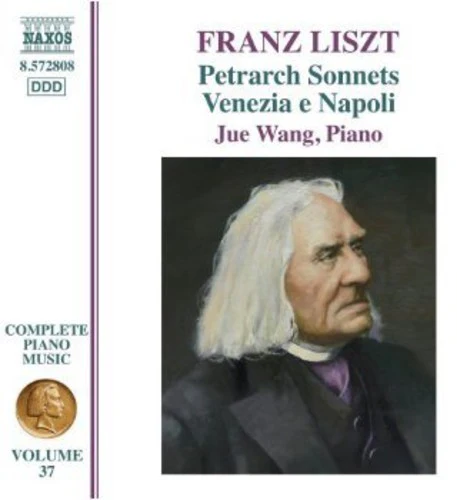
Liszt: Complete Piano Music, Vol. 37 / Jue Wang
Naxos’ ongoing complete Liszt piano music cycle reaches Volume 37 with the rarely heard first versions of three Petrarca Sonnets and Venezia e Napoli. The latter’s original incarnation included four rather than three movements. The opening movement features material that Liszt later recycled for his symphonic poem Tasso, with a middle section packed with scintillating arpeggios and rapid unison passages. It is followed by a brief declamatory movement, and then an Andante placido that would grow more elaborate, decorative, fluid, and imaginative as Gondoliera in the revised suite. Similarly, the later Tarantella is tighter and more dramatically cogent than its more diffuse yet no less demanding earlier counterpart. Among the three earlier Petrarca pieces, Sonetto No. 104’s differences particularly stand out from its later, more familiar revision, notably in a long, brooding introduction that Liszt replaced with the terser, agitated short phrases we know today.
Making his Naxos label debut, pianist Jue Wang plays best when his hands are fully occupied, as in the Tarantella’s bravura climaxes and long stretches of repeated notes, although Leslie Howard shapes the slower, rhetorical passagework with a stronger sense of the music’s declamatory nature and dynamic contrasts. While Wang captures the unquiet undercurrents of Schlaflos Frage und Antwort, his relatively heavy touch and general loudness take a back seat to Alfred Brendel’s faster and texturally clearer account on his Philips recording.
However, Wang’s light and supple Toccata points up the work’s foreshadowing similar textures and harmonic ambiguities of Debussy and Bartók. He tosses off the brief, flashy Galop de bal and the more substantial A minor Galop with tremendous character and technical finish, and serves up an ebullient Grand Galop chromatique that takes Liszt’s tempos and accentuations more seriously than the deliciously wacky Cziffra, whose galloping horse is closer to a souped-up bumper car. Keith Anderson’s annotations are up to his usual high standards.
-- Jed Distler, ClassicsToday.com
Making his Naxos label debut, pianist Jue Wang plays best when his hands are fully occupied, as in the Tarantella’s bravura climaxes and long stretches of repeated notes, although Leslie Howard shapes the slower, rhetorical passagework with a stronger sense of the music’s declamatory nature and dynamic contrasts. While Wang captures the unquiet undercurrents of Schlaflos Frage und Antwort, his relatively heavy touch and general loudness take a back seat to Alfred Brendel’s faster and texturally clearer account on his Philips recording.
However, Wang’s light and supple Toccata points up the work’s foreshadowing similar textures and harmonic ambiguities of Debussy and Bartók. He tosses off the brief, flashy Galop de bal and the more substantial A minor Galop with tremendous character and technical finish, and serves up an ebullient Grand Galop chromatique that takes Liszt’s tempos and accentuations more seriously than the deliciously wacky Cziffra, whose galloping horse is closer to a souped-up bumper car. Keith Anderson’s annotations are up to his usual high standards.
-- Jed Distler, ClassicsToday.com
Naxos’ ongoing complete Liszt piano music cycle reaches Volume 37 with the rarely heard first versions of three Petrarca Sonnets and Venezia e Napoli. The latter’s original incarnation included four rather than three movements. The opening movement features material that Liszt later recycled for his symphonic poem Tasso, with a middle section packed with scintillating arpeggios and rapid unison passages. It is followed by a brief declamatory movement, and then an Andante placido that would grow more elaborate, decorative, fluid, and imaginative as Gondoliera in the revised suite. Similarly, the later Tarantella is tighter and more dramatically cogent than its more diffuse yet no less demanding earlier counterpart. Among the three earlier Petrarca pieces, Sonetto No. 104’s differences particularly stand out from its later, more familiar revision, notably in a long, brooding introduction that Liszt replaced with the terser, agitated short phrases we know today.
Making his Naxos label debut, pianist Jue Wang plays best when his hands are fully occupied, as in the Tarantella’s bravura climaxes and long stretches of repeated notes, although Leslie Howard shapes the slower, rhetorical passagework with a stronger sense of the music’s declamatory nature and dynamic contrasts. While Wang captures the unquiet undercurrents of Schlaflos Frage und Antwort, his relatively heavy touch and general loudness take a back seat to Alfred Brendel’s faster and texturally clearer account on his Philips recording.
However, Wang’s light and supple Toccata points up the work’s foreshadowing similar textures and harmonic ambiguities of Debussy and Bartók. He tosses off the brief, flashy Galop de bal and the more substantial A minor Galop with tremendous character and technical finish, and serves up an ebullient Grand Galop chromatique that takes Liszt’s tempos and accentuations more seriously than the deliciously wacky Cziffra, whose galloping horse is closer to a souped-up bumper car. Keith Anderson’s annotations are up to his usual high standards.
-- Jed Distler, ClassicsToday.com
Making his Naxos label debut, pianist Jue Wang plays best when his hands are fully occupied, as in the Tarantella’s bravura climaxes and long stretches of repeated notes, although Leslie Howard shapes the slower, rhetorical passagework with a stronger sense of the music’s declamatory nature and dynamic contrasts. While Wang captures the unquiet undercurrents of Schlaflos Frage und Antwort, his relatively heavy touch and general loudness take a back seat to Alfred Brendel’s faster and texturally clearer account on his Philips recording.
However, Wang’s light and supple Toccata points up the work’s foreshadowing similar textures and harmonic ambiguities of Debussy and Bartók. He tosses off the brief, flashy Galop de bal and the more substantial A minor Galop with tremendous character and technical finish, and serves up an ebullient Grand Galop chromatique that takes Liszt’s tempos and accentuations more seriously than the deliciously wacky Cziffra, whose galloping horse is closer to a souped-up bumper car. Keith Anderson’s annotations are up to his usual high standards.
-- Jed Distler, ClassicsToday.com
$19.99
Liszt: Complete Piano Music, Vol. 37 / Jue Wang—
$19.99
Description
Naxos’ ongoing complete Liszt piano music cycle reaches Volume 37 with the rarely heard first versions of three Petrarca Sonnets and Venezia e Napoli. The latter’s original incarnation included four rather than three movements. The opening movement features material that Liszt later recycled for his symphonic poem Tasso, with a middle section packed with scintillating arpeggios and rapid unison passages. It is followed by a brief declamatory movement, and then an Andante placido that would grow more elaborate, decorative, fluid, and imaginative as Gondoliera in the revised suite. Similarly, the later Tarantella is tighter and more dramatically cogent than its more diffuse yet no less demanding earlier counterpart. Among the three earlier Petrarca pieces, Sonetto No. 104’s differences particularly stand out from its later, more familiar revision, notably in a long, brooding introduction that Liszt replaced with the terser, agitated short phrases we know today.
Making his Naxos label debut, pianist Jue Wang plays best when his hands are fully occupied, as in the Tarantella’s bravura climaxes and long stretches of repeated notes, although Leslie Howard shapes the slower, rhetorical passagework with a stronger sense of the music’s declamatory nature and dynamic contrasts. While Wang captures the unquiet undercurrents of Schlaflos Frage und Antwort, his relatively heavy touch and general loudness take a back seat to Alfred Brendel’s faster and texturally clearer account on his Philips recording.
However, Wang’s light and supple Toccata points up the work’s foreshadowing similar textures and harmonic ambiguities of Debussy and Bartók. He tosses off the brief, flashy Galop de bal and the more substantial A minor Galop with tremendous character and technical finish, and serves up an ebullient Grand Galop chromatique that takes Liszt’s tempos and accentuations more seriously than the deliciously wacky Cziffra, whose galloping horse is closer to a souped-up bumper car. Keith Anderson’s annotations are up to his usual high standards.
-- Jed Distler, ClassicsToday.com
Making his Naxos label debut, pianist Jue Wang plays best when his hands are fully occupied, as in the Tarantella’s bravura climaxes and long stretches of repeated notes, although Leslie Howard shapes the slower, rhetorical passagework with a stronger sense of the music’s declamatory nature and dynamic contrasts. While Wang captures the unquiet undercurrents of Schlaflos Frage und Antwort, his relatively heavy touch and general loudness take a back seat to Alfred Brendel’s faster and texturally clearer account on his Philips recording.
However, Wang’s light and supple Toccata points up the work’s foreshadowing similar textures and harmonic ambiguities of Debussy and Bartók. He tosses off the brief, flashy Galop de bal and the more substantial A minor Galop with tremendous character and technical finish, and serves up an ebullient Grand Galop chromatique that takes Liszt’s tempos and accentuations more seriously than the deliciously wacky Cziffra, whose galloping horse is closer to a souped-up bumper car. Keith Anderson’s annotations are up to his usual high standards.
-- Jed Distler, ClassicsToday.com