🎉 Up to 70% Off Selected ItemsShop Sale

1 / 2
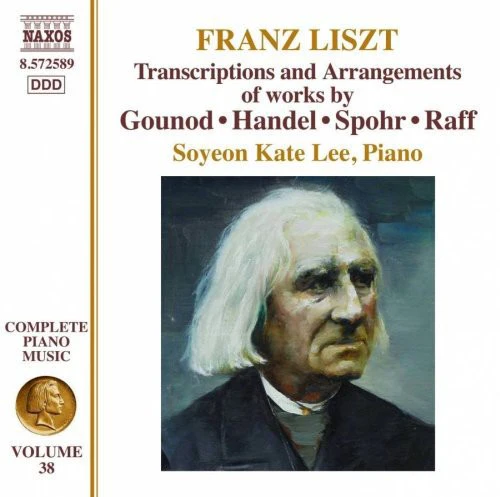
Liszt: Transcriptions And Arrangements / Soyeon Kate Lee
Remember Soyeon Kate Lee’s 2008 Zankel Hall recital, where she appeared in a concert gown constructed from 6000 recycled grape juice containers? Not surprisingly her outfit got more press than her actual music making, but the fact is that Lee is a splendid pianist who doesn’t need gimmicks. Her first appearance in Naxos’ complete Liszt piano music cycle attests to this.
Lee’s shapely and sonorous handling of the thick pianistic hurdles throughout Liszt’s transcription of the Sarabande and Chaconne from Handel’s Singspiel Almira holds interest in terms of technique and stamina, although the music is deadly dull. By contrast, Liszt’s paraphrase based on Gounod’s Hymne a Sainte Cecile thoroughly improves upon the original composition, where Lee’s contouring of the multi-thematic textural layers proves more pliable and forward moving than in Leslie Howard’s comparatively square (though no less sensitive) rendition.
So far as Liszt’s transcription from Joachim Raff’s forgotten opera König Alfred, Lee does not differentiate the opening Andante finale’s foreground and background material with Leslie Howard’s variety, yet she’s more animated and energetic in the subsequent Marsch. Lee also plays the Gounod transcriptions from Romeo et Juliette and La reine de Saba with a lovely lyrical sensitivity. The better known Valse from Gounod’s Faust paraphrase features scrupulous and crisply dispatched fingerwork, but the interpretation is a bit cut and dried, falling short of Jean-Yves Thibaudet’s glittery panache or the dynamic and rhythmic heft of Earl Wild and Egon Petri. However, she takes the opening section of Liszt’s transcription of Spohr’s Die Rose Romanze at a faster clip and with more vocally oriented phrasing than in Howard’s slower, more static traversal, heightening the music’s rich harmonic invention in the process. Annotations and engineering are first rate. In all, a strong entry in Naxos’ ongoing Liszt series.
-- Jed Distler, ClassicsToday.com
Lee’s shapely and sonorous handling of the thick pianistic hurdles throughout Liszt’s transcription of the Sarabande and Chaconne from Handel’s Singspiel Almira holds interest in terms of technique and stamina, although the music is deadly dull. By contrast, Liszt’s paraphrase based on Gounod’s Hymne a Sainte Cecile thoroughly improves upon the original composition, where Lee’s contouring of the multi-thematic textural layers proves more pliable and forward moving than in Leslie Howard’s comparatively square (though no less sensitive) rendition.
So far as Liszt’s transcription from Joachim Raff’s forgotten opera König Alfred, Lee does not differentiate the opening Andante finale’s foreground and background material with Leslie Howard’s variety, yet she’s more animated and energetic in the subsequent Marsch. Lee also plays the Gounod transcriptions from Romeo et Juliette and La reine de Saba with a lovely lyrical sensitivity. The better known Valse from Gounod’s Faust paraphrase features scrupulous and crisply dispatched fingerwork, but the interpretation is a bit cut and dried, falling short of Jean-Yves Thibaudet’s glittery panache or the dynamic and rhythmic heft of Earl Wild and Egon Petri. However, she takes the opening section of Liszt’s transcription of Spohr’s Die Rose Romanze at a faster clip and with more vocally oriented phrasing than in Howard’s slower, more static traversal, heightening the music’s rich harmonic invention in the process. Annotations and engineering are first rate. In all, a strong entry in Naxos’ ongoing Liszt series.
-- Jed Distler, ClassicsToday.com
Remember Soyeon Kate Lee’s 2008 Zankel Hall recital, where she appeared in a concert gown constructed from 6000 recycled grape juice containers? Not surprisingly her outfit got more press than her actual music making, but the fact is that Lee is a splendid pianist who doesn’t need gimmicks. Her first appearance in Naxos’ complete Liszt piano music cycle attests to this.
Lee’s shapely and sonorous handling of the thick pianistic hurdles throughout Liszt’s transcription of the Sarabande and Chaconne from Handel’s Singspiel Almira holds interest in terms of technique and stamina, although the music is deadly dull. By contrast, Liszt’s paraphrase based on Gounod’s Hymne a Sainte Cecile thoroughly improves upon the original composition, where Lee’s contouring of the multi-thematic textural layers proves more pliable and forward moving than in Leslie Howard’s comparatively square (though no less sensitive) rendition.
So far as Liszt’s transcription from Joachim Raff’s forgotten opera König Alfred, Lee does not differentiate the opening Andante finale’s foreground and background material with Leslie Howard’s variety, yet she’s more animated and energetic in the subsequent Marsch. Lee also plays the Gounod transcriptions from Romeo et Juliette and La reine de Saba with a lovely lyrical sensitivity. The better known Valse from Gounod’s Faust paraphrase features scrupulous and crisply dispatched fingerwork, but the interpretation is a bit cut and dried, falling short of Jean-Yves Thibaudet’s glittery panache or the dynamic and rhythmic heft of Earl Wild and Egon Petri. However, she takes the opening section of Liszt’s transcription of Spohr’s Die Rose Romanze at a faster clip and with more vocally oriented phrasing than in Howard’s slower, more static traversal, heightening the music’s rich harmonic invention in the process. Annotations and engineering are first rate. In all, a strong entry in Naxos’ ongoing Liszt series.
-- Jed Distler, ClassicsToday.com
Lee’s shapely and sonorous handling of the thick pianistic hurdles throughout Liszt’s transcription of the Sarabande and Chaconne from Handel’s Singspiel Almira holds interest in terms of technique and stamina, although the music is deadly dull. By contrast, Liszt’s paraphrase based on Gounod’s Hymne a Sainte Cecile thoroughly improves upon the original composition, where Lee’s contouring of the multi-thematic textural layers proves more pliable and forward moving than in Leslie Howard’s comparatively square (though no less sensitive) rendition.
So far as Liszt’s transcription from Joachim Raff’s forgotten opera König Alfred, Lee does not differentiate the opening Andante finale’s foreground and background material with Leslie Howard’s variety, yet she’s more animated and energetic in the subsequent Marsch. Lee also plays the Gounod transcriptions from Romeo et Juliette and La reine de Saba with a lovely lyrical sensitivity. The better known Valse from Gounod’s Faust paraphrase features scrupulous and crisply dispatched fingerwork, but the interpretation is a bit cut and dried, falling short of Jean-Yves Thibaudet’s glittery panache or the dynamic and rhythmic heft of Earl Wild and Egon Petri. However, she takes the opening section of Liszt’s transcription of Spohr’s Die Rose Romanze at a faster clip and with more vocally oriented phrasing than in Howard’s slower, more static traversal, heightening the music’s rich harmonic invention in the process. Annotations and engineering are first rate. In all, a strong entry in Naxos’ ongoing Liszt series.
-- Jed Distler, ClassicsToday.com
$9.99
Liszt: Transcriptions And Arrangements / Soyeon Kate Lee—
$9.99
Description
Remember Soyeon Kate Lee’s 2008 Zankel Hall recital, where she appeared in a concert gown constructed from 6000 recycled grape juice containers? Not surprisingly her outfit got more press than her actual music making, but the fact is that Lee is a splendid pianist who doesn’t need gimmicks. Her first appearance in Naxos’ complete Liszt piano music cycle attests to this.
Lee’s shapely and sonorous handling of the thick pianistic hurdles throughout Liszt’s transcription of the Sarabande and Chaconne from Handel’s Singspiel Almira holds interest in terms of technique and stamina, although the music is deadly dull. By contrast, Liszt’s paraphrase based on Gounod’s Hymne a Sainte Cecile thoroughly improves upon the original composition, where Lee’s contouring of the multi-thematic textural layers proves more pliable and forward moving than in Leslie Howard’s comparatively square (though no less sensitive) rendition.
So far as Liszt’s transcription from Joachim Raff’s forgotten opera König Alfred, Lee does not differentiate the opening Andante finale’s foreground and background material with Leslie Howard’s variety, yet she’s more animated and energetic in the subsequent Marsch. Lee also plays the Gounod transcriptions from Romeo et Juliette and La reine de Saba with a lovely lyrical sensitivity. The better known Valse from Gounod’s Faust paraphrase features scrupulous and crisply dispatched fingerwork, but the interpretation is a bit cut and dried, falling short of Jean-Yves Thibaudet’s glittery panache or the dynamic and rhythmic heft of Earl Wild and Egon Petri. However, she takes the opening section of Liszt’s transcription of Spohr’s Die Rose Romanze at a faster clip and with more vocally oriented phrasing than in Howard’s slower, more static traversal, heightening the music’s rich harmonic invention in the process. Annotations and engineering are first rate. In all, a strong entry in Naxos’ ongoing Liszt series.
-- Jed Distler, ClassicsToday.com
Lee’s shapely and sonorous handling of the thick pianistic hurdles throughout Liszt’s transcription of the Sarabande and Chaconne from Handel’s Singspiel Almira holds interest in terms of technique and stamina, although the music is deadly dull. By contrast, Liszt’s paraphrase based on Gounod’s Hymne a Sainte Cecile thoroughly improves upon the original composition, where Lee’s contouring of the multi-thematic textural layers proves more pliable and forward moving than in Leslie Howard’s comparatively square (though no less sensitive) rendition.
So far as Liszt’s transcription from Joachim Raff’s forgotten opera König Alfred, Lee does not differentiate the opening Andante finale’s foreground and background material with Leslie Howard’s variety, yet she’s more animated and energetic in the subsequent Marsch. Lee also plays the Gounod transcriptions from Romeo et Juliette and La reine de Saba with a lovely lyrical sensitivity. The better known Valse from Gounod’s Faust paraphrase features scrupulous and crisply dispatched fingerwork, but the interpretation is a bit cut and dried, falling short of Jean-Yves Thibaudet’s glittery panache or the dynamic and rhythmic heft of Earl Wild and Egon Petri. However, she takes the opening section of Liszt’s transcription of Spohr’s Die Rose Romanze at a faster clip and with more vocally oriented phrasing than in Howard’s slower, more static traversal, heightening the music’s rich harmonic invention in the process. Annotations and engineering are first rate. In all, a strong entry in Naxos’ ongoing Liszt series.
-- Jed Distler, ClassicsToday.com