🎉 Up to 70% Off Selected ItemsShop Sale

1 / 2
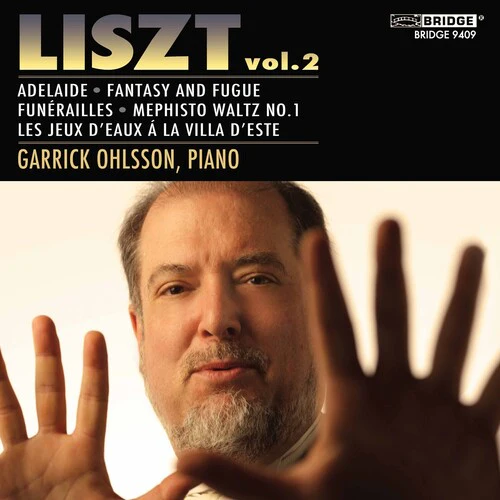
Liszt, Vol. 2 / Garrick Ohlsson
LISZT Années de pèlerinage , Book III: Les Jeux d’eaux à la Villa d’Este. Harmonies poétiques et religieuses: Bénédiction de Dieu dans la solitude; Funérailles. Nuages gris. 4 Little Piano Pieces : No. 2 in A?. Mephisto Waltz No. 1. BEETHOVEN-LISZT Adelaide. BACH-LISZT Fantasy and Fugue, S 463 • Garrick Ohlsson (pn) • BRIDGE 9409 (76:27)
A few months back, I was wowed by a blazing new Liszt recital from Valentina Lisitsa (see Fanfare 37:4). Here, on a solidly engineered disc featuring a pianist of an earlier generation, we get something substantially less dazzling, although in its own way even more impressive. Not that Ohlsson lacks technique: whether in the clarity of the voices in the Bach-Liszt Fugue or of the sprays of notes in Jeux d’eaux , Ohlsson strides through this often transcendentally difficult music with supreme and fully justified confidence. Still—and I mean this as a descriptive, rather than an evaluative, claim—there’s a maturity to the playing that we don’t hear in Lisitsa’s more exuberantly youthful and improvisatory performances.
For the most part (the closing Mephisto Waltz is the primary exception), Ohlsson has chosen from Liszt’s more sober works—and for the most part, his moderate tempos and (where appropriate) his bass-centered sonority give the details of the music a chance to sink in. More importantly, I think, he manages to probe beneath the surface of the music and (miraculously) to do so without sacrificing any of its immediate rhetoric. Thus, for instance, there’s no lack of virtuoso sparkle in Jeux d’eaux ; but Ohlsson is also unusually alert to its subtler emotional shadings, capturing the disarming splashes of nostalgic regret, in particular, as well as anyone. Similarly, while he can crush you with the climaxes of Funérailles , he’s unusually tender in the quieter moments, giving the work a nobility it doesn’t always have in the hands of more consistently extroverted pianists like Horowitz and Barere. In his appropriately enthusiastic review of Ohlsson’s previous Bridge Liszt recording (the Sonata and the Ad Nos Fantasy , 35:2), Patrick Rucker referred to Ohlsson’s “profound wisdom and almost excruciating beauty”—and the same overriding qualities certainly characterize this remarkable Funérailles , too.
Ohlsson also has an enviable sense of architecture. This emerges not only in his treatment of the individual works (there’s consistent impetus to Bénédiction , a work that can easily stall but that here provides an engrossing sense of journey), but also in his design of the program as a whole. I particularly enjoyed the way that Jeux d’eaux , which follows the joyful reading of the Bach-Liszt Fugue, serves as to prepare us for beauties of Bénédiction —as well as the way Nuages gris (played with remarkable finesse) and the second of the Four Little Piano Pieces provide a transition between the grimness of Funérailles and the dash of the Mephisto Waltz.
In sum, music-making that deserves to be savored. I hope that Bridge and Ohlsson have plans for continuing the series.
FANFARE: Peter J. Rabinowitz
LISZT Années de pèlerinage , Book III: Les Jeux d’eaux à la Villa d’Este. Harmonies poétiques et religieuses: Bénédiction de Dieu dans la solitude; Funérailles. Nuages gris. 4 Little Piano Pieces : No. 2 in A?. Mephisto Waltz No. 1. BEETHOVEN-LISZT Adelaide. BACH-LISZT Fantasy and Fugue, S 463 • Garrick Ohlsson (pn) • BRIDGE 9409 (76:27)
A few months back, I was wowed by a blazing new Liszt recital from Valentina Lisitsa (see Fanfare 37:4). Here, on a solidly engineered disc featuring a pianist of an earlier generation, we get something substantially less dazzling, although in its own way even more impressive. Not that Ohlsson lacks technique: whether in the clarity of the voices in the Bach-Liszt Fugue or of the sprays of notes in Jeux d’eaux , Ohlsson strides through this often transcendentally difficult music with supreme and fully justified confidence. Still—and I mean this as a descriptive, rather than an evaluative, claim—there’s a maturity to the playing that we don’t hear in Lisitsa’s more exuberantly youthful and improvisatory performances.
For the most part (the closing Mephisto Waltz is the primary exception), Ohlsson has chosen from Liszt’s more sober works—and for the most part, his moderate tempos and (where appropriate) his bass-centered sonority give the details of the music a chance to sink in. More importantly, I think, he manages to probe beneath the surface of the music and (miraculously) to do so without sacrificing any of its immediate rhetoric. Thus, for instance, there’s no lack of virtuoso sparkle in Jeux d’eaux ; but Ohlsson is also unusually alert to its subtler emotional shadings, capturing the disarming splashes of nostalgic regret, in particular, as well as anyone. Similarly, while he can crush you with the climaxes of Funérailles , he’s unusually tender in the quieter moments, giving the work a nobility it doesn’t always have in the hands of more consistently extroverted pianists like Horowitz and Barere. In his appropriately enthusiastic review of Ohlsson’s previous Bridge Liszt recording (the Sonata and the Ad Nos Fantasy , 35:2), Patrick Rucker referred to Ohlsson’s “profound wisdom and almost excruciating beauty”—and the same overriding qualities certainly characterize this remarkable Funérailles , too.
Ohlsson also has an enviable sense of architecture. This emerges not only in his treatment of the individual works (there’s consistent impetus to Bénédiction , a work that can easily stall but that here provides an engrossing sense of journey), but also in his design of the program as a whole. I particularly enjoyed the way that Jeux d’eaux , which follows the joyful reading of the Bach-Liszt Fugue, serves as to prepare us for beauties of Bénédiction —as well as the way Nuages gris (played with remarkable finesse) and the second of the Four Little Piano Pieces provide a transition between the grimness of Funérailles and the dash of the Mephisto Waltz.
In sum, music-making that deserves to be savored. I hope that Bridge and Ohlsson have plans for continuing the series.
FANFARE: Peter J. Rabinowitz
$14.99
Liszt, Vol. 2 / Garrick Ohlsson—
$14.99
Description
LISZT Années de pèlerinage , Book III: Les Jeux d’eaux à la Villa d’Este. Harmonies poétiques et religieuses: Bénédiction de Dieu dans la solitude; Funérailles. Nuages gris. 4 Little Piano Pieces : No. 2 in A?. Mephisto Waltz No. 1. BEETHOVEN-LISZT Adelaide. BACH-LISZT Fantasy and Fugue, S 463 • Garrick Ohlsson (pn) • BRIDGE 9409 (76:27)
A few months back, I was wowed by a blazing new Liszt recital from Valentina Lisitsa (see Fanfare 37:4). Here, on a solidly engineered disc featuring a pianist of an earlier generation, we get something substantially less dazzling, although in its own way even more impressive. Not that Ohlsson lacks technique: whether in the clarity of the voices in the Bach-Liszt Fugue or of the sprays of notes in Jeux d’eaux , Ohlsson strides through this often transcendentally difficult music with supreme and fully justified confidence. Still—and I mean this as a descriptive, rather than an evaluative, claim—there’s a maturity to the playing that we don’t hear in Lisitsa’s more exuberantly youthful and improvisatory performances.
For the most part (the closing Mephisto Waltz is the primary exception), Ohlsson has chosen from Liszt’s more sober works—and for the most part, his moderate tempos and (where appropriate) his bass-centered sonority give the details of the music a chance to sink in. More importantly, I think, he manages to probe beneath the surface of the music and (miraculously) to do so without sacrificing any of its immediate rhetoric. Thus, for instance, there’s no lack of virtuoso sparkle in Jeux d’eaux ; but Ohlsson is also unusually alert to its subtler emotional shadings, capturing the disarming splashes of nostalgic regret, in particular, as well as anyone. Similarly, while he can crush you with the climaxes of Funérailles , he’s unusually tender in the quieter moments, giving the work a nobility it doesn’t always have in the hands of more consistently extroverted pianists like Horowitz and Barere. In his appropriately enthusiastic review of Ohlsson’s previous Bridge Liszt recording (the Sonata and the Ad Nos Fantasy , 35:2), Patrick Rucker referred to Ohlsson’s “profound wisdom and almost excruciating beauty”—and the same overriding qualities certainly characterize this remarkable Funérailles , too.
Ohlsson also has an enviable sense of architecture. This emerges not only in his treatment of the individual works (there’s consistent impetus to Bénédiction , a work that can easily stall but that here provides an engrossing sense of journey), but also in his design of the program as a whole. I particularly enjoyed the way that Jeux d’eaux , which follows the joyful reading of the Bach-Liszt Fugue, serves as to prepare us for beauties of Bénédiction —as well as the way Nuages gris (played with remarkable finesse) and the second of the Four Little Piano Pieces provide a transition between the grimness of Funérailles and the dash of the Mephisto Waltz.
In sum, music-making that deserves to be savored. I hope that Bridge and Ohlsson have plans for continuing the series.
FANFARE: Peter J. Rabinowitz