🎉 Up to 70% Off Selected ItemsShop Sale

1 / 2
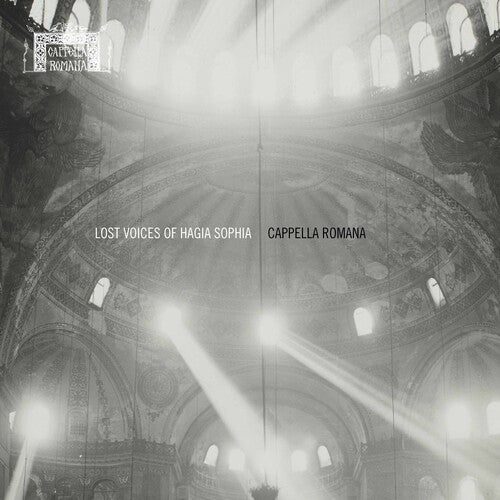
Lost Voices of Hagia Sophia / Lingas, Cappella Romana [CD + Blu-ray Audio]
Lost Voices of Hagia Sophia is the first vocal album in the world to be recorded entirely in live virtual acoustics. It brings together art history, music history, performance, and technology to re-create medieval sacred sound in the cathedral of Hagia Sophia as an aural virtual reality. With a stunning reverberation time of over 11 seconds, the acoustics of Hagia Sophia were measured and analyzed, and auralized in real time on Cappella Romana’s performance by the Icons of Sound team at Stanford University (iconsofsound.stanford.edu). Lost Voices of Hagia Sophia presents more than 75 minutes of medieval Byzantine chant for the Feast of the Holy Cross in Constantinople, one of the greatest celebrations in the yearly cycle of worship at Hagia Sophia. This deluxe package contains standard- and high-resolution stereo and surround-sound formats including Dolby Atmos™, as well as a bonus track and a 24-minute documentary film. Enrich your experience of the music with in-depth essays, musical examples, and illustrations about the project in a 40-page booklet, which also presents all original Greek texts with translations in English. For a thousand years, Hagia Sophia was the largest enclosed space in the world. Let Lost Voices of Hagia Sophia transport you back in time to medieval sound and ritual in this monumental sixth-century cathedral.
-----
REVIEW:
In the winter of 2010, Ms. Bissera Pentcheva obtained permission to enter what was then the Hagia Sophia museum at dawn, capturing four balloon pops and a wealth of acoustic detail.
The balloon noises, along with maps of the interior, enabled identification of the acoustic fingerprint of the building, including the multidirectional refraction of sound as it bounces off the dome and marble colonnades. Computer simulations were then integrated into a set of microphones and speakers.
Thus the members of Cappella Romana, a vocal ensemble based in Portland, Ore., specializing in Byzantine chant, recorded “The Lost Voices” in an offsite space that persuasively mimicked the acoustics of Hagia Sophia — with its luscious reverberation, cross echoes, and amplification of particular frequencies.
In Byzantine cathedral chant, reverberation was key to invoking the divine presence. She pointed to the exuberant amount of melisma in the repertory, where a single syllable is stretched over multiple notes. In the liquid acoustics of Hagia Sophia, words sung in this way blur.
The recording provides a glimpse of that experience. Phrases chanted in unison leave a ghostly imprint. Rhythmic shudders and grace notes set off blurry squiggles of overlapping echoes. Chords unfurl in reverberant bloom.
– New York Times (Corinna da Fonseca-Wollheim)
-----
REVIEW:
In the winter of 2010, Ms. Bissera Pentcheva obtained permission to enter what was then the Hagia Sophia museum at dawn, capturing four balloon pops and a wealth of acoustic detail.
The balloon noises, along with maps of the interior, enabled identification of the acoustic fingerprint of the building, including the multidirectional refraction of sound as it bounces off the dome and marble colonnades. Computer simulations were then integrated into a set of microphones and speakers.
Thus the members of Cappella Romana, a vocal ensemble based in Portland, Ore., specializing in Byzantine chant, recorded “The Lost Voices” in an offsite space that persuasively mimicked the acoustics of Hagia Sophia — with its luscious reverberation, cross echoes, and amplification of particular frequencies.
In Byzantine cathedral chant, reverberation was key to invoking the divine presence. She pointed to the exuberant amount of melisma in the repertory, where a single syllable is stretched over multiple notes. In the liquid acoustics of Hagia Sophia, words sung in this way blur.
The recording provides a glimpse of that experience. Phrases chanted in unison leave a ghostly imprint. Rhythmic shudders and grace notes set off blurry squiggles of overlapping echoes. Chords unfurl in reverberant bloom.
– New York Times (Corinna da Fonseca-Wollheim)
Lost Voices of Hagia Sophia is the first vocal album in the world to be recorded entirely in live virtual acoustics. It brings together art history, music history, performance, and technology to re-create medieval sacred sound in the cathedral of Hagia Sophia as an aural virtual reality. With a stunning reverberation time of over 11 seconds, the acoustics of Hagia Sophia were measured and analyzed, and auralized in real time on Cappella Romana’s performance by the Icons of Sound team at Stanford University (iconsofsound.stanford.edu). Lost Voices of Hagia Sophia presents more than 75 minutes of medieval Byzantine chant for the Feast of the Holy Cross in Constantinople, one of the greatest celebrations in the yearly cycle of worship at Hagia Sophia. This deluxe package contains standard- and high-resolution stereo and surround-sound formats including Dolby Atmos™, as well as a bonus track and a 24-minute documentary film. Enrich your experience of the music with in-depth essays, musical examples, and illustrations about the project in a 40-page booklet, which also presents all original Greek texts with translations in English. For a thousand years, Hagia Sophia was the largest enclosed space in the world. Let Lost Voices of Hagia Sophia transport you back in time to medieval sound and ritual in this monumental sixth-century cathedral.
-----
REVIEW:
In the winter of 2010, Ms. Bissera Pentcheva obtained permission to enter what was then the Hagia Sophia museum at dawn, capturing four balloon pops and a wealth of acoustic detail.
The balloon noises, along with maps of the interior, enabled identification of the acoustic fingerprint of the building, including the multidirectional refraction of sound as it bounces off the dome and marble colonnades. Computer simulations were then integrated into a set of microphones and speakers.
Thus the members of Cappella Romana, a vocal ensemble based in Portland, Ore., specializing in Byzantine chant, recorded “The Lost Voices” in an offsite space that persuasively mimicked the acoustics of Hagia Sophia — with its luscious reverberation, cross echoes, and amplification of particular frequencies.
In Byzantine cathedral chant, reverberation was key to invoking the divine presence. She pointed to the exuberant amount of melisma in the repertory, where a single syllable is stretched over multiple notes. In the liquid acoustics of Hagia Sophia, words sung in this way blur.
The recording provides a glimpse of that experience. Phrases chanted in unison leave a ghostly imprint. Rhythmic shudders and grace notes set off blurry squiggles of overlapping echoes. Chords unfurl in reverberant bloom.
– New York Times (Corinna da Fonseca-Wollheim)
-----
REVIEW:
In the winter of 2010, Ms. Bissera Pentcheva obtained permission to enter what was then the Hagia Sophia museum at dawn, capturing four balloon pops and a wealth of acoustic detail.
The balloon noises, along with maps of the interior, enabled identification of the acoustic fingerprint of the building, including the multidirectional refraction of sound as it bounces off the dome and marble colonnades. Computer simulations were then integrated into a set of microphones and speakers.
Thus the members of Cappella Romana, a vocal ensemble based in Portland, Ore., specializing in Byzantine chant, recorded “The Lost Voices” in an offsite space that persuasively mimicked the acoustics of Hagia Sophia — with its luscious reverberation, cross echoes, and amplification of particular frequencies.
In Byzantine cathedral chant, reverberation was key to invoking the divine presence. She pointed to the exuberant amount of melisma in the repertory, where a single syllable is stretched over multiple notes. In the liquid acoustics of Hagia Sophia, words sung in this way blur.
The recording provides a glimpse of that experience. Phrases chanted in unison leave a ghostly imprint. Rhythmic shudders and grace notes set off blurry squiggles of overlapping echoes. Chords unfurl in reverberant bloom.
– New York Times (Corinna da Fonseca-Wollheim)
$8.75
Original: $24.99
-65%Lost Voices of Hagia Sophia / Lingas, Cappella Romana [CD + Blu-ray Audio]—
$24.99
$8.75Description
Lost Voices of Hagia Sophia is the first vocal album in the world to be recorded entirely in live virtual acoustics. It brings together art history, music history, performance, and technology to re-create medieval sacred sound in the cathedral of Hagia Sophia as an aural virtual reality. With a stunning reverberation time of over 11 seconds, the acoustics of Hagia Sophia were measured and analyzed, and auralized in real time on Cappella Romana’s performance by the Icons of Sound team at Stanford University (iconsofsound.stanford.edu). Lost Voices of Hagia Sophia presents more than 75 minutes of medieval Byzantine chant for the Feast of the Holy Cross in Constantinople, one of the greatest celebrations in the yearly cycle of worship at Hagia Sophia. This deluxe package contains standard- and high-resolution stereo and surround-sound formats including Dolby Atmos™, as well as a bonus track and a 24-minute documentary film. Enrich your experience of the music with in-depth essays, musical examples, and illustrations about the project in a 40-page booklet, which also presents all original Greek texts with translations in English. For a thousand years, Hagia Sophia was the largest enclosed space in the world. Let Lost Voices of Hagia Sophia transport you back in time to medieval sound and ritual in this monumental sixth-century cathedral.
-----
REVIEW:
In the winter of 2010, Ms. Bissera Pentcheva obtained permission to enter what was then the Hagia Sophia museum at dawn, capturing four balloon pops and a wealth of acoustic detail.
The balloon noises, along with maps of the interior, enabled identification of the acoustic fingerprint of the building, including the multidirectional refraction of sound as it bounces off the dome and marble colonnades. Computer simulations were then integrated into a set of microphones and speakers.
Thus the members of Cappella Romana, a vocal ensemble based in Portland, Ore., specializing in Byzantine chant, recorded “The Lost Voices” in an offsite space that persuasively mimicked the acoustics of Hagia Sophia — with its luscious reverberation, cross echoes, and amplification of particular frequencies.
In Byzantine cathedral chant, reverberation was key to invoking the divine presence. She pointed to the exuberant amount of melisma in the repertory, where a single syllable is stretched over multiple notes. In the liquid acoustics of Hagia Sophia, words sung in this way blur.
The recording provides a glimpse of that experience. Phrases chanted in unison leave a ghostly imprint. Rhythmic shudders and grace notes set off blurry squiggles of overlapping echoes. Chords unfurl in reverberant bloom.
– New York Times (Corinna da Fonseca-Wollheim)
-----
REVIEW:
In the winter of 2010, Ms. Bissera Pentcheva obtained permission to enter what was then the Hagia Sophia museum at dawn, capturing four balloon pops and a wealth of acoustic detail.
The balloon noises, along with maps of the interior, enabled identification of the acoustic fingerprint of the building, including the multidirectional refraction of sound as it bounces off the dome and marble colonnades. Computer simulations were then integrated into a set of microphones and speakers.
Thus the members of Cappella Romana, a vocal ensemble based in Portland, Ore., specializing in Byzantine chant, recorded “The Lost Voices” in an offsite space that persuasively mimicked the acoustics of Hagia Sophia — with its luscious reverberation, cross echoes, and amplification of particular frequencies.
In Byzantine cathedral chant, reverberation was key to invoking the divine presence. She pointed to the exuberant amount of melisma in the repertory, where a single syllable is stretched over multiple notes. In the liquid acoustics of Hagia Sophia, words sung in this way blur.
The recording provides a glimpse of that experience. Phrases chanted in unison leave a ghostly imprint. Rhythmic shudders and grace notes set off blurry squiggles of overlapping echoes. Chords unfurl in reverberant bloom.
– New York Times (Corinna da Fonseca-Wollheim)