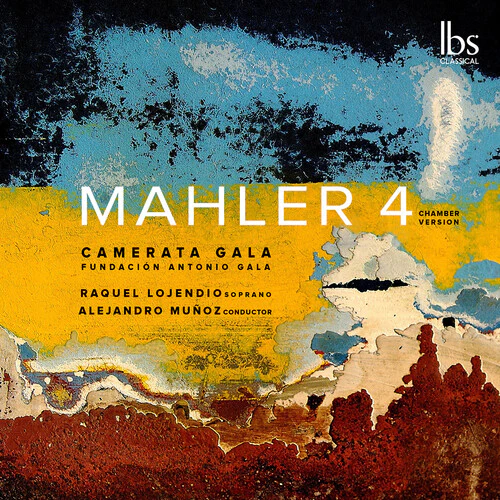
Mahler: Symphony No. 4 / Lojendio, Muñoz, Camerata Gala
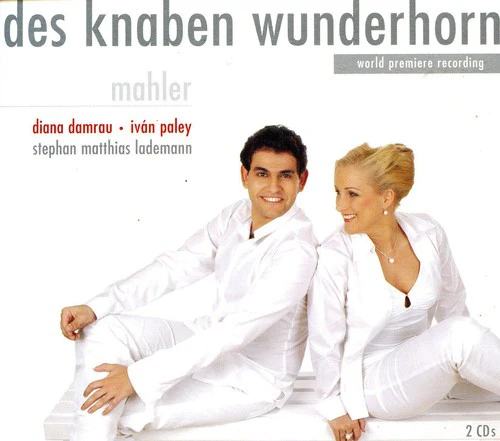
Mahler’s 4th Symphony and the lieder of Des knaben Wunderhorn are symphonic scores with a hue similar to that which can be found in chamber music. This is due to the fact that Mahler’s orchestration is not too dense. Domínguez-Nieto’s conception of the work, recorded here for the first time, exploits, with utmost respect for the composer’s original orchestration, its chamber music overtones to its maximum. Gustav Mahler’s 4th Symphony, as well as the song cycle Des Knaben Wunderhorn (The Boy’s Magic Horn), is based on Arnim and Brentano’s collection of children’s stories of the same name. The fantasy that emanates from this piece of literature finds in Mahler a natural catalyst, who manages, with each musical impulse, articulation, nuance, glissando, harmonic or any other of the myriad of details that inhabit his scores, to transport us to the dreamy and magical world of children’s stories, thus developing a fragile balance between utter fiction and overwhelming reality. With his 4th Symphony, Mahler brings to an end his so-called Wunderhorn period, marked by the reverie and imagination which can be found in such tales.
Mahler’s 4th Symphony and the lieder of Des knaben Wunderhorn are symphonic scores with a hue similar to that which can be found in chamber music. This is due to the fact that Mahler’s orchestration is not too dense. Domínguez-Nieto’s conception of the work, recorded here for the first time, exploits, with utmost respect for the composer’s original orchestration, its chamber music overtones to its maximum. Gustav Mahler’s 4th Symphony, as well as the song cycle Des Knaben Wunderhorn (The Boy’s Magic Horn), is based on Arnim and Brentano’s collection of children’s stories of the same name. The fantasy that emanates from this piece of literature finds in Mahler a natural catalyst, who manages, with each musical impulse, articulation, nuance, glissando, harmonic or any other of the myriad of details that inhabit his scores, to transport us to the dreamy and magical world of children’s stories, thus developing a fragile balance between utter fiction and overwhelming reality. With his 4th Symphony, Mahler brings to an end his so-called Wunderhorn period, marked by the reverie and imagination which can be found in such tales.
Description
Mahler’s 4th Symphony and the lieder of Des knaben Wunderhorn are symphonic scores with a hue similar to that which can be found in chamber music. This is due to the fact that Mahler’s orchestration is not too dense. Domínguez-Nieto’s conception of the work, recorded here for the first time, exploits, with utmost respect for the composer’s original orchestration, its chamber music overtones to its maximum. Gustav Mahler’s 4th Symphony, as well as the song cycle Des Knaben Wunderhorn (The Boy’s Magic Horn), is based on Arnim and Brentano’s collection of children’s stories of the same name. The fantasy that emanates from this piece of literature finds in Mahler a natural catalyst, who manages, with each musical impulse, articulation, nuance, glissando, harmonic or any other of the myriad of details that inhabit his scores, to transport us to the dreamy and magical world of children’s stories, thus developing a fragile balance between utter fiction and overwhelming reality. With his 4th Symphony, Mahler brings to an end his so-called Wunderhorn period, marked by the reverie and imagination which can be found in such tales.