🎉 Up to 70% Off Selected ItemsShop Sale

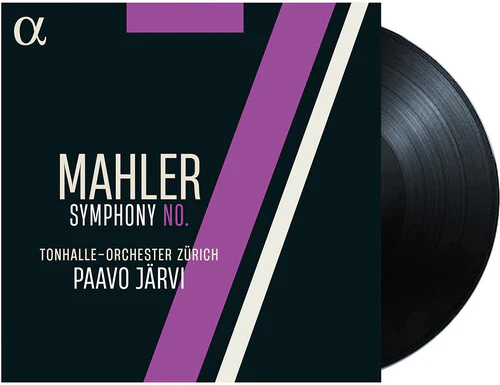
Mahler: Symphony No.7 (LP)
Paavo J�rvi and the Tonhalle-Orchester Z�rich continue their recording of Mahler's complete symphonies with the Seventh, considered one of his most complex and challenging symphonies: "The Mahler we encounter in Symphony No. 7 is more complex, darker, and more philosophical than the Mahler we know from his earlier works," says Paavo J�rvi. Mahler, who was extremely busy in his role as director of the Vienna Opera, composed this symphony on the shores of Lake W�rthersee in Austria during the summers of 1904 and 1905. Also known as Song of the Night, this symphony is characterized by rich instrumentation (including a guitar and mandolin in the fourth movement) and spectacular orchestral effects: "Here, nature roars," Mahler said of the tenor horn solo at the beginning of the work.
Paavo J�rvi and the Tonhalle-Orchester Z�rich continue their recording of Mahler's complete symphonies with the Seventh, considered one of his most complex and challenging symphonies: "The Mahler we encounter in Symphony No. 7 is more complex, darker, and more philosophical than the Mahler we know from his earlier works," says Paavo J�rvi. Mahler, who was extremely busy in his role as director of the Vienna Opera, composed this symphony on the shores of Lake W�rthersee in Austria during the summers of 1904 and 1905. Also known as Song of the Night, this symphony is characterized by rich instrumentation (including a guitar and mandolin in the fourth movement) and spectacular orchestral effects: "Here, nature roars," Mahler said of the tenor horn solo at the beginning of the work.
$39.99
Mahler: Symphony No.7 (LP)—
$39.99
Description
Paavo J�rvi and the Tonhalle-Orchester Z�rich continue their recording of Mahler's complete symphonies with the Seventh, considered one of his most complex and challenging symphonies: "The Mahler we encounter in Symphony No. 7 is more complex, darker, and more philosophical than the Mahler we know from his earlier works," says Paavo J�rvi. Mahler, who was extremely busy in his role as director of the Vienna Opera, composed this symphony on the shores of Lake W�rthersee in Austria during the summers of 1904 and 1905. Also known as Song of the Night, this symphony is characterized by rich instrumentation (including a guitar and mandolin in the fourth movement) and spectacular orchestral effects: "Here, nature roars," Mahler said of the tenor horn solo at the beginning of the work.