🎉 Up to 70% Off Selected ItemsShop Sale

1 / 2
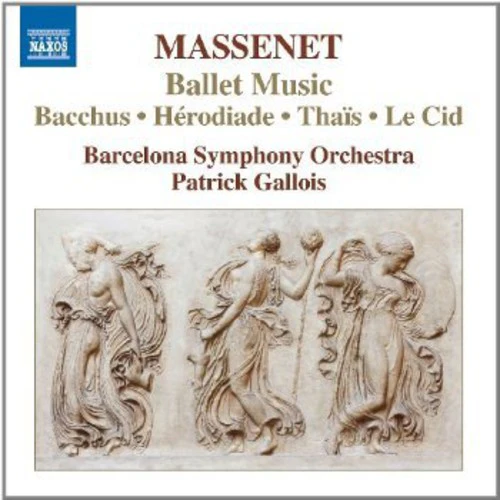
Massenet: Ballet Music / Gallois, Barcelona
This disc is just a peach. Jules Massenet’s ballet music brings together all the most charming musical trends of the 19th century: the new French ballet tradition, the lightness of Offenbach’s operettas, the lush tunes of Strauss’s Vienna, the big splashy orchestration of late-century “exotic” potboilers. The music keeps getting better and better as the CD goes along.
First I listened out of order and decided the opener, Bacchus, was my least favourite. Then I went in order and, mid-Bacchus, wondered what I had been complaining about. Yes, “Chasseresses et Bacchantes” has an early role for a percussion instrument so wimpily played that I’m not sure what it is, but then the most glorious Johann Strauss parody waltz breaks out and all is forgiven. Yes, the final bacchanale isn’t as crazy as Saint-Säens’ or Roussel’s, but what music is?
Hérodiade is an opera about Herod, where he’s the central character, in contrast with Richard Strauss’s Salome. The ballet music comes from a banquet where Herod entertains guests with dances by exotic slave girls from various foreign lands. It’s the shortest selection here.
Then we have big suites from Thaïs and Le Cid, each over 20 minutes, the highlights of the disc. Those who know Thaïs only for its “Meditation” will be happy to hear that the rest of the opera is also jam-packed with beautiful music. It’s varied, too, from the stern timpani roll of the opening andante to the perky Pierné-like flute and piccolo solos of the sixth movement, to the unexpected two-minute church-like organ solo. Le Cid is a festival of Spanish tropes, tunes and clichés from the very start. The inevitable cor anglais solo, in ‘Madrilène’, is just gorgeous. It’s as tuneful and colourful as the Spanish pastiches of Chabrier and Debussy, which is to say it’s a ton of fun.
The Barcelona Symphony plays excellently throughout, that one wimpy percussion issue confined to a single track. They seem to especially enjoy the Le Cid music, but who wouldn’t? Patrick Gallois continues to prove himself an extremely skilled, sensitive conductor of ballet music. You could imagine people dancing to this album. Given how good the music is, it’s extremely rare to have it collected on disc without the full operas alongside. Frémaux and Marriner have recorded Le Cid but for sound, panache and comprehensiveness, it’s hard to beat this. What fun.
– Brian Reinhart, MusicWeb International
First I listened out of order and decided the opener, Bacchus, was my least favourite. Then I went in order and, mid-Bacchus, wondered what I had been complaining about. Yes, “Chasseresses et Bacchantes” has an early role for a percussion instrument so wimpily played that I’m not sure what it is, but then the most glorious Johann Strauss parody waltz breaks out and all is forgiven. Yes, the final bacchanale isn’t as crazy as Saint-Säens’ or Roussel’s, but what music is?
Hérodiade is an opera about Herod, where he’s the central character, in contrast with Richard Strauss’s Salome. The ballet music comes from a banquet where Herod entertains guests with dances by exotic slave girls from various foreign lands. It’s the shortest selection here.
Then we have big suites from Thaïs and Le Cid, each over 20 minutes, the highlights of the disc. Those who know Thaïs only for its “Meditation” will be happy to hear that the rest of the opera is also jam-packed with beautiful music. It’s varied, too, from the stern timpani roll of the opening andante to the perky Pierné-like flute and piccolo solos of the sixth movement, to the unexpected two-minute church-like organ solo. Le Cid is a festival of Spanish tropes, tunes and clichés from the very start. The inevitable cor anglais solo, in ‘Madrilène’, is just gorgeous. It’s as tuneful and colourful as the Spanish pastiches of Chabrier and Debussy, which is to say it’s a ton of fun.
The Barcelona Symphony plays excellently throughout, that one wimpy percussion issue confined to a single track. They seem to especially enjoy the Le Cid music, but who wouldn’t? Patrick Gallois continues to prove himself an extremely skilled, sensitive conductor of ballet music. You could imagine people dancing to this album. Given how good the music is, it’s extremely rare to have it collected on disc without the full operas alongside. Frémaux and Marriner have recorded Le Cid but for sound, panache and comprehensiveness, it’s hard to beat this. What fun.
– Brian Reinhart, MusicWeb International
This disc is just a peach. Jules Massenet’s ballet music brings together all the most charming musical trends of the 19th century: the new French ballet tradition, the lightness of Offenbach’s operettas, the lush tunes of Strauss’s Vienna, the big splashy orchestration of late-century “exotic” potboilers. The music keeps getting better and better as the CD goes along.
First I listened out of order and decided the opener, Bacchus, was my least favourite. Then I went in order and, mid-Bacchus, wondered what I had been complaining about. Yes, “Chasseresses et Bacchantes” has an early role for a percussion instrument so wimpily played that I’m not sure what it is, but then the most glorious Johann Strauss parody waltz breaks out and all is forgiven. Yes, the final bacchanale isn’t as crazy as Saint-Säens’ or Roussel’s, but what music is?
Hérodiade is an opera about Herod, where he’s the central character, in contrast with Richard Strauss’s Salome. The ballet music comes from a banquet where Herod entertains guests with dances by exotic slave girls from various foreign lands. It’s the shortest selection here.
Then we have big suites from Thaïs and Le Cid, each over 20 minutes, the highlights of the disc. Those who know Thaïs only for its “Meditation” will be happy to hear that the rest of the opera is also jam-packed with beautiful music. It’s varied, too, from the stern timpani roll of the opening andante to the perky Pierné-like flute and piccolo solos of the sixth movement, to the unexpected two-minute church-like organ solo. Le Cid is a festival of Spanish tropes, tunes and clichés from the very start. The inevitable cor anglais solo, in ‘Madrilène’, is just gorgeous. It’s as tuneful and colourful as the Spanish pastiches of Chabrier and Debussy, which is to say it’s a ton of fun.
The Barcelona Symphony plays excellently throughout, that one wimpy percussion issue confined to a single track. They seem to especially enjoy the Le Cid music, but who wouldn’t? Patrick Gallois continues to prove himself an extremely skilled, sensitive conductor of ballet music. You could imagine people dancing to this album. Given how good the music is, it’s extremely rare to have it collected on disc without the full operas alongside. Frémaux and Marriner have recorded Le Cid but for sound, panache and comprehensiveness, it’s hard to beat this. What fun.
– Brian Reinhart, MusicWeb International
First I listened out of order and decided the opener, Bacchus, was my least favourite. Then I went in order and, mid-Bacchus, wondered what I had been complaining about. Yes, “Chasseresses et Bacchantes” has an early role for a percussion instrument so wimpily played that I’m not sure what it is, but then the most glorious Johann Strauss parody waltz breaks out and all is forgiven. Yes, the final bacchanale isn’t as crazy as Saint-Säens’ or Roussel’s, but what music is?
Hérodiade is an opera about Herod, where he’s the central character, in contrast with Richard Strauss’s Salome. The ballet music comes from a banquet where Herod entertains guests with dances by exotic slave girls from various foreign lands. It’s the shortest selection here.
Then we have big suites from Thaïs and Le Cid, each over 20 minutes, the highlights of the disc. Those who know Thaïs only for its “Meditation” will be happy to hear that the rest of the opera is also jam-packed with beautiful music. It’s varied, too, from the stern timpani roll of the opening andante to the perky Pierné-like flute and piccolo solos of the sixth movement, to the unexpected two-minute church-like organ solo. Le Cid is a festival of Spanish tropes, tunes and clichés from the very start. The inevitable cor anglais solo, in ‘Madrilène’, is just gorgeous. It’s as tuneful and colourful as the Spanish pastiches of Chabrier and Debussy, which is to say it’s a ton of fun.
The Barcelona Symphony plays excellently throughout, that one wimpy percussion issue confined to a single track. They seem to especially enjoy the Le Cid music, but who wouldn’t? Patrick Gallois continues to prove himself an extremely skilled, sensitive conductor of ballet music. You could imagine people dancing to this album. Given how good the music is, it’s extremely rare to have it collected on disc without the full operas alongside. Frémaux and Marriner have recorded Le Cid but for sound, panache and comprehensiveness, it’s hard to beat this. What fun.
– Brian Reinhart, MusicWeb International
$4.90
Original: $13.99
-65%Massenet: Ballet Music / Gallois, Barcelona—
$13.99
$4.90Description
This disc is just a peach. Jules Massenet’s ballet music brings together all the most charming musical trends of the 19th century: the new French ballet tradition, the lightness of Offenbach’s operettas, the lush tunes of Strauss’s Vienna, the big splashy orchestration of late-century “exotic” potboilers. The music keeps getting better and better as the CD goes along.
First I listened out of order and decided the opener, Bacchus, was my least favourite. Then I went in order and, mid-Bacchus, wondered what I had been complaining about. Yes, “Chasseresses et Bacchantes” has an early role for a percussion instrument so wimpily played that I’m not sure what it is, but then the most glorious Johann Strauss parody waltz breaks out and all is forgiven. Yes, the final bacchanale isn’t as crazy as Saint-Säens’ or Roussel’s, but what music is?
Hérodiade is an opera about Herod, where he’s the central character, in contrast with Richard Strauss’s Salome. The ballet music comes from a banquet where Herod entertains guests with dances by exotic slave girls from various foreign lands. It’s the shortest selection here.
Then we have big suites from Thaïs and Le Cid, each over 20 minutes, the highlights of the disc. Those who know Thaïs only for its “Meditation” will be happy to hear that the rest of the opera is also jam-packed with beautiful music. It’s varied, too, from the stern timpani roll of the opening andante to the perky Pierné-like flute and piccolo solos of the sixth movement, to the unexpected two-minute church-like organ solo. Le Cid is a festival of Spanish tropes, tunes and clichés from the very start. The inevitable cor anglais solo, in ‘Madrilène’, is just gorgeous. It’s as tuneful and colourful as the Spanish pastiches of Chabrier and Debussy, which is to say it’s a ton of fun.
The Barcelona Symphony plays excellently throughout, that one wimpy percussion issue confined to a single track. They seem to especially enjoy the Le Cid music, but who wouldn’t? Patrick Gallois continues to prove himself an extremely skilled, sensitive conductor of ballet music. You could imagine people dancing to this album. Given how good the music is, it’s extremely rare to have it collected on disc without the full operas alongside. Frémaux and Marriner have recorded Le Cid but for sound, panache and comprehensiveness, it’s hard to beat this. What fun.
– Brian Reinhart, MusicWeb International
First I listened out of order and decided the opener, Bacchus, was my least favourite. Then I went in order and, mid-Bacchus, wondered what I had been complaining about. Yes, “Chasseresses et Bacchantes” has an early role for a percussion instrument so wimpily played that I’m not sure what it is, but then the most glorious Johann Strauss parody waltz breaks out and all is forgiven. Yes, the final bacchanale isn’t as crazy as Saint-Säens’ or Roussel’s, but what music is?
Hérodiade is an opera about Herod, where he’s the central character, in contrast with Richard Strauss’s Salome. The ballet music comes from a banquet where Herod entertains guests with dances by exotic slave girls from various foreign lands. It’s the shortest selection here.
Then we have big suites from Thaïs and Le Cid, each over 20 minutes, the highlights of the disc. Those who know Thaïs only for its “Meditation” will be happy to hear that the rest of the opera is also jam-packed with beautiful music. It’s varied, too, from the stern timpani roll of the opening andante to the perky Pierné-like flute and piccolo solos of the sixth movement, to the unexpected two-minute church-like organ solo. Le Cid is a festival of Spanish tropes, tunes and clichés from the very start. The inevitable cor anglais solo, in ‘Madrilène’, is just gorgeous. It’s as tuneful and colourful as the Spanish pastiches of Chabrier and Debussy, which is to say it’s a ton of fun.
The Barcelona Symphony plays excellently throughout, that one wimpy percussion issue confined to a single track. They seem to especially enjoy the Le Cid music, but who wouldn’t? Patrick Gallois continues to prove himself an extremely skilled, sensitive conductor of ballet music. You could imagine people dancing to this album. Given how good the music is, it’s extremely rare to have it collected on disc without the full operas alongside. Frémaux and Marriner have recorded Le Cid but for sound, panache and comprehensiveness, it’s hard to beat this. What fun.
– Brian Reinhart, MusicWeb International