🎉 Up to 70% Off Selected ItemsShop Sale

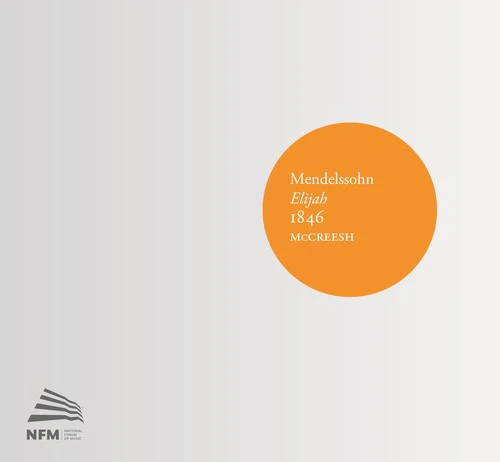
Mendelssohn: Elijah / Mccreesh, Connolly, Joshua, Murray, Keenlyside
MENDELSSOHN Elijah • Paul McCreesh, cond; Rosemary Joshua (sop); Sarah Connolly (mez); Robert Murray (ten); Simon Keenlyside (bar); Jonty Ward (tr); Gabrieli Consort; Gabrieli Players; Wroc?aw P Ch; Chetham’s C Ch; North East Youth Ch; Taplow Youth Ch; Ulster Youth C Ch; William Whitehead (org) • SIGNUM SIGCD 300 (2 CDs: 135:58)
Period-performance practice is often loosely associated with smallish forces—but it doesn’t need to be; and although McCreesh happily claims responsibility for the first recording of St. Matthew Passion using a one-to-a-part vocal contingent, he’s also been interested in reproducing the blockbusters of the late 18th and early 19th centuries as they were first heard, with big choruses and surprisingly large period-instrument orchestras. He’s already given us The Creation and the Berlioz Requiem in recordings that approximate the forces of their premieres; now we get a period Elijah that’s modeled on the Birmingham first performance of 1846. What precisely does this mean? For the solo numbers, we have a hefty, but hardly unusual orchestral group. But to accompany the nearly 300-voice chorus, the strings are pumped up by half; woodwinds, trumpets, and drums are doubled; the ophicleide is tripled; and three serpents are thrown into the mix. The result is an orchestra of well more than a hundred. There are other big Elijah s out there, of course, but I suspect that there are none on quite this scale. I’ve heard the Mahler Eighth performed by a smaller crowd.
What’s the benefit, besides increased volume in the climaxes? Well, increased volume is not to be sneered at, but there’s a lot more. The alterations in orchestral size provide additional tonal and emotional variety; the period instruments (which include slide trumpets) provide unusual bursts of color (listen, for example to the tangy sting of the horn stabs in “Though thousands languish” or the gleam of the brass tone in “Baal, we cry to thee”). Most important, though, there’s an audible and striking shift in tonal balance. People often think of Mendelssohn’s music as light, with a treble tilt—and that’s true, say, of the Fourth Symphony or A Midsummer Night’s Dream . But it’s certainly not the case with this Elijah : McCreesh’s performance gives prominence to the bass lines—in part by the use of serpents to double the choral basses, in part by the presence of the extra ophicleides (one of which is a contrabass ophicleide, apparently the only one that still exists), in part by the use of the Birmingham organ (unfortunately dubbed in, but at least very effectively done) with its floor rattling “Grand Ophicleide” stop, in part by the use of so-called “Tower drums” (huge instruments that are in some cases tuned an octave lower). I suspect you’ve never heard the pedal point under the first choral entry so clearly; I suspect you’ve never heard “Thanks be to God!” played with such inevitable and overpowering accumulation of orchestral weight, and never heard it conclude with such depth of sound; I suspect you’ve never heard Elijah’s ascent into heaven or the final fugue thrown forth with such solidity. You might expect the weight to drag the music down; but despite the size and disposition of his forces, McCreesh manages to duplicate the energy and rhythmic vitality of the best small-group performances. If you think of Elijah as “Victorian”—in the loose sense of stodgy or sanctimonious—you’ll be disabused.
Not surprisingly, McCreesh offers an interpretation that stresses the dramatic. Tempos are generally mainstream, although he does resist the temptation to slow down in such moments as “He watching over Israel,” which can easily turn saccharine. I don’t mean to suggest that it’s unsubtle, much less that it lacks passages of exquisite beauty—listen to the glow in the second half of “Yet doth the Lord see it not” or the magic of the double quartet in “For He shall give His Angels charge” or the sweetness of “Blessed are the men who fear Him.” Still, you’re liable to remember this most for its unparalleled outbursts of power—for the huge sound of pleading on the first choral entry, for the overwhelming impact of the silences after “Hear and answer!,” for the shocking arrival of the fire from heaven (“Oh thou who makest”), for the sense of vastness of “Go, return upon thy way.”
As for the title role: If you’re looking for tender authority as Elijah cures the widow’s son, Keenlyside is your man; if, on the other hand, you’re looking for sheer venom as Elijah calls for the murder of the prophets of Baal, then Keenlyside is also your man. This is, simply put, a superbly rich characterization, one that captures, in glorious voice, all the expressive swings of the part. For a quick tour, try the handling of the tricky emotional terrain in “It is enough.”
The other soloists are all excellent: I especially appreciated Rosemary Joshua’s fiery purpose in “What have I to do with thee?” The chorus, which combines singers from Wroc?aw and from Britain, has a lot of younger voices: They sing with freshness, enthusiasm, and no sign of inexperience. The eight who have been picked out for the double quartet—and who are also called forth, in various combinations, for “Cast thy burden,” “Lift thine eyes,” and “Holy, holy, holy”—blend exquisitely. The orchestra is magnificent, too, and balances between soloists, orchestra, and chorus are consistently well judged.
Although I wish (as I did with their Berlioz Requiem) that we had been given a surround-sound version of this performance, the stereo engineering is first class. When you go to your shelf for a recording to demonstrate your new subwoofer, you’re not usually apt to pass by Mahler to reach for Mendelssohn; but this is surely an ideal release for that purpose. As with the Berlioz, it comes in a hard-cover book (fortunately, CD-sized, so it fits on your shelves) with detailed notes, full text, and plenty of photographs. One textual point: Mendelssohn revised the work significantly for the second performance, and McCreesh gives us the final version (with a bit of light editing to the words). This is clearly the right choice, and clearly the Elijah of choice. Want List material.
FANFARE: Peter J. Rabinowitz
MENDELSSOHN Elijah • Paul McCreesh, cond; Rosemary Joshua (sop); Sarah Connolly (mez); Robert Murray (ten); Simon Keenlyside (bar); Jonty Ward (tr); Gabrieli Consort; Gabrieli Players; Wroc?aw P Ch; Chetham’s C Ch; North East Youth Ch; Taplow Youth Ch; Ulster Youth C Ch; William Whitehead (org) • SIGNUM SIGCD 300 (2 CDs: 135:58)
Period-performance practice is often loosely associated with smallish forces—but it doesn’t need to be; and although McCreesh happily claims responsibility for the first recording of St. Matthew Passion using a one-to-a-part vocal contingent, he’s also been interested in reproducing the blockbusters of the late 18th and early 19th centuries as they were first heard, with big choruses and surprisingly large period-instrument orchestras. He’s already given us The Creation and the Berlioz Requiem in recordings that approximate the forces of their premieres; now we get a period Elijah that’s modeled on the Birmingham first performance of 1846. What precisely does this mean? For the solo numbers, we have a hefty, but hardly unusual orchestral group. But to accompany the nearly 300-voice chorus, the strings are pumped up by half; woodwinds, trumpets, and drums are doubled; the ophicleide is tripled; and three serpents are thrown into the mix. The result is an orchestra of well more than a hundred. There are other big Elijah s out there, of course, but I suspect that there are none on quite this scale. I’ve heard the Mahler Eighth performed by a smaller crowd.
What’s the benefit, besides increased volume in the climaxes? Well, increased volume is not to be sneered at, but there’s a lot more. The alterations in orchestral size provide additional tonal and emotional variety; the period instruments (which include slide trumpets) provide unusual bursts of color (listen, for example to the tangy sting of the horn stabs in “Though thousands languish” or the gleam of the brass tone in “Baal, we cry to thee”). Most important, though, there’s an audible and striking shift in tonal balance. People often think of Mendelssohn’s music as light, with a treble tilt—and that’s true, say, of the Fourth Symphony or A Midsummer Night’s Dream . But it’s certainly not the case with this Elijah : McCreesh’s performance gives prominence to the bass lines—in part by the use of serpents to double the choral basses, in part by the presence of the extra ophicleides (one of which is a contrabass ophicleide, apparently the only one that still exists), in part by the use of the Birmingham organ (unfortunately dubbed in, but at least very effectively done) with its floor rattling “Grand Ophicleide” stop, in part by the use of so-called “Tower drums” (huge instruments that are in some cases tuned an octave lower). I suspect you’ve never heard the pedal point under the first choral entry so clearly; I suspect you’ve never heard “Thanks be to God!” played with such inevitable and overpowering accumulation of orchestral weight, and never heard it conclude with such depth of sound; I suspect you’ve never heard Elijah’s ascent into heaven or the final fugue thrown forth with such solidity. You might expect the weight to drag the music down; but despite the size and disposition of his forces, McCreesh manages to duplicate the energy and rhythmic vitality of the best small-group performances. If you think of Elijah as “Victorian”—in the loose sense of stodgy or sanctimonious—you’ll be disabused.
Not surprisingly, McCreesh offers an interpretation that stresses the dramatic. Tempos are generally mainstream, although he does resist the temptation to slow down in such moments as “He watching over Israel,” which can easily turn saccharine. I don’t mean to suggest that it’s unsubtle, much less that it lacks passages of exquisite beauty—listen to the glow in the second half of “Yet doth the Lord see it not” or the magic of the double quartet in “For He shall give His Angels charge” or the sweetness of “Blessed are the men who fear Him.” Still, you’re liable to remember this most for its unparalleled outbursts of power—for the huge sound of pleading on the first choral entry, for the overwhelming impact of the silences after “Hear and answer!,” for the shocking arrival of the fire from heaven (“Oh thou who makest”), for the sense of vastness of “Go, return upon thy way.”
As for the title role: If you’re looking for tender authority as Elijah cures the widow’s son, Keenlyside is your man; if, on the other hand, you’re looking for sheer venom as Elijah calls for the murder of the prophets of Baal, then Keenlyside is also your man. This is, simply put, a superbly rich characterization, one that captures, in glorious voice, all the expressive swings of the part. For a quick tour, try the handling of the tricky emotional terrain in “It is enough.”
The other soloists are all excellent: I especially appreciated Rosemary Joshua’s fiery purpose in “What have I to do with thee?” The chorus, which combines singers from Wroc?aw and from Britain, has a lot of younger voices: They sing with freshness, enthusiasm, and no sign of inexperience. The eight who have been picked out for the double quartet—and who are also called forth, in various combinations, for “Cast thy burden,” “Lift thine eyes,” and “Holy, holy, holy”—blend exquisitely. The orchestra is magnificent, too, and balances between soloists, orchestra, and chorus are consistently well judged.
Although I wish (as I did with their Berlioz Requiem) that we had been given a surround-sound version of this performance, the stereo engineering is first class. When you go to your shelf for a recording to demonstrate your new subwoofer, you’re not usually apt to pass by Mahler to reach for Mendelssohn; but this is surely an ideal release for that purpose. As with the Berlioz, it comes in a hard-cover book (fortunately, CD-sized, so it fits on your shelves) with detailed notes, full text, and plenty of photographs. One textual point: Mendelssohn revised the work significantly for the second performance, and McCreesh gives us the final version (with a bit of light editing to the words). This is clearly the right choice, and clearly the Elijah of choice. Want List material.
FANFARE: Peter J. Rabinowitz
$7.35
Original: $20.99
-65%Mendelssohn: Elijah / Mccreesh, Connolly, Joshua, Murray, Keenlyside—
$20.99
$7.35Description
MENDELSSOHN Elijah • Paul McCreesh, cond; Rosemary Joshua (sop); Sarah Connolly (mez); Robert Murray (ten); Simon Keenlyside (bar); Jonty Ward (tr); Gabrieli Consort; Gabrieli Players; Wroc?aw P Ch; Chetham’s C Ch; North East Youth Ch; Taplow Youth Ch; Ulster Youth C Ch; William Whitehead (org) • SIGNUM SIGCD 300 (2 CDs: 135:58)
Period-performance practice is often loosely associated with smallish forces—but it doesn’t need to be; and although McCreesh happily claims responsibility for the first recording of St. Matthew Passion using a one-to-a-part vocal contingent, he’s also been interested in reproducing the blockbusters of the late 18th and early 19th centuries as they were first heard, with big choruses and surprisingly large period-instrument orchestras. He’s already given us The Creation and the Berlioz Requiem in recordings that approximate the forces of their premieres; now we get a period Elijah that’s modeled on the Birmingham first performance of 1846. What precisely does this mean? For the solo numbers, we have a hefty, but hardly unusual orchestral group. But to accompany the nearly 300-voice chorus, the strings are pumped up by half; woodwinds, trumpets, and drums are doubled; the ophicleide is tripled; and three serpents are thrown into the mix. The result is an orchestra of well more than a hundred. There are other big Elijah s out there, of course, but I suspect that there are none on quite this scale. I’ve heard the Mahler Eighth performed by a smaller crowd.
What’s the benefit, besides increased volume in the climaxes? Well, increased volume is not to be sneered at, but there’s a lot more. The alterations in orchestral size provide additional tonal and emotional variety; the period instruments (which include slide trumpets) provide unusual bursts of color (listen, for example to the tangy sting of the horn stabs in “Though thousands languish” or the gleam of the brass tone in “Baal, we cry to thee”). Most important, though, there’s an audible and striking shift in tonal balance. People often think of Mendelssohn’s music as light, with a treble tilt—and that’s true, say, of the Fourth Symphony or A Midsummer Night’s Dream . But it’s certainly not the case with this Elijah : McCreesh’s performance gives prominence to the bass lines—in part by the use of serpents to double the choral basses, in part by the presence of the extra ophicleides (one of which is a contrabass ophicleide, apparently the only one that still exists), in part by the use of the Birmingham organ (unfortunately dubbed in, but at least very effectively done) with its floor rattling “Grand Ophicleide” stop, in part by the use of so-called “Tower drums” (huge instruments that are in some cases tuned an octave lower). I suspect you’ve never heard the pedal point under the first choral entry so clearly; I suspect you’ve never heard “Thanks be to God!” played with such inevitable and overpowering accumulation of orchestral weight, and never heard it conclude with such depth of sound; I suspect you’ve never heard Elijah’s ascent into heaven or the final fugue thrown forth with such solidity. You might expect the weight to drag the music down; but despite the size and disposition of his forces, McCreesh manages to duplicate the energy and rhythmic vitality of the best small-group performances. If you think of Elijah as “Victorian”—in the loose sense of stodgy or sanctimonious—you’ll be disabused.
Not surprisingly, McCreesh offers an interpretation that stresses the dramatic. Tempos are generally mainstream, although he does resist the temptation to slow down in such moments as “He watching over Israel,” which can easily turn saccharine. I don’t mean to suggest that it’s unsubtle, much less that it lacks passages of exquisite beauty—listen to the glow in the second half of “Yet doth the Lord see it not” or the magic of the double quartet in “For He shall give His Angels charge” or the sweetness of “Blessed are the men who fear Him.” Still, you’re liable to remember this most for its unparalleled outbursts of power—for the huge sound of pleading on the first choral entry, for the overwhelming impact of the silences after “Hear and answer!,” for the shocking arrival of the fire from heaven (“Oh thou who makest”), for the sense of vastness of “Go, return upon thy way.”
As for the title role: If you’re looking for tender authority as Elijah cures the widow’s son, Keenlyside is your man; if, on the other hand, you’re looking for sheer venom as Elijah calls for the murder of the prophets of Baal, then Keenlyside is also your man. This is, simply put, a superbly rich characterization, one that captures, in glorious voice, all the expressive swings of the part. For a quick tour, try the handling of the tricky emotional terrain in “It is enough.”
The other soloists are all excellent: I especially appreciated Rosemary Joshua’s fiery purpose in “What have I to do with thee?” The chorus, which combines singers from Wroc?aw and from Britain, has a lot of younger voices: They sing with freshness, enthusiasm, and no sign of inexperience. The eight who have been picked out for the double quartet—and who are also called forth, in various combinations, for “Cast thy burden,” “Lift thine eyes,” and “Holy, holy, holy”—blend exquisitely. The orchestra is magnificent, too, and balances between soloists, orchestra, and chorus are consistently well judged.
Although I wish (as I did with their Berlioz Requiem) that we had been given a surround-sound version of this performance, the stereo engineering is first class. When you go to your shelf for a recording to demonstrate your new subwoofer, you’re not usually apt to pass by Mahler to reach for Mendelssohn; but this is surely an ideal release for that purpose. As with the Berlioz, it comes in a hard-cover book (fortunately, CD-sized, so it fits on your shelves) with detailed notes, full text, and plenty of photographs. One textual point: Mendelssohn revised the work significantly for the second performance, and McCreesh gives us the final version (with a bit of light editing to the words). This is clearly the right choice, and clearly the Elijah of choice. Want List material.
FANFARE: Peter J. Rabinowitz