🎉 Up to 70% Off Selected ItemsShop Sale

1 / 2
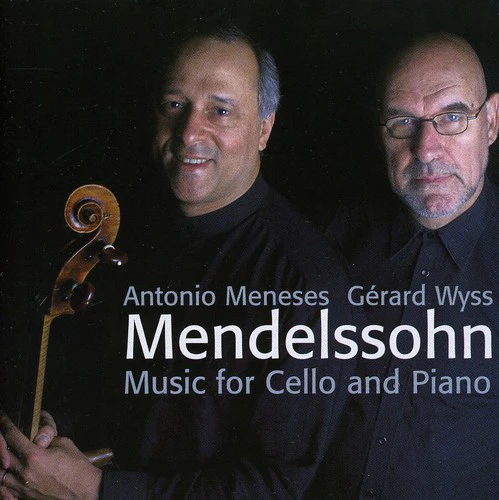
Mendelssohn: Music For Cello And Piano / Meneses, Wyss
MENDELSSOHN Cello Sonatas: in B?, op. 45; in D, op. 58. Variations concertantes, op. 17. Assai tranquillo. Lieder ohne Worte, op.19a/1,3,6 (arr. Piati); op.109 • Antonio Meneses (vc); Gérard Wyss (pn) • AVIE 2140 (72:45)
As Chopin’s works for cello owe their genesis to his association with Franchomme, so Mendelssohn’s pieces were written with specific cellists in mind. The charming and brilliant Variations concertantes (1829) and the First Sonata (1838) were written for the composer’s talented younger brother, Paul. In the interim, Mendelssohn composed the charming albumblatt, known as the Assai tranquillo , as a gift for his Düsseldorf colleague, Julius Rietz. The weightier Second Sonata, from 1843, is dedicated to Count Mateusz Wielhorski, who became a professional cellist on his retirement from the Russian army and eventually an important patron of music in St. Petersburg. Mendelssohn’s last work for cello and piano, the poetic Song without Words , op 109, is dedicated to Lisa Cristiani, one of the few women cellists of the time. Three of the piano solo Songs without Words , transcribed by the cellist Alfredo Piatti, who was much admired by Mendelssohn when they met in London, are interspersed among the original works on this disc.
The distinguished Antonio Meneses—a celebrated soloist and, since 1998, cellist with the Beaux Arts Trio—is a near-ideal interpreter of this important Romantic repertoire. Commanding a rich and varied tonal palette, Meneses approaches Mendelssohn’s essentially lyric expression with poise and equilibrium. This does not mean that passion and drama are given short shrift. In the Scherzo of the D-Major Sonata, the cunning pizzicatos verge on the sinister, only to be dispelled by the flowing cantabile of the trio. During the ensuing Adagio, one of the most beautiful slow movements in Mendelssohn’s chamber music, the cello interrupts the piano’s chorale figure with a series of recitatives. Meneses imbues these passages with a poetic utterance that is disarming in its intensity. His reading of the op. 109 Song without Words is the finest I can remember. Though Gérard Wyss’s piano-playing may lack a certain polish and finesse, his musical instincts are acute, and he remains the sensitive and supportive partner throughout.
Musically speaking, these performances will comfortably take their place alongside other admired readings of the repertoire, including those of Mischa Maisky and Sergio Tiempo (DG 471565) and János Starker and György Sebok (Mercury 434377). The recording, however, made in England in June 2007 at Potton Hall, Suffolk, doesn’t seem to do full justice to Meneses’s wonderful sound. It’s difficult to tell if poor microphone placement or a problematic acoustic space is the culprit, but presence and blend are lackluster. Stephen Pettitt contributed the informative and inviting notes.
FANFARE: Patrick Rucker
MENDELSSOHN Cello Sonatas: in B?, op. 45; in D, op. 58. Variations concertantes, op. 17. Assai tranquillo. Lieder ohne Worte, op.19a/1,3,6 (arr. Piati); op.109 • Antonio Meneses (vc); Gérard Wyss (pn) • AVIE 2140 (72:45)
As Chopin’s works for cello owe their genesis to his association with Franchomme, so Mendelssohn’s pieces were written with specific cellists in mind. The charming and brilliant Variations concertantes (1829) and the First Sonata (1838) were written for the composer’s talented younger brother, Paul. In the interim, Mendelssohn composed the charming albumblatt, known as the Assai tranquillo , as a gift for his Düsseldorf colleague, Julius Rietz. The weightier Second Sonata, from 1843, is dedicated to Count Mateusz Wielhorski, who became a professional cellist on his retirement from the Russian army and eventually an important patron of music in St. Petersburg. Mendelssohn’s last work for cello and piano, the poetic Song without Words , op 109, is dedicated to Lisa Cristiani, one of the few women cellists of the time. Three of the piano solo Songs without Words , transcribed by the cellist Alfredo Piatti, who was much admired by Mendelssohn when they met in London, are interspersed among the original works on this disc.
The distinguished Antonio Meneses—a celebrated soloist and, since 1998, cellist with the Beaux Arts Trio—is a near-ideal interpreter of this important Romantic repertoire. Commanding a rich and varied tonal palette, Meneses approaches Mendelssohn’s essentially lyric expression with poise and equilibrium. This does not mean that passion and drama are given short shrift. In the Scherzo of the D-Major Sonata, the cunning pizzicatos verge on the sinister, only to be dispelled by the flowing cantabile of the trio. During the ensuing Adagio, one of the most beautiful slow movements in Mendelssohn’s chamber music, the cello interrupts the piano’s chorale figure with a series of recitatives. Meneses imbues these passages with a poetic utterance that is disarming in its intensity. His reading of the op. 109 Song without Words is the finest I can remember. Though Gérard Wyss’s piano-playing may lack a certain polish and finesse, his musical instincts are acute, and he remains the sensitive and supportive partner throughout.
Musically speaking, these performances will comfortably take their place alongside other admired readings of the repertoire, including those of Mischa Maisky and Sergio Tiempo (DG 471565) and János Starker and György Sebok (Mercury 434377). The recording, however, made in England in June 2007 at Potton Hall, Suffolk, doesn’t seem to do full justice to Meneses’s wonderful sound. It’s difficult to tell if poor microphone placement or a problematic acoustic space is the culprit, but presence and blend are lackluster. Stephen Pettitt contributed the informative and inviting notes.
FANFARE: Patrick Rucker
$9.99
Mendelssohn: Music For Cello And Piano / Meneses, Wyss—
$9.99
Description
MENDELSSOHN Cello Sonatas: in B?, op. 45; in D, op. 58. Variations concertantes, op. 17. Assai tranquillo. Lieder ohne Worte, op.19a/1,3,6 (arr. Piati); op.109 • Antonio Meneses (vc); Gérard Wyss (pn) • AVIE 2140 (72:45)
As Chopin’s works for cello owe their genesis to his association with Franchomme, so Mendelssohn’s pieces were written with specific cellists in mind. The charming and brilliant Variations concertantes (1829) and the First Sonata (1838) were written for the composer’s talented younger brother, Paul. In the interim, Mendelssohn composed the charming albumblatt, known as the Assai tranquillo , as a gift for his Düsseldorf colleague, Julius Rietz. The weightier Second Sonata, from 1843, is dedicated to Count Mateusz Wielhorski, who became a professional cellist on his retirement from the Russian army and eventually an important patron of music in St. Petersburg. Mendelssohn’s last work for cello and piano, the poetic Song without Words , op 109, is dedicated to Lisa Cristiani, one of the few women cellists of the time. Three of the piano solo Songs without Words , transcribed by the cellist Alfredo Piatti, who was much admired by Mendelssohn when they met in London, are interspersed among the original works on this disc.
The distinguished Antonio Meneses—a celebrated soloist and, since 1998, cellist with the Beaux Arts Trio—is a near-ideal interpreter of this important Romantic repertoire. Commanding a rich and varied tonal palette, Meneses approaches Mendelssohn’s essentially lyric expression with poise and equilibrium. This does not mean that passion and drama are given short shrift. In the Scherzo of the D-Major Sonata, the cunning pizzicatos verge on the sinister, only to be dispelled by the flowing cantabile of the trio. During the ensuing Adagio, one of the most beautiful slow movements in Mendelssohn’s chamber music, the cello interrupts the piano’s chorale figure with a series of recitatives. Meneses imbues these passages with a poetic utterance that is disarming in its intensity. His reading of the op. 109 Song without Words is the finest I can remember. Though Gérard Wyss’s piano-playing may lack a certain polish and finesse, his musical instincts are acute, and he remains the sensitive and supportive partner throughout.
Musically speaking, these performances will comfortably take their place alongside other admired readings of the repertoire, including those of Mischa Maisky and Sergio Tiempo (DG 471565) and János Starker and György Sebok (Mercury 434377). The recording, however, made in England in June 2007 at Potton Hall, Suffolk, doesn’t seem to do full justice to Meneses’s wonderful sound. It’s difficult to tell if poor microphone placement or a problematic acoustic space is the culprit, but presence and blend are lackluster. Stephen Pettitt contributed the informative and inviting notes.
FANFARE: Patrick Rucker