Moeran: Rhapsody No 2, Violin Concerto, Etc / Boult, Handley
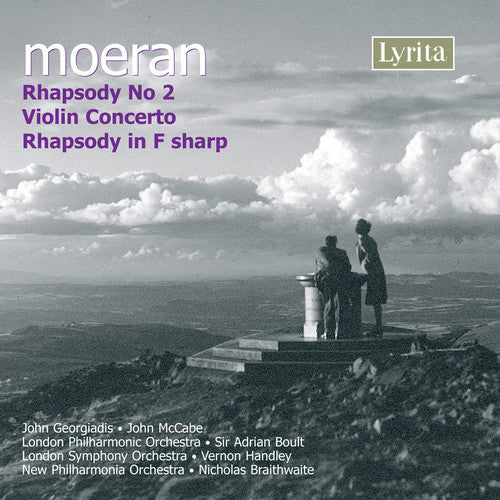
Ernest John Moeran (1894-1950), still the least-known significant English composer of his generation, composed in his prime three large-scale works with orchestra, a symphony (1937), a violin concerto (1942) and a cello concerto (1945). Part of Moeran’s neglect may perhaps be attributed to his derivative musical style. Yet the positive individuality of Moeran’s music, which grew in strength as he became older and is finally shorn of all props in the masterly cello concerto, overrides these derivations in nearly all his works. He is a composer with something to say and an unwavering judgment about the way in which it must be said.
Ernest John Moeran (1894-1950), still the least-known significant English composer of his generation, composed in his prime three large-scale works with orchestra, a symphony (1937), a violin concerto (1942) and a cello concerto (1945). Part of Moeran’s neglect may perhaps be attributed to his derivative musical style. Yet the positive individuality of Moeran’s music, which grew in strength as he became older and is finally shorn of all props in the masterly cello concerto, overrides these derivations in nearly all his works. He is a composer with something to say and an unwavering judgment about the way in which it must be said.
Description
Ernest John Moeran (1894-1950), still the least-known significant English composer of his generation, composed in his prime three large-scale works with orchestra, a symphony (1937), a violin concerto (1942) and a cello concerto (1945). Part of Moeran’s neglect may perhaps be attributed to his derivative musical style. Yet the positive individuality of Moeran’s music, which grew in strength as he became older and is finally shorn of all props in the masterly cello concerto, overrides these derivations in nearly all his works. He is a composer with something to say and an unwavering judgment about the way in which it must be said.