🎉 Up to 70% Off Selected ItemsShop Sale

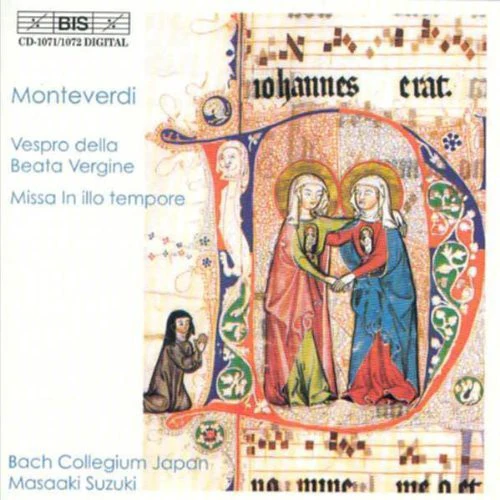
Monteverdi: Vespro Della Beata Vergine / Suzuki, Et Al
‘Our main purpose for this recording,’ writes Masaaki Suzuki, ‘was to perform all the music contained in the collection that Monteverdi published in 1610.’ So he begins with the Missa In illo tempore, a superb example of old-style, elaborate polyphony; moves through the Vespers themselves, following the original order of the pieces and interpolating nothing; then, after the lavish Magnificat a 7, he ends with the more modest Magnificat a 6, which Monteverdi appended as an alternative.
This straightforward approach seems almost radical given the current glut of more fanciful versions, in which conductors reshuffle the Vespers, pepper them with antiphons and works by other composers and variously ‘adapt’ them to fit specific liturgical occasions. Such diverse interpretations make the choice of a benchmark recording highly subjective. Gardiner (dramatic, on Archiv) and Parrott (intimate and liturgically correct, on Virgin Veritas) offer fine, contrasting views, and several other versions (Christie, Garrido, Junghänel, Pickett) are well worth exploring.
This new set is consistently engaging. Unlike his rivals, Suzuki uses a high pitch of A=465Hz (common in Monteverdi’s Italy), but follows current thinking in transposing certain pieces down a fourth (the Missa, the Magnificats, ‘Lauda Jerusalem’). Performances throughout are expressive, sharply focused, intensely committed. Though he dispenses with liturgical trappings, Suzuki, aided by a spacious ‘churchy’ acoustic, certainly brings out the ritualistic and devotional character of the music, from the ornate orchestral splendour of the ‘Sonata sopra Sancta Maria’ to the tender vocal passions of ‘Pulchra es’ and ‘Duo Seraphim’. Excellent.
-- Graham Lock, BBC Music Magazine
This straightforward approach seems almost radical given the current glut of more fanciful versions, in which conductors reshuffle the Vespers, pepper them with antiphons and works by other composers and variously ‘adapt’ them to fit specific liturgical occasions. Such diverse interpretations make the choice of a benchmark recording highly subjective. Gardiner (dramatic, on Archiv) and Parrott (intimate and liturgically correct, on Virgin Veritas) offer fine, contrasting views, and several other versions (Christie, Garrido, Junghänel, Pickett) are well worth exploring.
This new set is consistently engaging. Unlike his rivals, Suzuki uses a high pitch of A=465Hz (common in Monteverdi’s Italy), but follows current thinking in transposing certain pieces down a fourth (the Missa, the Magnificats, ‘Lauda Jerusalem’). Performances throughout are expressive, sharply focused, intensely committed. Though he dispenses with liturgical trappings, Suzuki, aided by a spacious ‘churchy’ acoustic, certainly brings out the ritualistic and devotional character of the music, from the ornate orchestral splendour of the ‘Sonata sopra Sancta Maria’ to the tender vocal passions of ‘Pulchra es’ and ‘Duo Seraphim’. Excellent.
-- Graham Lock, BBC Music Magazine
‘Our main purpose for this recording,’ writes Masaaki Suzuki, ‘was to perform all the music contained in the collection that Monteverdi published in 1610.’ So he begins with the Missa In illo tempore, a superb example of old-style, elaborate polyphony; moves through the Vespers themselves, following the original order of the pieces and interpolating nothing; then, after the lavish Magnificat a 7, he ends with the more modest Magnificat a 6, which Monteverdi appended as an alternative.
This straightforward approach seems almost radical given the current glut of more fanciful versions, in which conductors reshuffle the Vespers, pepper them with antiphons and works by other composers and variously ‘adapt’ them to fit specific liturgical occasions. Such diverse interpretations make the choice of a benchmark recording highly subjective. Gardiner (dramatic, on Archiv) and Parrott (intimate and liturgically correct, on Virgin Veritas) offer fine, contrasting views, and several other versions (Christie, Garrido, Junghänel, Pickett) are well worth exploring.
This new set is consistently engaging. Unlike his rivals, Suzuki uses a high pitch of A=465Hz (common in Monteverdi’s Italy), but follows current thinking in transposing certain pieces down a fourth (the Missa, the Magnificats, ‘Lauda Jerusalem’). Performances throughout are expressive, sharply focused, intensely committed. Though he dispenses with liturgical trappings, Suzuki, aided by a spacious ‘churchy’ acoustic, certainly brings out the ritualistic and devotional character of the music, from the ornate orchestral splendour of the ‘Sonata sopra Sancta Maria’ to the tender vocal passions of ‘Pulchra es’ and ‘Duo Seraphim’. Excellent.
-- Graham Lock, BBC Music Magazine
This straightforward approach seems almost radical given the current glut of more fanciful versions, in which conductors reshuffle the Vespers, pepper them with antiphons and works by other composers and variously ‘adapt’ them to fit specific liturgical occasions. Such diverse interpretations make the choice of a benchmark recording highly subjective. Gardiner (dramatic, on Archiv) and Parrott (intimate and liturgically correct, on Virgin Veritas) offer fine, contrasting views, and several other versions (Christie, Garrido, Junghänel, Pickett) are well worth exploring.
This new set is consistently engaging. Unlike his rivals, Suzuki uses a high pitch of A=465Hz (common in Monteverdi’s Italy), but follows current thinking in transposing certain pieces down a fourth (the Missa, the Magnificats, ‘Lauda Jerusalem’). Performances throughout are expressive, sharply focused, intensely committed. Though he dispenses with liturgical trappings, Suzuki, aided by a spacious ‘churchy’ acoustic, certainly brings out the ritualistic and devotional character of the music, from the ornate orchestral splendour of the ‘Sonata sopra Sancta Maria’ to the tender vocal passions of ‘Pulchra es’ and ‘Duo Seraphim’. Excellent.
-- Graham Lock, BBC Music Magazine
$12.25
Original: $34.99
-65%Monteverdi: Vespro Della Beata Vergine / Suzuki, Et Al—
$34.99
$12.25Description
‘Our main purpose for this recording,’ writes Masaaki Suzuki, ‘was to perform all the music contained in the collection that Monteverdi published in 1610.’ So he begins with the Missa In illo tempore, a superb example of old-style, elaborate polyphony; moves through the Vespers themselves, following the original order of the pieces and interpolating nothing; then, after the lavish Magnificat a 7, he ends with the more modest Magnificat a 6, which Monteverdi appended as an alternative.
This straightforward approach seems almost radical given the current glut of more fanciful versions, in which conductors reshuffle the Vespers, pepper them with antiphons and works by other composers and variously ‘adapt’ them to fit specific liturgical occasions. Such diverse interpretations make the choice of a benchmark recording highly subjective. Gardiner (dramatic, on Archiv) and Parrott (intimate and liturgically correct, on Virgin Veritas) offer fine, contrasting views, and several other versions (Christie, Garrido, Junghänel, Pickett) are well worth exploring.
This new set is consistently engaging. Unlike his rivals, Suzuki uses a high pitch of A=465Hz (common in Monteverdi’s Italy), but follows current thinking in transposing certain pieces down a fourth (the Missa, the Magnificats, ‘Lauda Jerusalem’). Performances throughout are expressive, sharply focused, intensely committed. Though he dispenses with liturgical trappings, Suzuki, aided by a spacious ‘churchy’ acoustic, certainly brings out the ritualistic and devotional character of the music, from the ornate orchestral splendour of the ‘Sonata sopra Sancta Maria’ to the tender vocal passions of ‘Pulchra es’ and ‘Duo Seraphim’. Excellent.
-- Graham Lock, BBC Music Magazine
This straightforward approach seems almost radical given the current glut of more fanciful versions, in which conductors reshuffle the Vespers, pepper them with antiphons and works by other composers and variously ‘adapt’ them to fit specific liturgical occasions. Such diverse interpretations make the choice of a benchmark recording highly subjective. Gardiner (dramatic, on Archiv) and Parrott (intimate and liturgically correct, on Virgin Veritas) offer fine, contrasting views, and several other versions (Christie, Garrido, Junghänel, Pickett) are well worth exploring.
This new set is consistently engaging. Unlike his rivals, Suzuki uses a high pitch of A=465Hz (common in Monteverdi’s Italy), but follows current thinking in transposing certain pieces down a fourth (the Missa, the Magnificats, ‘Lauda Jerusalem’). Performances throughout are expressive, sharply focused, intensely committed. Though he dispenses with liturgical trappings, Suzuki, aided by a spacious ‘churchy’ acoustic, certainly brings out the ritualistic and devotional character of the music, from the ornate orchestral splendour of the ‘Sonata sopra Sancta Maria’ to the tender vocal passions of ‘Pulchra es’ and ‘Duo Seraphim’. Excellent.
-- Graham Lock, BBC Music Magazine