Mozart: Piano Concertos, Vol. 6 - K. 482 & 488; Impresario Overture / Bavouzet
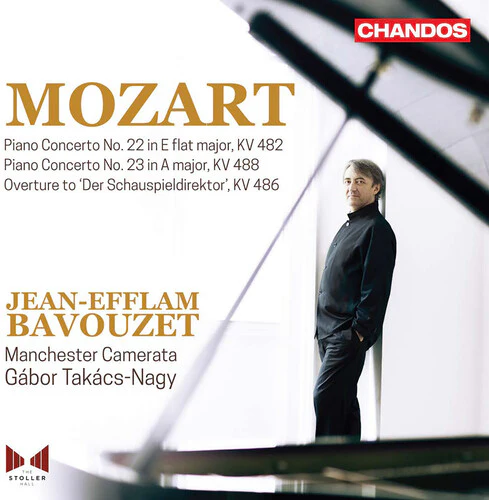
Described by BBC Music Magazine as ‘Mozart music-making of altogether superior quality’, Jean-Efflam Bavouzet’s acclaimed Mozart Concertos series reaches Vol. 6. Along with Concerto No. 24, K. 491, the two concertos presented here were composed in Vienna in the winter of 1785 – 86, at a time when Mozart was working on Le nozze di Figaro. He was at the height of his fame as composer, virtuoso pianist, and teacher. These three concertos were all written for his own use in the concerts of that winter, and remained unpublished during his lifetime. Der Schauspieldirektor (The Impresario) was commissioned by Emperor Joseph II for an important state visit and performed at Schönbrunn palace on 7 February 1786. The Overture highlights Mozart’s innate ability as an orchestrator, and serves as a demonstration piece for Gábor Takács-Nagy and the wonderful musicians of Manchester Camerata.
REVIEWS:
Gábor Takács-Nagy elicits incisive yet vocally orientated phrasing from The Manchester Camerata, giving the impression that the marvellous string, wind and brass sections are reacting and responding to one another, while the timpani strokes make consistently palpable yet never overwhelming impact. The point and refinement of Bavouzet’s elegant phrasing exemplifies Mozart’s famous description of how certain passages should ‘flow like oil’… The engineering’s spacious yet clear concert-hall realism further factors into my enthusiastic recommendation.
-- Gramophone (Jed Distler)
Described by BBC Music Magazine as ‘Mozart music-making of altogether superior quality’, Jean-Efflam Bavouzet’s acclaimed Mozart Concertos series reaches Vol. 6. Along with Concerto No. 24, K. 491, the two concertos presented here were composed in Vienna in the winter of 1785 – 86, at a time when Mozart was working on Le nozze di Figaro. He was at the height of his fame as composer, virtuoso pianist, and teacher. These three concertos were all written for his own use in the concerts of that winter, and remained unpublished during his lifetime. Der Schauspieldirektor (The Impresario) was commissioned by Emperor Joseph II for an important state visit and performed at Schönbrunn palace on 7 February 1786. The Overture highlights Mozart’s innate ability as an orchestrator, and serves as a demonstration piece for Gábor Takács-Nagy and the wonderful musicians of Manchester Camerata.
REVIEWS:
Gábor Takács-Nagy elicits incisive yet vocally orientated phrasing from The Manchester Camerata, giving the impression that the marvellous string, wind and brass sections are reacting and responding to one another, while the timpani strokes make consistently palpable yet never overwhelming impact. The point and refinement of Bavouzet’s elegant phrasing exemplifies Mozart’s famous description of how certain passages should ‘flow like oil’… The engineering’s spacious yet clear concert-hall realism further factors into my enthusiastic recommendation.
-- Gramophone (Jed Distler)
Description
Described by BBC Music Magazine as ‘Mozart music-making of altogether superior quality’, Jean-Efflam Bavouzet’s acclaimed Mozart Concertos series reaches Vol. 6. Along with Concerto No. 24, K. 491, the two concertos presented here were composed in Vienna in the winter of 1785 – 86, at a time when Mozart was working on Le nozze di Figaro. He was at the height of his fame as composer, virtuoso pianist, and teacher. These three concertos were all written for his own use in the concerts of that winter, and remained unpublished during his lifetime. Der Schauspieldirektor (The Impresario) was commissioned by Emperor Joseph II for an important state visit and performed at Schönbrunn palace on 7 February 1786. The Overture highlights Mozart’s innate ability as an orchestrator, and serves as a demonstration piece for Gábor Takács-Nagy and the wonderful musicians of Manchester Camerata.
REVIEWS:
Gábor Takács-Nagy elicits incisive yet vocally orientated phrasing from The Manchester Camerata, giving the impression that the marvellous string, wind and brass sections are reacting and responding to one another, while the timpani strokes make consistently palpable yet never overwhelming impact. The point and refinement of Bavouzet’s elegant phrasing exemplifies Mozart’s famous description of how certain passages should ‘flow like oil’… The engineering’s spacious yet clear concert-hall realism further factors into my enthusiastic recommendation.
-- Gramophone (Jed Distler)