🎉 Up to 70% Off Selected ItemsShop Sale

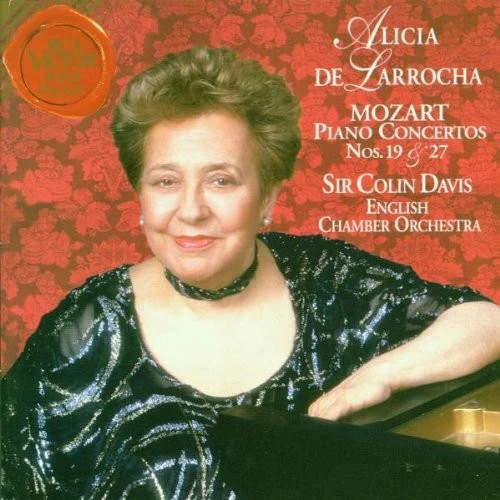
Mozart: Piano Concertos No 19 And 27 / De Larrocha, Davis
Sir Colin Davis’ sensitivity is effortlessly mirrored by Larrocha with her enviable ease, her avoidance of all artifice or attention-seeking dalliance. Few other pianists are more attuned to Mozart’s mix of pain and radiance.
Alicia de Larrocha’s and Sir Colin Davis’s Mozart concerto cycle, while rarely less than distinguished, grows in stature with each new issue. Indeed, so musicianly and distilled are both these performances that the casual listener is in danger of taking them for granted, mistaking their classic sobriety for monotony and their devotion for a monochrome quality.
Sir Colin’s unforced way with the opening tutti of K595, his awareness of “all passion spent” is haunting but unobtrusive. Such sensitivity is effortlessly mirrored by Larrocha with her enviable ease, her avoidance of all artifice or attention-seeking dalliance. Few other pianists are more attuned to Mozart’s mix of pain and radiance, of the subtle major-minor shifts commencing at 6'34'' and, throughout, her economy ensures that every passing mood is unmistakably yet unobtrusively registered. Again, tempos are ideal whether in K595’s gently paced final Allegro (less idiosyncratically slow or autumnal than from Kempff on DG) or in the central Allegretto of K459. Even in the finale’s opera buffa high-jinks she captures the music’s undertow, a poise and equanimity like “the still point of the turning world”.
Balance and sound (grainy but apt) are exemplary, and this issue is graced with a fine portrait of the pianist by Christian Steiner.'
-- Bryce Morrison, Gramophone [12/1997]
Alicia de Larrocha’s and Sir Colin Davis’s Mozart concerto cycle, while rarely less than distinguished, grows in stature with each new issue. Indeed, so musicianly and distilled are both these performances that the casual listener is in danger of taking them for granted, mistaking their classic sobriety for monotony and their devotion for a monochrome quality.
Sir Colin’s unforced way with the opening tutti of K595, his awareness of “all passion spent” is haunting but unobtrusive. Such sensitivity is effortlessly mirrored by Larrocha with her enviable ease, her avoidance of all artifice or attention-seeking dalliance. Few other pianists are more attuned to Mozart’s mix of pain and radiance, of the subtle major-minor shifts commencing at 6'34'' and, throughout, her economy ensures that every passing mood is unmistakably yet unobtrusively registered. Again, tempos are ideal whether in K595’s gently paced final Allegro (less idiosyncratically slow or autumnal than from Kempff on DG) or in the central Allegretto of K459. Even in the finale’s opera buffa high-jinks she captures the music’s undertow, a poise and equanimity like “the still point of the turning world”.
Balance and sound (grainy but apt) are exemplary, and this issue is graced with a fine portrait of the pianist by Christian Steiner.'
-- Bryce Morrison, Gramophone [12/1997]
Sir Colin Davis’ sensitivity is effortlessly mirrored by Larrocha with her enviable ease, her avoidance of all artifice or attention-seeking dalliance. Few other pianists are more attuned to Mozart’s mix of pain and radiance.
Alicia de Larrocha’s and Sir Colin Davis’s Mozart concerto cycle, while rarely less than distinguished, grows in stature with each new issue. Indeed, so musicianly and distilled are both these performances that the casual listener is in danger of taking them for granted, mistaking their classic sobriety for monotony and their devotion for a monochrome quality.
Sir Colin’s unforced way with the opening tutti of K595, his awareness of “all passion spent” is haunting but unobtrusive. Such sensitivity is effortlessly mirrored by Larrocha with her enviable ease, her avoidance of all artifice or attention-seeking dalliance. Few other pianists are more attuned to Mozart’s mix of pain and radiance, of the subtle major-minor shifts commencing at 6'34'' and, throughout, her economy ensures that every passing mood is unmistakably yet unobtrusively registered. Again, tempos are ideal whether in K595’s gently paced final Allegro (less idiosyncratically slow or autumnal than from Kempff on DG) or in the central Allegretto of K459. Even in the finale’s opera buffa high-jinks she captures the music’s undertow, a poise and equanimity like “the still point of the turning world”.
Balance and sound (grainy but apt) are exemplary, and this issue is graced with a fine portrait of the pianist by Christian Steiner.'
-- Bryce Morrison, Gramophone [12/1997]
Alicia de Larrocha’s and Sir Colin Davis’s Mozart concerto cycle, while rarely less than distinguished, grows in stature with each new issue. Indeed, so musicianly and distilled are both these performances that the casual listener is in danger of taking them for granted, mistaking their classic sobriety for monotony and their devotion for a monochrome quality.
Sir Colin’s unforced way with the opening tutti of K595, his awareness of “all passion spent” is haunting but unobtrusive. Such sensitivity is effortlessly mirrored by Larrocha with her enviable ease, her avoidance of all artifice or attention-seeking dalliance. Few other pianists are more attuned to Mozart’s mix of pain and radiance, of the subtle major-minor shifts commencing at 6'34'' and, throughout, her economy ensures that every passing mood is unmistakably yet unobtrusively registered. Again, tempos are ideal whether in K595’s gently paced final Allegro (less idiosyncratically slow or autumnal than from Kempff on DG) or in the central Allegretto of K459. Even in the finale’s opera buffa high-jinks she captures the music’s undertow, a poise and equanimity like “the still point of the turning world”.
Balance and sound (grainy but apt) are exemplary, and this issue is graced with a fine portrait of the pianist by Christian Steiner.'
-- Bryce Morrison, Gramophone [12/1997]
$13.99
Mozart: Piano Concertos No 19 And 27 / De Larrocha, Davis—
$13.99
Description
Sir Colin Davis’ sensitivity is effortlessly mirrored by Larrocha with her enviable ease, her avoidance of all artifice or attention-seeking dalliance. Few other pianists are more attuned to Mozart’s mix of pain and radiance.
Alicia de Larrocha’s and Sir Colin Davis’s Mozart concerto cycle, while rarely less than distinguished, grows in stature with each new issue. Indeed, so musicianly and distilled are both these performances that the casual listener is in danger of taking them for granted, mistaking their classic sobriety for monotony and their devotion for a monochrome quality.
Sir Colin’s unforced way with the opening tutti of K595, his awareness of “all passion spent” is haunting but unobtrusive. Such sensitivity is effortlessly mirrored by Larrocha with her enviable ease, her avoidance of all artifice or attention-seeking dalliance. Few other pianists are more attuned to Mozart’s mix of pain and radiance, of the subtle major-minor shifts commencing at 6'34'' and, throughout, her economy ensures that every passing mood is unmistakably yet unobtrusively registered. Again, tempos are ideal whether in K595’s gently paced final Allegro (less idiosyncratically slow or autumnal than from Kempff on DG) or in the central Allegretto of K459. Even in the finale’s opera buffa high-jinks she captures the music’s undertow, a poise and equanimity like “the still point of the turning world”.
Balance and sound (grainy but apt) are exemplary, and this issue is graced with a fine portrait of the pianist by Christian Steiner.'
-- Bryce Morrison, Gramophone [12/1997]
Alicia de Larrocha’s and Sir Colin Davis’s Mozart concerto cycle, while rarely less than distinguished, grows in stature with each new issue. Indeed, so musicianly and distilled are both these performances that the casual listener is in danger of taking them for granted, mistaking their classic sobriety for monotony and their devotion for a monochrome quality.
Sir Colin’s unforced way with the opening tutti of K595, his awareness of “all passion spent” is haunting but unobtrusive. Such sensitivity is effortlessly mirrored by Larrocha with her enviable ease, her avoidance of all artifice or attention-seeking dalliance. Few other pianists are more attuned to Mozart’s mix of pain and radiance, of the subtle major-minor shifts commencing at 6'34'' and, throughout, her economy ensures that every passing mood is unmistakably yet unobtrusively registered. Again, tempos are ideal whether in K595’s gently paced final Allegro (less idiosyncratically slow or autumnal than from Kempff on DG) or in the central Allegretto of K459. Even in the finale’s opera buffa high-jinks she captures the music’s undertow, a poise and equanimity like “the still point of the turning world”.
Balance and sound (grainy but apt) are exemplary, and this issue is graced with a fine portrait of the pianist by Christian Steiner.'
-- Bryce Morrison, Gramophone [12/1997]