Mozart: Piano Concertos, Vol. 7 - K. 491 & 503; Marriage of Figaro Overture / Bavouzet
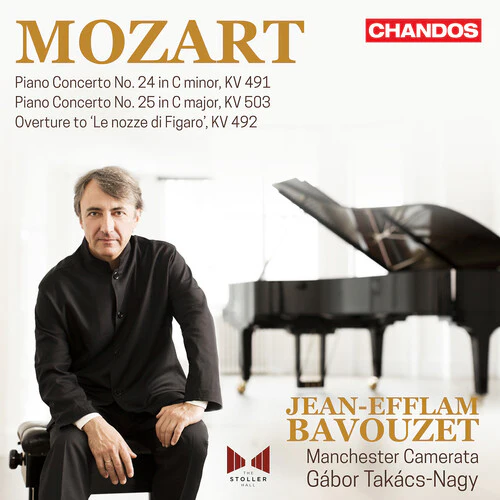
Volume 7 of Jean-Efflam Bavouzet’s Mozart piano concerto features two of the late concertos – nos. 24 and 25 - coupled with a spirited reading of the Marriage of Figaro overture from Gábor Takács-Nagy and the Manchester Camerata. Concerto no. 24 was written whilst he was busily composing the Marriage of Figaro between October 1785 and the premier in Vienna in May 1786. One of only two of his piano concertos in a minor key, there are many unusual features in this extraordinary work, including the deliberately ambivalent tonality of the opening melody, which uses all 12 tones of the scale (a pre-echo of serialism??!). Concerto no. 25 was probably first performed in Vienna in December 1876, and was certainly a success as there were many repeated performances in the following years (including one by Beethoven in 1795). Recorded in Manchester’s Stoller Hall, Bavouzet plays a Yamaha CFX nine-foot Concert Grand Piano.
REVIEWS:
Bavouzet uses a modern concert grand, with the orchestra avoiding excessive vibrato but otherwise playing in today’s mellow-toned instrumental style. The superlative collective result shows that period performance issues need not be an overriding concern, if the feeling for the idiom itself is so engagingly right.
Volume 7 of Jean-Efflam Bavouzet’s Mozart piano concerto features two of the late concertos – nos. 24 and 25 - coupled with a spirited reading of the Marriage of Figaro overture from Gábor Takács-Nagy and the Manchester Camerata. Concerto no. 24 was written whilst he was busily composing the Marriage of Figaro between October 1785 and the premier in Vienna in May 1786. One of only two of his piano concertos in a minor key, there are many unusual features in this extraordinary work, including the deliberately ambivalent tonality of the opening melody, which uses all 12 tones of the scale (a pre-echo of serialism??!). Concerto no. 25 was probably first performed in Vienna in December 1876, and was certainly a success as there were many repeated performances in the following years (including one by Beethoven in 1795). Recorded in Manchester’s Stoller Hall, Bavouzet plays a Yamaha CFX nine-foot Concert Grand Piano.
REVIEWS:
Bavouzet uses a modern concert grand, with the orchestra avoiding excessive vibrato but otherwise playing in today’s mellow-toned instrumental style. The superlative collective result shows that period performance issues need not be an overriding concern, if the feeling for the idiom itself is so engagingly right.
Description
Volume 7 of Jean-Efflam Bavouzet’s Mozart piano concerto features two of the late concertos – nos. 24 and 25 - coupled with a spirited reading of the Marriage of Figaro overture from Gábor Takács-Nagy and the Manchester Camerata. Concerto no. 24 was written whilst he was busily composing the Marriage of Figaro between October 1785 and the premier in Vienna in May 1786. One of only two of his piano concertos in a minor key, there are many unusual features in this extraordinary work, including the deliberately ambivalent tonality of the opening melody, which uses all 12 tones of the scale (a pre-echo of serialism??!). Concerto no. 25 was probably first performed in Vienna in December 1876, and was certainly a success as there were many repeated performances in the following years (including one by Beethoven in 1795). Recorded in Manchester’s Stoller Hall, Bavouzet plays a Yamaha CFX nine-foot Concert Grand Piano.
REVIEWS:
Bavouzet uses a modern concert grand, with the orchestra avoiding excessive vibrato but otherwise playing in today’s mellow-toned instrumental style. The superlative collective result shows that period performance issues need not be an overriding concern, if the feeling for the idiom itself is so engagingly right.