🎉 Up to 70% Off Selected ItemsShop Sale

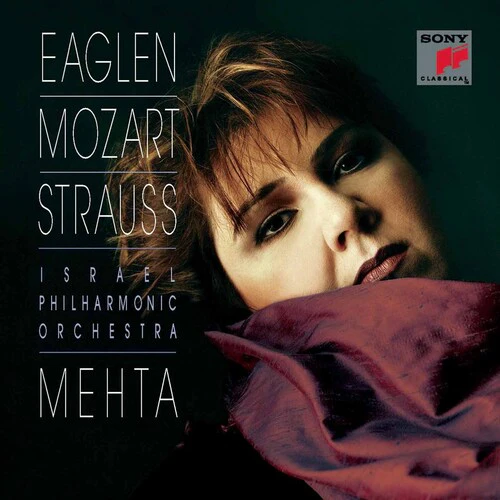
Mozart, Strauss / Eaglen, Mehta, Israel Philharmonic
There is certainly blood aplenty in these bleeding chunks. As Salome kisses the mouth of Jokanaan, the lunar beauty at the core of Jane Eaglen’s dramatic lyric soprano reminds us not only of the chilling purity of Salome’s corruption, but of just what we are missing in hearing Eaglen live so little in Britain.
The partnership of Eaglen and the Israel Philharmonic under Zubin Mehta is at its strongest in the Richard Strauss tracks of this Mozart and Strauss compilation. The orchestra’s superbly balanced wind soloists create dark shadows for Guntram’s Freihild, as she reflects within them, at first perplexed and then, in unflaggingly focused voice, thankful for her love for the Minnesinger – and for the glory of her top B. If Ariadne’s distraction is captured rather less convincingly, then the sustained rapture of Die Aegyptische Helena’s “Zweite Brautnacht!” draws the full effulgence from Eaglen’s golden soprano in what seems to be one breathless sentence.
The five Mozart arias here remind us just what a formidable Mozartian Eaglen is; and one only wishes that Mehta were her equal in this respect. I found myself constantly longing for a livelier orchestral presence, warmer phrasing, more discriminating support. Eaglen’s bleached tone in Donna Anna’s “Non mi dir” gives way to some considerable tension in the florid, high-lying passages, and the matter-of-fact, even peremptory accompaniment of “Or sai chi l’onore” doesn’t help her in what becomes a somewhat shrill revelation.
Eaglen’s own skills at pacing and charging with emotion Electra’s passages of accompanied recitative make for real momentum, lit by a bright platinum gleam in the voice in “Oh smania! ... D’Oreste, d’Aiace”; and her instinctive phrasing gives eloquent voice to Electra’s more demure moments in “Idol mio”.'
-- Hilary Finch, Gramophone [6/1998]
The partnership of Eaglen and the Israel Philharmonic under Zubin Mehta is at its strongest in the Richard Strauss tracks of this Mozart and Strauss compilation. The orchestra’s superbly balanced wind soloists create dark shadows for Guntram’s Freihild, as she reflects within them, at first perplexed and then, in unflaggingly focused voice, thankful for her love for the Minnesinger – and for the glory of her top B. If Ariadne’s distraction is captured rather less convincingly, then the sustained rapture of Die Aegyptische Helena’s “Zweite Brautnacht!” draws the full effulgence from Eaglen’s golden soprano in what seems to be one breathless sentence.
The five Mozart arias here remind us just what a formidable Mozartian Eaglen is; and one only wishes that Mehta were her equal in this respect. I found myself constantly longing for a livelier orchestral presence, warmer phrasing, more discriminating support. Eaglen’s bleached tone in Donna Anna’s “Non mi dir” gives way to some considerable tension in the florid, high-lying passages, and the matter-of-fact, even peremptory accompaniment of “Or sai chi l’onore” doesn’t help her in what becomes a somewhat shrill revelation.
Eaglen’s own skills at pacing and charging with emotion Electra’s passages of accompanied recitative make for real momentum, lit by a bright platinum gleam in the voice in “Oh smania! ... D’Oreste, d’Aiace”; and her instinctive phrasing gives eloquent voice to Electra’s more demure moments in “Idol mio”.'
-- Hilary Finch, Gramophone [6/1998]
There is certainly blood aplenty in these bleeding chunks. As Salome kisses the mouth of Jokanaan, the lunar beauty at the core of Jane Eaglen’s dramatic lyric soprano reminds us not only of the chilling purity of Salome’s corruption, but of just what we are missing in hearing Eaglen live so little in Britain.
The partnership of Eaglen and the Israel Philharmonic under Zubin Mehta is at its strongest in the Richard Strauss tracks of this Mozart and Strauss compilation. The orchestra’s superbly balanced wind soloists create dark shadows for Guntram’s Freihild, as she reflects within them, at first perplexed and then, in unflaggingly focused voice, thankful for her love for the Minnesinger – and for the glory of her top B. If Ariadne’s distraction is captured rather less convincingly, then the sustained rapture of Die Aegyptische Helena’s “Zweite Brautnacht!” draws the full effulgence from Eaglen’s golden soprano in what seems to be one breathless sentence.
The five Mozart arias here remind us just what a formidable Mozartian Eaglen is; and one only wishes that Mehta were her equal in this respect. I found myself constantly longing for a livelier orchestral presence, warmer phrasing, more discriminating support. Eaglen’s bleached tone in Donna Anna’s “Non mi dir” gives way to some considerable tension in the florid, high-lying passages, and the matter-of-fact, even peremptory accompaniment of “Or sai chi l’onore” doesn’t help her in what becomes a somewhat shrill revelation.
Eaglen’s own skills at pacing and charging with emotion Electra’s passages of accompanied recitative make for real momentum, lit by a bright platinum gleam in the voice in “Oh smania! ... D’Oreste, d’Aiace”; and her instinctive phrasing gives eloquent voice to Electra’s more demure moments in “Idol mio”.'
-- Hilary Finch, Gramophone [6/1998]
The partnership of Eaglen and the Israel Philharmonic under Zubin Mehta is at its strongest in the Richard Strauss tracks of this Mozart and Strauss compilation. The orchestra’s superbly balanced wind soloists create dark shadows for Guntram’s Freihild, as she reflects within them, at first perplexed and then, in unflaggingly focused voice, thankful for her love for the Minnesinger – and for the glory of her top B. If Ariadne’s distraction is captured rather less convincingly, then the sustained rapture of Die Aegyptische Helena’s “Zweite Brautnacht!” draws the full effulgence from Eaglen’s golden soprano in what seems to be one breathless sentence.
The five Mozart arias here remind us just what a formidable Mozartian Eaglen is; and one only wishes that Mehta were her equal in this respect. I found myself constantly longing for a livelier orchestral presence, warmer phrasing, more discriminating support. Eaglen’s bleached tone in Donna Anna’s “Non mi dir” gives way to some considerable tension in the florid, high-lying passages, and the matter-of-fact, even peremptory accompaniment of “Or sai chi l’onore” doesn’t help her in what becomes a somewhat shrill revelation.
Eaglen’s own skills at pacing and charging with emotion Electra’s passages of accompanied recitative make for real momentum, lit by a bright platinum gleam in the voice in “Oh smania! ... D’Oreste, d’Aiace”; and her instinctive phrasing gives eloquent voice to Electra’s more demure moments in “Idol mio”.'
-- Hilary Finch, Gramophone [6/1998]
$4.90
Original: $13.99
-65%Mozart, Strauss / Eaglen, Mehta, Israel Philharmonic—
$13.99
$4.90Description
There is certainly blood aplenty in these bleeding chunks. As Salome kisses the mouth of Jokanaan, the lunar beauty at the core of Jane Eaglen’s dramatic lyric soprano reminds us not only of the chilling purity of Salome’s corruption, but of just what we are missing in hearing Eaglen live so little in Britain.
The partnership of Eaglen and the Israel Philharmonic under Zubin Mehta is at its strongest in the Richard Strauss tracks of this Mozart and Strauss compilation. The orchestra’s superbly balanced wind soloists create dark shadows for Guntram’s Freihild, as she reflects within them, at first perplexed and then, in unflaggingly focused voice, thankful for her love for the Minnesinger – and for the glory of her top B. If Ariadne’s distraction is captured rather less convincingly, then the sustained rapture of Die Aegyptische Helena’s “Zweite Brautnacht!” draws the full effulgence from Eaglen’s golden soprano in what seems to be one breathless sentence.
The five Mozart arias here remind us just what a formidable Mozartian Eaglen is; and one only wishes that Mehta were her equal in this respect. I found myself constantly longing for a livelier orchestral presence, warmer phrasing, more discriminating support. Eaglen’s bleached tone in Donna Anna’s “Non mi dir” gives way to some considerable tension in the florid, high-lying passages, and the matter-of-fact, even peremptory accompaniment of “Or sai chi l’onore” doesn’t help her in what becomes a somewhat shrill revelation.
Eaglen’s own skills at pacing and charging with emotion Electra’s passages of accompanied recitative make for real momentum, lit by a bright platinum gleam in the voice in “Oh smania! ... D’Oreste, d’Aiace”; and her instinctive phrasing gives eloquent voice to Electra’s more demure moments in “Idol mio”.'
-- Hilary Finch, Gramophone [6/1998]
The partnership of Eaglen and the Israel Philharmonic under Zubin Mehta is at its strongest in the Richard Strauss tracks of this Mozart and Strauss compilation. The orchestra’s superbly balanced wind soloists create dark shadows for Guntram’s Freihild, as she reflects within them, at first perplexed and then, in unflaggingly focused voice, thankful for her love for the Minnesinger – and for the glory of her top B. If Ariadne’s distraction is captured rather less convincingly, then the sustained rapture of Die Aegyptische Helena’s “Zweite Brautnacht!” draws the full effulgence from Eaglen’s golden soprano in what seems to be one breathless sentence.
The five Mozart arias here remind us just what a formidable Mozartian Eaglen is; and one only wishes that Mehta were her equal in this respect. I found myself constantly longing for a livelier orchestral presence, warmer phrasing, more discriminating support. Eaglen’s bleached tone in Donna Anna’s “Non mi dir” gives way to some considerable tension in the florid, high-lying passages, and the matter-of-fact, even peremptory accompaniment of “Or sai chi l’onore” doesn’t help her in what becomes a somewhat shrill revelation.
Eaglen’s own skills at pacing and charging with emotion Electra’s passages of accompanied recitative make for real momentum, lit by a bright platinum gleam in the voice in “Oh smania! ... D’Oreste, d’Aiace”; and her instinctive phrasing gives eloquent voice to Electra’s more demure moments in “Idol mio”.'
-- Hilary Finch, Gramophone [6/1998]