🎉 Up to 70% Off Selected ItemsShop Sale

1 / 2
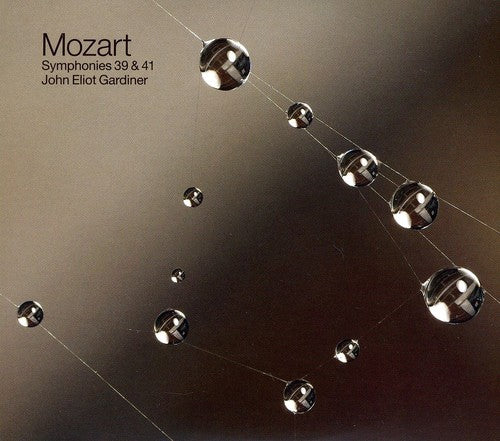
Mozart: Symphonies 39 & 41 / Gardiner, English Baroque Soloists
This album made the headlines in 2006 as the UK’s first classical “on the night” recording. CDs were made during the second part of the concert for the audience to take home after the concert. This is the first time this CD has been commercially released.
Symphonies 39 & 41 are among the last composed by Mozart. They use the full eighteenth-century orchestra, complete with trumpets and timpani.
Symphony 39 (K543) shows Mozart at his most exalted in the orchestral passages, while some passages remain intimate and touching, with more delicate themes. The Minuet features the orchestra’s guest artists, the clarinets, in a waltz-like Trio.
The “Jupiter”, Mozart’s final symphony (no 41, K551), belongs to a sequence of grand ceremonial works in C major. Typically for Mozart it juxtaposes a number of different contrasting musical characters and ideas, from the formal and aristocratic to the heartfelt and soulful.
In the finale, the composer’s compositional virtuosity is on display. Through the whole runs an extraordinary spirit, a mixture of intellectual excitement, the feeling of a grand design, and a sense of fun.
Symphonies 39 & 41 are among the last composed by Mozart. They use the full eighteenth-century orchestra, complete with trumpets and timpani.
Symphony 39 (K543) shows Mozart at his most exalted in the orchestral passages, while some passages remain intimate and touching, with more delicate themes. The Minuet features the orchestra’s guest artists, the clarinets, in a waltz-like Trio.
The “Jupiter”, Mozart’s final symphony (no 41, K551), belongs to a sequence of grand ceremonial works in C major. Typically for Mozart it juxtaposes a number of different contrasting musical characters and ideas, from the formal and aristocratic to the heartfelt and soulful.
In the finale, the composer’s compositional virtuosity is on display. Through the whole runs an extraordinary spirit, a mixture of intellectual excitement, the feeling of a grand design, and a sense of fun.
This album made the headlines in 2006 as the UK’s first classical “on the night” recording. CDs were made during the second part of the concert for the audience to take home after the concert. This is the first time this CD has been commercially released.
Symphonies 39 & 41 are among the last composed by Mozart. They use the full eighteenth-century orchestra, complete with trumpets and timpani.
Symphony 39 (K543) shows Mozart at his most exalted in the orchestral passages, while some passages remain intimate and touching, with more delicate themes. The Minuet features the orchestra’s guest artists, the clarinets, in a waltz-like Trio.
The “Jupiter”, Mozart’s final symphony (no 41, K551), belongs to a sequence of grand ceremonial works in C major. Typically for Mozart it juxtaposes a number of different contrasting musical characters and ideas, from the formal and aristocratic to the heartfelt and soulful.
In the finale, the composer’s compositional virtuosity is on display. Through the whole runs an extraordinary spirit, a mixture of intellectual excitement, the feeling of a grand design, and a sense of fun.
Symphonies 39 & 41 are among the last composed by Mozart. They use the full eighteenth-century orchestra, complete with trumpets and timpani.
Symphony 39 (K543) shows Mozart at his most exalted in the orchestral passages, while some passages remain intimate and touching, with more delicate themes. The Minuet features the orchestra’s guest artists, the clarinets, in a waltz-like Trio.
The “Jupiter”, Mozart’s final symphony (no 41, K551), belongs to a sequence of grand ceremonial works in C major. Typically for Mozart it juxtaposes a number of different contrasting musical characters and ideas, from the formal and aristocratic to the heartfelt and soulful.
In the finale, the composer’s compositional virtuosity is on display. Through the whole runs an extraordinary spirit, a mixture of intellectual excitement, the feeling of a grand design, and a sense of fun.
$20.99
Mozart: Symphonies 39 & 41 / Gardiner, English Baroque Soloists—
$20.99
Description
This album made the headlines in 2006 as the UK’s first classical “on the night” recording. CDs were made during the second part of the concert for the audience to take home after the concert. This is the first time this CD has been commercially released.
Symphonies 39 & 41 are among the last composed by Mozart. They use the full eighteenth-century orchestra, complete with trumpets and timpani.
Symphony 39 (K543) shows Mozart at his most exalted in the orchestral passages, while some passages remain intimate and touching, with more delicate themes. The Minuet features the orchestra’s guest artists, the clarinets, in a waltz-like Trio.
The “Jupiter”, Mozart’s final symphony (no 41, K551), belongs to a sequence of grand ceremonial works in C major. Typically for Mozart it juxtaposes a number of different contrasting musical characters and ideas, from the formal and aristocratic to the heartfelt and soulful.
In the finale, the composer’s compositional virtuosity is on display. Through the whole runs an extraordinary spirit, a mixture of intellectual excitement, the feeling of a grand design, and a sense of fun.
Symphonies 39 & 41 are among the last composed by Mozart. They use the full eighteenth-century orchestra, complete with trumpets and timpani.
Symphony 39 (K543) shows Mozart at his most exalted in the orchestral passages, while some passages remain intimate and touching, with more delicate themes. The Minuet features the orchestra’s guest artists, the clarinets, in a waltz-like Trio.
The “Jupiter”, Mozart’s final symphony (no 41, K551), belongs to a sequence of grand ceremonial works in C major. Typically for Mozart it juxtaposes a number of different contrasting musical characters and ideas, from the formal and aristocratic to the heartfelt and soulful.
In the finale, the composer’s compositional virtuosity is on display. Through the whole runs an extraordinary spirit, a mixture of intellectual excitement, the feeling of a grand design, and a sense of fun.