🎉 Up to 70% Off Selected ItemsShop Sale

1 / 2
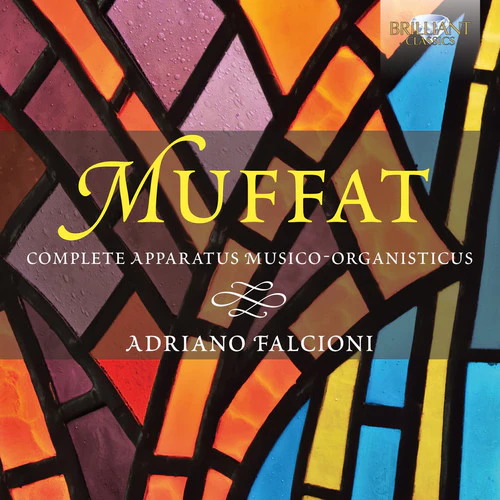
Muffat: Complete Apparatus Music-Organisticus / Falcioni
A former pupil of Pasquini who also came into contact with Corelli, Georg Muffat -- born in Savoy in 1653 -- was the first example of a truly international composer who brought together elements of the German, French and Italian styles. He was primarily an organist, working in cities such as Paris, Vienna and Prague, and his Apparatus musico-organisticus, to which this release is dedicated, was the largest corpus of organ works published at the time -- an enormously popular volume, to the extent that it was considered among the foremost compilations of its sort in southern Germany.
The Apparatus originally consisted of 12 toccatas, but in a later edition three pieces were added to the set: Ciacona, Passacaglia and Nova Cyclopeias Harmonica. The organist is certainly put to the test, what with the scales, the leaps, double trills and a wide variety of figures that express 'contrasting affections' in the works -- the last of which alludes to the story of Pythagoras, who discovered the foundations of musical tuning by listening to the hammering of a blacksmith on various anvils. Brilliant Classics regular, Adriano Falcioni -- whose previous recordings for the label include Duruflé's Complete Music for Choir and Organ (9264) -- performs this magnum opus with aplomb, revealing the skill of a composer who is credited with being the first musician to introduce the Italian concerto grosso and the French suite to the German-speaking countries.
Other information:
- Recorded 15--17 May 2013.
- Georg Muffat was a cosmopolitan artist. In a time when no work permits were needed he travelled Europe and worked in Strassbourg, Berlin, Vienna, Prague, Rome and ultimately in Salzburg, at the court of the Archbishop.
- Like a musical sponge he absorbed every current style of his time in his music, which contains Italian melodiousness, French ornamentations and Germany's severe structures and counterpoint. He published a volume of organ works which became immensely popular among musicians, containing a series of Toccatas, Ciaconas and Passacaglias, works of the highest technical order: the Apparatus Musico-organisticus, a survey of all instrumental and compositional tricks and accomplishments of the time.
- Adriano Falcioni, one of the foremost organists of Italy, offers impressive performances of this complete collection, showing great insight into the styles and performance practice.
- Booklet contains information on the music, artist and the organ.
The Apparatus originally consisted of 12 toccatas, but in a later edition three pieces were added to the set: Ciacona, Passacaglia and Nova Cyclopeias Harmonica. The organist is certainly put to the test, what with the scales, the leaps, double trills and a wide variety of figures that express 'contrasting affections' in the works -- the last of which alludes to the story of Pythagoras, who discovered the foundations of musical tuning by listening to the hammering of a blacksmith on various anvils. Brilliant Classics regular, Adriano Falcioni -- whose previous recordings for the label include Duruflé's Complete Music for Choir and Organ (9264) -- performs this magnum opus with aplomb, revealing the skill of a composer who is credited with being the first musician to introduce the Italian concerto grosso and the French suite to the German-speaking countries.
Other information:
- Recorded 15--17 May 2013.
- Georg Muffat was a cosmopolitan artist. In a time when no work permits were needed he travelled Europe and worked in Strassbourg, Berlin, Vienna, Prague, Rome and ultimately in Salzburg, at the court of the Archbishop.
- Like a musical sponge he absorbed every current style of his time in his music, which contains Italian melodiousness, French ornamentations and Germany's severe structures and counterpoint. He published a volume of organ works which became immensely popular among musicians, containing a series of Toccatas, Ciaconas and Passacaglias, works of the highest technical order: the Apparatus Musico-organisticus, a survey of all instrumental and compositional tricks and accomplishments of the time.
- Adriano Falcioni, one of the foremost organists of Italy, offers impressive performances of this complete collection, showing great insight into the styles and performance practice.
- Booklet contains information on the music, artist and the organ.
A former pupil of Pasquini who also came into contact with Corelli, Georg Muffat -- born in Savoy in 1653 -- was the first example of a truly international composer who brought together elements of the German, French and Italian styles. He was primarily an organist, working in cities such as Paris, Vienna and Prague, and his Apparatus musico-organisticus, to which this release is dedicated, was the largest corpus of organ works published at the time -- an enormously popular volume, to the extent that it was considered among the foremost compilations of its sort in southern Germany.
The Apparatus originally consisted of 12 toccatas, but in a later edition three pieces were added to the set: Ciacona, Passacaglia and Nova Cyclopeias Harmonica. The organist is certainly put to the test, what with the scales, the leaps, double trills and a wide variety of figures that express 'contrasting affections' in the works -- the last of which alludes to the story of Pythagoras, who discovered the foundations of musical tuning by listening to the hammering of a blacksmith on various anvils. Brilliant Classics regular, Adriano Falcioni -- whose previous recordings for the label include Duruflé's Complete Music for Choir and Organ (9264) -- performs this magnum opus with aplomb, revealing the skill of a composer who is credited with being the first musician to introduce the Italian concerto grosso and the French suite to the German-speaking countries.
Other information:
- Recorded 15--17 May 2013.
- Georg Muffat was a cosmopolitan artist. In a time when no work permits were needed he travelled Europe and worked in Strassbourg, Berlin, Vienna, Prague, Rome and ultimately in Salzburg, at the court of the Archbishop.
- Like a musical sponge he absorbed every current style of his time in his music, which contains Italian melodiousness, French ornamentations and Germany's severe structures and counterpoint. He published a volume of organ works which became immensely popular among musicians, containing a series of Toccatas, Ciaconas and Passacaglias, works of the highest technical order: the Apparatus Musico-organisticus, a survey of all instrumental and compositional tricks and accomplishments of the time.
- Adriano Falcioni, one of the foremost organists of Italy, offers impressive performances of this complete collection, showing great insight into the styles and performance practice.
- Booklet contains information on the music, artist and the organ.
The Apparatus originally consisted of 12 toccatas, but in a later edition three pieces were added to the set: Ciacona, Passacaglia and Nova Cyclopeias Harmonica. The organist is certainly put to the test, what with the scales, the leaps, double trills and a wide variety of figures that express 'contrasting affections' in the works -- the last of which alludes to the story of Pythagoras, who discovered the foundations of musical tuning by listening to the hammering of a blacksmith on various anvils. Brilliant Classics regular, Adriano Falcioni -- whose previous recordings for the label include Duruflé's Complete Music for Choir and Organ (9264) -- performs this magnum opus with aplomb, revealing the skill of a composer who is credited with being the first musician to introduce the Italian concerto grosso and the French suite to the German-speaking countries.
Other information:
- Recorded 15--17 May 2013.
- Georg Muffat was a cosmopolitan artist. In a time when no work permits were needed he travelled Europe and worked in Strassbourg, Berlin, Vienna, Prague, Rome and ultimately in Salzburg, at the court of the Archbishop.
- Like a musical sponge he absorbed every current style of his time in his music, which contains Italian melodiousness, French ornamentations and Germany's severe structures and counterpoint. He published a volume of organ works which became immensely popular among musicians, containing a series of Toccatas, Ciaconas and Passacaglias, works of the highest technical order: the Apparatus Musico-organisticus, a survey of all instrumental and compositional tricks and accomplishments of the time.
- Adriano Falcioni, one of the foremost organists of Italy, offers impressive performances of this complete collection, showing great insight into the styles and performance practice.
- Booklet contains information on the music, artist and the organ.
$17.99
Muffat: Complete Apparatus Music-Organisticus / Falcioni—
$17.99
Description
A former pupil of Pasquini who also came into contact with Corelli, Georg Muffat -- born in Savoy in 1653 -- was the first example of a truly international composer who brought together elements of the German, French and Italian styles. He was primarily an organist, working in cities such as Paris, Vienna and Prague, and his Apparatus musico-organisticus, to which this release is dedicated, was the largest corpus of organ works published at the time -- an enormously popular volume, to the extent that it was considered among the foremost compilations of its sort in southern Germany.
The Apparatus originally consisted of 12 toccatas, but in a later edition three pieces were added to the set: Ciacona, Passacaglia and Nova Cyclopeias Harmonica. The organist is certainly put to the test, what with the scales, the leaps, double trills and a wide variety of figures that express 'contrasting affections' in the works -- the last of which alludes to the story of Pythagoras, who discovered the foundations of musical tuning by listening to the hammering of a blacksmith on various anvils. Brilliant Classics regular, Adriano Falcioni -- whose previous recordings for the label include Duruflé's Complete Music for Choir and Organ (9264) -- performs this magnum opus with aplomb, revealing the skill of a composer who is credited with being the first musician to introduce the Italian concerto grosso and the French suite to the German-speaking countries.
Other information:
- Recorded 15--17 May 2013.
- Georg Muffat was a cosmopolitan artist. In a time when no work permits were needed he travelled Europe and worked in Strassbourg, Berlin, Vienna, Prague, Rome and ultimately in Salzburg, at the court of the Archbishop.
- Like a musical sponge he absorbed every current style of his time in his music, which contains Italian melodiousness, French ornamentations and Germany's severe structures and counterpoint. He published a volume of organ works which became immensely popular among musicians, containing a series of Toccatas, Ciaconas and Passacaglias, works of the highest technical order: the Apparatus Musico-organisticus, a survey of all instrumental and compositional tricks and accomplishments of the time.
- Adriano Falcioni, one of the foremost organists of Italy, offers impressive performances of this complete collection, showing great insight into the styles and performance practice.
- Booklet contains information on the music, artist and the organ.
The Apparatus originally consisted of 12 toccatas, but in a later edition three pieces were added to the set: Ciacona, Passacaglia and Nova Cyclopeias Harmonica. The organist is certainly put to the test, what with the scales, the leaps, double trills and a wide variety of figures that express 'contrasting affections' in the works -- the last of which alludes to the story of Pythagoras, who discovered the foundations of musical tuning by listening to the hammering of a blacksmith on various anvils. Brilliant Classics regular, Adriano Falcioni -- whose previous recordings for the label include Duruflé's Complete Music for Choir and Organ (9264) -- performs this magnum opus with aplomb, revealing the skill of a composer who is credited with being the first musician to introduce the Italian concerto grosso and the French suite to the German-speaking countries.
Other information:
- Recorded 15--17 May 2013.
- Georg Muffat was a cosmopolitan artist. In a time when no work permits were needed he travelled Europe and worked in Strassbourg, Berlin, Vienna, Prague, Rome and ultimately in Salzburg, at the court of the Archbishop.
- Like a musical sponge he absorbed every current style of his time in his music, which contains Italian melodiousness, French ornamentations and Germany's severe structures and counterpoint. He published a volume of organ works which became immensely popular among musicians, containing a series of Toccatas, Ciaconas and Passacaglias, works of the highest technical order: the Apparatus Musico-organisticus, a survey of all instrumental and compositional tricks and accomplishments of the time.
- Adriano Falcioni, one of the foremost organists of Italy, offers impressive performances of this complete collection, showing great insight into the styles and performance practice.
- Booklet contains information on the music, artist and the organ.