🎉 Up to 70% Off Selected ItemsShop Sale

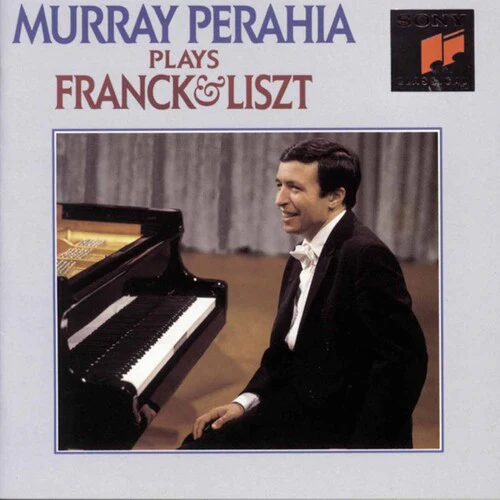
Murray Perahia Plays Franck & Liszt
A decade or so ago, a recital of Franck and Liszt from Murray Perahia might have caused some surprise. But one of the most refreshing things about this artist is his growing refusal to be typecast. The Franck (like all but two of the Liszt pieces) was recorded at The Maltings in Snape, a venue he knows and likes so well. This I enjoyed for its stylish reminders of the composer's long devotion to the Church—i.e. for a strain of simple devoutness, free from all heart-on-sleeve emotionalism, with which he invests the first two movements. The central choral is allowed an easy flow, and I liked his dynamic restraint in the first two statements of the chorale theme itself so as to leave plenty in reserve for the characteristically Franckian emergence from darkness into light as the work progresses. Discreet pedalling ensures that texture never clots in the fugue, and the homecoming is truly joyous.
The rest of the 60 minutes go to Liszt, and here my only slight (but only very slight) disappointment came in the Mephisto Waltz, recorded in UCLA's Royce Hall in Los Angeles. Needless to say it is played with all Perahia's customary command, finesse and what I can only describe as aristocratic musical discernment. Yet I still felt that just that last touch of devilry was missing on the dance-floor (even more piquant accentuation might perhaps have helped), and likewise the ultimate in lingering sensuous seduction in Liszt's "lascivious, caressing dreams of love". For the rest I have nothing but praise—starting with the cutting intensity Perahia brings to the melodic line in Petrarch's tale of unrequited love ("Sonetto 104"). By comparison, Louis Lortie on Chandos (in a less forward and less sharp-cut sounding recent Maltings recording) seems to shrink from this sonnet's acutest disquiet and pain—such as in the passage marked agitato, and then crescendo and rinforzando from about 3'46"-4'17" in track 5 of Perahia's disc. Perahia's liquidity in "Au bard d'une source" and shimmering whispers in the first Concert Study, "Waldesrauschen" (as spacious as Arrau's—now part of the Philips Arrau Edition) are wholly ravishing as sound per se, while "Gnomenreigen" in its turn brings reminders of that delicately scintillating brilliance that always gave him a place apart when gambol ling with Mendelssohn in concerto finales. His range of keyboard colour in the concluding Rhapsodic espagnole (the second and finer of Liszt's pair) is as ear-catching as are his rhythmic spring, his teasing caprice and his exuberant climaxes.
Full marks to his engineers for so faithfully capturing so wide a dynamic range—and, incidentally, to Sony for including so generously spacious a booklet (with full quotations from Lenau, Petrarch and Schiller).
-- Joan Chissell, Gramophone [10/1991]
The rest of the 60 minutes go to Liszt, and here my only slight (but only very slight) disappointment came in the Mephisto Waltz, recorded in UCLA's Royce Hall in Los Angeles. Needless to say it is played with all Perahia's customary command, finesse and what I can only describe as aristocratic musical discernment. Yet I still felt that just that last touch of devilry was missing on the dance-floor (even more piquant accentuation might perhaps have helped), and likewise the ultimate in lingering sensuous seduction in Liszt's "lascivious, caressing dreams of love". For the rest I have nothing but praise—starting with the cutting intensity Perahia brings to the melodic line in Petrarch's tale of unrequited love ("Sonetto 104"). By comparison, Louis Lortie on Chandos (in a less forward and less sharp-cut sounding recent Maltings recording) seems to shrink from this sonnet's acutest disquiet and pain—such as in the passage marked agitato, and then crescendo and rinforzando from about 3'46"-4'17" in track 5 of Perahia's disc. Perahia's liquidity in "Au bard d'une source" and shimmering whispers in the first Concert Study, "Waldesrauschen" (as spacious as Arrau's—now part of the Philips Arrau Edition) are wholly ravishing as sound per se, while "Gnomenreigen" in its turn brings reminders of that delicately scintillating brilliance that always gave him a place apart when gambol ling with Mendelssohn in concerto finales. His range of keyboard colour in the concluding Rhapsodic espagnole (the second and finer of Liszt's pair) is as ear-catching as are his rhythmic spring, his teasing caprice and his exuberant climaxes.
Full marks to his engineers for so faithfully capturing so wide a dynamic range—and, incidentally, to Sony for including so generously spacious a booklet (with full quotations from Lenau, Petrarch and Schiller).
-- Joan Chissell, Gramophone [10/1991]
A decade or so ago, a recital of Franck and Liszt from Murray Perahia might have caused some surprise. But one of the most refreshing things about this artist is his growing refusal to be typecast. The Franck (like all but two of the Liszt pieces) was recorded at The Maltings in Snape, a venue he knows and likes so well. This I enjoyed for its stylish reminders of the composer's long devotion to the Church—i.e. for a strain of simple devoutness, free from all heart-on-sleeve emotionalism, with which he invests the first two movements. The central choral is allowed an easy flow, and I liked his dynamic restraint in the first two statements of the chorale theme itself so as to leave plenty in reserve for the characteristically Franckian emergence from darkness into light as the work progresses. Discreet pedalling ensures that texture never clots in the fugue, and the homecoming is truly joyous.
The rest of the 60 minutes go to Liszt, and here my only slight (but only very slight) disappointment came in the Mephisto Waltz, recorded in UCLA's Royce Hall in Los Angeles. Needless to say it is played with all Perahia's customary command, finesse and what I can only describe as aristocratic musical discernment. Yet I still felt that just that last touch of devilry was missing on the dance-floor (even more piquant accentuation might perhaps have helped), and likewise the ultimate in lingering sensuous seduction in Liszt's "lascivious, caressing dreams of love". For the rest I have nothing but praise—starting with the cutting intensity Perahia brings to the melodic line in Petrarch's tale of unrequited love ("Sonetto 104"). By comparison, Louis Lortie on Chandos (in a less forward and less sharp-cut sounding recent Maltings recording) seems to shrink from this sonnet's acutest disquiet and pain—such as in the passage marked agitato, and then crescendo and rinforzando from about 3'46"-4'17" in track 5 of Perahia's disc. Perahia's liquidity in "Au bard d'une source" and shimmering whispers in the first Concert Study, "Waldesrauschen" (as spacious as Arrau's—now part of the Philips Arrau Edition) are wholly ravishing as sound per se, while "Gnomenreigen" in its turn brings reminders of that delicately scintillating brilliance that always gave him a place apart when gambol ling with Mendelssohn in concerto finales. His range of keyboard colour in the concluding Rhapsodic espagnole (the second and finer of Liszt's pair) is as ear-catching as are his rhythmic spring, his teasing caprice and his exuberant climaxes.
Full marks to his engineers for so faithfully capturing so wide a dynamic range—and, incidentally, to Sony for including so generously spacious a booklet (with full quotations from Lenau, Petrarch and Schiller).
-- Joan Chissell, Gramophone [10/1991]
The rest of the 60 minutes go to Liszt, and here my only slight (but only very slight) disappointment came in the Mephisto Waltz, recorded in UCLA's Royce Hall in Los Angeles. Needless to say it is played with all Perahia's customary command, finesse and what I can only describe as aristocratic musical discernment. Yet I still felt that just that last touch of devilry was missing on the dance-floor (even more piquant accentuation might perhaps have helped), and likewise the ultimate in lingering sensuous seduction in Liszt's "lascivious, caressing dreams of love". For the rest I have nothing but praise—starting with the cutting intensity Perahia brings to the melodic line in Petrarch's tale of unrequited love ("Sonetto 104"). By comparison, Louis Lortie on Chandos (in a less forward and less sharp-cut sounding recent Maltings recording) seems to shrink from this sonnet's acutest disquiet and pain—such as in the passage marked agitato, and then crescendo and rinforzando from about 3'46"-4'17" in track 5 of Perahia's disc. Perahia's liquidity in "Au bard d'une source" and shimmering whispers in the first Concert Study, "Waldesrauschen" (as spacious as Arrau's—now part of the Philips Arrau Edition) are wholly ravishing as sound per se, while "Gnomenreigen" in its turn brings reminders of that delicately scintillating brilliance that always gave him a place apart when gambol ling with Mendelssohn in concerto finales. His range of keyboard colour in the concluding Rhapsodic espagnole (the second and finer of Liszt's pair) is as ear-catching as are his rhythmic spring, his teasing caprice and his exuberant climaxes.
Full marks to his engineers for so faithfully capturing so wide a dynamic range—and, incidentally, to Sony for including so generously spacious a booklet (with full quotations from Lenau, Petrarch and Schiller).
-- Joan Chissell, Gramophone [10/1991]
$6.30
Original: $17.99
-65%Murray Perahia Plays Franck & Liszt—
$17.99
$6.30Description
A decade or so ago, a recital of Franck and Liszt from Murray Perahia might have caused some surprise. But one of the most refreshing things about this artist is his growing refusal to be typecast. The Franck (like all but two of the Liszt pieces) was recorded at The Maltings in Snape, a venue he knows and likes so well. This I enjoyed for its stylish reminders of the composer's long devotion to the Church—i.e. for a strain of simple devoutness, free from all heart-on-sleeve emotionalism, with which he invests the first two movements. The central choral is allowed an easy flow, and I liked his dynamic restraint in the first two statements of the chorale theme itself so as to leave plenty in reserve for the characteristically Franckian emergence from darkness into light as the work progresses. Discreet pedalling ensures that texture never clots in the fugue, and the homecoming is truly joyous.
The rest of the 60 minutes go to Liszt, and here my only slight (but only very slight) disappointment came in the Mephisto Waltz, recorded in UCLA's Royce Hall in Los Angeles. Needless to say it is played with all Perahia's customary command, finesse and what I can only describe as aristocratic musical discernment. Yet I still felt that just that last touch of devilry was missing on the dance-floor (even more piquant accentuation might perhaps have helped), and likewise the ultimate in lingering sensuous seduction in Liszt's "lascivious, caressing dreams of love". For the rest I have nothing but praise—starting with the cutting intensity Perahia brings to the melodic line in Petrarch's tale of unrequited love ("Sonetto 104"). By comparison, Louis Lortie on Chandos (in a less forward and less sharp-cut sounding recent Maltings recording) seems to shrink from this sonnet's acutest disquiet and pain—such as in the passage marked agitato, and then crescendo and rinforzando from about 3'46"-4'17" in track 5 of Perahia's disc. Perahia's liquidity in "Au bard d'une source" and shimmering whispers in the first Concert Study, "Waldesrauschen" (as spacious as Arrau's—now part of the Philips Arrau Edition) are wholly ravishing as sound per se, while "Gnomenreigen" in its turn brings reminders of that delicately scintillating brilliance that always gave him a place apart when gambol ling with Mendelssohn in concerto finales. His range of keyboard colour in the concluding Rhapsodic espagnole (the second and finer of Liszt's pair) is as ear-catching as are his rhythmic spring, his teasing caprice and his exuberant climaxes.
Full marks to his engineers for so faithfully capturing so wide a dynamic range—and, incidentally, to Sony for including so generously spacious a booklet (with full quotations from Lenau, Petrarch and Schiller).
-- Joan Chissell, Gramophone [10/1991]
The rest of the 60 minutes go to Liszt, and here my only slight (but only very slight) disappointment came in the Mephisto Waltz, recorded in UCLA's Royce Hall in Los Angeles. Needless to say it is played with all Perahia's customary command, finesse and what I can only describe as aristocratic musical discernment. Yet I still felt that just that last touch of devilry was missing on the dance-floor (even more piquant accentuation might perhaps have helped), and likewise the ultimate in lingering sensuous seduction in Liszt's "lascivious, caressing dreams of love". For the rest I have nothing but praise—starting with the cutting intensity Perahia brings to the melodic line in Petrarch's tale of unrequited love ("Sonetto 104"). By comparison, Louis Lortie on Chandos (in a less forward and less sharp-cut sounding recent Maltings recording) seems to shrink from this sonnet's acutest disquiet and pain—such as in the passage marked agitato, and then crescendo and rinforzando from about 3'46"-4'17" in track 5 of Perahia's disc. Perahia's liquidity in "Au bard d'une source" and shimmering whispers in the first Concert Study, "Waldesrauschen" (as spacious as Arrau's—now part of the Philips Arrau Edition) are wholly ravishing as sound per se, while "Gnomenreigen" in its turn brings reminders of that delicately scintillating brilliance that always gave him a place apart when gambol ling with Mendelssohn in concerto finales. His range of keyboard colour in the concluding Rhapsodic espagnole (the second and finer of Liszt's pair) is as ear-catching as are his rhythmic spring, his teasing caprice and his exuberant climaxes.
Full marks to his engineers for so faithfully capturing so wide a dynamic range—and, incidentally, to Sony for including so generously spacious a booklet (with full quotations from Lenau, Petrarch and Schiller).
-- Joan Chissell, Gramophone [10/1991]