Nickel: Sonatas & Chamber Music for Oboes / Vanderkolk
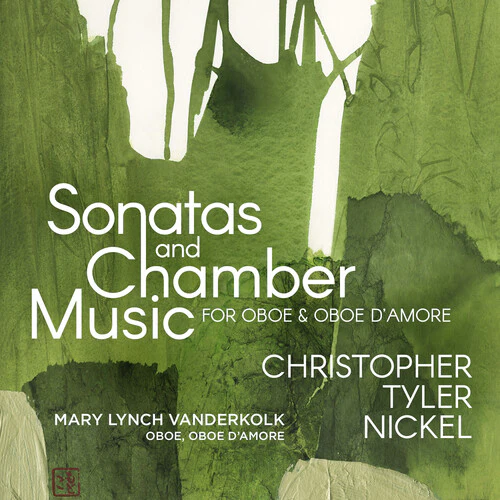
The soulful sounds of the oboe and oboe d’amore infuse the expressive, lyrical new album of solo and chamber works by award-winning Canadian composer Christopher Tyler Nickel. The star of the show is Seattle Symphony principal Mary Lynch VanderKolk, whose artistry plays a vital role in Chris’ compositional process. He explains, “I find ways to incorporate her strengths and personality into expressing the music’s emotions.” The Oboe Sonata, dedicated to Mary, is by turns haunting and pastoral, navigating the full three-octave range of the instrument. The Sonata for Oboe d’amore demonstrates the large timbral and emotional range of the oboe’s lower-pitched cousin, from darkness to light.
Undaunted by the historic canon of iconic solo instrumental works already in existence, Chris – an oboist himself – created a tour de force with his Suite for Unaccompanied Oboe, a work Mary describes as “more cinematic” than his other concert works, not surprising perhaps given his countless award-winning TV, film, and theatrical scores. The album concludes with what is surely the only Oboe d’amore Quintet ever composed. The instrument’s plaintive tone takes center stage against the backdrop of string quartet, as the work moves from serenity, melancholy, and nostalgia, before ending with an invigorating finale that brings the inspiring album to a close.
REVIEWS:
Featuring the talents of oboist Mary Lynch VanderKolk, the new album Christopher Tyler Nickel: Sonatas and Chamber Music for Oboe and Oboe d’amore masterfully explores the full range and lyrical aspects of the oboe while spiritedly challenging its technical capabilities. Opening with the Oboe Sonata specifically composed for VanderKolk, Nickel’s own familiarity with the oboe is clearly demonstrated as he insightfully captures the strengths of the player – creating beautifully sweeping lines that showcase VanderKolk’s colourful and lyrical capabilities as she artfully navigates the dynamic and rhythmic passages in a way that only the most consummate performer could. Imagining the pensive sadness of the lone instrument at twilight is what one may experience as they listen to Nickel’s second piece of this collection, the Oboe d’amore Sonata.
The album concludes with the Quintet for Oboe d’amore for the namesake instrument and string quartet in a uniquely distinctive composition drawing the listener in with the dark, melancholic timbre of the double-reed instrument traditionally only heard in Baroque music, making this piece the first of its kind and a true testament to this Canadian composer’s proclivity for the oboe family and ability to fashion narrowly defined aspects of both music and the instrument into a broader phenomenon.
-- The Whole Note
The soulful sounds of the oboe and oboe d’amore infuse the expressive, lyrical new album of solo and chamber works by award-winning Canadian composer Christopher Tyler Nickel. The star of the show is Seattle Symphony principal Mary Lynch VanderKolk, whose artistry plays a vital role in Chris’ compositional process. He explains, “I find ways to incorporate her strengths and personality into expressing the music’s emotions.” The Oboe Sonata, dedicated to Mary, is by turns haunting and pastoral, navigating the full three-octave range of the instrument. The Sonata for Oboe d’amore demonstrates the large timbral and emotional range of the oboe’s lower-pitched cousin, from darkness to light.
Undaunted by the historic canon of iconic solo instrumental works already in existence, Chris – an oboist himself – created a tour de force with his Suite for Unaccompanied Oboe, a work Mary describes as “more cinematic” than his other concert works, not surprising perhaps given his countless award-winning TV, film, and theatrical scores. The album concludes with what is surely the only Oboe d’amore Quintet ever composed. The instrument’s plaintive tone takes center stage against the backdrop of string quartet, as the work moves from serenity, melancholy, and nostalgia, before ending with an invigorating finale that brings the inspiring album to a close.
REVIEWS:
Featuring the talents of oboist Mary Lynch VanderKolk, the new album Christopher Tyler Nickel: Sonatas and Chamber Music for Oboe and Oboe d’amore masterfully explores the full range and lyrical aspects of the oboe while spiritedly challenging its technical capabilities. Opening with the Oboe Sonata specifically composed for VanderKolk, Nickel’s own familiarity with the oboe is clearly demonstrated as he insightfully captures the strengths of the player – creating beautifully sweeping lines that showcase VanderKolk’s colourful and lyrical capabilities as she artfully navigates the dynamic and rhythmic passages in a way that only the most consummate performer could. Imagining the pensive sadness of the lone instrument at twilight is what one may experience as they listen to Nickel’s second piece of this collection, the Oboe d’amore Sonata.
The album concludes with the Quintet for Oboe d’amore for the namesake instrument and string quartet in a uniquely distinctive composition drawing the listener in with the dark, melancholic timbre of the double-reed instrument traditionally only heard in Baroque music, making this piece the first of its kind and a true testament to this Canadian composer’s proclivity for the oboe family and ability to fashion narrowly defined aspects of both music and the instrument into a broader phenomenon.
-- The Whole Note
Description
The soulful sounds of the oboe and oboe d’amore infuse the expressive, lyrical new album of solo and chamber works by award-winning Canadian composer Christopher Tyler Nickel. The star of the show is Seattle Symphony principal Mary Lynch VanderKolk, whose artistry plays a vital role in Chris’ compositional process. He explains, “I find ways to incorporate her strengths and personality into expressing the music’s emotions.” The Oboe Sonata, dedicated to Mary, is by turns haunting and pastoral, navigating the full three-octave range of the instrument. The Sonata for Oboe d’amore demonstrates the large timbral and emotional range of the oboe’s lower-pitched cousin, from darkness to light.
Undaunted by the historic canon of iconic solo instrumental works already in existence, Chris – an oboist himself – created a tour de force with his Suite for Unaccompanied Oboe, a work Mary describes as “more cinematic” than his other concert works, not surprising perhaps given his countless award-winning TV, film, and theatrical scores. The album concludes with what is surely the only Oboe d’amore Quintet ever composed. The instrument’s plaintive tone takes center stage against the backdrop of string quartet, as the work moves from serenity, melancholy, and nostalgia, before ending with an invigorating finale that brings the inspiring album to a close.
REVIEWS:
Featuring the talents of oboist Mary Lynch VanderKolk, the new album Christopher Tyler Nickel: Sonatas and Chamber Music for Oboe and Oboe d’amore masterfully explores the full range and lyrical aspects of the oboe while spiritedly challenging its technical capabilities. Opening with the Oboe Sonata specifically composed for VanderKolk, Nickel’s own familiarity with the oboe is clearly demonstrated as he insightfully captures the strengths of the player – creating beautifully sweeping lines that showcase VanderKolk’s colourful and lyrical capabilities as she artfully navigates the dynamic and rhythmic passages in a way that only the most consummate performer could. Imagining the pensive sadness of the lone instrument at twilight is what one may experience as they listen to Nickel’s second piece of this collection, the Oboe d’amore Sonata.
The album concludes with the Quintet for Oboe d’amore for the namesake instrument and string quartet in a uniquely distinctive composition drawing the listener in with the dark, melancholic timbre of the double-reed instrument traditionally only heard in Baroque music, making this piece the first of its kind and a true testament to this Canadian composer’s proclivity for the oboe family and ability to fashion narrowly defined aspects of both music and the instrument into a broader phenomenon.
-- The Whole Note