🎉 Up to 70% Off Selected ItemsShop Sale

1 / 2
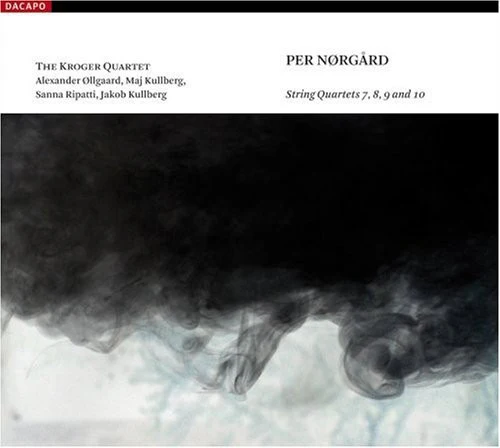
Norgaard: String Quartets 7, 8, 9 And 10 / Kroger Quartet
In one of my earlier reviews of recordings of Nørgård’s music, I remarked that his musical and stylistic progress is far from a straight line. This composer is used to surprising even his staunchest admirers with unexpected twists and turns. This is certainly valid when considering his string quartets - ten at the time of writing. It may be worth reminding ourselves that his first essays in the genre are available on Kontrapunkt 32015 played by the Kontra Quartet. It’s a disc still worth looking out for.
The String Quartet No.7 opens mysteriously “with faraway signal notes”. The music quickly gets more animated and unfolds through contrasting episodes characterised by capricious rhythms. The slow movement makes use of various techniques and is almost a study in microtonal writing. It creates harmonic and tonal ambiguity that is fairly quickly dispelled by the energy at play in the final movement in which we hear reminiscences from Nørgård’s Second String Quartet Quartetto Brioso composed in 1954 and revised in 1958. The Seventh String Quartet was written to celebrate the bicentenary of the Danish Royal Library, a rather improbable commission indeed considering that there is absolutely nothing academic in the music.
The String Quartet No.8 subtitled Natten sænker sig som røg (“Night Descending like Smoke”) was completed in 1997. Its five movements derive most of their thematic material from Nørgård’s Apollinaire-inspired opera Nuit des Hommes - available on DaCapo 8.226011 and reviewed here some time ago. The first movement opens with siren-like sounds before proceeding further with what is mostly a distorted rendering of a Danish hymn-tune and building to violent, final, climactic and heavily repeated chords. The second movement Man – Animal is a short brutal war-like Scherzo. The third movement Voyage suggests exactly that in various ways, mostly through rhythm. The fourth movement Night Descending, opening with a variant of the opening gesture in the preceding movement, is a sort of tense Nocturne which at times seems to come to a standstill. The final movement Epilogue – Elegy reverts to the material of the first movement albeit presented in a totally different way, “including the chorale, but now transformed or distorted into a lament” as well as brief reminders of material from the other movements. Nørgård’s Eighth String Quartet is one of the grimmest of works, but this should not surprise anyone who knows the opera on which the piece is based.
Completed a few years later, in 2001, the String Quartet No.9 subtitled Ind i kilden (“Into the Source” or “Into the Spring”) is again completely different from its immediate predecessors. Whatever the intended meaning of that subtitle - maybe “the further forward, the further backward” as suggested in the excellent insert notes accompanying this release - the music is far more approachable. It is full of typical Nørgård hallmarks and remains rather demanding, while ultimately rewarding.
Much the same can be said of the most recent work here, the String Quartet No.10 subtitled Høsttidløs (“meadow saffron”). It is in one movement and, again, is almost plain sailing – by Nørgård’s standards – when compared to the much more acerbic Eighth Quartet. The music here is mostly characterised by clarity and transparency. The very opening is a good example of such almost disarming new simplicity although much of the ensuing music is clearly from the same pen as that heard in the other quartets. This is a beautiful and engaging work and one likely to earn Nørgård new admirers.
The Kroger Quartet, for whom the Tenth Quartet was composed, play beautifully throughout and clearly have the full measure of the music Their committed and carefully prepared readings deserve only praise and admiration. The recorded sound is magnificent and the production of this release, particularly Jensen’s well-informed insert notes from which I have quoted, is first rate and well up to DaCapo’s best. This most welcome release is a must for all fans of this composer’s music. It usefully and splendidly completes Kontrapunkt’s recordings of the earlier string quartets. This is quite strong stuff but it is all well worth the effort.
-- Hubert Culot, MusicWeb International
The String Quartet No.7 opens mysteriously “with faraway signal notes”. The music quickly gets more animated and unfolds through contrasting episodes characterised by capricious rhythms. The slow movement makes use of various techniques and is almost a study in microtonal writing. It creates harmonic and tonal ambiguity that is fairly quickly dispelled by the energy at play in the final movement in which we hear reminiscences from Nørgård’s Second String Quartet Quartetto Brioso composed in 1954 and revised in 1958. The Seventh String Quartet was written to celebrate the bicentenary of the Danish Royal Library, a rather improbable commission indeed considering that there is absolutely nothing academic in the music.
The String Quartet No.8 subtitled Natten sænker sig som røg (“Night Descending like Smoke”) was completed in 1997. Its five movements derive most of their thematic material from Nørgård’s Apollinaire-inspired opera Nuit des Hommes - available on DaCapo 8.226011 and reviewed here some time ago. The first movement opens with siren-like sounds before proceeding further with what is mostly a distorted rendering of a Danish hymn-tune and building to violent, final, climactic and heavily repeated chords. The second movement Man – Animal is a short brutal war-like Scherzo. The third movement Voyage suggests exactly that in various ways, mostly through rhythm. The fourth movement Night Descending, opening with a variant of the opening gesture in the preceding movement, is a sort of tense Nocturne which at times seems to come to a standstill. The final movement Epilogue – Elegy reverts to the material of the first movement albeit presented in a totally different way, “including the chorale, but now transformed or distorted into a lament” as well as brief reminders of material from the other movements. Nørgård’s Eighth String Quartet is one of the grimmest of works, but this should not surprise anyone who knows the opera on which the piece is based.
Completed a few years later, in 2001, the String Quartet No.9 subtitled Ind i kilden (“Into the Source” or “Into the Spring”) is again completely different from its immediate predecessors. Whatever the intended meaning of that subtitle - maybe “the further forward, the further backward” as suggested in the excellent insert notes accompanying this release - the music is far more approachable. It is full of typical Nørgård hallmarks and remains rather demanding, while ultimately rewarding.
Much the same can be said of the most recent work here, the String Quartet No.10 subtitled Høsttidløs (“meadow saffron”). It is in one movement and, again, is almost plain sailing – by Nørgård’s standards – when compared to the much more acerbic Eighth Quartet. The music here is mostly characterised by clarity and transparency. The very opening is a good example of such almost disarming new simplicity although much of the ensuing music is clearly from the same pen as that heard in the other quartets. This is a beautiful and engaging work and one likely to earn Nørgård new admirers.
The Kroger Quartet, for whom the Tenth Quartet was composed, play beautifully throughout and clearly have the full measure of the music Their committed and carefully prepared readings deserve only praise and admiration. The recorded sound is magnificent and the production of this release, particularly Jensen’s well-informed insert notes from which I have quoted, is first rate and well up to DaCapo’s best. This most welcome release is a must for all fans of this composer’s music. It usefully and splendidly completes Kontrapunkt’s recordings of the earlier string quartets. This is quite strong stuff but it is all well worth the effort.
-- Hubert Culot, MusicWeb International
In one of my earlier reviews of recordings of Nørgård’s music, I remarked that his musical and stylistic progress is far from a straight line. This composer is used to surprising even his staunchest admirers with unexpected twists and turns. This is certainly valid when considering his string quartets - ten at the time of writing. It may be worth reminding ourselves that his first essays in the genre are available on Kontrapunkt 32015 played by the Kontra Quartet. It’s a disc still worth looking out for.
The String Quartet No.7 opens mysteriously “with faraway signal notes”. The music quickly gets more animated and unfolds through contrasting episodes characterised by capricious rhythms. The slow movement makes use of various techniques and is almost a study in microtonal writing. It creates harmonic and tonal ambiguity that is fairly quickly dispelled by the energy at play in the final movement in which we hear reminiscences from Nørgård’s Second String Quartet Quartetto Brioso composed in 1954 and revised in 1958. The Seventh String Quartet was written to celebrate the bicentenary of the Danish Royal Library, a rather improbable commission indeed considering that there is absolutely nothing academic in the music.
The String Quartet No.8 subtitled Natten sænker sig som røg (“Night Descending like Smoke”) was completed in 1997. Its five movements derive most of their thematic material from Nørgård’s Apollinaire-inspired opera Nuit des Hommes - available on DaCapo 8.226011 and reviewed here some time ago. The first movement opens with siren-like sounds before proceeding further with what is mostly a distorted rendering of a Danish hymn-tune and building to violent, final, climactic and heavily repeated chords. The second movement Man – Animal is a short brutal war-like Scherzo. The third movement Voyage suggests exactly that in various ways, mostly through rhythm. The fourth movement Night Descending, opening with a variant of the opening gesture in the preceding movement, is a sort of tense Nocturne which at times seems to come to a standstill. The final movement Epilogue – Elegy reverts to the material of the first movement albeit presented in a totally different way, “including the chorale, but now transformed or distorted into a lament” as well as brief reminders of material from the other movements. Nørgård’s Eighth String Quartet is one of the grimmest of works, but this should not surprise anyone who knows the opera on which the piece is based.
Completed a few years later, in 2001, the String Quartet No.9 subtitled Ind i kilden (“Into the Source” or “Into the Spring”) is again completely different from its immediate predecessors. Whatever the intended meaning of that subtitle - maybe “the further forward, the further backward” as suggested in the excellent insert notes accompanying this release - the music is far more approachable. It is full of typical Nørgård hallmarks and remains rather demanding, while ultimately rewarding.
Much the same can be said of the most recent work here, the String Quartet No.10 subtitled Høsttidløs (“meadow saffron”). It is in one movement and, again, is almost plain sailing – by Nørgård’s standards – when compared to the much more acerbic Eighth Quartet. The music here is mostly characterised by clarity and transparency. The very opening is a good example of such almost disarming new simplicity although much of the ensuing music is clearly from the same pen as that heard in the other quartets. This is a beautiful and engaging work and one likely to earn Nørgård new admirers.
The Kroger Quartet, for whom the Tenth Quartet was composed, play beautifully throughout and clearly have the full measure of the music Their committed and carefully prepared readings deserve only praise and admiration. The recorded sound is magnificent and the production of this release, particularly Jensen’s well-informed insert notes from which I have quoted, is first rate and well up to DaCapo’s best. This most welcome release is a must for all fans of this composer’s music. It usefully and splendidly completes Kontrapunkt’s recordings of the earlier string quartets. This is quite strong stuff but it is all well worth the effort.
-- Hubert Culot, MusicWeb International
The String Quartet No.7 opens mysteriously “with faraway signal notes”. The music quickly gets more animated and unfolds through contrasting episodes characterised by capricious rhythms. The slow movement makes use of various techniques and is almost a study in microtonal writing. It creates harmonic and tonal ambiguity that is fairly quickly dispelled by the energy at play in the final movement in which we hear reminiscences from Nørgård’s Second String Quartet Quartetto Brioso composed in 1954 and revised in 1958. The Seventh String Quartet was written to celebrate the bicentenary of the Danish Royal Library, a rather improbable commission indeed considering that there is absolutely nothing academic in the music.
The String Quartet No.8 subtitled Natten sænker sig som røg (“Night Descending like Smoke”) was completed in 1997. Its five movements derive most of their thematic material from Nørgård’s Apollinaire-inspired opera Nuit des Hommes - available on DaCapo 8.226011 and reviewed here some time ago. The first movement opens with siren-like sounds before proceeding further with what is mostly a distorted rendering of a Danish hymn-tune and building to violent, final, climactic and heavily repeated chords. The second movement Man – Animal is a short brutal war-like Scherzo. The third movement Voyage suggests exactly that in various ways, mostly through rhythm. The fourth movement Night Descending, opening with a variant of the opening gesture in the preceding movement, is a sort of tense Nocturne which at times seems to come to a standstill. The final movement Epilogue – Elegy reverts to the material of the first movement albeit presented in a totally different way, “including the chorale, but now transformed or distorted into a lament” as well as brief reminders of material from the other movements. Nørgård’s Eighth String Quartet is one of the grimmest of works, but this should not surprise anyone who knows the opera on which the piece is based.
Completed a few years later, in 2001, the String Quartet No.9 subtitled Ind i kilden (“Into the Source” or “Into the Spring”) is again completely different from its immediate predecessors. Whatever the intended meaning of that subtitle - maybe “the further forward, the further backward” as suggested in the excellent insert notes accompanying this release - the music is far more approachable. It is full of typical Nørgård hallmarks and remains rather demanding, while ultimately rewarding.
Much the same can be said of the most recent work here, the String Quartet No.10 subtitled Høsttidløs (“meadow saffron”). It is in one movement and, again, is almost plain sailing – by Nørgård’s standards – when compared to the much more acerbic Eighth Quartet. The music here is mostly characterised by clarity and transparency. The very opening is a good example of such almost disarming new simplicity although much of the ensuing music is clearly from the same pen as that heard in the other quartets. This is a beautiful and engaging work and one likely to earn Nørgård new admirers.
The Kroger Quartet, for whom the Tenth Quartet was composed, play beautifully throughout and clearly have the full measure of the music Their committed and carefully prepared readings deserve only praise and admiration. The recorded sound is magnificent and the production of this release, particularly Jensen’s well-informed insert notes from which I have quoted, is first rate and well up to DaCapo’s best. This most welcome release is a must for all fans of this composer’s music. It usefully and splendidly completes Kontrapunkt’s recordings of the earlier string quartets. This is quite strong stuff but it is all well worth the effort.
-- Hubert Culot, MusicWeb International
$13.99
Norgaard: String Quartets 7, 8, 9 And 10 / Kroger Quartet—
$13.99
Description
In one of my earlier reviews of recordings of Nørgård’s music, I remarked that his musical and stylistic progress is far from a straight line. This composer is used to surprising even his staunchest admirers with unexpected twists and turns. This is certainly valid when considering his string quartets - ten at the time of writing. It may be worth reminding ourselves that his first essays in the genre are available on Kontrapunkt 32015 played by the Kontra Quartet. It’s a disc still worth looking out for.
The String Quartet No.7 opens mysteriously “with faraway signal notes”. The music quickly gets more animated and unfolds through contrasting episodes characterised by capricious rhythms. The slow movement makes use of various techniques and is almost a study in microtonal writing. It creates harmonic and tonal ambiguity that is fairly quickly dispelled by the energy at play in the final movement in which we hear reminiscences from Nørgård’s Second String Quartet Quartetto Brioso composed in 1954 and revised in 1958. The Seventh String Quartet was written to celebrate the bicentenary of the Danish Royal Library, a rather improbable commission indeed considering that there is absolutely nothing academic in the music.
The String Quartet No.8 subtitled Natten sænker sig som røg (“Night Descending like Smoke”) was completed in 1997. Its five movements derive most of their thematic material from Nørgård’s Apollinaire-inspired opera Nuit des Hommes - available on DaCapo 8.226011 and reviewed here some time ago. The first movement opens with siren-like sounds before proceeding further with what is mostly a distorted rendering of a Danish hymn-tune and building to violent, final, climactic and heavily repeated chords. The second movement Man – Animal is a short brutal war-like Scherzo. The third movement Voyage suggests exactly that in various ways, mostly through rhythm. The fourth movement Night Descending, opening with a variant of the opening gesture in the preceding movement, is a sort of tense Nocturne which at times seems to come to a standstill. The final movement Epilogue – Elegy reverts to the material of the first movement albeit presented in a totally different way, “including the chorale, but now transformed or distorted into a lament” as well as brief reminders of material from the other movements. Nørgård’s Eighth String Quartet is one of the grimmest of works, but this should not surprise anyone who knows the opera on which the piece is based.
Completed a few years later, in 2001, the String Quartet No.9 subtitled Ind i kilden (“Into the Source” or “Into the Spring”) is again completely different from its immediate predecessors. Whatever the intended meaning of that subtitle - maybe “the further forward, the further backward” as suggested in the excellent insert notes accompanying this release - the music is far more approachable. It is full of typical Nørgård hallmarks and remains rather demanding, while ultimately rewarding.
Much the same can be said of the most recent work here, the String Quartet No.10 subtitled Høsttidløs (“meadow saffron”). It is in one movement and, again, is almost plain sailing – by Nørgård’s standards – when compared to the much more acerbic Eighth Quartet. The music here is mostly characterised by clarity and transparency. The very opening is a good example of such almost disarming new simplicity although much of the ensuing music is clearly from the same pen as that heard in the other quartets. This is a beautiful and engaging work and one likely to earn Nørgård new admirers.
The Kroger Quartet, for whom the Tenth Quartet was composed, play beautifully throughout and clearly have the full measure of the music Their committed and carefully prepared readings deserve only praise and admiration. The recorded sound is magnificent and the production of this release, particularly Jensen’s well-informed insert notes from which I have quoted, is first rate and well up to DaCapo’s best. This most welcome release is a must for all fans of this composer’s music. It usefully and splendidly completes Kontrapunkt’s recordings of the earlier string quartets. This is quite strong stuff but it is all well worth the effort.
-- Hubert Culot, MusicWeb International
The String Quartet No.7 opens mysteriously “with faraway signal notes”. The music quickly gets more animated and unfolds through contrasting episodes characterised by capricious rhythms. The slow movement makes use of various techniques and is almost a study in microtonal writing. It creates harmonic and tonal ambiguity that is fairly quickly dispelled by the energy at play in the final movement in which we hear reminiscences from Nørgård’s Second String Quartet Quartetto Brioso composed in 1954 and revised in 1958. The Seventh String Quartet was written to celebrate the bicentenary of the Danish Royal Library, a rather improbable commission indeed considering that there is absolutely nothing academic in the music.
The String Quartet No.8 subtitled Natten sænker sig som røg (“Night Descending like Smoke”) was completed in 1997. Its five movements derive most of their thematic material from Nørgård’s Apollinaire-inspired opera Nuit des Hommes - available on DaCapo 8.226011 and reviewed here some time ago. The first movement opens with siren-like sounds before proceeding further with what is mostly a distorted rendering of a Danish hymn-tune and building to violent, final, climactic and heavily repeated chords. The second movement Man – Animal is a short brutal war-like Scherzo. The third movement Voyage suggests exactly that in various ways, mostly through rhythm. The fourth movement Night Descending, opening with a variant of the opening gesture in the preceding movement, is a sort of tense Nocturne which at times seems to come to a standstill. The final movement Epilogue – Elegy reverts to the material of the first movement albeit presented in a totally different way, “including the chorale, but now transformed or distorted into a lament” as well as brief reminders of material from the other movements. Nørgård’s Eighth String Quartet is one of the grimmest of works, but this should not surprise anyone who knows the opera on which the piece is based.
Completed a few years later, in 2001, the String Quartet No.9 subtitled Ind i kilden (“Into the Source” or “Into the Spring”) is again completely different from its immediate predecessors. Whatever the intended meaning of that subtitle - maybe “the further forward, the further backward” as suggested in the excellent insert notes accompanying this release - the music is far more approachable. It is full of typical Nørgård hallmarks and remains rather demanding, while ultimately rewarding.
Much the same can be said of the most recent work here, the String Quartet No.10 subtitled Høsttidløs (“meadow saffron”). It is in one movement and, again, is almost plain sailing – by Nørgård’s standards – when compared to the much more acerbic Eighth Quartet. The music here is mostly characterised by clarity and transparency. The very opening is a good example of such almost disarming new simplicity although much of the ensuing music is clearly from the same pen as that heard in the other quartets. This is a beautiful and engaging work and one likely to earn Nørgård new admirers.
The Kroger Quartet, for whom the Tenth Quartet was composed, play beautifully throughout and clearly have the full measure of the music Their committed and carefully prepared readings deserve only praise and admiration. The recorded sound is magnificent and the production of this release, particularly Jensen’s well-informed insert notes from which I have quoted, is first rate and well up to DaCapo’s best. This most welcome release is a must for all fans of this composer’s music. It usefully and splendidly completes Kontrapunkt’s recordings of the earlier string quartets. This is quite strong stuff but it is all well worth the effort.
-- Hubert Culot, MusicWeb International