🎉 Up to 70% Off Selected ItemsShop Sale

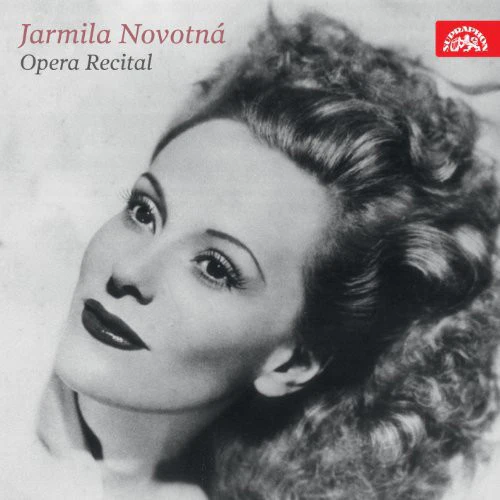
Opera Recital / Jarmila Novotna
JARMILA NOVOTNÁ OPERA RECITAL • Jarmila Novotná (s); Ezio Pinza (bs); 3 Raoul Jobin (t); 5 Jan Peerce (t); 7 James Melton (t); 9 Martial Singher (bar); 11 Arturo Toscanini 1 , Paul Breisach 2 , Bruno Walter 3 , Frieder Weissmann 4 , Thomas Beecham 5 , Morton Gould 6 , Ettore Panizza 7 , Maurice Abravanel 8 , Frank Black 9 , Alfred Wallenstein 10 , Donald Voorhees 11 , Wilfred Pelletier 12 , cond; Gibner King (pn); 13 Vienna PO; 1 Metropolitan Op O; 14 Victor O; 4 Bell Telephone O 11 • SUPRAPHON 4158, mono (79:02) Live, film, and studio performances 1930–1956
ROSSINI Il barbiere di Siviglia: Una voce poco fà (in Czech). MOZART 1 Die Zauberflöte: Ach, ich fühls. 2,14 Le nozze di Figaro: Non so più; Voi che sapete. 3,14 Don Giovanni: Ah, che mi dice mai; Fuggi il traditor. OFFENBACH Les contes d’Hoffmann: Les oiseaux dans la charmille (in German); 4 Belle nuit,ô nuit d’amour; 4 Elle a fui; 5,14 Voyez l’étrange fantasie … C’est un chanson d’amour. VERDI La traviata: 6 Tra voi; 7,14 Ah, fors’ è lui … Sempre libera; 8 Addio del passato; 9 Parigi, o cara. PUCCINI La bohème: 10 Si mi chiamano Mimi; 11 Mimi! Speravo di trovarvi qui. 12,14 Tosca: Vissi d’arte. SMETANA 10 The Bartered Bride: Ten lásky sen. 4 The Kiss: Hajej, m?j andílku. 13 Rusalka: O lovely moon
Despite a long, distinguished career of 30 years, 16 of them at the Metropolitan Opera, Jarmila Novotná is known largely to record collectors and students of archive performances. Her one and only intersection with popular culture was an appearance in the M-G-M film The Great Caruso (1951), whose big star was tenor Mario Lanza. In Germany, where she appeared for several years and made some fairly popular films ( Fire in the Opera, The Beggar Student, The Bartered Bride, Song of the Lark ), she is perhaps better known, and in her native (now former) Czechoslovakia she is considered to be on a par with Emmy Destinn and Maria Jeritza. In her early years, when she was a high soubrette, the voice was ear-ravishing lovely, even sparkling in sound, but by 1937 her tone was becoming a bit heavier and her upper range less easy; thus, by the time she made her Met debut (January 5, 1940, in La bohème opposite Jussi Björling), the voice had become darker. But she was an excellent stage actress, an outstanding musician (she had already sung such offbeat works as Ravel’s L’heure espagnole, at Otto Klemperer’s Kroll Opera, as well as Krenek’s The Life of Orestes, and Schoenberg’s Die glückliche Hand ) and a fine stage actress. She was a favorite soprano of such conductors as Zemlinsky, Erich Kleiber, Walter, Szell, and Toscanini.
One thing you can’t miss from the opening track—Rossini’s “Una voce poco fà” sung in Czech—was that she sang with her high range too “open,” much the same way Bidú Sayão did in her “coloratura” years, and with similar results; both had to come down to the lyric range because they blew it out. You can hear the difference immediately after the Rossini aria, in her the “Ach, ich fühls” from Die Zauberflöte in Toscanini’s ill-fated Salzburg performance (ill-fated due to the overloud singing of his Tamino, Helge Rosawenge, and the botched, out-of-key performance of the Queen of the Night, Julie Osvath). Yet you can also hear her phrasing becoming tighter and more musical, less scatter-gun in her approach to producing notes. To modern ears, more used to mezzo Cherubinos, Novotná sounds rather light and very girlish (even Christine Schäfer, one of our few soprano Cherubinos nowadays, sings the music with a darker tone than this), but once again she is very fine, particularly in “Voi, che sapete.” Despite a slightly slower tempo than we are used to today, this performance could pass muster in our modern opera houses. But one does sense a loss from her earlier voice with its bright, open tone: The sound, now slightly covered, is no longer as distinctive. In Donna Elvira’s “Ah, che mi dice mai,” the voice no longer has any “bite” up top, despite splendid singing (and Bruno Walter’s tempo is much too fast for this music), but both soprano and conductor sound better in “Fuggi il traditor.”
The three excerpts from Les contes d’Hoffmann point out the differences well: the very early (1930) “Doll song” in German sung with light, pointed tone (and good trills), the “Barcarolle” and “Elle a fui” (now in French, from 1945) sounding more covered and bit muddy in tone, as is the 1944 duet with Jobin (a rather plain, ugly-sounding vocalist who was the Met’s preferred French tenor of the 1940s). By this point in her career, Novotná was also breaking her phrases a bit more frequently for breath than she had just a few years earlier.
The four Traviata excerpts, ranging in date from 1940 (“Addio del passato”) to 1950 (“Parigi, o cara”) are interesting in showing how Novotná built a character up throughout an opera. She was not the equal of an Olivero or Mattila, but in some moments she was interesting in a general way. In “Ah, fors’ e lui” she sings the descending opening line with the rests between the notes, the way Verdi wrote them, but after the tenor’s lines in “Sempre libera” she makes a mistake, correcting herself quickly. There is, however, no feeling in her “Addio del passato,” which is also conducted much too quickly by Abravanel. The voice is so dark by the time of her 1950 “Parigi, o cara” that it is almost unrecognizable as the same singer, and there is no feeling of loss or desperation in her voice. She might as well have been singing about her missing dog. (To be fair, however, her partner in this duet, James Melton, sings with no expression whatever.) There is a bit of expression in her “Si, mi chiamano Mimì” from 1943, but again, it’s just a sort of “generic Puccini sound,” nothing particularly personal in her tone or expression. The Mimì-Marcello duet with Singher (a rather gray-sounding and uninteresting baritone who was the Met’s French baritone counterpart to Jobin) shows, once again, Novotná’s generic, all-purpose acting style.
Although Novotná does not give out any more emotionally in the Czech operatic excerpts, the voice does sound more comfortable than in Italian or French. Hers is one of the better performances I’ve heard of the Bartered Bride aria, and the best I’ve heard of the aria from The Kiss. But I still have to rate Elfride Trötschel, Zinka Milanov, and Renée Fleming better in “O lovely moon” from Rusalka. (Novotná’s performance is also cut, missing one section.)
All in all this is an interesting cross-section of performances by a now-neglected soprano, though I’d much rather have had one of her excerpts from the German Bartered Bride film in place of the Tosca aria.
FANFARE: Lynn René Bayley
JARMILA NOVOTNÁ OPERA RECITAL • Jarmila Novotná (s); Ezio Pinza (bs); 3 Raoul Jobin (t); 5 Jan Peerce (t); 7 James Melton (t); 9 Martial Singher (bar); 11 Arturo Toscanini 1 , Paul Breisach 2 , Bruno Walter 3 , Frieder Weissmann 4 , Thomas Beecham 5 , Morton Gould 6 , Ettore Panizza 7 , Maurice Abravanel 8 , Frank Black 9 , Alfred Wallenstein 10 , Donald Voorhees 11 , Wilfred Pelletier 12 , cond; Gibner King (pn); 13 Vienna PO; 1 Metropolitan Op O; 14 Victor O; 4 Bell Telephone O 11 • SUPRAPHON 4158, mono (79:02) Live, film, and studio performances 1930–1956
ROSSINI Il barbiere di Siviglia: Una voce poco fà (in Czech). MOZART 1 Die Zauberflöte: Ach, ich fühls. 2,14 Le nozze di Figaro: Non so più; Voi che sapete. 3,14 Don Giovanni: Ah, che mi dice mai; Fuggi il traditor. OFFENBACH Les contes d’Hoffmann: Les oiseaux dans la charmille (in German); 4 Belle nuit,ô nuit d’amour; 4 Elle a fui; 5,14 Voyez l’étrange fantasie … C’est un chanson d’amour. VERDI La traviata: 6 Tra voi; 7,14 Ah, fors’ è lui … Sempre libera; 8 Addio del passato; 9 Parigi, o cara. PUCCINI La bohème: 10 Si mi chiamano Mimi; 11 Mimi! Speravo di trovarvi qui. 12,14 Tosca: Vissi d’arte. SMETANA 10 The Bartered Bride: Ten lásky sen. 4 The Kiss: Hajej, m?j andílku. 13 Rusalka: O lovely moon
Despite a long, distinguished career of 30 years, 16 of them at the Metropolitan Opera, Jarmila Novotná is known largely to record collectors and students of archive performances. Her one and only intersection with popular culture was an appearance in the M-G-M film The Great Caruso (1951), whose big star was tenor Mario Lanza. In Germany, where she appeared for several years and made some fairly popular films ( Fire in the Opera, The Beggar Student, The Bartered Bride, Song of the Lark ), she is perhaps better known, and in her native (now former) Czechoslovakia she is considered to be on a par with Emmy Destinn and Maria Jeritza. In her early years, when she was a high soubrette, the voice was ear-ravishing lovely, even sparkling in sound, but by 1937 her tone was becoming a bit heavier and her upper range less easy; thus, by the time she made her Met debut (January 5, 1940, in La bohème opposite Jussi Björling), the voice had become darker. But she was an excellent stage actress, an outstanding musician (she had already sung such offbeat works as Ravel’s L’heure espagnole, at Otto Klemperer’s Kroll Opera, as well as Krenek’s The Life of Orestes, and Schoenberg’s Die glückliche Hand ) and a fine stage actress. She was a favorite soprano of such conductors as Zemlinsky, Erich Kleiber, Walter, Szell, and Toscanini.
One thing you can’t miss from the opening track—Rossini’s “Una voce poco fà” sung in Czech—was that she sang with her high range too “open,” much the same way Bidú Sayão did in her “coloratura” years, and with similar results; both had to come down to the lyric range because they blew it out. You can hear the difference immediately after the Rossini aria, in her the “Ach, ich fühls” from Die Zauberflöte in Toscanini’s ill-fated Salzburg performance (ill-fated due to the overloud singing of his Tamino, Helge Rosawenge, and the botched, out-of-key performance of the Queen of the Night, Julie Osvath). Yet you can also hear her phrasing becoming tighter and more musical, less scatter-gun in her approach to producing notes. To modern ears, more used to mezzo Cherubinos, Novotná sounds rather light and very girlish (even Christine Schäfer, one of our few soprano Cherubinos nowadays, sings the music with a darker tone than this), but once again she is very fine, particularly in “Voi, che sapete.” Despite a slightly slower tempo than we are used to today, this performance could pass muster in our modern opera houses. But one does sense a loss from her earlier voice with its bright, open tone: The sound, now slightly covered, is no longer as distinctive. In Donna Elvira’s “Ah, che mi dice mai,” the voice no longer has any “bite” up top, despite splendid singing (and Bruno Walter’s tempo is much too fast for this music), but both soprano and conductor sound better in “Fuggi il traditor.”
The three excerpts from Les contes d’Hoffmann point out the differences well: the very early (1930) “Doll song” in German sung with light, pointed tone (and good trills), the “Barcarolle” and “Elle a fui” (now in French, from 1945) sounding more covered and bit muddy in tone, as is the 1944 duet with Jobin (a rather plain, ugly-sounding vocalist who was the Met’s preferred French tenor of the 1940s). By this point in her career, Novotná was also breaking her phrases a bit more frequently for breath than she had just a few years earlier.
The four Traviata excerpts, ranging in date from 1940 (“Addio del passato”) to 1950 (“Parigi, o cara”) are interesting in showing how Novotná built a character up throughout an opera. She was not the equal of an Olivero or Mattila, but in some moments she was interesting in a general way. In “Ah, fors’ e lui” she sings the descending opening line with the rests between the notes, the way Verdi wrote them, but after the tenor’s lines in “Sempre libera” she makes a mistake, correcting herself quickly. There is, however, no feeling in her “Addio del passato,” which is also conducted much too quickly by Abravanel. The voice is so dark by the time of her 1950 “Parigi, o cara” that it is almost unrecognizable as the same singer, and there is no feeling of loss or desperation in her voice. She might as well have been singing about her missing dog. (To be fair, however, her partner in this duet, James Melton, sings with no expression whatever.) There is a bit of expression in her “Si, mi chiamano Mimì” from 1943, but again, it’s just a sort of “generic Puccini sound,” nothing particularly personal in her tone or expression. The Mimì-Marcello duet with Singher (a rather gray-sounding and uninteresting baritone who was the Met’s French baritone counterpart to Jobin) shows, once again, Novotná’s generic, all-purpose acting style.
Although Novotná does not give out any more emotionally in the Czech operatic excerpts, the voice does sound more comfortable than in Italian or French. Hers is one of the better performances I’ve heard of the Bartered Bride aria, and the best I’ve heard of the aria from The Kiss. But I still have to rate Elfride Trötschel, Zinka Milanov, and Renée Fleming better in “O lovely moon” from Rusalka. (Novotná’s performance is also cut, missing one section.)
All in all this is an interesting cross-section of performances by a now-neglected soprano, though I’d much rather have had one of her excerpts from the German Bartered Bride film in place of the Tosca aria.
FANFARE: Lynn René Bayley
$6.65
Original: $18.99
-65%Opera Recital / Jarmila Novotna—
$18.99
$6.65Description
JARMILA NOVOTNÁ OPERA RECITAL • Jarmila Novotná (s); Ezio Pinza (bs); 3 Raoul Jobin (t); 5 Jan Peerce (t); 7 James Melton (t); 9 Martial Singher (bar); 11 Arturo Toscanini 1 , Paul Breisach 2 , Bruno Walter 3 , Frieder Weissmann 4 , Thomas Beecham 5 , Morton Gould 6 , Ettore Panizza 7 , Maurice Abravanel 8 , Frank Black 9 , Alfred Wallenstein 10 , Donald Voorhees 11 , Wilfred Pelletier 12 , cond; Gibner King (pn); 13 Vienna PO; 1 Metropolitan Op O; 14 Victor O; 4 Bell Telephone O 11 • SUPRAPHON 4158, mono (79:02) Live, film, and studio performances 1930–1956
ROSSINI Il barbiere di Siviglia: Una voce poco fà (in Czech). MOZART 1 Die Zauberflöte: Ach, ich fühls. 2,14 Le nozze di Figaro: Non so più; Voi che sapete. 3,14 Don Giovanni: Ah, che mi dice mai; Fuggi il traditor. OFFENBACH Les contes d’Hoffmann: Les oiseaux dans la charmille (in German); 4 Belle nuit,ô nuit d’amour; 4 Elle a fui; 5,14 Voyez l’étrange fantasie … C’est un chanson d’amour. VERDI La traviata: 6 Tra voi; 7,14 Ah, fors’ è lui … Sempre libera; 8 Addio del passato; 9 Parigi, o cara. PUCCINI La bohème: 10 Si mi chiamano Mimi; 11 Mimi! Speravo di trovarvi qui. 12,14 Tosca: Vissi d’arte. SMETANA 10 The Bartered Bride: Ten lásky sen. 4 The Kiss: Hajej, m?j andílku. 13 Rusalka: O lovely moon
Despite a long, distinguished career of 30 years, 16 of them at the Metropolitan Opera, Jarmila Novotná is known largely to record collectors and students of archive performances. Her one and only intersection with popular culture was an appearance in the M-G-M film The Great Caruso (1951), whose big star was tenor Mario Lanza. In Germany, where she appeared for several years and made some fairly popular films ( Fire in the Opera, The Beggar Student, The Bartered Bride, Song of the Lark ), she is perhaps better known, and in her native (now former) Czechoslovakia she is considered to be on a par with Emmy Destinn and Maria Jeritza. In her early years, when she was a high soubrette, the voice was ear-ravishing lovely, even sparkling in sound, but by 1937 her tone was becoming a bit heavier and her upper range less easy; thus, by the time she made her Met debut (January 5, 1940, in La bohème opposite Jussi Björling), the voice had become darker. But she was an excellent stage actress, an outstanding musician (she had already sung such offbeat works as Ravel’s L’heure espagnole, at Otto Klemperer’s Kroll Opera, as well as Krenek’s The Life of Orestes, and Schoenberg’s Die glückliche Hand ) and a fine stage actress. She was a favorite soprano of such conductors as Zemlinsky, Erich Kleiber, Walter, Szell, and Toscanini.
One thing you can’t miss from the opening track—Rossini’s “Una voce poco fà” sung in Czech—was that she sang with her high range too “open,” much the same way Bidú Sayão did in her “coloratura” years, and with similar results; both had to come down to the lyric range because they blew it out. You can hear the difference immediately after the Rossini aria, in her the “Ach, ich fühls” from Die Zauberflöte in Toscanini’s ill-fated Salzburg performance (ill-fated due to the overloud singing of his Tamino, Helge Rosawenge, and the botched, out-of-key performance of the Queen of the Night, Julie Osvath). Yet you can also hear her phrasing becoming tighter and more musical, less scatter-gun in her approach to producing notes. To modern ears, more used to mezzo Cherubinos, Novotná sounds rather light and very girlish (even Christine Schäfer, one of our few soprano Cherubinos nowadays, sings the music with a darker tone than this), but once again she is very fine, particularly in “Voi, che sapete.” Despite a slightly slower tempo than we are used to today, this performance could pass muster in our modern opera houses. But one does sense a loss from her earlier voice with its bright, open tone: The sound, now slightly covered, is no longer as distinctive. In Donna Elvira’s “Ah, che mi dice mai,” the voice no longer has any “bite” up top, despite splendid singing (and Bruno Walter’s tempo is much too fast for this music), but both soprano and conductor sound better in “Fuggi il traditor.”
The three excerpts from Les contes d’Hoffmann point out the differences well: the very early (1930) “Doll song” in German sung with light, pointed tone (and good trills), the “Barcarolle” and “Elle a fui” (now in French, from 1945) sounding more covered and bit muddy in tone, as is the 1944 duet with Jobin (a rather plain, ugly-sounding vocalist who was the Met’s preferred French tenor of the 1940s). By this point in her career, Novotná was also breaking her phrases a bit more frequently for breath than she had just a few years earlier.
The four Traviata excerpts, ranging in date from 1940 (“Addio del passato”) to 1950 (“Parigi, o cara”) are interesting in showing how Novotná built a character up throughout an opera. She was not the equal of an Olivero or Mattila, but in some moments she was interesting in a general way. In “Ah, fors’ e lui” she sings the descending opening line with the rests between the notes, the way Verdi wrote them, but after the tenor’s lines in “Sempre libera” she makes a mistake, correcting herself quickly. There is, however, no feeling in her “Addio del passato,” which is also conducted much too quickly by Abravanel. The voice is so dark by the time of her 1950 “Parigi, o cara” that it is almost unrecognizable as the same singer, and there is no feeling of loss or desperation in her voice. She might as well have been singing about her missing dog. (To be fair, however, her partner in this duet, James Melton, sings with no expression whatever.) There is a bit of expression in her “Si, mi chiamano Mimì” from 1943, but again, it’s just a sort of “generic Puccini sound,” nothing particularly personal in her tone or expression. The Mimì-Marcello duet with Singher (a rather gray-sounding and uninteresting baritone who was the Met’s French baritone counterpart to Jobin) shows, once again, Novotná’s generic, all-purpose acting style.
Although Novotná does not give out any more emotionally in the Czech operatic excerpts, the voice does sound more comfortable than in Italian or French. Hers is one of the better performances I’ve heard of the Bartered Bride aria, and the best I’ve heard of the aria from The Kiss. But I still have to rate Elfride Trötschel, Zinka Milanov, and Renée Fleming better in “O lovely moon” from Rusalka. (Novotná’s performance is also cut, missing one section.)
All in all this is an interesting cross-section of performances by a now-neglected soprano, though I’d much rather have had one of her excerpts from the German Bartered Bride film in place of the Tosca aria.
FANFARE: Lynn René Bayley