Paddle to the Sea / Third Coast Percussion
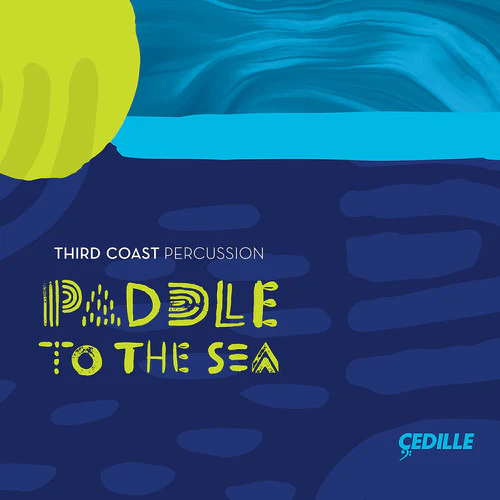
Third Coast Percussion’s Paddle to the Sea transports listeners into a realm of imaginative sounds and world-premiere recordings evoking the aquatic world. Anchoring the album is the Grammy Award-winning ensemble’s original new collaborative composition Paddle to the Sea. The fearsomely talented foursome conceived it as a live soundtrack to the charming, Oscar-nominated 1966 film of the same name, based on a classic children’s story about a Native Canadian boy who carves a wooden figure called Paddle-to-the-Sea and launches him on a solo canoe voyage to the ocean. The Dallas Morning News called Third Coast’s concert performance “arresting and enjoyable.” TheaterJones called it “unforgettable” and said, “There was something magical about the performance, but it is almost impossible to describe the experience in mere words.” In composing Paddle to the Sea, Third Coast found a wellspring of ideas in the other works they’ve included on the album. Jacob Druckman’s Reflections on the Nature of Water revels in textures and timbres unique to the marimba as it explores the different characters water can embody. Third Coast plays its own arrangement of selections from Philip Glass’s 12 Pieces for Ballet (originally composed for piano) — also drawing inspiration from Brazilian group Uakti’s multi-instrumental version, titled Aguas da Amazonia. The final leg of Third Coast’s waterborne adventure is Zimbabwean Musekiwa Chingdoza’s arrangement of Chingwaya, a song from the Shona tradition used to call water spirits.
REVIEW:
Today’s percussionists are amazing virtuosos, and the members of Third Coast Percussion play with astonishing precision and sensitivity throughout this intelligently planned recital built around the theme of “water” in many of its forms. There are two major works, the most important of which is Jacob Druckman’s amazing marimba solo “Reflections on the Nature of Water.” Its six movement are broken into pairs, and spread throughout the disc. As the idiom is strongly atonal, it makes a refreshing contrast to the mellow harmonic syntax of the remaining pieces.
The other major work is Third World Percussion’s original film score Paddle to the Sea. The movements have evocative titles, some presumably taken from the images to which they correspond: The Lighthouse and the Cabin, Open Water, Nagara, The Locks, etc. Other bits are simply evocative and more impressionistic: Flow, Thaw, Sanctuary, Release. The entire work plays for about thirty-five minutes, and despite the considerable skill that obviously went into its crafting, it doesn’t seem to have much musical substance. It sounds like background, and presumably suits its purpose admirably, but you may well feel differently.
Also interspersed with the other items are four superbly made transcriptions from Philip Glass’s score to Aguas da Amazonia, easy on the ear and magnificently played. The last of them, Amazon River, brings the program to a satisfying conclusion. Finally, the players toss in a Zimbabwean song of the Shona people, Chigwaya, supposedly used to call water spirits. It’s charming, but also musically ephemeral. It would have been interesting to hear the song used as the basis for something more extended in form.
The bottom line here is that the performances are amazing, the music of variable quality but never gratuitously difficult or off-putting, and the engineering is perfect. You make the call.
– ClassicsToday (David Hurwitz)
Third Coast Percussion’s Paddle to the Sea transports listeners into a realm of imaginative sounds and world-premiere recordings evoking the aquatic world. Anchoring the album is the Grammy Award-winning ensemble’s original new collaborative composition Paddle to the Sea. The fearsomely talented foursome conceived it as a live soundtrack to the charming, Oscar-nominated 1966 film of the same name, based on a classic children’s story about a Native Canadian boy who carves a wooden figure called Paddle-to-the-Sea and launches him on a solo canoe voyage to the ocean. The Dallas Morning News called Third Coast’s concert performance “arresting and enjoyable.” TheaterJones called it “unforgettable” and said, “There was something magical about the performance, but it is almost impossible to describe the experience in mere words.” In composing Paddle to the Sea, Third Coast found a wellspring of ideas in the other works they’ve included on the album. Jacob Druckman’s Reflections on the Nature of Water revels in textures and timbres unique to the marimba as it explores the different characters water can embody. Third Coast plays its own arrangement of selections from Philip Glass’s 12 Pieces for Ballet (originally composed for piano) — also drawing inspiration from Brazilian group Uakti’s multi-instrumental version, titled Aguas da Amazonia. The final leg of Third Coast’s waterborne adventure is Zimbabwean Musekiwa Chingdoza’s arrangement of Chingwaya, a song from the Shona tradition used to call water spirits.
REVIEW:
Today’s percussionists are amazing virtuosos, and the members of Third Coast Percussion play with astonishing precision and sensitivity throughout this intelligently planned recital built around the theme of “water” in many of its forms. There are two major works, the most important of which is Jacob Druckman’s amazing marimba solo “Reflections on the Nature of Water.” Its six movement are broken into pairs, and spread throughout the disc. As the idiom is strongly atonal, it makes a refreshing contrast to the mellow harmonic syntax of the remaining pieces.
The other major work is Third World Percussion’s original film score Paddle to the Sea. The movements have evocative titles, some presumably taken from the images to which they correspond: The Lighthouse and the Cabin, Open Water, Nagara, The Locks, etc. Other bits are simply evocative and more impressionistic: Flow, Thaw, Sanctuary, Release. The entire work plays for about thirty-five minutes, and despite the considerable skill that obviously went into its crafting, it doesn’t seem to have much musical substance. It sounds like background, and presumably suits its purpose admirably, but you may well feel differently.
Also interspersed with the other items are four superbly made transcriptions from Philip Glass’s score to Aguas da Amazonia, easy on the ear and magnificently played. The last of them, Amazon River, brings the program to a satisfying conclusion. Finally, the players toss in a Zimbabwean song of the Shona people, Chigwaya, supposedly used to call water spirits. It’s charming, but also musically ephemeral. It would have been interesting to hear the song used as the basis for something more extended in form.
The bottom line here is that the performances are amazing, the music of variable quality but never gratuitously difficult or off-putting, and the engineering is perfect. You make the call.
– ClassicsToday (David Hurwitz)
Description
Third Coast Percussion’s Paddle to the Sea transports listeners into a realm of imaginative sounds and world-premiere recordings evoking the aquatic world. Anchoring the album is the Grammy Award-winning ensemble’s original new collaborative composition Paddle to the Sea. The fearsomely talented foursome conceived it as a live soundtrack to the charming, Oscar-nominated 1966 film of the same name, based on a classic children’s story about a Native Canadian boy who carves a wooden figure called Paddle-to-the-Sea and launches him on a solo canoe voyage to the ocean. The Dallas Morning News called Third Coast’s concert performance “arresting and enjoyable.” TheaterJones called it “unforgettable” and said, “There was something magical about the performance, but it is almost impossible to describe the experience in mere words.” In composing Paddle to the Sea, Third Coast found a wellspring of ideas in the other works they’ve included on the album. Jacob Druckman’s Reflections on the Nature of Water revels in textures and timbres unique to the marimba as it explores the different characters water can embody. Third Coast plays its own arrangement of selections from Philip Glass’s 12 Pieces for Ballet (originally composed for piano) — also drawing inspiration from Brazilian group Uakti’s multi-instrumental version, titled Aguas da Amazonia. The final leg of Third Coast’s waterborne adventure is Zimbabwean Musekiwa Chingdoza’s arrangement of Chingwaya, a song from the Shona tradition used to call water spirits.
REVIEW:
Today’s percussionists are amazing virtuosos, and the members of Third Coast Percussion play with astonishing precision and sensitivity throughout this intelligently planned recital built around the theme of “water” in many of its forms. There are two major works, the most important of which is Jacob Druckman’s amazing marimba solo “Reflections on the Nature of Water.” Its six movement are broken into pairs, and spread throughout the disc. As the idiom is strongly atonal, it makes a refreshing contrast to the mellow harmonic syntax of the remaining pieces.
The other major work is Third World Percussion’s original film score Paddle to the Sea. The movements have evocative titles, some presumably taken from the images to which they correspond: The Lighthouse and the Cabin, Open Water, Nagara, The Locks, etc. Other bits are simply evocative and more impressionistic: Flow, Thaw, Sanctuary, Release. The entire work plays for about thirty-five minutes, and despite the considerable skill that obviously went into its crafting, it doesn’t seem to have much musical substance. It sounds like background, and presumably suits its purpose admirably, but you may well feel differently.
Also interspersed with the other items are four superbly made transcriptions from Philip Glass’s score to Aguas da Amazonia, easy on the ear and magnificently played. The last of them, Amazon River, brings the program to a satisfying conclusion. Finally, the players toss in a Zimbabwean song of the Shona people, Chigwaya, supposedly used to call water spirits. It’s charming, but also musically ephemeral. It would have been interesting to hear the song used as the basis for something more extended in form.
The bottom line here is that the performances are amazing, the music of variable quality but never gratuitously difficult or off-putting, and the engineering is perfect. You make the call.
– ClassicsToday (David Hurwitz)