🎉 Up to 70% Off Selected ItemsShop Sale

1 / 2
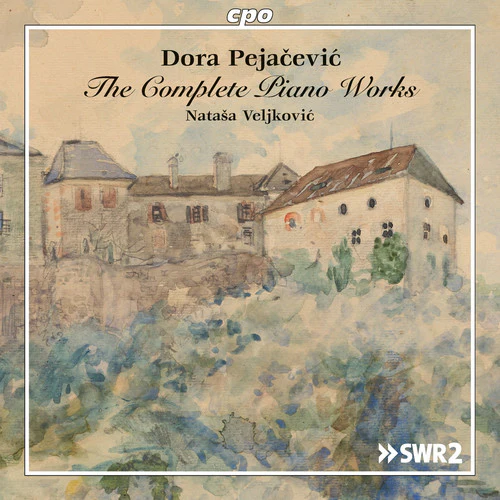
Pejacevic: The Complete Piano Works / Veljkovic
On the last volume of our edition of Dora Pejacevic's complete works, Nataša Veljkovic turns to the great Croatian composer’s music for piano. The nuanced richness in her attention to the tonal resources of the instrument, the demanding piano part, often polyphonic and exhibiting all the dimensions of orchestral sound, demonstrate Veljkovic’s self-assured and virtuosic mastery of the art of performance and Pejacevic’s perfection in her compositional craft.
-----
REVIEWS:
Although probably unknown even to the vast majority of musicians, Dora Pejacevic (in old documents also Pejacsevich) should, in fact, be considered a major Croatian composer, leaving behind a considerable catalogue of fifty-eight opuses (106 compositions), mostly in late-Romantic style, including songs, piano music, chamber music, and several compositions for large orchestra, arguably her best oeuvre, her Symphony in F sharp minor, being considered the first symphony in Croatian music.
The piano is the main focus of Pejacevic’s output, given that it was the medium in which she was best able to express her musical ideas and to convey the essence of her music – only four of her works, in fact, don’t include the piano. Unlike Clara Schumann, Pejacevic wasn’t a pianist as such, so didn’t appear in concerts featuring performances of her solo pieces. Despite this, her gift for keyboard composition, especially as the works from her middle and later periods suggest, does very much correspond to the performance-style of the piano virtuosity of the time. As a rule, any demanding solo part or passage is subservient to the musical idea, and not there for mere dazzle or show.
The recording, presentation and playing are all first-rate – save for a slight apparent confusion over opus numbers – and laying out the tracks in non-chronological order across the two discs works very well, and maintains the interest throughout.
It’s good to know that, even after many years in music, there’s always something fresh to discover, and the fact that this composer is from a country about which the headlines for many years have been so unwelcoming, makes this new issue even more appealing.
– MusicWeb International
Pejacevic’s piano pieces are well served by Natasha Veljkovic’s warmly sensitive playing.
– BBC Music Magazine
Veljkovic plays consistently well with imagination, an impressive variety of touch and tone and a real flair for the idiom.
– Gramophone
-----
REVIEWS:
Although probably unknown even to the vast majority of musicians, Dora Pejacevic (in old documents also Pejacsevich) should, in fact, be considered a major Croatian composer, leaving behind a considerable catalogue of fifty-eight opuses (106 compositions), mostly in late-Romantic style, including songs, piano music, chamber music, and several compositions for large orchestra, arguably her best oeuvre, her Symphony in F sharp minor, being considered the first symphony in Croatian music.
The piano is the main focus of Pejacevic’s output, given that it was the medium in which she was best able to express her musical ideas and to convey the essence of her music – only four of her works, in fact, don’t include the piano. Unlike Clara Schumann, Pejacevic wasn’t a pianist as such, so didn’t appear in concerts featuring performances of her solo pieces. Despite this, her gift for keyboard composition, especially as the works from her middle and later periods suggest, does very much correspond to the performance-style of the piano virtuosity of the time. As a rule, any demanding solo part or passage is subservient to the musical idea, and not there for mere dazzle or show.
The recording, presentation and playing are all first-rate – save for a slight apparent confusion over opus numbers – and laying out the tracks in non-chronological order across the two discs works very well, and maintains the interest throughout.
It’s good to know that, even after many years in music, there’s always something fresh to discover, and the fact that this composer is from a country about which the headlines for many years have been so unwelcoming, makes this new issue even more appealing.
– MusicWeb International
Pejacevic’s piano pieces are well served by Natasha Veljkovic’s warmly sensitive playing.
– BBC Music Magazine
Veljkovic plays consistently well with imagination, an impressive variety of touch and tone and a real flair for the idiom.
– Gramophone
On the last volume of our edition of Dora Pejacevic's complete works, Nataša Veljkovic turns to the great Croatian composer’s music for piano. The nuanced richness in her attention to the tonal resources of the instrument, the demanding piano part, often polyphonic and exhibiting all the dimensions of orchestral sound, demonstrate Veljkovic’s self-assured and virtuosic mastery of the art of performance and Pejacevic’s perfection in her compositional craft.
-----
REVIEWS:
Although probably unknown even to the vast majority of musicians, Dora Pejacevic (in old documents also Pejacsevich) should, in fact, be considered a major Croatian composer, leaving behind a considerable catalogue of fifty-eight opuses (106 compositions), mostly in late-Romantic style, including songs, piano music, chamber music, and several compositions for large orchestra, arguably her best oeuvre, her Symphony in F sharp minor, being considered the first symphony in Croatian music.
The piano is the main focus of Pejacevic’s output, given that it was the medium in which she was best able to express her musical ideas and to convey the essence of her music – only four of her works, in fact, don’t include the piano. Unlike Clara Schumann, Pejacevic wasn’t a pianist as such, so didn’t appear in concerts featuring performances of her solo pieces. Despite this, her gift for keyboard composition, especially as the works from her middle and later periods suggest, does very much correspond to the performance-style of the piano virtuosity of the time. As a rule, any demanding solo part or passage is subservient to the musical idea, and not there for mere dazzle or show.
The recording, presentation and playing are all first-rate – save for a slight apparent confusion over opus numbers – and laying out the tracks in non-chronological order across the two discs works very well, and maintains the interest throughout.
It’s good to know that, even after many years in music, there’s always something fresh to discover, and the fact that this composer is from a country about which the headlines for many years have been so unwelcoming, makes this new issue even more appealing.
– MusicWeb International
Pejacevic’s piano pieces are well served by Natasha Veljkovic’s warmly sensitive playing.
– BBC Music Magazine
Veljkovic plays consistently well with imagination, an impressive variety of touch and tone and a real flair for the idiom.
– Gramophone
-----
REVIEWS:
Although probably unknown even to the vast majority of musicians, Dora Pejacevic (in old documents also Pejacsevich) should, in fact, be considered a major Croatian composer, leaving behind a considerable catalogue of fifty-eight opuses (106 compositions), mostly in late-Romantic style, including songs, piano music, chamber music, and several compositions for large orchestra, arguably her best oeuvre, her Symphony in F sharp minor, being considered the first symphony in Croatian music.
The piano is the main focus of Pejacevic’s output, given that it was the medium in which she was best able to express her musical ideas and to convey the essence of her music – only four of her works, in fact, don’t include the piano. Unlike Clara Schumann, Pejacevic wasn’t a pianist as such, so didn’t appear in concerts featuring performances of her solo pieces. Despite this, her gift for keyboard composition, especially as the works from her middle and later periods suggest, does very much correspond to the performance-style of the piano virtuosity of the time. As a rule, any demanding solo part or passage is subservient to the musical idea, and not there for mere dazzle or show.
The recording, presentation and playing are all first-rate – save for a slight apparent confusion over opus numbers – and laying out the tracks in non-chronological order across the two discs works very well, and maintains the interest throughout.
It’s good to know that, even after many years in music, there’s always something fresh to discover, and the fact that this composer is from a country about which the headlines for many years have been so unwelcoming, makes this new issue even more appealing.
– MusicWeb International
Pejacevic’s piano pieces are well served by Natasha Veljkovic’s warmly sensitive playing.
– BBC Music Magazine
Veljkovic plays consistently well with imagination, an impressive variety of touch and tone and a real flair for the idiom.
– Gramophone
$25.99
Pejacevic: The Complete Piano Works / Veljkovic—
$25.99
Description
On the last volume of our edition of Dora Pejacevic's complete works, Nataša Veljkovic turns to the great Croatian composer’s music for piano. The nuanced richness in her attention to the tonal resources of the instrument, the demanding piano part, often polyphonic and exhibiting all the dimensions of orchestral sound, demonstrate Veljkovic’s self-assured and virtuosic mastery of the art of performance and Pejacevic’s perfection in her compositional craft.
-----
REVIEWS:
Although probably unknown even to the vast majority of musicians, Dora Pejacevic (in old documents also Pejacsevich) should, in fact, be considered a major Croatian composer, leaving behind a considerable catalogue of fifty-eight opuses (106 compositions), mostly in late-Romantic style, including songs, piano music, chamber music, and several compositions for large orchestra, arguably her best oeuvre, her Symphony in F sharp minor, being considered the first symphony in Croatian music.
The piano is the main focus of Pejacevic’s output, given that it was the medium in which she was best able to express her musical ideas and to convey the essence of her music – only four of her works, in fact, don’t include the piano. Unlike Clara Schumann, Pejacevic wasn’t a pianist as such, so didn’t appear in concerts featuring performances of her solo pieces. Despite this, her gift for keyboard composition, especially as the works from her middle and later periods suggest, does very much correspond to the performance-style of the piano virtuosity of the time. As a rule, any demanding solo part or passage is subservient to the musical idea, and not there for mere dazzle or show.
The recording, presentation and playing are all first-rate – save for a slight apparent confusion over opus numbers – and laying out the tracks in non-chronological order across the two discs works very well, and maintains the interest throughout.
It’s good to know that, even after many years in music, there’s always something fresh to discover, and the fact that this composer is from a country about which the headlines for many years have been so unwelcoming, makes this new issue even more appealing.
– MusicWeb International
Pejacevic’s piano pieces are well served by Natasha Veljkovic’s warmly sensitive playing.
– BBC Music Magazine
Veljkovic plays consistently well with imagination, an impressive variety of touch and tone and a real flair for the idiom.
– Gramophone
-----
REVIEWS:
Although probably unknown even to the vast majority of musicians, Dora Pejacevic (in old documents also Pejacsevich) should, in fact, be considered a major Croatian composer, leaving behind a considerable catalogue of fifty-eight opuses (106 compositions), mostly in late-Romantic style, including songs, piano music, chamber music, and several compositions for large orchestra, arguably her best oeuvre, her Symphony in F sharp minor, being considered the first symphony in Croatian music.
The piano is the main focus of Pejacevic’s output, given that it was the medium in which she was best able to express her musical ideas and to convey the essence of her music – only four of her works, in fact, don’t include the piano. Unlike Clara Schumann, Pejacevic wasn’t a pianist as such, so didn’t appear in concerts featuring performances of her solo pieces. Despite this, her gift for keyboard composition, especially as the works from her middle and later periods suggest, does very much correspond to the performance-style of the piano virtuosity of the time. As a rule, any demanding solo part or passage is subservient to the musical idea, and not there for mere dazzle or show.
The recording, presentation and playing are all first-rate – save for a slight apparent confusion over opus numbers – and laying out the tracks in non-chronological order across the two discs works very well, and maintains the interest throughout.
It’s good to know that, even after many years in music, there’s always something fresh to discover, and the fact that this composer is from a country about which the headlines for many years have been so unwelcoming, makes this new issue even more appealing.
– MusicWeb International
Pejacevic’s piano pieces are well served by Natasha Veljkovic’s warmly sensitive playing.
– BBC Music Magazine
Veljkovic plays consistently well with imagination, an impressive variety of touch and tone and a real flair for the idiom.
– Gramophone