🎉 Up to 70% Off Selected ItemsShop Sale

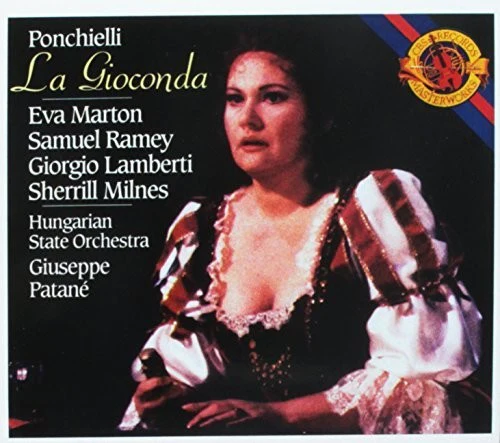
Ponchielli: La Gioconda / Marton, Ramey, Patane
...Eva Marton, as we know from her other opera recordings, possesses a voice of power and warmth which she can use with a deal of flexibility. Gioconda is obviously a role with which she closely identifies. Throughout, her portrayal of the unhappy, jealous Gioconda is histrionically strong and involving and she rides the climaxes in a way Caballe (Bartoletti/Decca) couldn't quite manage: this is the true spinto sound of which we hear far too little today...
Her Enzo was to have been Domingo but he had to cancel because of a bereavement. I am not altogether disappointed because Lamberti offers us a particular style in tenor singing that is almost lost, specifically Italianate in timbre and recalling di Stefano. His tone is always open and bright, he sings off the words, and he phrases with an innate ardour that's just right for the part. He manages some nice pianissimos, sings "Cielo e mar" with a long breath, and leads the Third Act concertato "Gia ti veggo" with a properly plaintive tone. He has almost as much voice as Ferraro (Votto) and is much more subtle. For better and worse, he isn't Pavarotti (Bartoletti), but I took to his reading. Milnes's Barnaba remains a well thought-through portrait of unmitigated villainy. He was in marginally steadier voice for Bartoletti on Decca, but the performance is still one of his most telling. Livia Budai, like her Hungarian compatriot, Marton, doesn't care to make much of the text, but the voice is as vibrant as any in this role: Cossotto (Votto) has the edge simply through being Italian. Ramey makes much of little as Alvise. Anne Gjevang is a steady La Cieca, and gives her solo the grave beauty it deserves...
-- Gramophone [2/1990]
Her Enzo was to have been Domingo but he had to cancel because of a bereavement. I am not altogether disappointed because Lamberti offers us a particular style in tenor singing that is almost lost, specifically Italianate in timbre and recalling di Stefano. His tone is always open and bright, he sings off the words, and he phrases with an innate ardour that's just right for the part. He manages some nice pianissimos, sings "Cielo e mar" with a long breath, and leads the Third Act concertato "Gia ti veggo" with a properly plaintive tone. He has almost as much voice as Ferraro (Votto) and is much more subtle. For better and worse, he isn't Pavarotti (Bartoletti), but I took to his reading. Milnes's Barnaba remains a well thought-through portrait of unmitigated villainy. He was in marginally steadier voice for Bartoletti on Decca, but the performance is still one of his most telling. Livia Budai, like her Hungarian compatriot, Marton, doesn't care to make much of the text, but the voice is as vibrant as any in this role: Cossotto (Votto) has the edge simply through being Italian. Ramey makes much of little as Alvise. Anne Gjevang is a steady La Cieca, and gives her solo the grave beauty it deserves...
-- Gramophone [2/1990]
...Eva Marton, as we know from her other opera recordings, possesses a voice of power and warmth which she can use with a deal of flexibility. Gioconda is obviously a role with which she closely identifies. Throughout, her portrayal of the unhappy, jealous Gioconda is histrionically strong and involving and she rides the climaxes in a way Caballe (Bartoletti/Decca) couldn't quite manage: this is the true spinto sound of which we hear far too little today...
Her Enzo was to have been Domingo but he had to cancel because of a bereavement. I am not altogether disappointed because Lamberti offers us a particular style in tenor singing that is almost lost, specifically Italianate in timbre and recalling di Stefano. His tone is always open and bright, he sings off the words, and he phrases with an innate ardour that's just right for the part. He manages some nice pianissimos, sings "Cielo e mar" with a long breath, and leads the Third Act concertato "Gia ti veggo" with a properly plaintive tone. He has almost as much voice as Ferraro (Votto) and is much more subtle. For better and worse, he isn't Pavarotti (Bartoletti), but I took to his reading. Milnes's Barnaba remains a well thought-through portrait of unmitigated villainy. He was in marginally steadier voice for Bartoletti on Decca, but the performance is still one of his most telling. Livia Budai, like her Hungarian compatriot, Marton, doesn't care to make much of the text, but the voice is as vibrant as any in this role: Cossotto (Votto) has the edge simply through being Italian. Ramey makes much of little as Alvise. Anne Gjevang is a steady La Cieca, and gives her solo the grave beauty it deserves...
-- Gramophone [2/1990]
Her Enzo was to have been Domingo but he had to cancel because of a bereavement. I am not altogether disappointed because Lamberti offers us a particular style in tenor singing that is almost lost, specifically Italianate in timbre and recalling di Stefano. His tone is always open and bright, he sings off the words, and he phrases with an innate ardour that's just right for the part. He manages some nice pianissimos, sings "Cielo e mar" with a long breath, and leads the Third Act concertato "Gia ti veggo" with a properly plaintive tone. He has almost as much voice as Ferraro (Votto) and is much more subtle. For better and worse, he isn't Pavarotti (Bartoletti), but I took to his reading. Milnes's Barnaba remains a well thought-through portrait of unmitigated villainy. He was in marginally steadier voice for Bartoletti on Decca, but the performance is still one of his most telling. Livia Budai, like her Hungarian compatriot, Marton, doesn't care to make much of the text, but the voice is as vibrant as any in this role: Cossotto (Votto) has the edge simply through being Italian. Ramey makes much of little as Alvise. Anne Gjevang is a steady La Cieca, and gives her solo the grave beauty it deserves...
-- Gramophone [2/1990]
$17.50
Original: $49.99
-65%Ponchielli: La Gioconda / Marton, Ramey, Patane—
$49.99
$17.50Description
...Eva Marton, as we know from her other opera recordings, possesses a voice of power and warmth which she can use with a deal of flexibility. Gioconda is obviously a role with which she closely identifies. Throughout, her portrayal of the unhappy, jealous Gioconda is histrionically strong and involving and she rides the climaxes in a way Caballe (Bartoletti/Decca) couldn't quite manage: this is the true spinto sound of which we hear far too little today...
Her Enzo was to have been Domingo but he had to cancel because of a bereavement. I am not altogether disappointed because Lamberti offers us a particular style in tenor singing that is almost lost, specifically Italianate in timbre and recalling di Stefano. His tone is always open and bright, he sings off the words, and he phrases with an innate ardour that's just right for the part. He manages some nice pianissimos, sings "Cielo e mar" with a long breath, and leads the Third Act concertato "Gia ti veggo" with a properly plaintive tone. He has almost as much voice as Ferraro (Votto) and is much more subtle. For better and worse, he isn't Pavarotti (Bartoletti), but I took to his reading. Milnes's Barnaba remains a well thought-through portrait of unmitigated villainy. He was in marginally steadier voice for Bartoletti on Decca, but the performance is still one of his most telling. Livia Budai, like her Hungarian compatriot, Marton, doesn't care to make much of the text, but the voice is as vibrant as any in this role: Cossotto (Votto) has the edge simply through being Italian. Ramey makes much of little as Alvise. Anne Gjevang is a steady La Cieca, and gives her solo the grave beauty it deserves...
-- Gramophone [2/1990]
Her Enzo was to have been Domingo but he had to cancel because of a bereavement. I am not altogether disappointed because Lamberti offers us a particular style in tenor singing that is almost lost, specifically Italianate in timbre and recalling di Stefano. His tone is always open and bright, he sings off the words, and he phrases with an innate ardour that's just right for the part. He manages some nice pianissimos, sings "Cielo e mar" with a long breath, and leads the Third Act concertato "Gia ti veggo" with a properly plaintive tone. He has almost as much voice as Ferraro (Votto) and is much more subtle. For better and worse, he isn't Pavarotti (Bartoletti), but I took to his reading. Milnes's Barnaba remains a well thought-through portrait of unmitigated villainy. He was in marginally steadier voice for Bartoletti on Decca, but the performance is still one of his most telling. Livia Budai, like her Hungarian compatriot, Marton, doesn't care to make much of the text, but the voice is as vibrant as any in this role: Cossotto (Votto) has the edge simply through being Italian. Ramey makes much of little as Alvise. Anne Gjevang is a steady La Cieca, and gives her solo the grave beauty it deserves...
-- Gramophone [2/1990]