🎉 Up to 70% Off Selected ItemsShop Sale

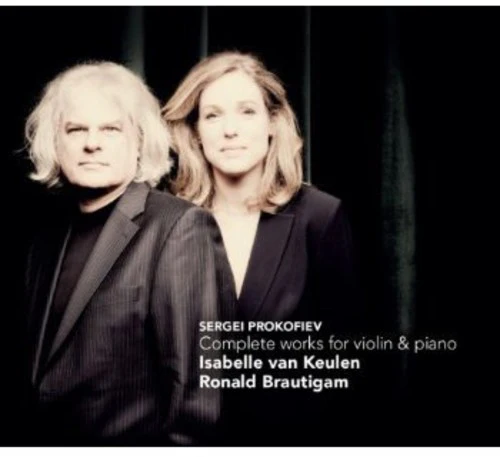
Prokofiev: Complete Works For Violin & Piano / Van Keulen, Brautigam
PROKOFIEV Violin Sonatas: No. 2 in D; No. 1 in f. Five Mélodies, op. 35a • Isabelle van Keulen (vn); Ronald Brautigam (pn) • CHALLENGE 72580 (60: 59)
Violinist Isabelle van Keulen and her frequent duo partner, pianist Ronald Brautigam, present Prokofiev’s two violin sonatas in the order of their appearance. The Second Sonata originally appeared as a flute sonata; David Oistrakh, who heard the premiere, asked the composer to arrange it for violin and piano. Prokofiev left the piano part untouched and collaborated with Oistrakh on adapting the flute part to the violin. When once practicing the Sonata, I heard a flute player in the next room playing the flute version. We both emerged into the hallway to argue about the superiority of the one over the other—I championing the flute version, and she the one for violin. Apparently, Oistrakh and Prokofiev did their jobs well. In fact, though, I always thought that Oistrakh played the piece like a flute sonata, while Nathan Milstein played it like a violin sonata (I can’t think of any flute players who play it like a violin sonata).
Van Keulen digs so deeply into the strings in her aggressive statement of the two themes that she erases all vestiges of that flute version. Yet she adds a silvery sheen to some of the passagework that keeps the movement from sounding coarse or brutal. She or Brautigam occasionally releases an intense outburst that reveals the music’s bubbling hot core, however irenic Prokofiev himself thought the music to be overall; and they showcase the Scherzo’s quicksilver sprightliness, although van Keulen draws an almost hoarsely rich tone from the lower registers of her 1734 Guarneri del Gesù in the trio—a timbre that also suggests steamy sultriness in the outer portions of the third movement—to say nothing of its slinky middle section. Van Keulen sounds almost ferocious—as did Milstein—in the Finale’s opening theme. I remember Dmitry Sitkovetsky’s recording as suggesting high resolution but equalized tension (Virgin 7243 5 61887, Fanfare 25:2). The resolution’s all here in van Keulen’s reading, but not the equalized tension—at the very least, the dynamic interplay between the duo partners guarantees that and they sprint with breathtaking élan to the finish.
In the First Sonata, van Keulen deploys a tone of great strength—modern textile armor wrapped around steel—which lends a hard edge to the first movement; and Brautigam delivers the already grim musical message with intimidating intensity, spreading the terror from the “wind in the graveyard” passages throughout the entire movement. The second movement begins with a snarl; and van Keulen’s very strength—a strength that occasionally causes her violinistic voice to crack, principally the first time it’s heard—lends a somewhat different musical meaning to the lyrical second theme from that which many listeners may have come to expect. She adopts a somewhat kinder and gentler manner in the more introspective third movement, but the duo gives the Finale a topsy-turvy sense of hurling jagged fragments.
The program ends with the Five Melodies . Once again a violinist, this time Paul Kochanski, helped Prokofiev arrange the part for violin. In Joseph Szigeti’s reading of these pieces with Carlo Bussotti, they retained a quirkiness that they lack in van Keulen’s and Brautigam’s version; but since van Keulen and Brautigam play passages like the middle of the second with joyous energy, and bring an almost searing intensity to the opening of the third, they can hardly be accused of pruning the pieces emotionally.
For those seeking a view of these works more recent than those of the first performers, van Keulen and Brautigam certainly provide an almost comparable musical understanding combined with, arguably, an equally ample technical command and, not at all arguably, superior recorded sound. Very strongly recommended.
FANFARE: Robert Maxham
PROKOFIEV Violin Sonatas: No. 2 in D; No. 1 in f. Five Mélodies, op. 35a • Isabelle van Keulen (vn); Ronald Brautigam (pn) • CHALLENGE 72580 (60: 59)
Violinist Isabelle van Keulen and her frequent duo partner, pianist Ronald Brautigam, present Prokofiev’s two violin sonatas in the order of their appearance. The Second Sonata originally appeared as a flute sonata; David Oistrakh, who heard the premiere, asked the composer to arrange it for violin and piano. Prokofiev left the piano part untouched and collaborated with Oistrakh on adapting the flute part to the violin. When once practicing the Sonata, I heard a flute player in the next room playing the flute version. We both emerged into the hallway to argue about the superiority of the one over the other—I championing the flute version, and she the one for violin. Apparently, Oistrakh and Prokofiev did their jobs well. In fact, though, I always thought that Oistrakh played the piece like a flute sonata, while Nathan Milstein played it like a violin sonata (I can’t think of any flute players who play it like a violin sonata).
Van Keulen digs so deeply into the strings in her aggressive statement of the two themes that she erases all vestiges of that flute version. Yet she adds a silvery sheen to some of the passagework that keeps the movement from sounding coarse or brutal. She or Brautigam occasionally releases an intense outburst that reveals the music’s bubbling hot core, however irenic Prokofiev himself thought the music to be overall; and they showcase the Scherzo’s quicksilver sprightliness, although van Keulen draws an almost hoarsely rich tone from the lower registers of her 1734 Guarneri del Gesù in the trio—a timbre that also suggests steamy sultriness in the outer portions of the third movement—to say nothing of its slinky middle section. Van Keulen sounds almost ferocious—as did Milstein—in the Finale’s opening theme. I remember Dmitry Sitkovetsky’s recording as suggesting high resolution but equalized tension (Virgin 7243 5 61887, Fanfare 25:2). The resolution’s all here in van Keulen’s reading, but not the equalized tension—at the very least, the dynamic interplay between the duo partners guarantees that and they sprint with breathtaking élan to the finish.
In the First Sonata, van Keulen deploys a tone of great strength—modern textile armor wrapped around steel—which lends a hard edge to the first movement; and Brautigam delivers the already grim musical message with intimidating intensity, spreading the terror from the “wind in the graveyard” passages throughout the entire movement. The second movement begins with a snarl; and van Keulen’s very strength—a strength that occasionally causes her violinistic voice to crack, principally the first time it’s heard—lends a somewhat different musical meaning to the lyrical second theme from that which many listeners may have come to expect. She adopts a somewhat kinder and gentler manner in the more introspective third movement, but the duo gives the Finale a topsy-turvy sense of hurling jagged fragments.
The program ends with the Five Melodies . Once again a violinist, this time Paul Kochanski, helped Prokofiev arrange the part for violin. In Joseph Szigeti’s reading of these pieces with Carlo Bussotti, they retained a quirkiness that they lack in van Keulen’s and Brautigam’s version; but since van Keulen and Brautigam play passages like the middle of the second with joyous energy, and bring an almost searing intensity to the opening of the third, they can hardly be accused of pruning the pieces emotionally.
For those seeking a view of these works more recent than those of the first performers, van Keulen and Brautigam certainly provide an almost comparable musical understanding combined with, arguably, an equally ample technical command and, not at all arguably, superior recorded sound. Very strongly recommended.
FANFARE: Robert Maxham
$6.65
Original: $18.99
-65%Prokofiev: Complete Works For Violin & Piano / Van Keulen, Brautigam—
$18.99
$6.65Description
PROKOFIEV Violin Sonatas: No. 2 in D; No. 1 in f. Five Mélodies, op. 35a • Isabelle van Keulen (vn); Ronald Brautigam (pn) • CHALLENGE 72580 (60: 59)
Violinist Isabelle van Keulen and her frequent duo partner, pianist Ronald Brautigam, present Prokofiev’s two violin sonatas in the order of their appearance. The Second Sonata originally appeared as a flute sonata; David Oistrakh, who heard the premiere, asked the composer to arrange it for violin and piano. Prokofiev left the piano part untouched and collaborated with Oistrakh on adapting the flute part to the violin. When once practicing the Sonata, I heard a flute player in the next room playing the flute version. We both emerged into the hallway to argue about the superiority of the one over the other—I championing the flute version, and she the one for violin. Apparently, Oistrakh and Prokofiev did their jobs well. In fact, though, I always thought that Oistrakh played the piece like a flute sonata, while Nathan Milstein played it like a violin sonata (I can’t think of any flute players who play it like a violin sonata).
Van Keulen digs so deeply into the strings in her aggressive statement of the two themes that she erases all vestiges of that flute version. Yet she adds a silvery sheen to some of the passagework that keeps the movement from sounding coarse or brutal. She or Brautigam occasionally releases an intense outburst that reveals the music’s bubbling hot core, however irenic Prokofiev himself thought the music to be overall; and they showcase the Scherzo’s quicksilver sprightliness, although van Keulen draws an almost hoarsely rich tone from the lower registers of her 1734 Guarneri del Gesù in the trio—a timbre that also suggests steamy sultriness in the outer portions of the third movement—to say nothing of its slinky middle section. Van Keulen sounds almost ferocious—as did Milstein—in the Finale’s opening theme. I remember Dmitry Sitkovetsky’s recording as suggesting high resolution but equalized tension (Virgin 7243 5 61887, Fanfare 25:2). The resolution’s all here in van Keulen’s reading, but not the equalized tension—at the very least, the dynamic interplay between the duo partners guarantees that and they sprint with breathtaking élan to the finish.
In the First Sonata, van Keulen deploys a tone of great strength—modern textile armor wrapped around steel—which lends a hard edge to the first movement; and Brautigam delivers the already grim musical message with intimidating intensity, spreading the terror from the “wind in the graveyard” passages throughout the entire movement. The second movement begins with a snarl; and van Keulen’s very strength—a strength that occasionally causes her violinistic voice to crack, principally the first time it’s heard—lends a somewhat different musical meaning to the lyrical second theme from that which many listeners may have come to expect. She adopts a somewhat kinder and gentler manner in the more introspective third movement, but the duo gives the Finale a topsy-turvy sense of hurling jagged fragments.
The program ends with the Five Melodies . Once again a violinist, this time Paul Kochanski, helped Prokofiev arrange the part for violin. In Joseph Szigeti’s reading of these pieces with Carlo Bussotti, they retained a quirkiness that they lack in van Keulen’s and Brautigam’s version; but since van Keulen and Brautigam play passages like the middle of the second with joyous energy, and bring an almost searing intensity to the opening of the third, they can hardly be accused of pruning the pieces emotionally.
For those seeking a view of these works more recent than those of the first performers, van Keulen and Brautigam certainly provide an almost comparable musical understanding combined with, arguably, an equally ample technical command and, not at all arguably, superior recorded sound. Very strongly recommended.
FANFARE: Robert Maxham