🎉 Up to 70% Off Selected ItemsShop Sale

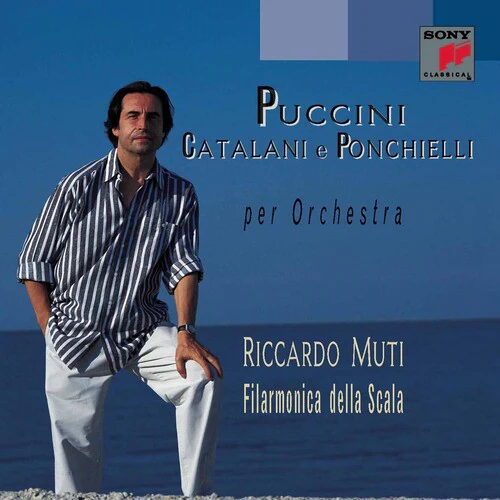
Puccini, Catalani E Ponchielli - Per Orchestra / Muti
It makes an apt coupling having the long-buried pieces by Ponchielli (Puccini’s teacher) and Catalani (his contemporary from the same city, Lucca) alongside the three most impressive examples of Puccini’s early orchestral writing. Like Puccini’s Preludio and Capriccio the works by Ponchielli and Catalani have been resurrected by the Italian musicologist, Pietro Spada, and similarly offer easily lyrical invention from composers who, like Puccini, were concentrating on opera.
The Ponchielli Elegia sustains its length well up to passionate climaxes, rather like film music. The two Catalani items were both arranged from piano pieces, the Scherzo a charming dance, Contemplazione much more ambitious, leading to a tender and hushed reprise of the opening theme (track 3, 8'32''). The orchestration was evidently made for the Scala orchestra’s appearance at the Paris Exhibition of 1878.
Welcome as those compositions are, it is striking that the Puccini pieces are markedly more memorable, above all in their melodic writing. That is immediately apparent in the free-flowing Preludio sinfonico, and “La tregenda” (“Witches’ Sabbath”), the dance interlude from Puccini’s first opera, Le villi, is the most brilliant of his early inspirations.
The Capriccio sinfonico, the longest piece here, was written as a graduation exercise, very well orchestrated, with structure well controlled. A moment of revelation comes when the Allegro opens on the theme which Puccini later used for the opening of La boheme. Muti brings out the emotional warmth in all these works.
-- Edward Greenfield, Gramophone [9/1998]
The Ponchielli Elegia sustains its length well up to passionate climaxes, rather like film music. The two Catalani items were both arranged from piano pieces, the Scherzo a charming dance, Contemplazione much more ambitious, leading to a tender and hushed reprise of the opening theme (track 3, 8'32''). The orchestration was evidently made for the Scala orchestra’s appearance at the Paris Exhibition of 1878.
Welcome as those compositions are, it is striking that the Puccini pieces are markedly more memorable, above all in their melodic writing. That is immediately apparent in the free-flowing Preludio sinfonico, and “La tregenda” (“Witches’ Sabbath”), the dance interlude from Puccini’s first opera, Le villi, is the most brilliant of his early inspirations.
The Capriccio sinfonico, the longest piece here, was written as a graduation exercise, very well orchestrated, with structure well controlled. A moment of revelation comes when the Allegro opens on the theme which Puccini later used for the opening of La boheme. Muti brings out the emotional warmth in all these works.
-- Edward Greenfield, Gramophone [9/1998]
It makes an apt coupling having the long-buried pieces by Ponchielli (Puccini’s teacher) and Catalani (his contemporary from the same city, Lucca) alongside the three most impressive examples of Puccini’s early orchestral writing. Like Puccini’s Preludio and Capriccio the works by Ponchielli and Catalani have been resurrected by the Italian musicologist, Pietro Spada, and similarly offer easily lyrical invention from composers who, like Puccini, were concentrating on opera.
The Ponchielli Elegia sustains its length well up to passionate climaxes, rather like film music. The two Catalani items were both arranged from piano pieces, the Scherzo a charming dance, Contemplazione much more ambitious, leading to a tender and hushed reprise of the opening theme (track 3, 8'32''). The orchestration was evidently made for the Scala orchestra’s appearance at the Paris Exhibition of 1878.
Welcome as those compositions are, it is striking that the Puccini pieces are markedly more memorable, above all in their melodic writing. That is immediately apparent in the free-flowing Preludio sinfonico, and “La tregenda” (“Witches’ Sabbath”), the dance interlude from Puccini’s first opera, Le villi, is the most brilliant of his early inspirations.
The Capriccio sinfonico, the longest piece here, was written as a graduation exercise, very well orchestrated, with structure well controlled. A moment of revelation comes when the Allegro opens on the theme which Puccini later used for the opening of La boheme. Muti brings out the emotional warmth in all these works.
-- Edward Greenfield, Gramophone [9/1998]
The Ponchielli Elegia sustains its length well up to passionate climaxes, rather like film music. The two Catalani items were both arranged from piano pieces, the Scherzo a charming dance, Contemplazione much more ambitious, leading to a tender and hushed reprise of the opening theme (track 3, 8'32''). The orchestration was evidently made for the Scala orchestra’s appearance at the Paris Exhibition of 1878.
Welcome as those compositions are, it is striking that the Puccini pieces are markedly more memorable, above all in their melodic writing. That is immediately apparent in the free-flowing Preludio sinfonico, and “La tregenda” (“Witches’ Sabbath”), the dance interlude from Puccini’s first opera, Le villi, is the most brilliant of his early inspirations.
The Capriccio sinfonico, the longest piece here, was written as a graduation exercise, very well orchestrated, with structure well controlled. A moment of revelation comes when the Allegro opens on the theme which Puccini later used for the opening of La boheme. Muti brings out the emotional warmth in all these works.
-- Edward Greenfield, Gramophone [9/1998]
$11.99
Puccini, Catalani E Ponchielli - Per Orchestra / Muti—
$11.99
Description
It makes an apt coupling having the long-buried pieces by Ponchielli (Puccini’s teacher) and Catalani (his contemporary from the same city, Lucca) alongside the three most impressive examples of Puccini’s early orchestral writing. Like Puccini’s Preludio and Capriccio the works by Ponchielli and Catalani have been resurrected by the Italian musicologist, Pietro Spada, and similarly offer easily lyrical invention from composers who, like Puccini, were concentrating on opera.
The Ponchielli Elegia sustains its length well up to passionate climaxes, rather like film music. The two Catalani items were both arranged from piano pieces, the Scherzo a charming dance, Contemplazione much more ambitious, leading to a tender and hushed reprise of the opening theme (track 3, 8'32''). The orchestration was evidently made for the Scala orchestra’s appearance at the Paris Exhibition of 1878.
Welcome as those compositions are, it is striking that the Puccini pieces are markedly more memorable, above all in their melodic writing. That is immediately apparent in the free-flowing Preludio sinfonico, and “La tregenda” (“Witches’ Sabbath”), the dance interlude from Puccini’s first opera, Le villi, is the most brilliant of his early inspirations.
The Capriccio sinfonico, the longest piece here, was written as a graduation exercise, very well orchestrated, with structure well controlled. A moment of revelation comes when the Allegro opens on the theme which Puccini later used for the opening of La boheme. Muti brings out the emotional warmth in all these works.
-- Edward Greenfield, Gramophone [9/1998]
The Ponchielli Elegia sustains its length well up to passionate climaxes, rather like film music. The two Catalani items were both arranged from piano pieces, the Scherzo a charming dance, Contemplazione much more ambitious, leading to a tender and hushed reprise of the opening theme (track 3, 8'32''). The orchestration was evidently made for the Scala orchestra’s appearance at the Paris Exhibition of 1878.
Welcome as those compositions are, it is striking that the Puccini pieces are markedly more memorable, above all in their melodic writing. That is immediately apparent in the free-flowing Preludio sinfonico, and “La tregenda” (“Witches’ Sabbath”), the dance interlude from Puccini’s first opera, Le villi, is the most brilliant of his early inspirations.
The Capriccio sinfonico, the longest piece here, was written as a graduation exercise, very well orchestrated, with structure well controlled. A moment of revelation comes when the Allegro opens on the theme which Puccini later used for the opening of La boheme. Muti brings out the emotional warmth in all these works.
-- Edward Greenfield, Gramophone [9/1998]