🎉 Up to 70% Off Selected ItemsShop Sale

1 / 2
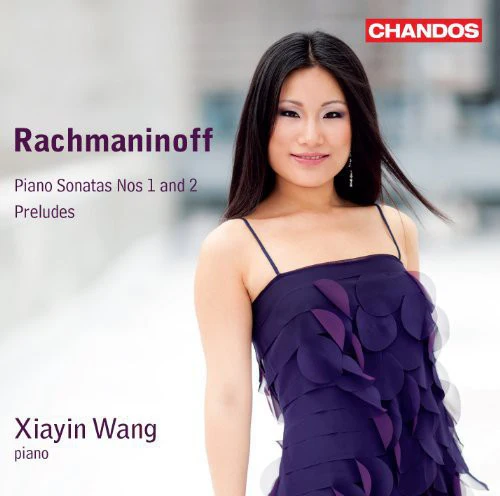
Rachmaninov: Piano Sonatas / Wang
It’s not easy to make Rachmaninov’s prolix First Sonata cohere, yet not impossible. For example, Alexis Weissenberg’s gaunt tone, febrile temperament, and paragraphic sweep give shape and clarity to the work’s vast textural tundra. By contrast, Xiayin Wang often adapts a more lyrical approach and luxuriates in the keyboard writing while keeping a grip on momentum.
At first she seems to stretch out and sectionalize the right hand’s three-note phrases at bar 33 in the first movement, yet she’s simply leaning into the composer’s intentionally accented downbeats. The pianist allows inner voices and hidden melodies their songful due, even when they threaten to be obliterated by big, galumphing chords strutting in opposite directions. Her warm, sensitively voiced Lento shines among this movement’s finest recorded versions, notwithstanding Weissenberg’s more effectively translucent soft passages. While Wang clearly articulates the third movement’s complex thematic interactions (complete with its Dies irae quote), some of the obsessive dotted rhythms and driving climaxes bog down instead of being swept away.
Three Op. 23 Preludes provide an entr’acte. I understand the expressive intent behind Wang’s dynamic hairpins and tiny accelerations in No. 4, yet they wind up tangling up textural balances and cause the melodic thread to veer on and off a steady, floating course. Conversely, No. 5’s march motive truly swaggers, while Wang projects the Trio’s dynamic surges and famous countermelody with full-bodied presence. All the more surprising that she holds back in No. 6, which lacks the expansive dynamism and long line of Vladimir Ashkenazy’s reference recording.
I suspect that Wang has lived longer with the Second Sonata (heard here in the composer’s 1931 revision), for she knocks it out of the park. Wang keeps significant thematic matter, harmonic felicities, and magic transitional moments (such as the slow movement’s recollection of the opening movement’s first theme) in clear focus. At the same time she takes virtuosic flourishes, scintillating runs, and other decorative patterns out for a proverbial joyride, unpredictably speeding up and slowing down, yet maintaining continuity, flow, and excitement without a trace of vulgarity. Well, maybe a trace. But who cares? In short, a disc that gets off to a promising, searching start, and ends with a decisive knockout.
-- Jed Distler, ClassicsToday.com
At first she seems to stretch out and sectionalize the right hand’s three-note phrases at bar 33 in the first movement, yet she’s simply leaning into the composer’s intentionally accented downbeats. The pianist allows inner voices and hidden melodies their songful due, even when they threaten to be obliterated by big, galumphing chords strutting in opposite directions. Her warm, sensitively voiced Lento shines among this movement’s finest recorded versions, notwithstanding Weissenberg’s more effectively translucent soft passages. While Wang clearly articulates the third movement’s complex thematic interactions (complete with its Dies irae quote), some of the obsessive dotted rhythms and driving climaxes bog down instead of being swept away.
Three Op. 23 Preludes provide an entr’acte. I understand the expressive intent behind Wang’s dynamic hairpins and tiny accelerations in No. 4, yet they wind up tangling up textural balances and cause the melodic thread to veer on and off a steady, floating course. Conversely, No. 5’s march motive truly swaggers, while Wang projects the Trio’s dynamic surges and famous countermelody with full-bodied presence. All the more surprising that she holds back in No. 6, which lacks the expansive dynamism and long line of Vladimir Ashkenazy’s reference recording.
I suspect that Wang has lived longer with the Second Sonata (heard here in the composer’s 1931 revision), for she knocks it out of the park. Wang keeps significant thematic matter, harmonic felicities, and magic transitional moments (such as the slow movement’s recollection of the opening movement’s first theme) in clear focus. At the same time she takes virtuosic flourishes, scintillating runs, and other decorative patterns out for a proverbial joyride, unpredictably speeding up and slowing down, yet maintaining continuity, flow, and excitement without a trace of vulgarity. Well, maybe a trace. But who cares? In short, a disc that gets off to a promising, searching start, and ends with a decisive knockout.
-- Jed Distler, ClassicsToday.com
It’s not easy to make Rachmaninov’s prolix First Sonata cohere, yet not impossible. For example, Alexis Weissenberg’s gaunt tone, febrile temperament, and paragraphic sweep give shape and clarity to the work’s vast textural tundra. By contrast, Xiayin Wang often adapts a more lyrical approach and luxuriates in the keyboard writing while keeping a grip on momentum.
At first she seems to stretch out and sectionalize the right hand’s three-note phrases at bar 33 in the first movement, yet she’s simply leaning into the composer’s intentionally accented downbeats. The pianist allows inner voices and hidden melodies their songful due, even when they threaten to be obliterated by big, galumphing chords strutting in opposite directions. Her warm, sensitively voiced Lento shines among this movement’s finest recorded versions, notwithstanding Weissenberg’s more effectively translucent soft passages. While Wang clearly articulates the third movement’s complex thematic interactions (complete with its Dies irae quote), some of the obsessive dotted rhythms and driving climaxes bog down instead of being swept away.
Three Op. 23 Preludes provide an entr’acte. I understand the expressive intent behind Wang’s dynamic hairpins and tiny accelerations in No. 4, yet they wind up tangling up textural balances and cause the melodic thread to veer on and off a steady, floating course. Conversely, No. 5’s march motive truly swaggers, while Wang projects the Trio’s dynamic surges and famous countermelody with full-bodied presence. All the more surprising that she holds back in No. 6, which lacks the expansive dynamism and long line of Vladimir Ashkenazy’s reference recording.
I suspect that Wang has lived longer with the Second Sonata (heard here in the composer’s 1931 revision), for she knocks it out of the park. Wang keeps significant thematic matter, harmonic felicities, and magic transitional moments (such as the slow movement’s recollection of the opening movement’s first theme) in clear focus. At the same time she takes virtuosic flourishes, scintillating runs, and other decorative patterns out for a proverbial joyride, unpredictably speeding up and slowing down, yet maintaining continuity, flow, and excitement without a trace of vulgarity. Well, maybe a trace. But who cares? In short, a disc that gets off to a promising, searching start, and ends with a decisive knockout.
-- Jed Distler, ClassicsToday.com
At first she seems to stretch out and sectionalize the right hand’s three-note phrases at bar 33 in the first movement, yet she’s simply leaning into the composer’s intentionally accented downbeats. The pianist allows inner voices and hidden melodies their songful due, even when they threaten to be obliterated by big, galumphing chords strutting in opposite directions. Her warm, sensitively voiced Lento shines among this movement’s finest recorded versions, notwithstanding Weissenberg’s more effectively translucent soft passages. While Wang clearly articulates the third movement’s complex thematic interactions (complete with its Dies irae quote), some of the obsessive dotted rhythms and driving climaxes bog down instead of being swept away.
Three Op. 23 Preludes provide an entr’acte. I understand the expressive intent behind Wang’s dynamic hairpins and tiny accelerations in No. 4, yet they wind up tangling up textural balances and cause the melodic thread to veer on and off a steady, floating course. Conversely, No. 5’s march motive truly swaggers, while Wang projects the Trio’s dynamic surges and famous countermelody with full-bodied presence. All the more surprising that she holds back in No. 6, which lacks the expansive dynamism and long line of Vladimir Ashkenazy’s reference recording.
I suspect that Wang has lived longer with the Second Sonata (heard here in the composer’s 1931 revision), for she knocks it out of the park. Wang keeps significant thematic matter, harmonic felicities, and magic transitional moments (such as the slow movement’s recollection of the opening movement’s first theme) in clear focus. At the same time she takes virtuosic flourishes, scintillating runs, and other decorative patterns out for a proverbial joyride, unpredictably speeding up and slowing down, yet maintaining continuity, flow, and excitement without a trace of vulgarity. Well, maybe a trace. But who cares? In short, a disc that gets off to a promising, searching start, and ends with a decisive knockout.
-- Jed Distler, ClassicsToday.com
$3.85
Original: $10.99
-65%Rachmaninov: Piano Sonatas / Wang—
$10.99
$3.85Description
It’s not easy to make Rachmaninov’s prolix First Sonata cohere, yet not impossible. For example, Alexis Weissenberg’s gaunt tone, febrile temperament, and paragraphic sweep give shape and clarity to the work’s vast textural tundra. By contrast, Xiayin Wang often adapts a more lyrical approach and luxuriates in the keyboard writing while keeping a grip on momentum.
At first she seems to stretch out and sectionalize the right hand’s three-note phrases at bar 33 in the first movement, yet she’s simply leaning into the composer’s intentionally accented downbeats. The pianist allows inner voices and hidden melodies their songful due, even when they threaten to be obliterated by big, galumphing chords strutting in opposite directions. Her warm, sensitively voiced Lento shines among this movement’s finest recorded versions, notwithstanding Weissenberg’s more effectively translucent soft passages. While Wang clearly articulates the third movement’s complex thematic interactions (complete with its Dies irae quote), some of the obsessive dotted rhythms and driving climaxes bog down instead of being swept away.
Three Op. 23 Preludes provide an entr’acte. I understand the expressive intent behind Wang’s dynamic hairpins and tiny accelerations in No. 4, yet they wind up tangling up textural balances and cause the melodic thread to veer on and off a steady, floating course. Conversely, No. 5’s march motive truly swaggers, while Wang projects the Trio’s dynamic surges and famous countermelody with full-bodied presence. All the more surprising that she holds back in No. 6, which lacks the expansive dynamism and long line of Vladimir Ashkenazy’s reference recording.
I suspect that Wang has lived longer with the Second Sonata (heard here in the composer’s 1931 revision), for she knocks it out of the park. Wang keeps significant thematic matter, harmonic felicities, and magic transitional moments (such as the slow movement’s recollection of the opening movement’s first theme) in clear focus. At the same time she takes virtuosic flourishes, scintillating runs, and other decorative patterns out for a proverbial joyride, unpredictably speeding up and slowing down, yet maintaining continuity, flow, and excitement without a trace of vulgarity. Well, maybe a trace. But who cares? In short, a disc that gets off to a promising, searching start, and ends with a decisive knockout.
-- Jed Distler, ClassicsToday.com
At first she seems to stretch out and sectionalize the right hand’s three-note phrases at bar 33 in the first movement, yet she’s simply leaning into the composer’s intentionally accented downbeats. The pianist allows inner voices and hidden melodies their songful due, even when they threaten to be obliterated by big, galumphing chords strutting in opposite directions. Her warm, sensitively voiced Lento shines among this movement’s finest recorded versions, notwithstanding Weissenberg’s more effectively translucent soft passages. While Wang clearly articulates the third movement’s complex thematic interactions (complete with its Dies irae quote), some of the obsessive dotted rhythms and driving climaxes bog down instead of being swept away.
Three Op. 23 Preludes provide an entr’acte. I understand the expressive intent behind Wang’s dynamic hairpins and tiny accelerations in No. 4, yet they wind up tangling up textural balances and cause the melodic thread to veer on and off a steady, floating course. Conversely, No. 5’s march motive truly swaggers, while Wang projects the Trio’s dynamic surges and famous countermelody with full-bodied presence. All the more surprising that she holds back in No. 6, which lacks the expansive dynamism and long line of Vladimir Ashkenazy’s reference recording.
I suspect that Wang has lived longer with the Second Sonata (heard here in the composer’s 1931 revision), for she knocks it out of the park. Wang keeps significant thematic matter, harmonic felicities, and magic transitional moments (such as the slow movement’s recollection of the opening movement’s first theme) in clear focus. At the same time she takes virtuosic flourishes, scintillating runs, and other decorative patterns out for a proverbial joyride, unpredictably speeding up and slowing down, yet maintaining continuity, flow, and excitement without a trace of vulgarity. Well, maybe a trace. But who cares? In short, a disc that gets off to a promising, searching start, and ends with a decisive knockout.
-- Jed Distler, ClassicsToday.com