🎉 Up to 70% Off Selected ItemsShop Sale

1 / 2
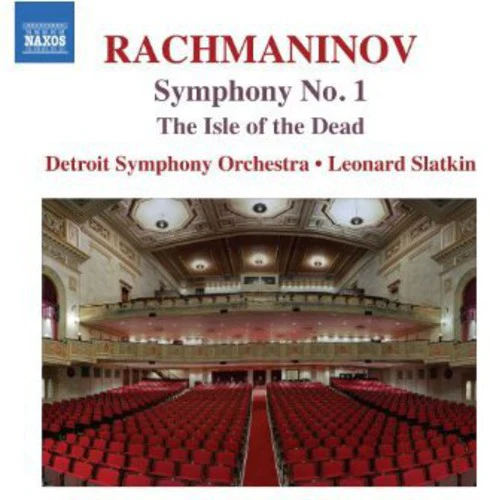
Rachmaninov: Symphony No 1, Isle Of The Dead / Slatkin, Detroit
RACHMANINOFF The Isle of the Dead. Symphony No. 1 • Leonard Slatkin, cond; Detroit SO • NAXOS 8.573234 (66:20)
Leonard Slatkin and his marvelous Detroit Symphony complete their superb Rachmaninoff symphony cycle with a spectacular First Symphony. Slatkin’s interpretations of the Second and Third symphonies were straightforward, powerful, and no-nonsense, focusing on the structure of both works and downplaying their emotional excesses. Here he takes a similar approach with the First Symphony and it pays off in huge dividends.
The first movement’s introduction is grimly menacing and Slatkin makes the allegro proper’s somewhat patchwork structure seem more cohesive than it really is, with deftly chosen tempos, forward moving rhythms, and seamless transitions. The Scherzo has an infectious swagger and Slatkin paces the Larghetto appropriately—well, larghetto (i.,e., not too slow)—so as to keep the music moving along and avoid languishing on the movement’s excessive melancholy. The Finale can often sound like a hodgepodge of discarded sketches of Rimsky-Korsakov, but Slatkin does as well as anyone at molding the seemingly unrelated episodic sections into a convincing unified statement. The performance here is extremely compelling and boasts an especially powerful and ominous coda. The trombones really have a field day. All in all, this is a great performance of a work difficult to pull off, one that can stand alongside the standard-setting versions by André Previn (London Symphony Orchestra, EMI 64530) and Vladimir Ashkenazy (Royal Concertgebouw Orchestra, Decca/London 448116 and 455798).
Rachmaninoff composed his symphonic poem The Isle of the Dead after viewing Arnold Böcklin’s painting of the same title in 1907. Considering the composer’s obsession with his own death, it is easy to understand how he would have been moved to compose a work inspired by this painting. Here Slatkin once again refuses to allow the music to wallow in its own mannerisms, choosing to make the most of its rhythmic momentum. In the opening, one can really feel the quintuple meter, so vividly depicting the gentle yet portentous sound of the oars as Charon, the ferryman, rows his boat with its newly deceased passengers across the River Styx. Throughout the work, Slatkin highlights the contrast between passages of ominous foreboding and those of serene tranquility perhaps more effectively than anyone before him. The climaxes are truly shattering, with snarling brass and pounding bass drum. Each successive statement of the Dies Irae becomes increasingly eerie. The cumulative effect is absolutely bone-chilling.
The city of Detroit may have seen better days, but the same cannot be said of its magnificent orchestra. After suffering its own financial woes a few years ago, the DSO has come back with a vengeance, sounding stronger than ever. Credit must be given to what is obviously a very productive partnership with its music director. I hope we can look forward to more Rachmaninoff from this team: say, the piano concertos and Paganini Rhapsody. Highly recommended, especially at Naxos’s budget-friendly price.
FANFARE: Merlin Patterson
RACHMANINOFF The Isle of the Dead. Symphony No. 1 • Leonard Slatkin, cond; Detroit SO • NAXOS 8.573234 (66:20)
Leonard Slatkin and his marvelous Detroit Symphony complete their superb Rachmaninoff symphony cycle with a spectacular First Symphony. Slatkin’s interpretations of the Second and Third symphonies were straightforward, powerful, and no-nonsense, focusing on the structure of both works and downplaying their emotional excesses. Here he takes a similar approach with the First Symphony and it pays off in huge dividends.
The first movement’s introduction is grimly menacing and Slatkin makes the allegro proper’s somewhat patchwork structure seem more cohesive than it really is, with deftly chosen tempos, forward moving rhythms, and seamless transitions. The Scherzo has an infectious swagger and Slatkin paces the Larghetto appropriately—well, larghetto (i.,e., not too slow)—so as to keep the music moving along and avoid languishing on the movement’s excessive melancholy. The Finale can often sound like a hodgepodge of discarded sketches of Rimsky-Korsakov, but Slatkin does as well as anyone at molding the seemingly unrelated episodic sections into a convincing unified statement. The performance here is extremely compelling and boasts an especially powerful and ominous coda. The trombones really have a field day. All in all, this is a great performance of a work difficult to pull off, one that can stand alongside the standard-setting versions by André Previn (London Symphony Orchestra, EMI 64530) and Vladimir Ashkenazy (Royal Concertgebouw Orchestra, Decca/London 448116 and 455798).
Rachmaninoff composed his symphonic poem The Isle of the Dead after viewing Arnold Böcklin’s painting of the same title in 1907. Considering the composer’s obsession with his own death, it is easy to understand how he would have been moved to compose a work inspired by this painting. Here Slatkin once again refuses to allow the music to wallow in its own mannerisms, choosing to make the most of its rhythmic momentum. In the opening, one can really feel the quintuple meter, so vividly depicting the gentle yet portentous sound of the oars as Charon, the ferryman, rows his boat with its newly deceased passengers across the River Styx. Throughout the work, Slatkin highlights the contrast between passages of ominous foreboding and those of serene tranquility perhaps more effectively than anyone before him. The climaxes are truly shattering, with snarling brass and pounding bass drum. Each successive statement of the Dies Irae becomes increasingly eerie. The cumulative effect is absolutely bone-chilling.
The city of Detroit may have seen better days, but the same cannot be said of its magnificent orchestra. After suffering its own financial woes a few years ago, the DSO has come back with a vengeance, sounding stronger than ever. Credit must be given to what is obviously a very productive partnership with its music director. I hope we can look forward to more Rachmaninoff from this team: say, the piano concertos and Paganini Rhapsody. Highly recommended, especially at Naxos’s budget-friendly price.
FANFARE: Merlin Patterson
$4.90
Original: $13.99
-65%Rachmaninov: Symphony No 1, Isle Of The Dead / Slatkin, Detroit—
$13.99
$4.90Description
RACHMANINOFF The Isle of the Dead. Symphony No. 1 • Leonard Slatkin, cond; Detroit SO • NAXOS 8.573234 (66:20)
Leonard Slatkin and his marvelous Detroit Symphony complete their superb Rachmaninoff symphony cycle with a spectacular First Symphony. Slatkin’s interpretations of the Second and Third symphonies were straightforward, powerful, and no-nonsense, focusing on the structure of both works and downplaying their emotional excesses. Here he takes a similar approach with the First Symphony and it pays off in huge dividends.
The first movement’s introduction is grimly menacing and Slatkin makes the allegro proper’s somewhat patchwork structure seem more cohesive than it really is, with deftly chosen tempos, forward moving rhythms, and seamless transitions. The Scherzo has an infectious swagger and Slatkin paces the Larghetto appropriately—well, larghetto (i.,e., not too slow)—so as to keep the music moving along and avoid languishing on the movement’s excessive melancholy. The Finale can often sound like a hodgepodge of discarded sketches of Rimsky-Korsakov, but Slatkin does as well as anyone at molding the seemingly unrelated episodic sections into a convincing unified statement. The performance here is extremely compelling and boasts an especially powerful and ominous coda. The trombones really have a field day. All in all, this is a great performance of a work difficult to pull off, one that can stand alongside the standard-setting versions by André Previn (London Symphony Orchestra, EMI 64530) and Vladimir Ashkenazy (Royal Concertgebouw Orchestra, Decca/London 448116 and 455798).
Rachmaninoff composed his symphonic poem The Isle of the Dead after viewing Arnold Böcklin’s painting of the same title in 1907. Considering the composer’s obsession with his own death, it is easy to understand how he would have been moved to compose a work inspired by this painting. Here Slatkin once again refuses to allow the music to wallow in its own mannerisms, choosing to make the most of its rhythmic momentum. In the opening, one can really feel the quintuple meter, so vividly depicting the gentle yet portentous sound of the oars as Charon, the ferryman, rows his boat with its newly deceased passengers across the River Styx. Throughout the work, Slatkin highlights the contrast between passages of ominous foreboding and those of serene tranquility perhaps more effectively than anyone before him. The climaxes are truly shattering, with snarling brass and pounding bass drum. Each successive statement of the Dies Irae becomes increasingly eerie. The cumulative effect is absolutely bone-chilling.
The city of Detroit may have seen better days, but the same cannot be said of its magnificent orchestra. After suffering its own financial woes a few years ago, the DSO has come back with a vengeance, sounding stronger than ever. Credit must be given to what is obviously a very productive partnership with its music director. I hope we can look forward to more Rachmaninoff from this team: say, the piano concertos and Paganini Rhapsody. Highly recommended, especially at Naxos’s budget-friendly price.
FANFARE: Merlin Patterson